Following the Francophone and Arabic display of books from North Africa, including books on textiles, organised at the University Library, this guide aims to facilitate more in-depth research into CULs’ print and electronic collections.
The recent exhibition of books on and from North Africa in the UL brought together a fascinating selection of volumes on textiles. In putting the display together, Irene Fabry-Tehranchi kindly considered my interest in the topic. The fact that I teach on the (Un)clothed body module for the MMLL comparative paper CS5: The Body means that I am always looking for material that resonates with this subject area. My research in North African literature has always involved consideration of the ways in which social customs, including dress, are represented in literature, thought and art on or from the region.
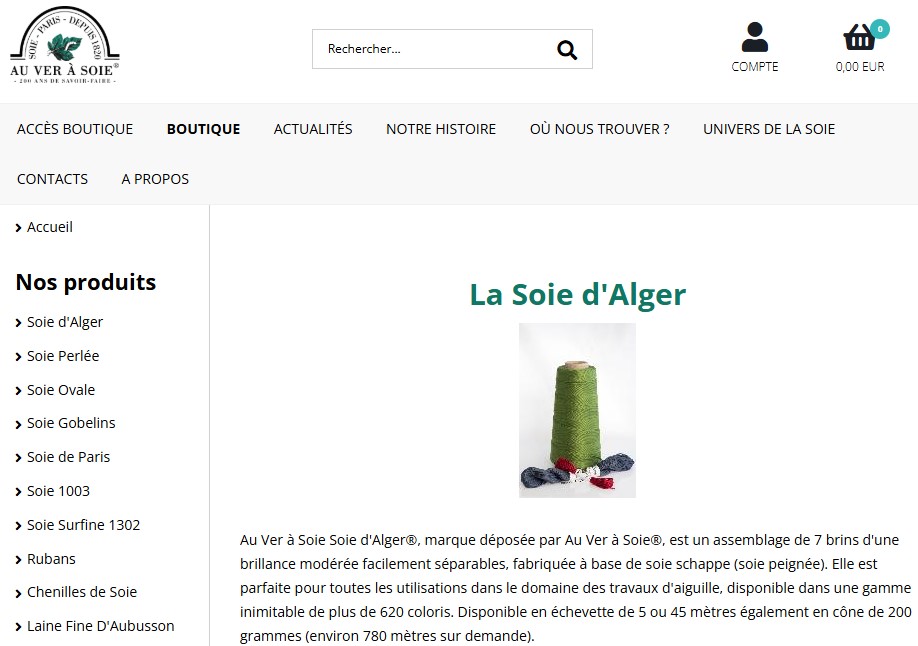
In addition to this, I am a keen amateur embroiderer and on a trip to Paris in recent years I discovered a silk embroidery floss called ‘soie d’Alger’ (Algiers silk), considered one of the finest silk embroidery threads available, produced by the family-owned firm Au ver à soie. Their website suggests that there is no connection between this stranded embroidery floss and the city of Algiers. The silk itself is imported from China, and the name ‘soie d’Alger’ is believed to be related to the process of spinning the stranded silk. But I am reluctant to accept this lack of geo-political connection without some investigation. Irene has pointed me in the direction of French press database Retronews and highlighted several articles on the French production of silk in Algeria under French rule. She also sourced a number of colonial exhibition catalogues and agricultural reports from the 19th and 20th centuries containing information on the production of fibres including silk, wool and cotton in French Algeria. Continue reading “Books on North African Textiles at Cambridge University Library”→
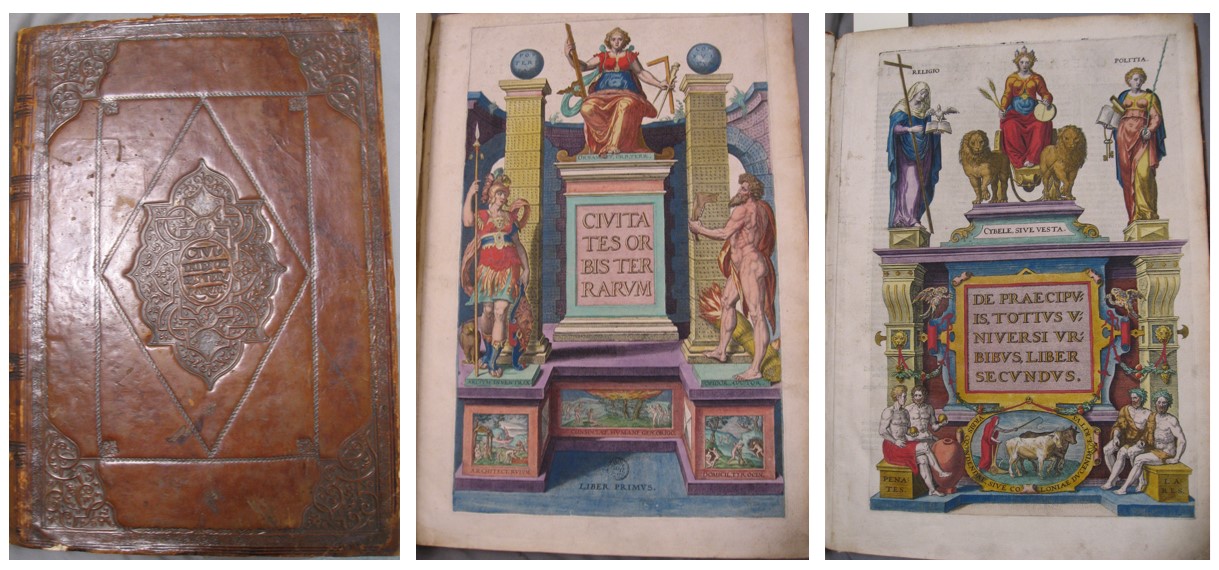
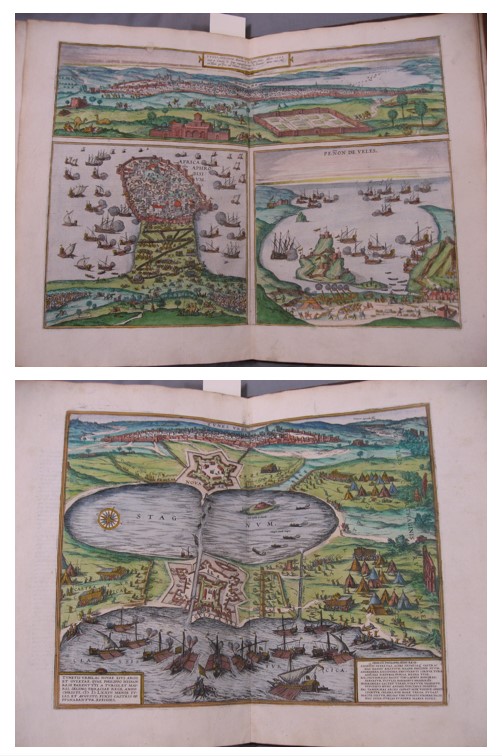
It has been a year since the Fitzwilliam Museum exhibition Black Atlantic: Power, People, Resistance, and the CCC network (Collections Connections Communities Strategic Research Initiative, which encompasses Cambridge University’s museums, garden, libraries, and archives) has just published a report on African Collections Futures, about Africa-related objects and materials present across the University of Cambridge. A few weeks ago, we organised at the library a display of books from North Africa, focusing on items about and from Morocco, Algeria and Tunisia (mainly Francophone, but including some Arabic material). This gave us the opportunity to showcase key collections among Cambridge University Library’s holdings. While older material often provided a Western perspective regarding the Maghreb, for 19th and 20th century works, we focused on publications emanating from these countries (historically marked by a strong colonial outlook); we still collect current Francophone publications from the region.
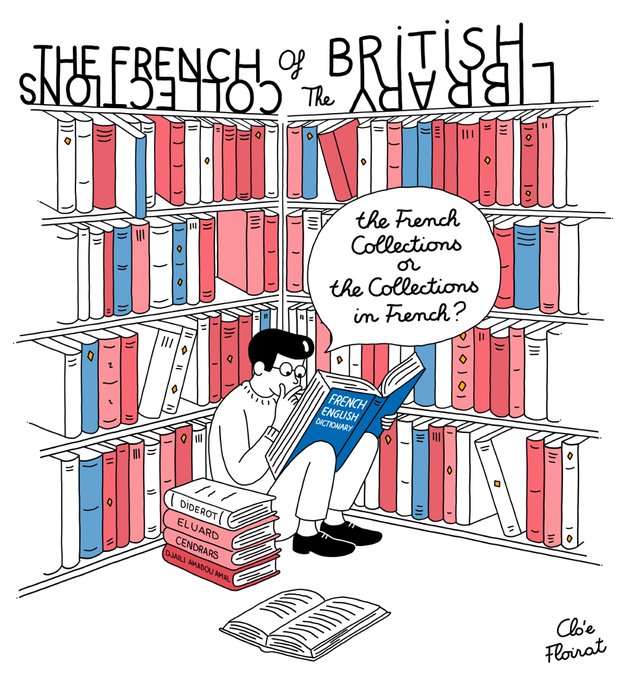
About a year ago, the study-day “French Collections in UK Libraries: Discovery, Research, Dissemination” was held at the Institut Français in London. We are looking forward to the symposium on “Collections in French at the British Library” which is happening tomorrow and whose speakers include, among others, acclaimed author Michel Pastoureau and Professor William Marx, who will be talking about “The World Library”. Both events have been sponsored by the French Studies Library Group, which aims to bring together librarians, information professionals, academics and the wider public to provide access, promotion and preservation of printed and digital French Collections in the UK.
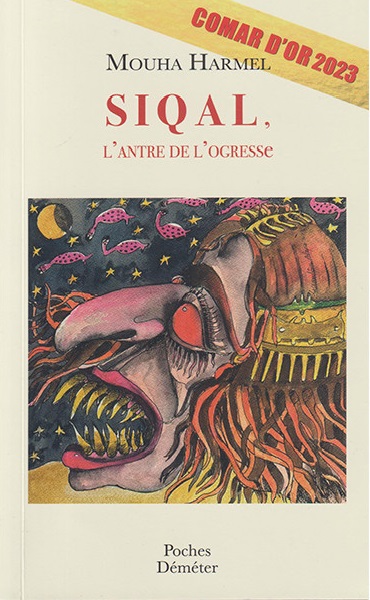
This year again, the team in charge of French-language collections at the UL has been busy getting hold of the latest winners of literary prizes in France and beyond. Our list – which we’ve been following year on year and sometimes expanding – comprises mainland French prizes, such as the Goncourt or the Femina, overseas French prizes such as the Carbet or the Fetkann, and prizes beyond France such as Tunisia’s Comar d’Or. The 2023 prizewinners are listed below. Some of our copies are still in transit, but where available we provide links to copies to find at the MMLL Faculty Library in the meantime.
Comar d’Or: Siqal : l’antre de l’ogresse : roman / Mouha Harmel. Déméter, 2023, C207.d.6588.
Grand prix du roman de l’Académie française: Une façon d’aimer : roman / Dominique Barbéris. Gallimard, 2023, C207.d.5616.
Grand Prix du Roman Métis: Un homme sans titre / Xavier Le Clerc. Gallimard, 2022, C207.d.4050.
Two years ago, Cambridge University Library acquired a satirical pocket-size (but 3 meters long, once unfolded) Panorama of the Franco-Prussian war by Percy Cruikshank (1870) (8000.e.354). This work is a good complement to the library’s Collection of 1870-71 Franco-Prussian caricatures from a British perspective. In a talk taking place on Thursday 7 March from 5-6pm in the University Library’s Milstein room, as part of the Cambridge History of Material Texts seminar, we are going to present Cruikshank’s panorama and contextualise this work within the author’s creation of other comic cartoons produced in the concertina format.
Panorama of the Franco Prussian War, painted by PC [Percy Cruikshank], London : F. Platts, 185 Fleet Street EC, & Mann Nephews, 39 Cornhill E.C., [1870-71].
Percy Cruikshank, The Comic History of the Russian War, London : Read & Co., 1856-57.
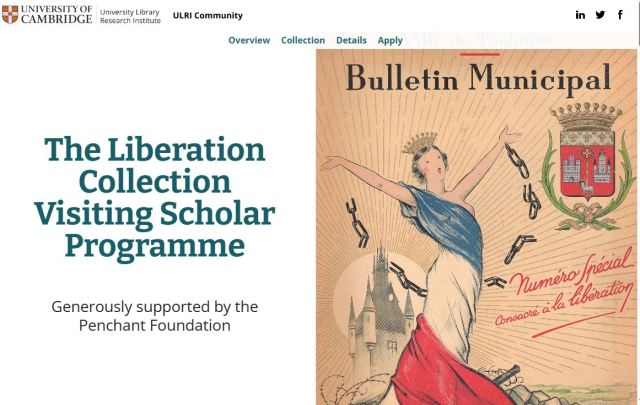
Cambridge University Library is delighted to announce the launch of the Liberation Collection Visiting Scholar Programme. Generously supported by the Penchant Foundation, this new initiative will enable a Visiting Scholar to spend between two and four months undertaking research focused on the Chadwyck-Healey Liberation Collection held at Cambridge University Library.
This programme is a collaboration between the University Library Research Institute and Clare Hall, a graduate college located at the heart of the University of Cambridge, renowned for its informal approach to college life and its international diversity. The maximum value of the scholarship is £6000 for UK-based applicants and £7000 for international applicants.
Bulletin municipal. Numéro spécial consacré à la Libération. Ville de Toulouse, Octobre 1944. Liberation.a.235 Special issue of the city bulletin of Toulouse published after the liberation of the city in August 1944.
Mon, 20 Nov 2023 09:15 – 18:30 (French Institute, 17 Queensberry Place, London SW7 2DT)
This event brings together leading specialists from academia, libraries and the book trade to explore French printed, archival, and digital collections in all their richness and diversity from across the United Kingdom. Found in major public institutions as well as hidden in lesser-known collections, they reflect the British Isles’ continuous engagement with France. Themes include collections of caricatures; the Second World War; Artists’ Books; Anglo-French collectors and their collections; and the French community in Britain. We will also consider how libraries shape research, and how they can play a role in cultural diplomacy. The event, which will provide a unique opportunity to foster the interpretation, promotion, and enjoyment of these collections, is aimed at a wide audience and will include ample time for discussion and networking. Continue reading “Event “French Collections in UK Libraries: Discovery, Research, Dissemination” at the Institut Français (London)”→
Meggie Boyle is a 3rd year student of French in the Faculty of Modern and Medieval Literature and Linguistics. Earlier this year, she got in touch with us at Cambridge University Libraries with book recommendations for her Year Abroad Dissertation project. She suggested titles that we did not have, and we arranged digital alternate formats for books that were only available to buy in print format, via the Cambridge Libraries Accessibility Services. You can read here about her experience of disability which fueled her dissertation project.
“Disability has dominated my life, not only pervading every part of my physical body, but also seeping into the very core of my being, my mind: I see it in everything I do and everywhere I go.
We are delighted to announce Cambridge University now has full access to “le site de presse de la BnF”, Retronews.
Cambridge students and academics have been interested in Retronews since its inception in 2016, but with full subscription access now following a successful extended trial at the end of 2022, our insights into centuries of French history may now deepen and flourish.
Retronews subscription provides access to the full, unabbreviated versions of the articles plus long-form research articles. The earliest title, La Gazette de Theophraste Renaudot, dates back to 1631. Retronews adds newly digitized archives to the site each week and Cambridge now contributes to fund the growth of the digitization. The majority of the newspapers were published between 1881 (the passing of press freedom law) and…

![Panorama of the Franco Prussian War, painted by PC [Percy Cruikshank], London : F. Platts, 185 Fleet Street EC, & Mann Nephews, 39 Cornhill E.C., [1870-71].](https://i0.wp.com/languagecollections-blog.lib.cam.ac.uk/wp-content/uploads/2022/08/20220705_150334a.jpg?w=341&h=284&ssl=1 "20220705_150334a")




 Languages across Borders