
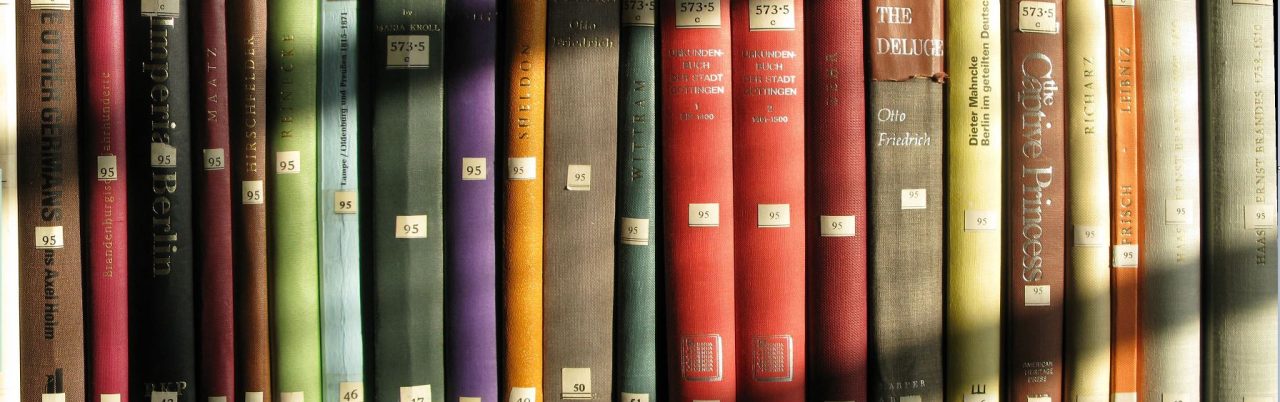
It has been a year since the Fitzwilliam Museum exhibition Black Atlantic: Power, People, Resistance, and the CCC network (Collections Connections Communities Strategic Research Initiative, which encompasses Cambridge University’s museums, garden, libraries, and archives) has just published a report on African Collections Futures, about Africa-related objects and materials present across the University of Cambridge. A few weeks ago, we organised at the library a display of books from North Africa, focusing on items about and from Morocco, Algeria and Tunisia (mainly Francophone, but including some Arabic material). This gave us the opportunity to showcase key collections among Cambridge University Library’s holdings. While older material often provided a Western perspective regarding the Maghreb, for 19th and 20th century works, we focused on publications emanating from these countries (historically marked by a strong colonial outlook); we still collect current Francophone publications from the region.
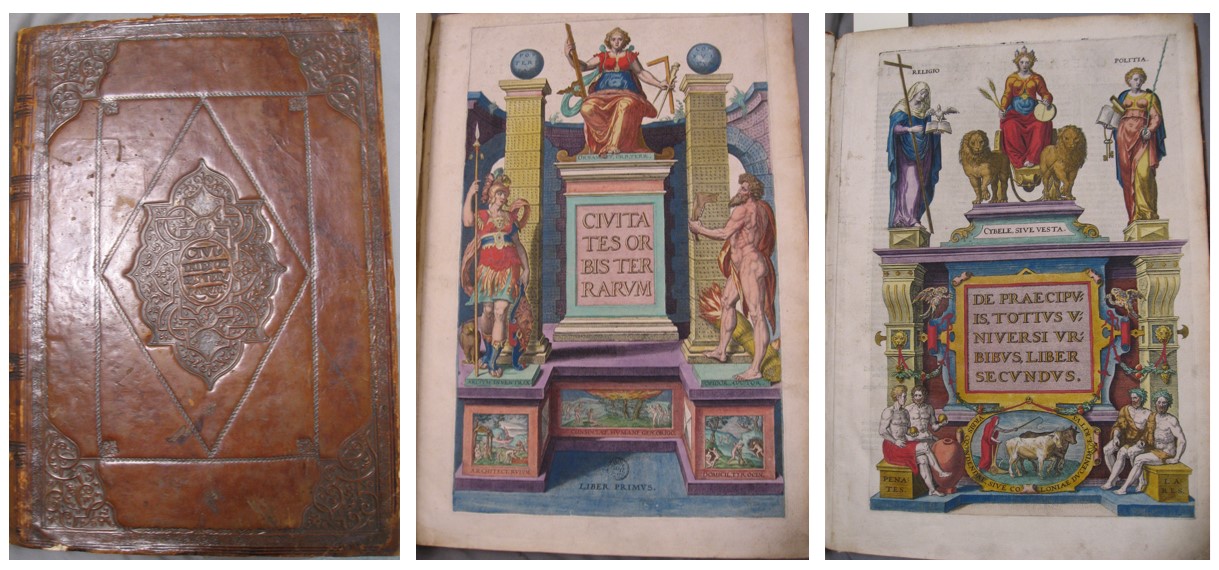
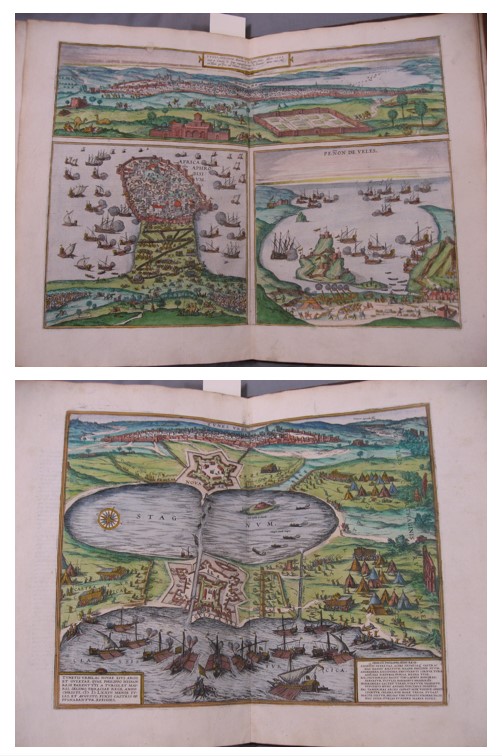
A highlight of the exhibit, from the Maps collections, was the famous Ciuitates orbis terrarum edited and compiled by Georg Braun (from Köln in Germany). A beautiful, coloured atlas of cities of the world, it includes maps and descriptions of Tunis and Algiers from 1575 (v. 2, Atlas.4.57.3). The 6-parts atlas includes 17 African cities whose descriptions are based on the account of Hassan al-Wazzan or Leo Africanus (1494-1555?), born from a Muslim family in Granada, who moved to Fez (Morocco) and travelled up to Timbuktu, Cairo, Constantinople and Rome (he is the subject of a wonderful novel by Amin Maalouf, Léon, l’Africain, 1986, 738:45.c.95.462). We also hold the Cities of the world in facsimile editions from 1965 (Atlas.4.06.1-) and 2017 (Atlas.5.201.230) with very useful translations and commentaries.
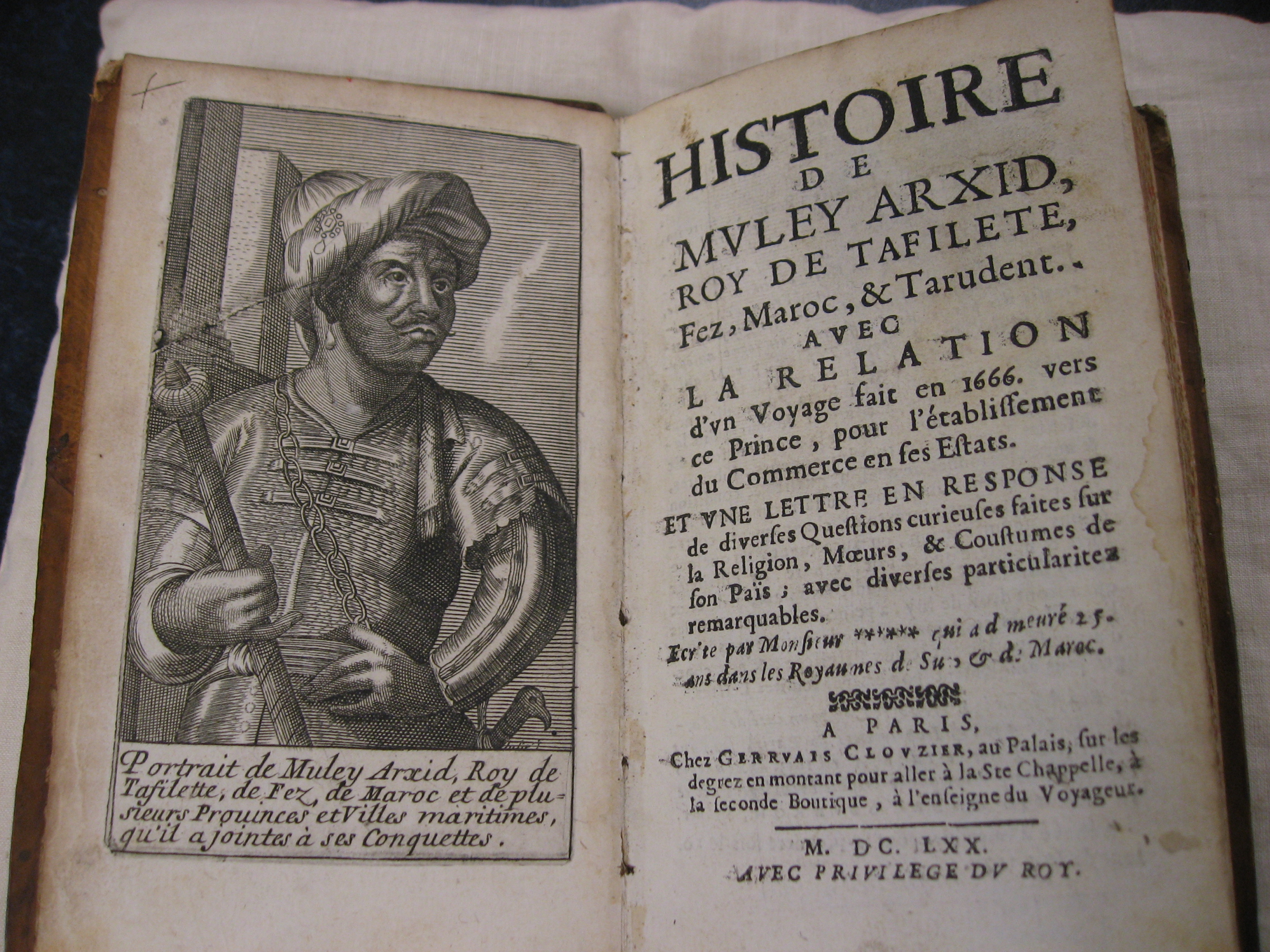
Among the Rare books featured in the exhibit, two early modern publications in French witness the development of trade and diplomatic relations between the France and Morocco under the reign of Louis XIV:
- an account of the history of Al-Rashid of Morocco, or Moulay Al-Rashid, Sultan of Morocco from 1666 to 1672, and of the travel made by Roland Fréjus, of Marseilles, sent to explore trade opportunities in the region.
Histoire de Muley Arxid, roi de Tafilete, Fez, Maroc, & Tarudent: avec La relation d’un voyage fait en 1666, vers ce prince, pour l’establissement du commerce en ces estats [by Roland Fréjus] et une lettre écrite par Monsieur *** [Antoine Charant]. A Paris : Chez Gerrvais Clouzier,1670 (O.6.18).
- a description of Morocco by François Pidou de Saint-Olon who was sent as an ambassador of Louis XIV to Ismail Ibn Sharif, or Moulay Ismaïl (Sultan of Morocco from 1672 to 1727), in Salé in 1693, where he unsuccessfully tried to negotiate the liberation of prisoners from the Barbary corsairs.
Relation de l’empire de Maroc : Ou l’on voit la situation du pays, les mœurs, coûtumes, gouvernement, religion & politque des habitans / Par Mr. de S. Olon, ambassadeur du roy à la cour de Maroc. A Paris : chez la Veuve Mabre Cramoisy, 1695. (T.5.52)
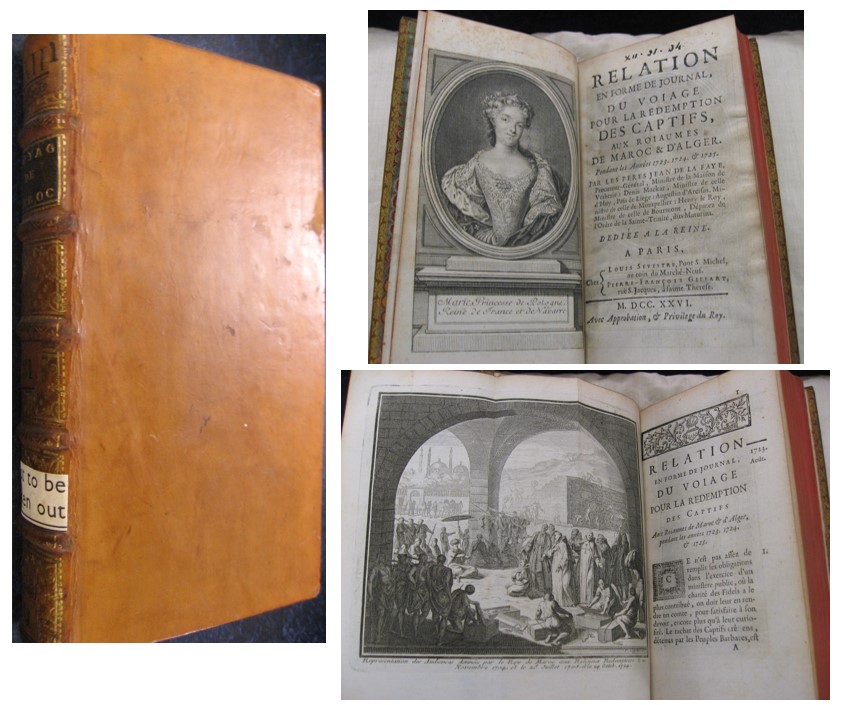
Indeed, the Barbary pirates were a main concern for European merchants and travellers and coastal towns around the Mediterranean from the Middle Ages, and increasingly so from the 16th to the 18th century. Therefore, dedicated Christian religious orders such as the Order of the Most Holy Trinity and of the Captives (Trinitarians or Mathurins) or the Order of Our Lady of Mercy and the Redemption of the Captives (Mercedarians) were established in the 12th to 13th century. Cambridge University Library holds the account of one of those prisoners, Emmanuel de Aranda, from a Spanish family settled in the Netherlands, who was enslaved in Algiers in 1640-41:
- Relation de la captivité et liberté du sieur E. d’Aranda, iadis esclaue à Alger. (Paris : Par la Compagnie des libraires du Palais, 1665.) (T.12.46),
as well as narratives by members from the two religious orders, dedicated to important sponsors and patrons, and retelling their expeditions to redeem Christian captives:
- Relation nouvelle et particulière du voyage des RR. PP. de la Mercy aux royaumes de Fez, de Maroc, pour la rédemption des captifs chrétiens : negociée en l’année 1681 avec Moule-Ismael [Moulay Ismaïl], roy de Fez & de Maroc, regnant aujourd’huy / par L. Desmay. (Paris : la veuve Gervais Clousier, 1682) (O.6.29)
- Relation en forme de journal, du voiage pour la redemption des captifs, aux Roiaumes de Maroc & d’Alger : pendant les années 1723. 1724. & 1725 par les Peres Jean de La Faye, Denis Mackar, Augustin d’Arcisas, Henry le Roy. (A Paris : Chez Louis Sevestre Pierre-François Giffart, 1726) (XII.31.34 and Acton.d.43.81)
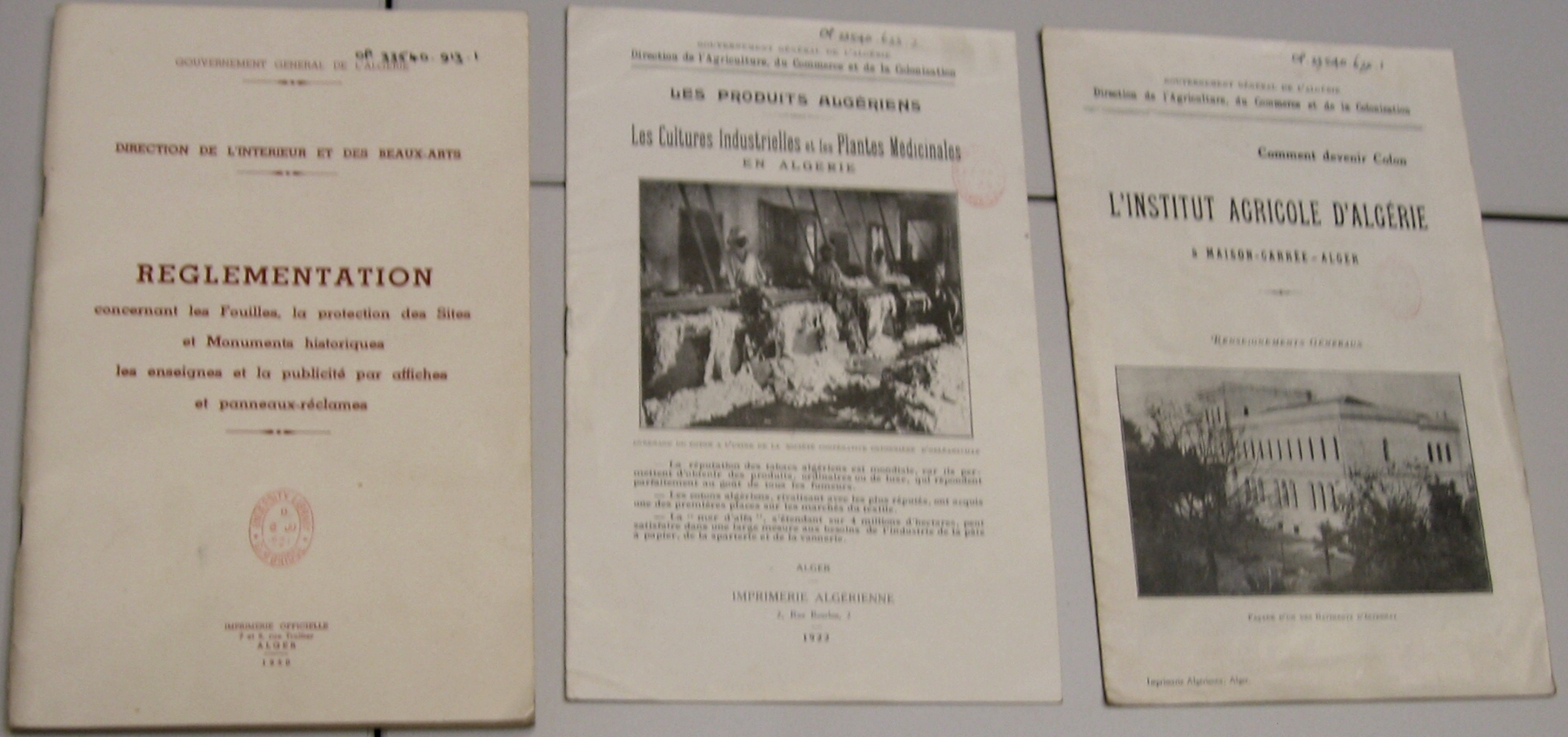
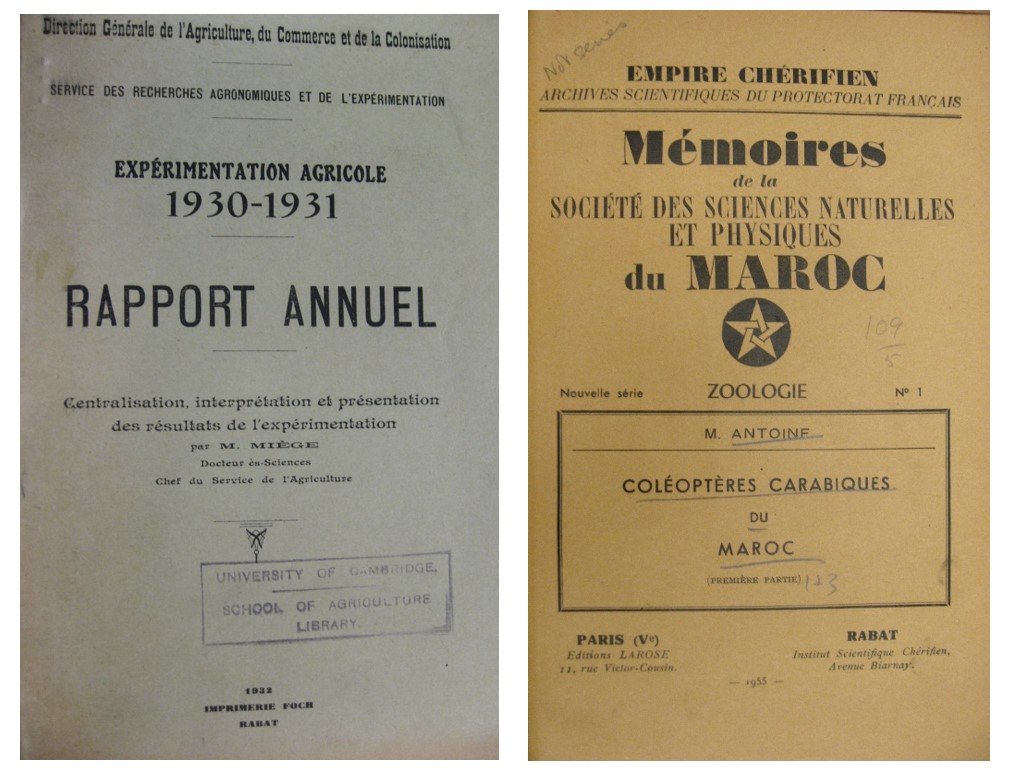
The colonial period and beyond saw the development of a wide range of publications including geography (mapping and establishing borders, as well as surveying resources, infrastructure, populations etc. being part of the colonial project; this also covers the production of touristic guides to the region), natural history (focusing on local flora and fauna), education, law and administration, commerce, industry and agriculture (promoting and supporting the idea of a colonial exploitation or development). Most of the works cited here and below are part of the UL’s French and Francophone collections, but some belong to Special collections, including Official Publications and the Royal Commonwealth Society collection.
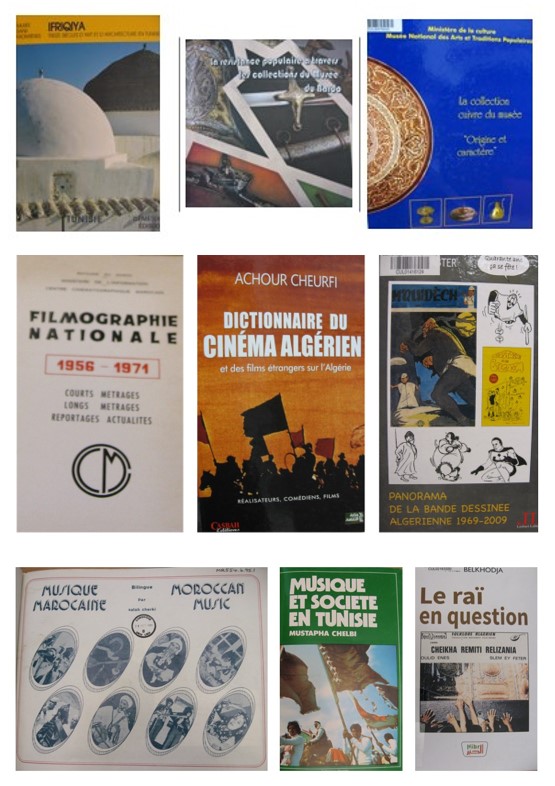
Publications in art and archaeology range from rock art (from the High Atlas in Morocco) to inscriptions and remains from the Classical and Christian periods, Islamic art and architecture, featuring collections and exhibitions from museums from the region, local music (such as the Chaabi, inspired by Andalusi music, or the Raï folkloric music -some of the related works are in the UL’s Music collections), or local film and comic books production.


Linguistics and literature are well represented, with many dictionaries and practical phrasebooks or specialised guides -such as “Pour lire la presse arabe”, between French and Arabic, and scholarly studies of regional multilingualism, including the different varieties of Arabic, such as the “Tounsi” or “Tunsi”, the Tunisian Arabic dialect and other languages, such as Amazigh or Tamazight, spoken by the Berber people. We hold many histories, dictionaries and bibliographies of the press and (Francophone) literary works and authors published in the different countries, as well as books in these languages, that we source and collect via European or African suppliers and sometimes directly from local publishing houses. Some older works in these categories can be found in the Moh collection.
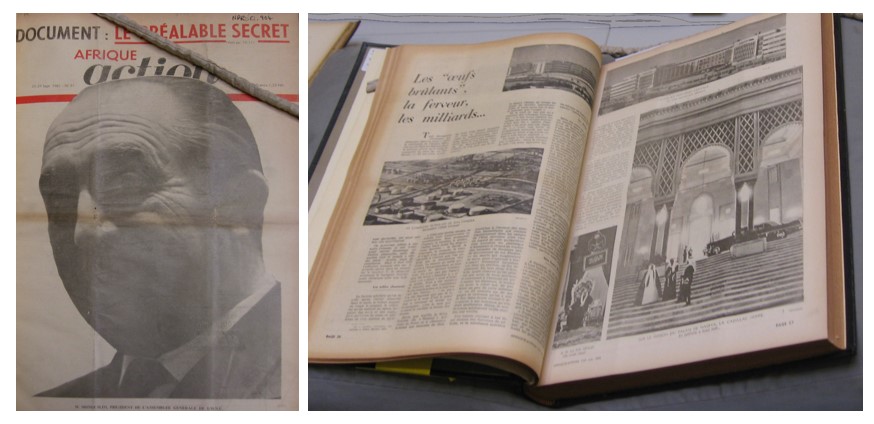
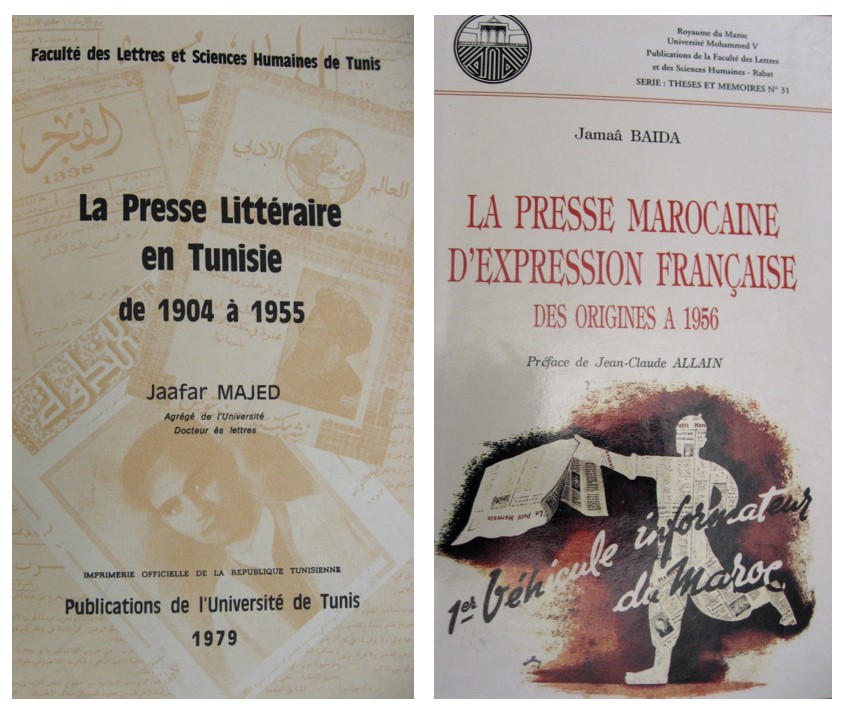
This, along with (historical) Newspapers and Periodicals, such as Afrique action, later called Jeune Afrique (Tunis 1960-1961, LSF) is completed by studies of the local press, book publishing industry and libraries.
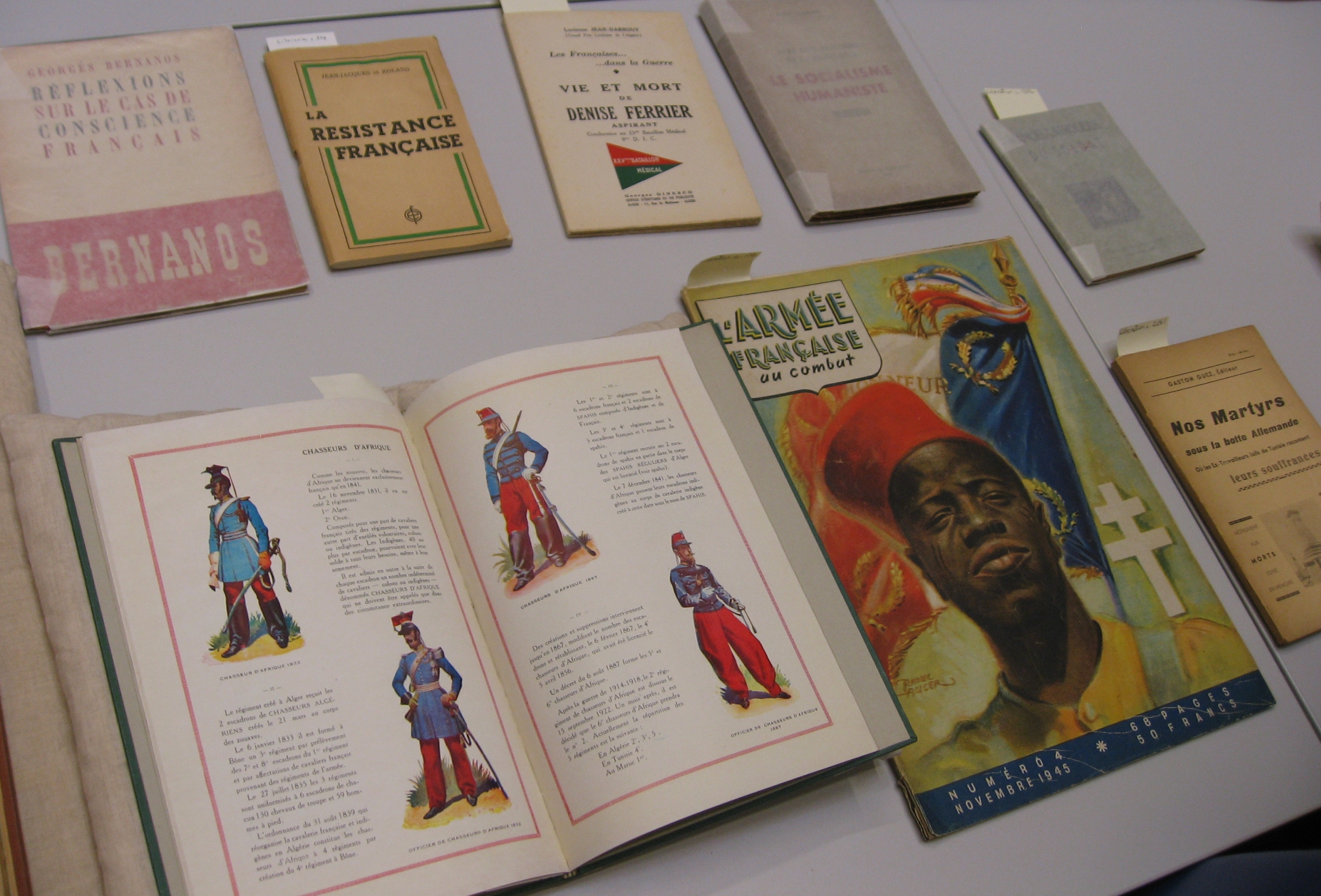
Historical works feature prominently in Cambridge University Library, with publications related to the inclusion of colonial troops in the French army and a cluster of books from the Chadwyck-Healey Liberation collection (1944-1946) which holds hundreds of works published outside of France. For North Africa, most of the Liberation books were published in Algeria (see searches with the keyword “Alger”), but also a few in Morocco and Tunisia (they can be hard to pinpoint in iDiscover, but do get in touch if you would like to know more -you can refer to the Liberation collection dataset as a starting point). After the Allied landing at the end of 1942 (Torch operation) Algiers became a base for the Allies in North Africa. Liberation books from North Africa include resistant and socialist publications, with accounts of men and women engaged in the France libre and Armée française de la Libération, as well as Jewish people from the Maghreb, including deportation and the experience of internment, labour and concentration camps, in Europe or in North Africa (especially during the German occupation of Tunisia, from November 1942 to May 1943).
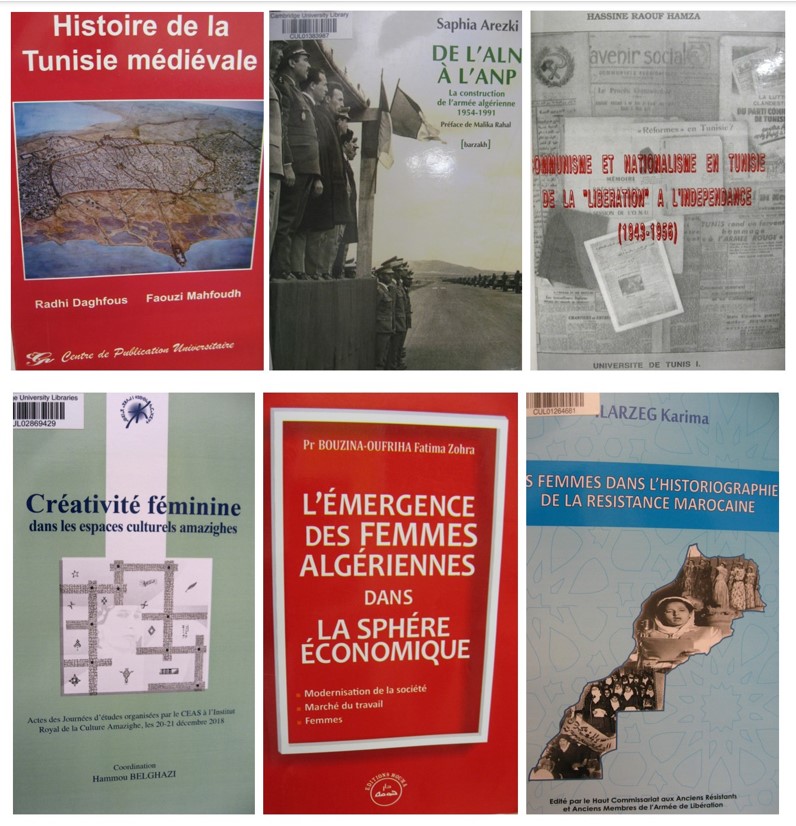
20th century history in the Cambridge UL’s French collections is very wide ranging, including among others studies of the Algerian Independence, the Civil War or the Hirak protest movement and works on the social life and politics of the region, covering issues such as the place of women, immigration etc.
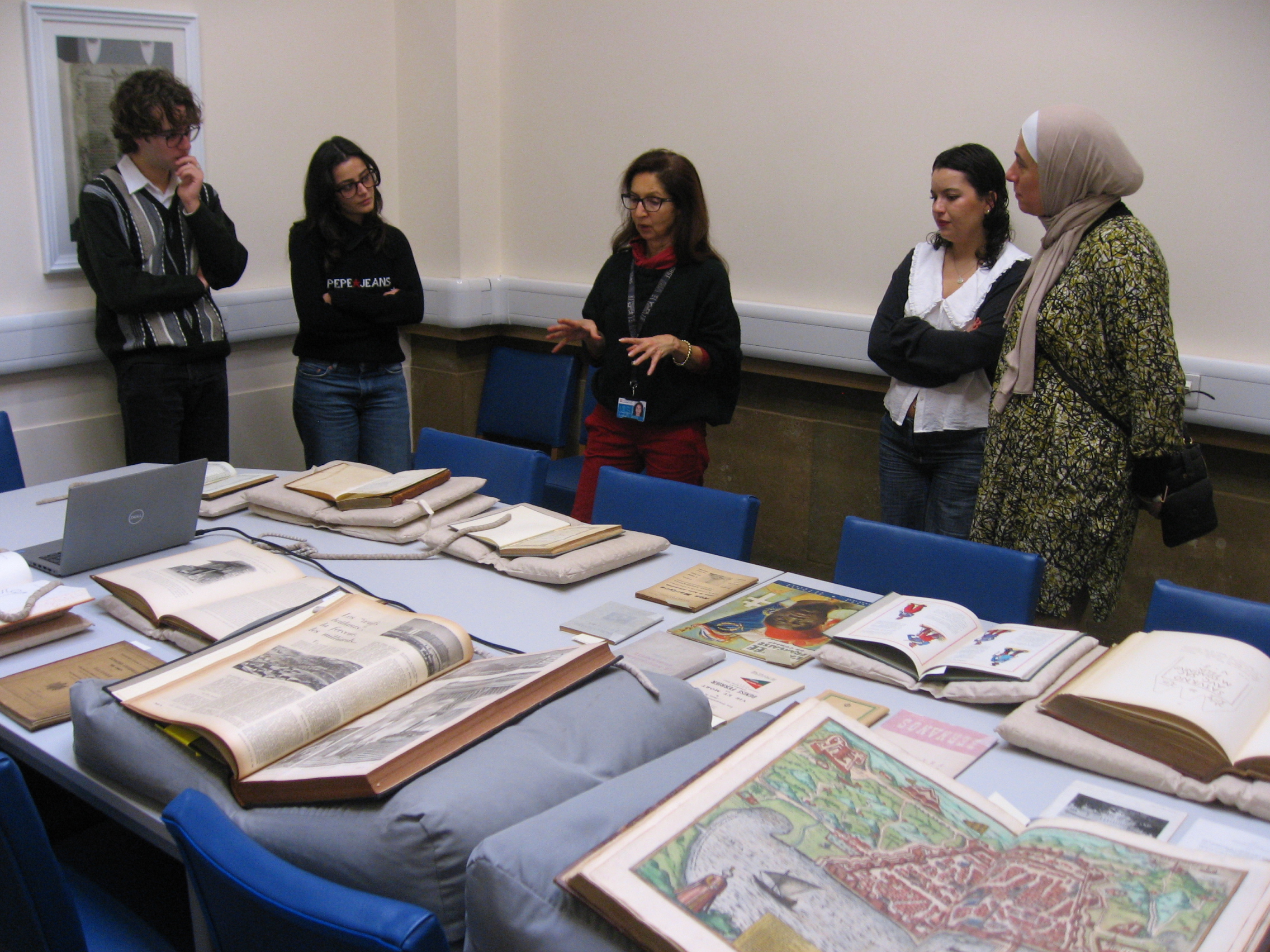
The focus on Francophone literature from North Africa, despite its extensive range, is only one aspect of the written production of the region, and our colleague Yasmin Faghihi (Near and Middle Eastern Collections) presented texts in Arabic published in Tunis which allowed a discussion on the differences in book history between the European and Islamic worlds:
- Kitāb wāsiṭat ʾal-sulūk fī siyāsat ʾal-mulūk / taʾlīf ʾal-ʾImām ʾal-malik ʾal-hammām ʾal-ʾasad ʾal-ḍirghām ʾAmīr ʾal-Muslimīn Mawlānā Mūsá ibn Yūsuf ʾAbū Ḥammū ibn Zayyān (Tūnis : Maṭbaʻat ʾal-Dawlah ʾal-Tūnisīyah, 1279 [1862]), Moh.172.c.6
- Kitāb ʾal-Riḥlah, ʾal-mawsūmah bi-ʾal-Wāsiṭah ʾilá maʻrifat Mālṭah wa-kashf ʾal-mukhbbā ʻan funūn ʾAwrubbā / taʾlīf ʾAbī ʾal-ʻAbbās ʾal-Shaykh ʾAḥmad Fāris ʾAfandī ʾal-Shidyāq (Tūnis : Maṭbaʻat ʾal-Dawlah ʾal-Tūnisīyah, 1283 [1867]), Moh.297.c.18
- Tārīkh ʼal-dawlatayn ʼal-Muwaḥḥidīyah wa-ʼal-Ḥafṣīyah / taʼlīf ʼAbī ʻAbd ʼAllāh Muḥammad ibn ʼIbrāhīm ʼal-Luʼluʼī ʼal-maʻrūf bi-ʼal-Zarkashī (Tūnis : Maṭbaʻat ʼal-Dawlah ʼal-Tūnisīyah ʼal-Maḥrūsah, 1289 [1872]), Moh.221.c.38
The North Africa display was initiated by Sura Qadiri, an academic working on Francophone studies for a group of students in the faculty of Modern and Medieval Languages and Linguistics (see her blogpost on North African Textiles) but it is of interest to researchers in other fields across the University and we plan to hold more in the future. This blogpost will be followed by a Guide to searching for material on North Africa, in Cambridge libraries and through online resources.
Irene Fabry-Tehranchi
 Languages across Borders