
Last autumn, Dr Kaoutar Ghilani, current Abdullah Al-Mubarak Research Fellow in Middle Eastern Studies at Pembroke College, got in touch with Cambridge University Library’s French specialist to recommend acquisitions from the Moroccan publisher En toutes Lettres. We already held four titles from the small independent publisher, acquired back in 2022. After discussion with Dr Ghilani and other interested academics in the Modern and Medieval Languages and Linguistics faculty, we placed an order for additional titles, essays dealing with questions of language politics and nation-building in Morocco, intellectual history, migration and women’s work (see the library’s holdings below). We took advantage of these new acquisitions to interview Kenza Sefrioui, founder of En toutes Lettres.
- What is the story behind the creation of En Toutes Lettres?
En toutes lettres was set up in Casablanca in 2012 by two former journalists of Le Journal hebdomadaire, Hicham Houdaïfa and Kenza Sefrioui, to continue investigative journalism outside the media, because of the restrictions on press freedom. We felt that a book was the best way of making a lasting impact on social issues. We also wanted to consolidate the production of knowledge about Morocco, from Morocco, and help spread the culture of critical thinking.
- How do you choose the topics of your publications and what is your relationship to your authors?
We are very sensitive to human rights issues: women’s rights, children’s rights, environment, social justice. We have also launched training programs for young journalists and civil society actors, inviting them to take part in collective books. It is important to support a new generation of authors. We are also proud of the fact that authors are submitting new manuscripts to us.
- En Toutes Lettres is multilingual. What was the rationale behind this decision? How do you choose the language of each publication? Does the language of a book have an impact on its sales?
Most of our books are in French, in keeping with the tradition of the French-language press in Morocco. But we have published a few books in Arabic, including two translations from French, and one bilingual book. The distribution channels for books in French and Arabic are very different, and Arabic-speaking readers read French, whereas French-speaking readers don’t read Arabic. We are aware that our books in French will only reach a minority of Moroccan readers, but they do reach teachers and civil society, who are also opinion formers.
- What do you know about your clients, your books’ readership, and the geographic spread of your publications? As your books circulate both in print and as ebooks, what are the implications, for you as a publisher, of these formats on their dissemination?
Our books are sold in Morocco’s major cities, wherever there are bookshops that are able to promote essays in the humanities in French. Our readers include many teachers and civil society actors, the French-speaking upper middle class who reads mainly in French, as well as foreign readers who want to know more about Moroccan society.
Our books are also listed on the Dilicom database, so they can be ordered from any French-language bookshop in the world. They can also be found in several bookshops in France, as well as on several online sales platforms. What gives us the best distribution outside Morocco is the CAIRN platform, which means our ebooks can be purchased individually or be found in library packages. Outside Morocco, digital distribution gives us better visibility than distribution of paper books, because of the overproduction of the market, particularly in France.
- How do you publicise your catalogue and new titles? Can you give us an example of a success story amongst your publications?
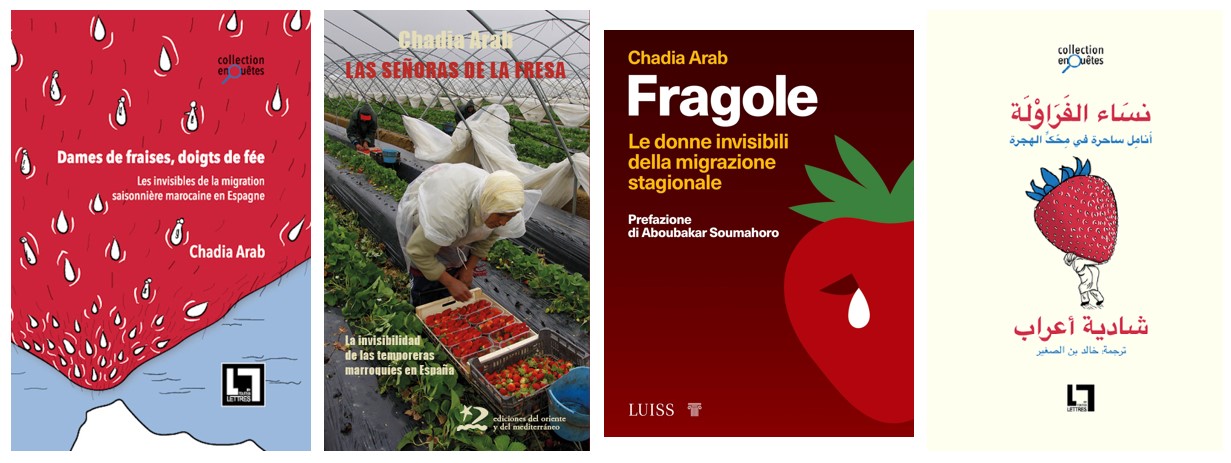
We are aware that we need to be very active in promoting our books, in order to rebuild the link with Moroccan readers. We are trying to increase the number of meetings in bookshops, in the all too rare libraries, as well as in universities and civil society associations. Our books also serve as the basis for the training courses we have developed. We also have several books that have been translated into Spanish and Italian, and soon into English and Arabic. For example, Dames de fraises, doigts de fée, les invisibles de la migration saisonnière marocaine en Espagne by Chadia Arab, has been translated into Spanish, Italian and Arabic and adapted as a graphic novel.
- How would you describe the publishing industry in Morocco today and how does it compare with 10, 20, and 30 years ago?
There is no book industry in Morocco because we do not have sufficient legislation to allow the sector to consolidate and get rid of toxic practices such as piracy, direct sales, competition from distributors to booksellers, etc. This is not changing. We aspire to a different kind of cultural policy, one that is not content with events or cultural diplomacy, but is genuinely at the service of citizens, guaranteeing them the right to culture.
- What are the main challenges faced by your press today?
The biggest challenge for us is to consolidate our publishing activity in a context that is not in its favour. Covid had dramatic consequences for the book ecosystem. We need a legislative framework like the Lang Law in France to save our network of bookshops. [Passed in 1981, this law established a fixed price set by publishers for the public sales of their books, promoting cultural policy over price competition. It has been evaluated as positive for the book industry, supporting distribution networks and helping with the diversity of publishing]. Without booksellers, there are no publishers.
Kenza Sefrioui, En toutes Lettres
En toutes Lettres holdings at Cambridge University Library:
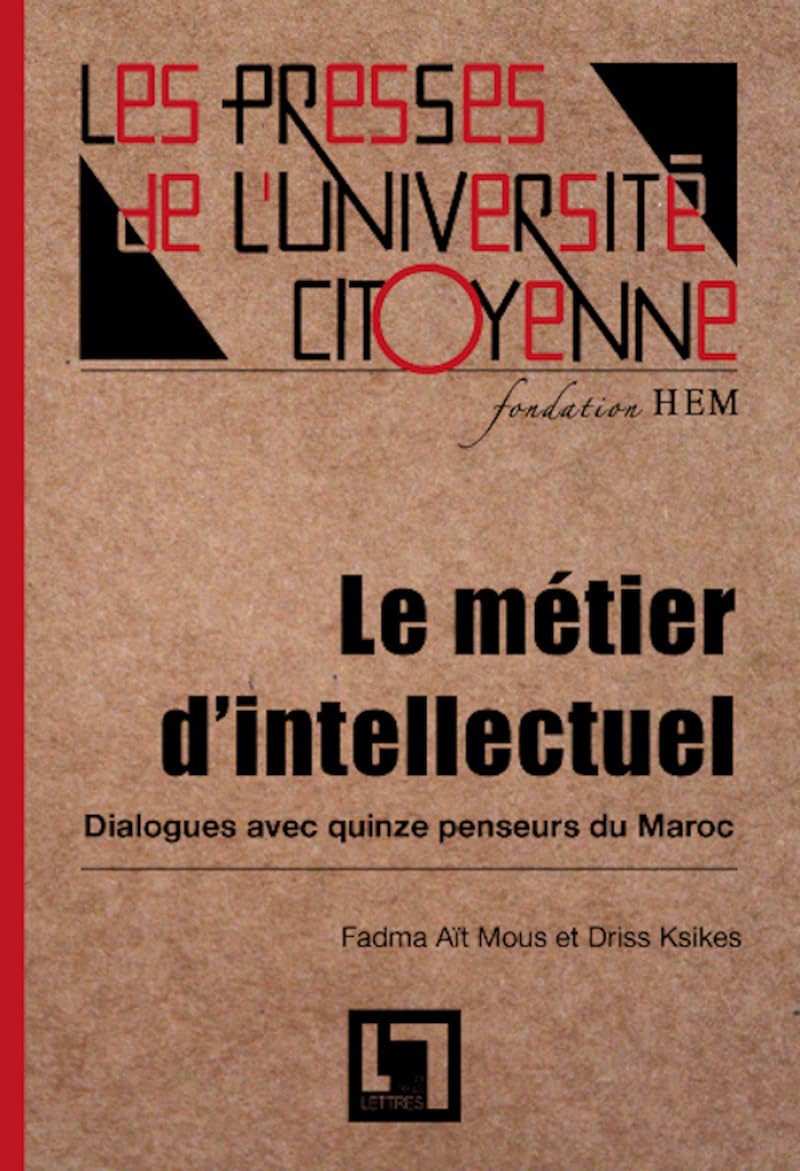
- Le métier d’intellectuel : dialogues avec quinze penseurs du Maroc / Fadma Aït Mous et Driss Ksikes, 2024. 2e édition. C207.d.8755 [prix Grand Atlas 2015]
- États-nations contre minorités : Maroc, Algérie, Libye, Égypte, Syrie, Turquie, Irak, Iran / FORSEM ; dir. Tahar Khalfoune, 2023. CAIRN eBooks
- Dames de fraises, doigts de fée : les invisibles de la migration saisonnière en Espagne / Chadia Arab. 2e édition, 2023. C207.d.8772
- Travailleuses invisibles : les métiers de la discrimination au Maroc / par Oumayma Aghzere, Soundouss Chraïbi, Sara El Ouedrhiri [and 7 others], 2022. CAIRN eBooks
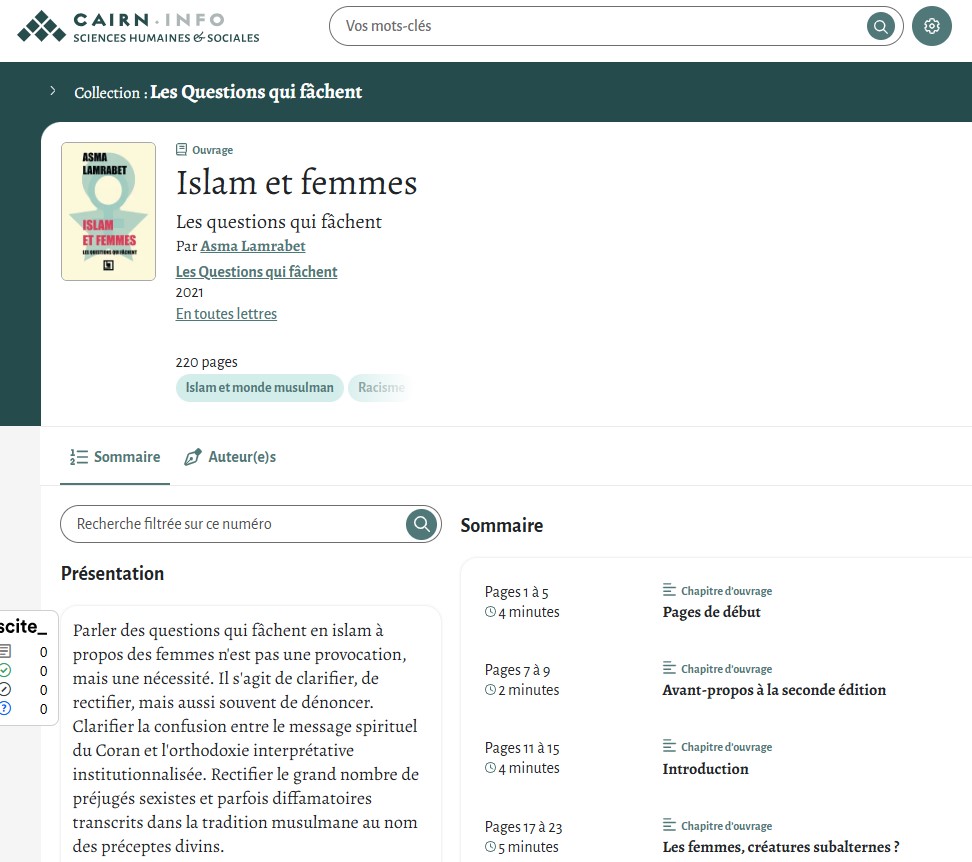
- Islam et femmes : Les questions qui fâchent / Asma Lamrabet. 2e édition, 2021, CAIRN eBooks [prix Grand Atlas 2017]
- Maroc : justice climatique, urgences sociales / sous la direction de Hicham Houdaïfa, 2021, CAIRN eBooks
- Les sentiers de l’indiscipline / Ksikes, Driss, 2021, C207.d.1914.
- Médecine et colonialisme au Maroc sous protectorat français / Reda Sadiki, 2021, C207.d.1970
- Migrations au Maroc : l’impasse? / dir. Hicham Houdaïfa, 2019, CAIRN eBooks
- Maroc : la guerre des langues? / Yassin Adnan, Mohammed Bennis, Jalal El Hakmaoui, Abdou Filali Ansary [and twelve others], 2018. CAIRN eBooks
- Le tissu de nos singularités : vivre ensemble au Maroc / dir. Fadma Ait Mous, Driss Ksikes, 2016. CAIRN eBooks
- Dos de femme, dos de mulet : les oubliées du Maroc profond / Hicham Houdaïfa, 2015. CAIRN eBooks
Ps: You can read here about Cambridge University Library’s (North) African collections.
 Languages across Borders