
We are delighted that the recording of the talk, which Dr Marie Puren (Liberation Collection Visiting Scholar) gave at the Cambridge University Library on 24th October 2024, is now available online on the library’s YouTube Channel. In this lecture, Marie gave an overview of her work on French publishing at the end of the Second World War, based on the Chadwyck-Healey Liberation Collection, a unique collection of over 3,000 works in French published at the end of the Second World War.
The Liberation of France in 1944 marked a decisive turning point, not only in political and societal terms, but also in the field of publishing and literature. The way in which the collective memory was constructed through the works published at that time reveals how literature was used to redefine national identity after the traumatic years of the Occupation.
The end of the Second World War saw a proliferation of publications devoted to the Resistance and national reconstruction. This revival of the French literary scene, which wiped the slate clean, was also the result of the work of the Comité National des Écrivains (CNE), founded in 1941, which set itself the task of purging the literary world of authors who had compromised with the occupying forces, and of promoting writers from the Resistance. This dynamic led to the emergence of a new generation of publishing houses, some of which have survived to the present day, such as Les Éditions de Minuit.
The politicisation of literature: a temporary phenomenon
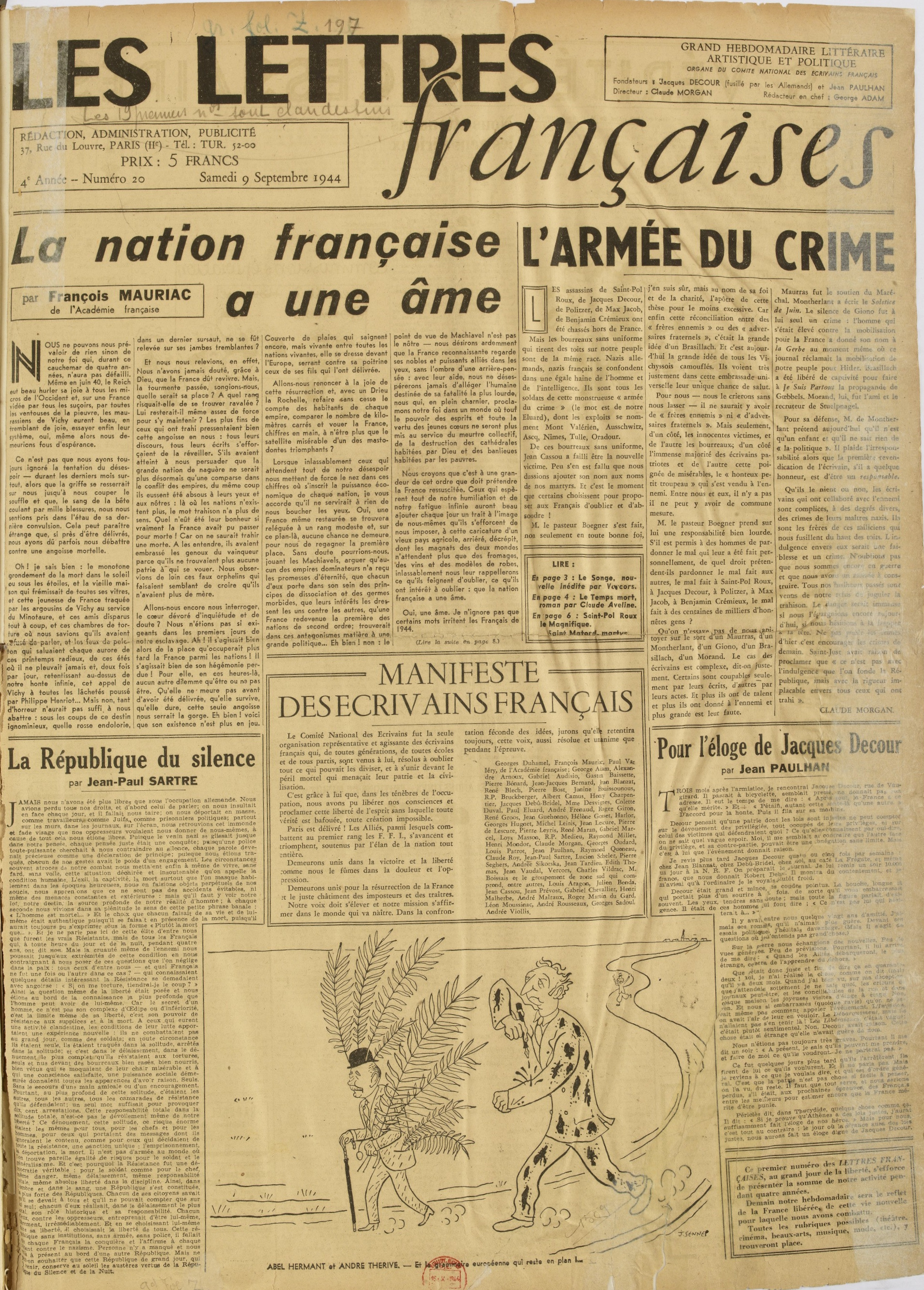
The writers of the Resistance became the guiding figures of the literature of the Liberation. To understand the importance of this phenomenon, we need to recall the words of Jean-Paul Sartre who, in his 9th of September 1944 manifesto published in Les Lettres Françaises, put forward the idea of a ‘Republic of Silence’: under the Occupation, every word was an act of resistance. The Liberation thus conferred on these authors the role of guardians of the collective memory, with an almost moral responsibility to pass on a unified national narrative.
Books by members of the Resistance were a huge commercial and critical success. These included Jean-Louis Bory’s Mon village à l’heure allemande (Liberation.c.1230), Romain Gary’s Éducation européenne (738:45.d.95.543) and Sartre’s Les Chemins de la liberté (738:45.d.90.197- and 738:45.d.90.400-), all published in 1945.
However, the omnipresence of the Resistance in the literary landscape soon faded. From 1946 onwards, public interest in these themes began to wane. Many publishing houses that had been set up underground were struggling to survive. This change marked the return of a more traditional literary institution, in which the autonomy of artistic creation was once again paramount.
A simplified and mythologised memory
The depiction of the Resistance in mass-market novels published after the Liberation is often Manichean. The enemy is dehumanised, compared to beasts, while collaboration is portrayed as simple opportunism devoid of ideology. The vision of a unified French people against the occupying forces contrasts with the historical reality of a divided France.
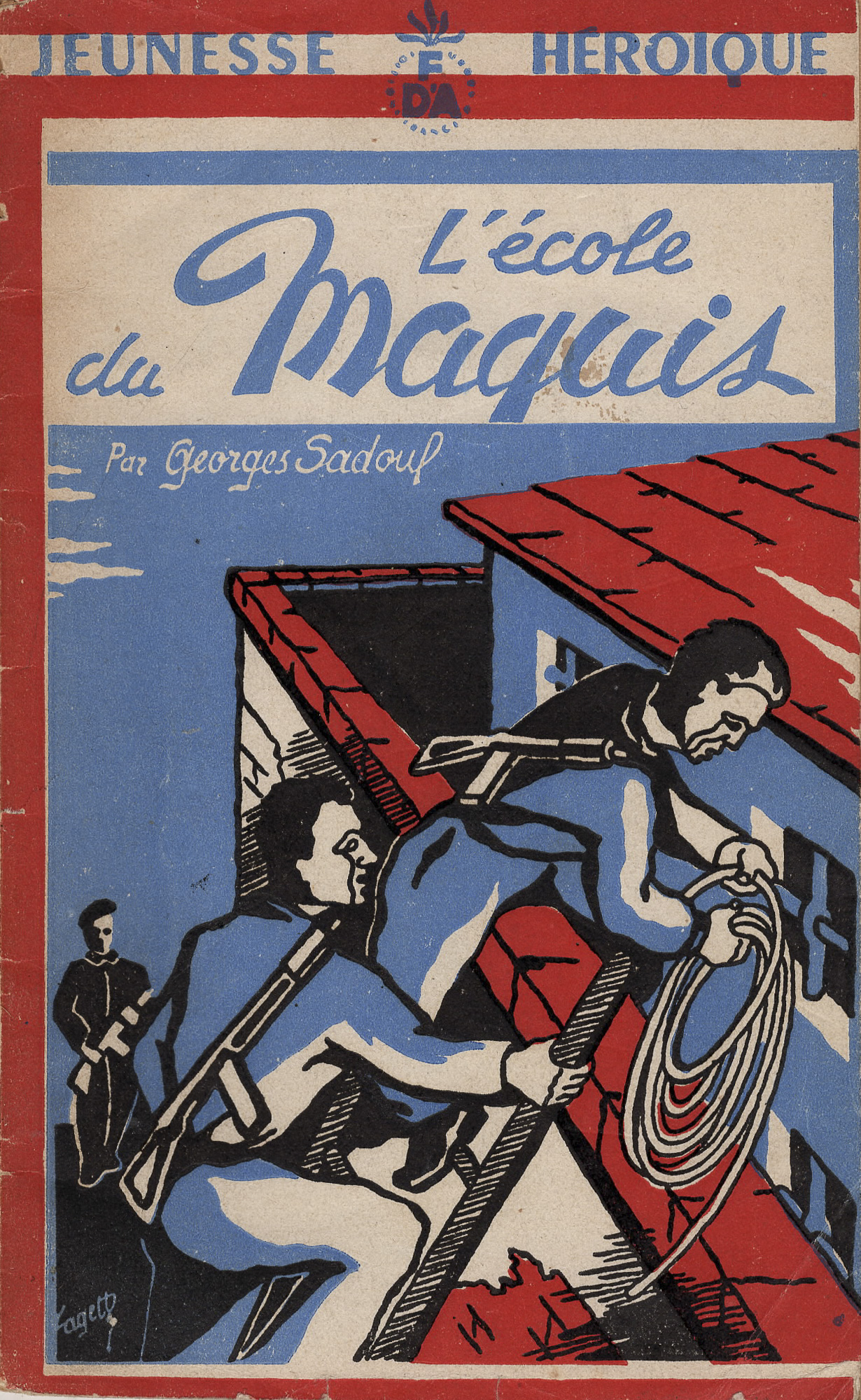
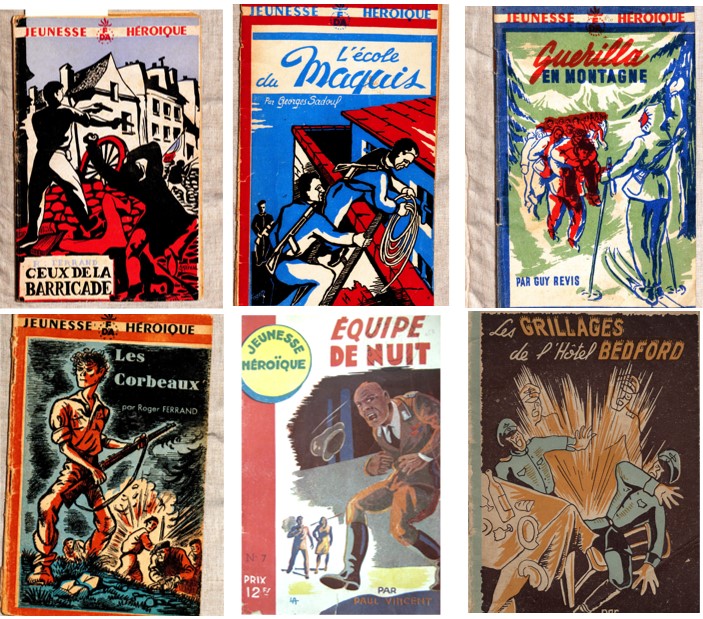
Many books, particularly those aimed at young people, help to build this collective memory. The Jeunesse héroïque collection (about 90 32-page fascicules available at Liberation.c.776, Liberation.c.2140-2224 and Liberation.c.2368, published between 1945 and 1949 -you can see examples in this previous blogpost) is a perfect illustration of this trend. These novels extol the courage of young Resistance fighters, while offering descriptions of great violence to a particularly young audience. While this can be seen as a way of exorcising the traumas of war, these depictions also satisfy a demand for morbid voyeurism. Therein lies the ambivalence of these stories, rooted in popular literature, oscillating between the sacralisation of the national narrative and purely commercial seduction.
The contribution of digital humanities: ‘distant’ reading of the collection
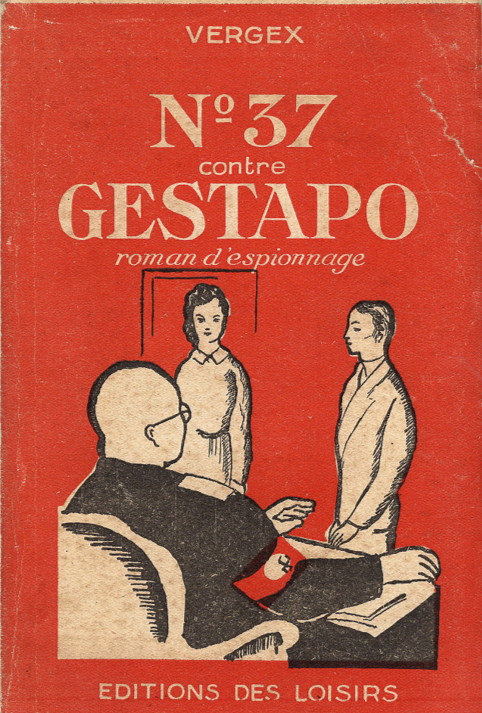 To understand these dynamics, the study of the Liberation Collection corpus has benefited from the tools of digital humanities. The digitisation of texts and the use of methods such as topic modelling and the analysis of emotions have enabled us to gain a better understanding of the trends that run through this literature.
For example, in Numéro 37 contre Gestapo, by “Vergex”, a pseudonym used by Marie Thérèse Gex (1946, Liberation.c.1802), a spy/adventure novel set in occupied France, the detection of emotions reveals that joy is associated with solidarity and resistance actions, while sadness is linked to enemies and imprisonment. Applied to a larger corpus, these quantitative analyses will shed light on the deeper structures of these texts and enrich the traditional historical approach.
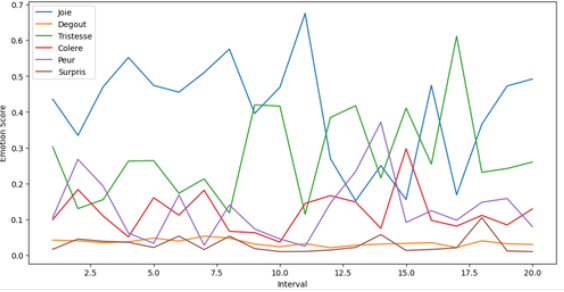
Evolution of the emotions detected in Vergex’ N°37.
(Rolling emotion detection with a fine-tuned BERT)
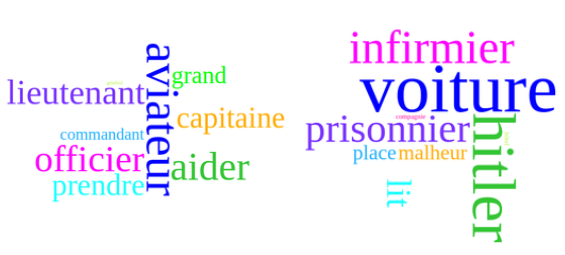 Most frequent terms in the topics associated with joy (left) and sadness (right)
in the same novel (LDA topic modeling)
Between history and memory
A study of the Liberation Collection shows the extent to which the Liberation period was marked by a tension between the writing of history and the construction of a collective memory. While the literature of the Resistance played a fundamental role in redefining national identity, its success was short-lived, giving way to a return to more varied and less directly political literary forms.
The contribution of digital humanities is now making it possible to revisit this literary production from a new angle, by analysing the themes, emotions and narrative structures of this crucial period on a large scale. By comparing these results with cultural and political history, we can better understand how France rebuilt its identity after the war and how this period shaped the collective memory of the Resistance.
Marie Puren
 Languages across Borders