
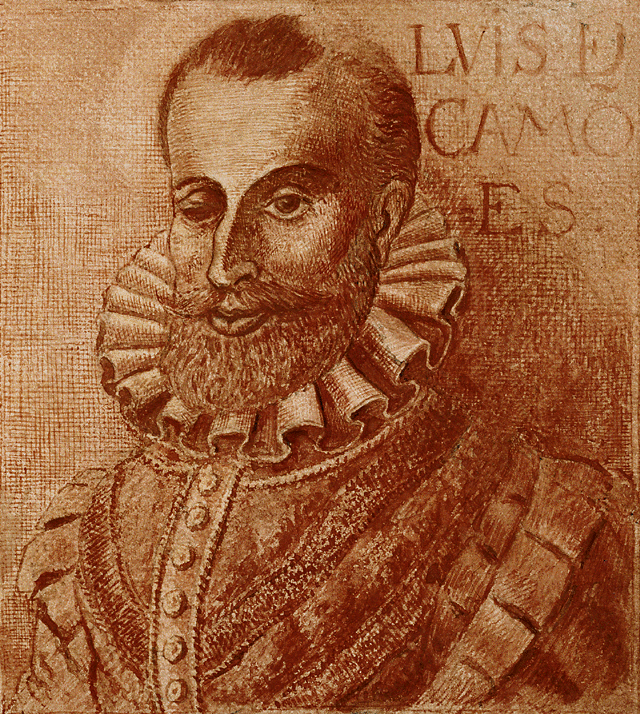
This year probably marks the 500th anniversary of the birth of Luís Vaz de Camões, the Portuguese language’s greatest poet. I say “probably” because, like much of the life of Camões, the exact date and place of his birth are uncertain – although Lisbon in 1524 is considered most likely. What we do know is that Camões lived a life as full of exotic and outlandish adventure as his most important work, Os Lusíadas (The Lusiads in English).
The Lusiads is an epic poem describing a fantasy version of Vasco da Gama’s sea journey around the Cape of Good Hope to reach India (1497-1499), the first European voyage to link Europe and Asia by an ocean route. Camões aimed with this work to create a Portuguese “national epic” in the manner of Virgil’s Aeneid and Homer’s Iliad and Odyssey. This interest in Classical culture, along with its focus on human achievement and scientific discovery, marks The Lusiads as an exemplary work of Renaissance humanism. It is now widely considered to be the most important work of Portuguese-language literature – to the extent that Portuguese is sometimes even referred to as “the language of Camões”.
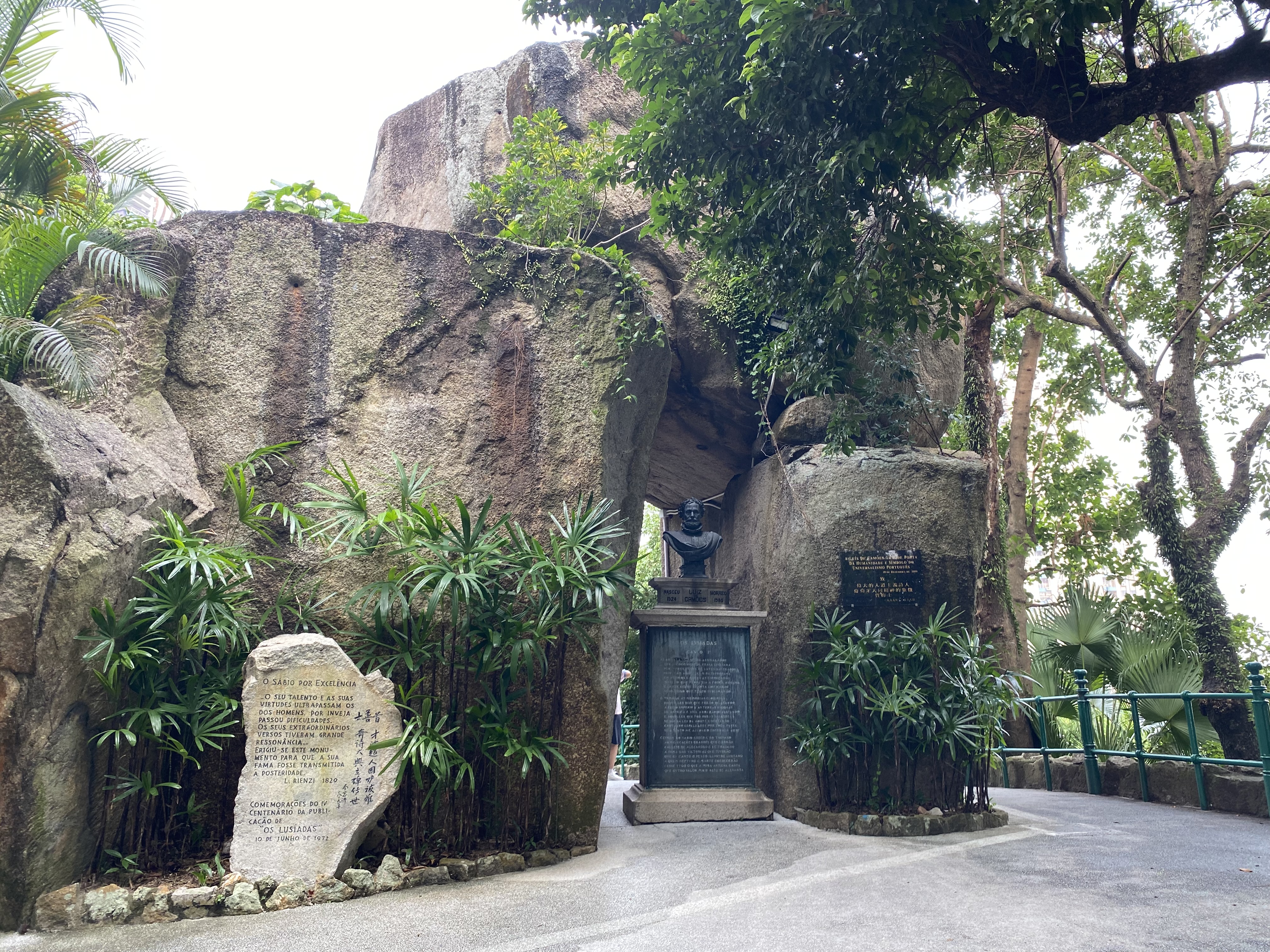
Little is known of the early life of Camões, but by the time he wrote The Lusiads, he had variously: lived a bohemian and amorous existence as a poet in Lisbon; lost his right eye in a naval battle in the Strait of Gibraltar; been sentenced (and then pardoned) to prison for stabbing another man during a religious procession; narrowly survived the naval journey to Goa, where he fought in various battles and was imprisoned (for reasons that are, once again, uncertain); and sent to Macau, where he supposedly wrote part of the epic poem in a cave, that still stands as a tribute to him.
Camões then returned to Portugal via Mozambique and The Lusiads was finally published in 1572. He died in relative poverty a few years later, on June 10, 1580, probably of bubonic plague. Fittingly enough, any knowledge of the location of his remains, never known for certain anyway, was lost forever after the 1755 Lisbon earthquake.
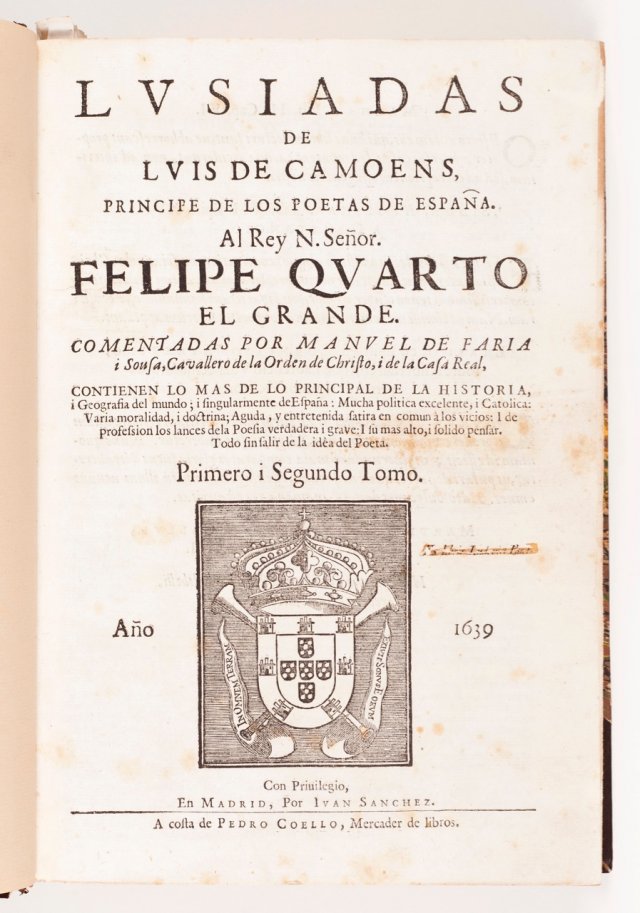
Cambridge University Library, unlike the Bodleian and the British Library, does not hold a first edition of The Lusiads. However, we do hold the 1639 Spanish edition, which contains one of the earliest published commentaries on the work, written by Manuel de Faria e Sousa. This edition has been digitised and made freely available by the Biblioteca Nacional de Portugal. We also have online access to another early edition with commentary, this time by Manoel Correa, who knew Camões and was one of his earliest biographers.
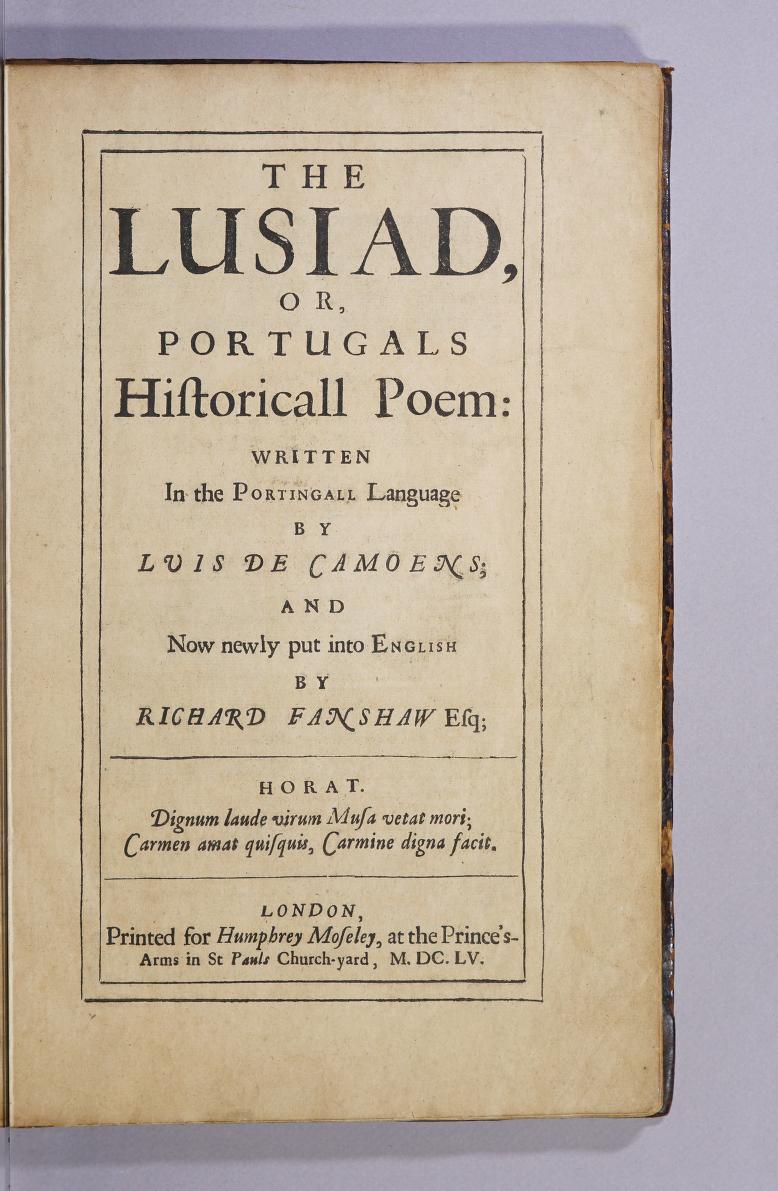
The UL also holds the first published English translation of The Lusiads by Richard Fanshawe from 1655. This translation, the first of eight different English translations of the work so far, was published in a new edition much more recently which you can also consult at the library.
Although the huge reputation of Camões rests mostly on The Lusiads, he also wrote highly esteemed lyric poetry, but this was not compiled until after his death. The UL’s earliest holdings of some of this material is in the collected Obras published in 1688. The first comprehensive collection of English translations of these works (by Landeg White, the most recent translator of The Lusiads) was published in 2008.
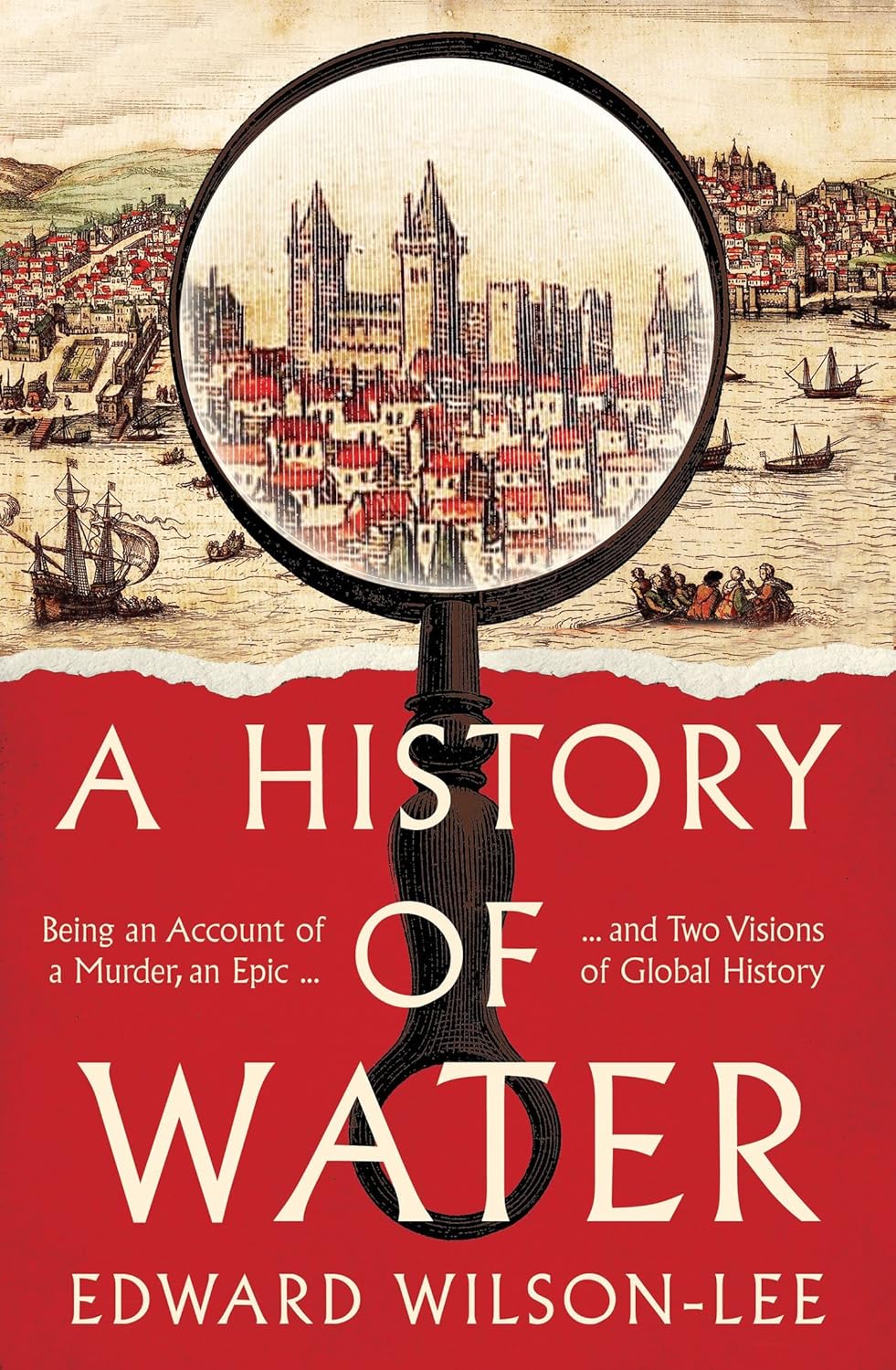
Unsurprisingly, given the importance of Camões, much continues to be written and published about him in a variety of languages. A History of Water by Dr Edward Wilson-Lee of Sidney Sussex College was a particularly popular and acclaimed recent title in English, in which the author compared and contrasted the life and work of Camões with those of Damião de Góis, another important (and equally well-travelled) Portuguese Renaissance humanist.
This year also marks the 100th anniversary of the Instituto Camões, the international institution set up by the Portuguese Government in 1924 (and named in the poet’s honour) to promote Portuguese language and culture, with UK branches in London, Edinburgh, Leeds, Newcastle and Oxford. The London branch at King’s College London held the most prominent commemorative events in the UK to mark the 500th anniversary.
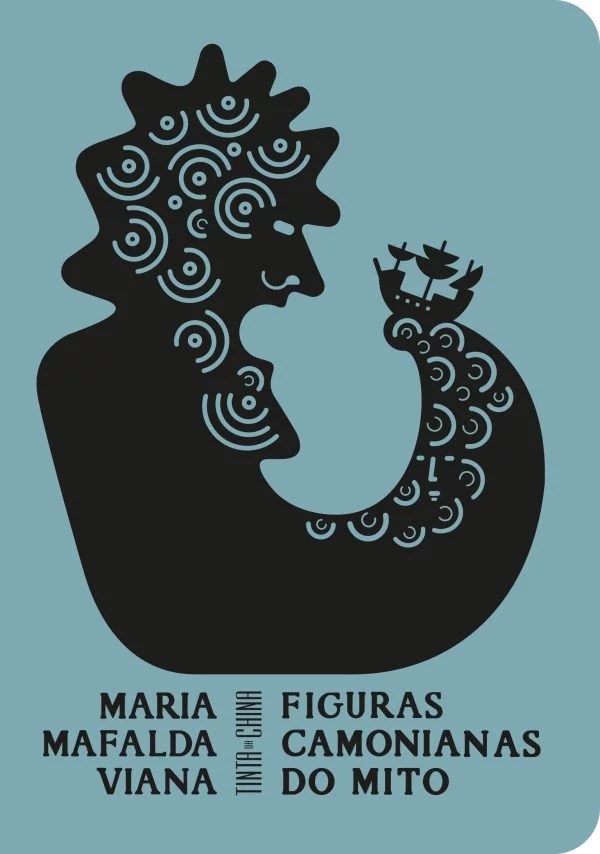
Perhaps because the 500th anniversary is not completely definitive (and most of the Portuguese Government’s official commemorations will not take place until next year, due to budget and planning issues), not as much new material about Camões has been published in Portuguese as one might expect. However, recent publications purchased for the University Library include: an expansive new biography of Camões by the prominent author Isabel Rio Novo ; the classicist Maria Mafalda Viana’s study of the significance of Greek and Latin myths within The Lusiads; the historian and poet António Borges Coelho’s 1980 study of the epic poem in a new edition by the leftist publisher Edições Avante! to mark the Portuguese Communist Party’s commemorations of the 500th anniversary; and a new Brazilian title dealing with the teaching of The Lusiads in schools during Portugal’s Estado Novo regime as a part of the formation of national identity.
We also recently purchased the complete surviving works of the forward-thinking (and consequently persecuted and tragically short-lived) 18th century Madeiran poet Francisco Álvares de Nóbrega, better known as “Camões Pequeno” (“Little Camões”) due to his poetic brilliance.
Christopher Greenberg
 Languages across Borders

.jpg)