
A guest blog post from Dr Ainur Akhmetova, a visiting scholar from Kazakhstan. This is the English version of the post she provided in English, Kazakh, and Russian.
I have made a list of the books on Central Asian literature and folklore at the Cambridge University Library that were displayed during a book exhibition (10.05.2024) for students and researchers interested in this subject, which was held in the MMLL Faculty.
I would like to thank Prof Charles Forsdick for his invaluable advice on postcolonial theory in relation to Kazakh Literature, along with my supervisor, Prof Hugues Azerad, at the Faculty of Modern and Medieval Languages and Linguistics (the MMLL faculty) of the University of Cambridge, for his support in setting up this event. I wrote this blog post for only a range of these important books. One part of the listed books has been found within my research project dedicated to the study of Central Asian literature through the prism of postcolonial studies and poetics.
I would also like to thank Mel Bach, the Head of Collections and Academic Liaison / Slavonic Specialist, along with Ula Dench, Francisco Garcia, Hélène Fernandez (Head of the MMLL Library) as well as Catherine Wardle; and the Ancient India & Iran Trust for providing me with essential books for the exhibition and my research. My thanks also to the Slavonic Section, and Irène Fabry-Tehranchi (French Specialist, University Library).
Below I offer a blog post which is arguably the first ever written about this hitherto neglected linguistic zone, on the crucial books related to Central Asian literature and folklore that can be found at the University Library in English, Kazakh, and Russian.

The classic poet and philosopher of Turkmenistan, Magtymguly Fragi / Pyragy’s “Songs from the steppes of Central Asia: the collected poems of Makhtumkuli, eighteenth century poet-hero of Turkmenistan” [versified by Brian Aldiss based on translations by Youssef Azemoun] (Caversham: Society of Friends of Makhtumkuli, 1995), contains considerable poems demonstrating his view of the society in which he lived at the time. Fragi is a pen name given to him. The time Magtymguly lived was a challenging period for the Turkmen people. Moralistic and didactic verses take a distinct place in his literary oeuvre, and some poems are dedicated to calling for the unity of the Turkmen who lived through harsh times and conditions. Scholars have conducted comprehensive Magtymguly studies, translating his literary writings into several languages. Magtymguly is an iconic poet of Central Asia, including Turkmenistan, along with other eminent poetic figures such as Omar Khayyam, Khoja Ahmed Yasawi, Abul-Qâsem Ferdowsi, Ali-Shir Nava’i, Muhammad Fuzuli, and Abai Qunanbaiuly.

The defense of women rights and freedom was taken up extensively in Kazakh literature by Kazakh writers, and appears in such novels as “Unhappy Jamal” (the first Kazakh novel, published in 1910) by Mirzhakyp Dulatov, “Dowry” (“Kalynmal”) by Spandyar Kobeev, “Beautiful Kamar” by Sultanmakhmut Toraigyrov, “Akbilek” by Zhusipbek Aimauytov and the stories “Sholpan’s sin” by Magzhan Zhumabayev and “Beauty in Mourning,” “An Orphan’s Lot” by Mukhtar Auezov, etc. in the 1920s and 1930s. We can find the book “Beauty in Mourning” (published by the Kazakh Pen Club and printed in the UK by Russell Press Ltd, 2017) with the preface of the well-known Kyrgyz writer Chingiz Aitmatov and short stories and novels such as “Savage Grey,” “Gunshot at the Pass,” and “Turbulent Times” by Mukhtar Auezov at the University Library, translated into English by Simon Geoghegan and compiled by Bigel’di Gabdullin. These short stories and novels focus their attention on the plight of women in society (including male violence, mourning, poverty) and the consequences of colonial policies on women’s wellbeing.

An epic novel in four volumes, “The Way of Abai” (1942, 1947, 1952, 1956) by Mukhtar Auezov is considered “the encyclopedia of the Kazakh people.” “The Way of Abai,” presents the renowned poet of Abai Qunanbayev’s imaginative works and autobiography, including the national ethnography, culture, art, and the beauty of the landscape of the Kazakh steppe. A famous poet of the Surrealist movement in France, Louis Aragon, dubbed this novel “one of the best works of the 20th century.” The first version of this epic novel was named “Abai” in two volumes published in 1942 and 1947. He was awarded the State Prize of the USSR in Literature in 1949 for his novel “Abai” and the Lenin Prize for the novel “The Way of Abai” in 1959.
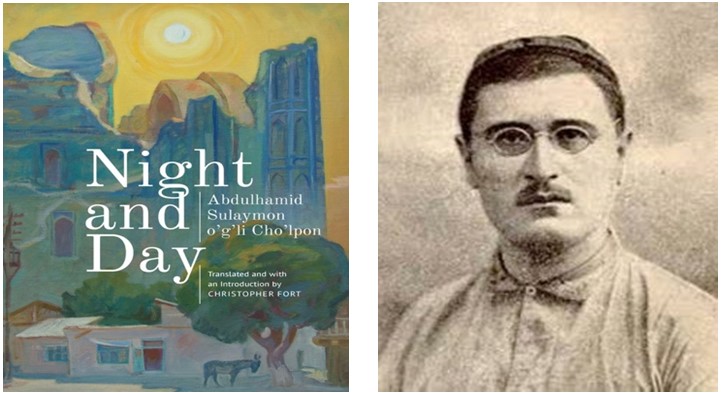
Uzbek writer, playwright, and literary translator Abdulhamid Sulaymono’g’li Chol’pon’s (1893-1938) novel “Night and Day” (Academic Studies Press, 2019) was published in 1936 and was translated from Uzbek into English by Christopher Fort in 2019. This book includes the translator’s introduction to Chol’pon’s literary work alongside a searching analysis of the novel. Chol’pon is his pen name, and he is an outstanding author who formed the motif of awakening in Central Asian literature, including Uzbekistan. Some sections of the novel were broadcast in 1935. Although the novel was entitled “Night and Day,” only the first section “Night” was published. A few scholars speculate that the novel’s unwritten or unpublished second chapter is likely to have “disappeared” due to political censorship. The novel introduces the Jadid* representatives’ and the author’s ideas, views, and resistance against Soviet colonial policy and the cruel fate of women in Central Asia – Turkestan region at the beginning of the 20th century. Chol’pon translated Shakespeare’s tragedy “Hamlet” and the literary creations of Pushkin, Gor’ky, Turgenev, and Chekhov into Uzbek.
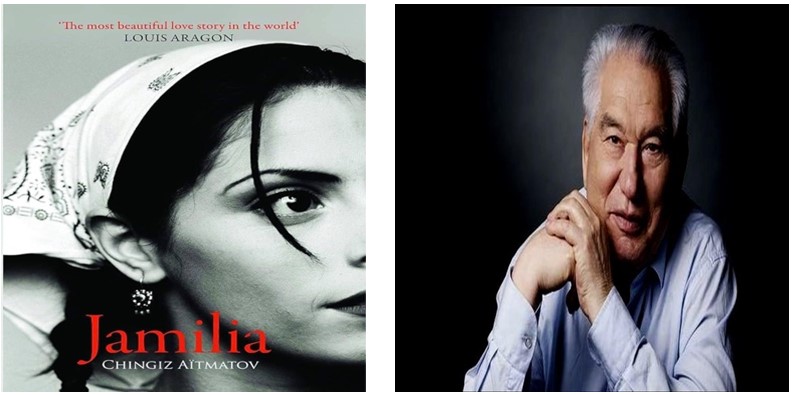
The well-known Kyrgyz bilingual writer and playwright of Central Asian region Chingiz Aitmatov’s novels were translated into several languages including English. His novels “Jamilia” in English (London: Telegram, 2007), “The White Ship” (in Russian) and etc. can be found in the University Library. His novels “The Day Lasts More Than a Hundred Years” (published by Indiana University Press in 1987), “The White Ship,” “Farewell, Gul’sary”! and “Jamilia,” etc. were warmly received by readers.
The novel “Jamilia” describes the love between Jamilia, a young woman who works at a collective farm, and Daniyar, a young disabled man who has returned from from the front (WWII). Jamilia’s husband, Sadyk, departs for the front before the relationship between Jamilia and Daniyar starts to develop. The novel’s characters named, Jamilia, Sadyk, and Daniyar, are typical of the men who went to war then returned to their homeland seriously wounded, and of the women who worked in farms under very difficult conditions. The novel was translated into English by James Riordan.
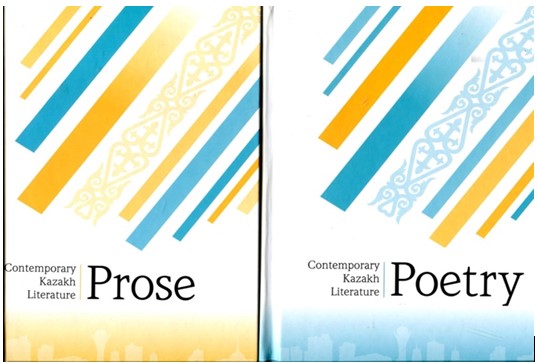
Readers are introduced to the thirty Kazakhstani writers’ thirty stories and novels in “Contemporary Kazakh literature. Prose” (Kazakhstan: Public Foundation National Bureau of Translations; Cambridge: Cambridge University Press, 2019), who are distinguished by their diverse styles. The anthology includes literary works on various themes, such as World War II, the national identity and cultural diversity of the Kazakhs, the consequences of nuclear tests in Kazakhstan during the USSR on people and the whole environment (known as the Semey Polygon), freedom, history, village life, etc.
In addition to this prose anthology, the anthology of “Contemporary Kazakh Literature. Poem” (Kazakhstan: Public Foundation National Bureau of Translations; Cambridge: Cambridge University Press, 2019) was also published. With a preface by Professor Jason Harding from Durham University, this publication includes thirty-one poets from Kazakhstan. Readers can read over four hundred poems representing Kazakh literature. A range of poets who were known for their excellent verse in the history of Kazakh literature, such as Kadyr Myrza Ali, Tumanbay Moldagaliyev, Fariza Ongarsynova, Olzhas Suleimenov, Mukhtar Shakhanov, Nesipbek Aituly, Temirkhan Medetbek, Ulykbek Yesdaulet, Yessengali Raushanov, Maraltai Raiymbekuly, Tanagoz Tolkynkyzy, Akberen Yelgezek and Yerlan Zhunis’s poems, represent Kazakh literature and culture more broadly.
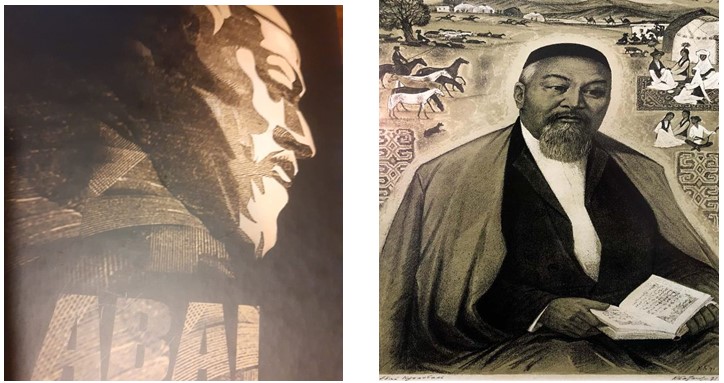
In honor of the 175th anniversary of the Kazakh poet and philosopher Abai Qunanbaiuly (1845-1904), the book “Abai” (Kazakhstan: Public Foundation National Bureau of Translations; Cambridge: Cambridge University Press, 2020) was published under the aegis of Kazakhstan President Kassym–Jomart Tokayev. Abai Qunanbayev’s poetic creativity was highly regarded by critics and readers, who formed the critic realism in Kazakh literature in the 19th century. The book includes a range of over a hundred poems and forty-five prose works by Abai and has been translated into English, Chinese, Spanish, Arabic, Italian, Turkish, French, Japanese, German, and Russian. Abai’s works were translated directly from Kazakh into English for the first time by Sean O’Brien, John Burnside, Zifa Auezova, Rose Kudabayeva, Gaukhar Khalyk, Mirgul Kali, Aknur Toleubayeva, and Assiya Issemberdiyeva.
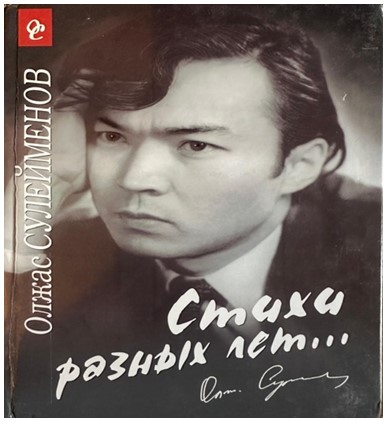
The Kazakhstani authors who composed their poems in Russian were recognized across some of countries during Soviet and Post-Soviet times, and a few of them were translated into English. The well-known poet, linguist, politician, and President of the Nevada-Semei Anti-Nuclear Movement Olzhas Suleimenov’s (1936) book “Stikhi raznykh let” (“Poems different years”) (Almaty: Daik-Press, 2006) includes his selected works such as “Kazakstan,” “Asian Bonfires,” “Night in the desert,” “Dombyra,” “We are nomads,” “Mountains, mountains,” etc. The poet is known for his “Earth, bow down to man,” “A Word about Igor’s Campaign” and “Az i IA”; his poems were translated from Russian into several languages. Olzhas Suleimenov’s poetry and academic output established a bridge between several cultural and linguistic zones, including Kazakh and Russian. As a poet, linguistician, politician, and public figure, he occupies an exceptional place in the literature and culture of Soviet and post-Soviet Kazakhstan.
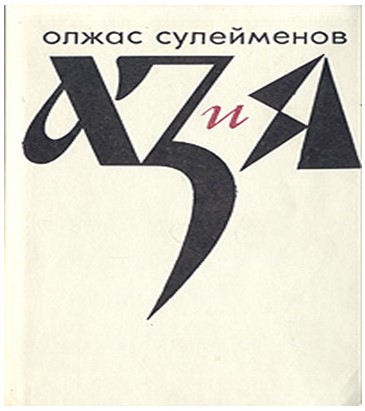
Suleimenov was best-known for his book “Az i ia” (Alma-Ata: Zhazushy, 1975.; Moskva: “Grifon M,” 2005). In this book, he endeavors to demonstrate the close cultural, social, and historical relationship between ancient Slavic and Turkic cultures by investigating “The Tale of Igor’s Campaign.” In 1976, after publishing “Az i ia,” the author was condemned as a pan-Turkist and nationalist. This book interprets religious and historical discourses and analyzes the etymologies of the words shared in old Slavic, Turkic*, and Sumerian cultures. Besides, this edition provides facts and references on the influence of ancient traditions and religious beliefs on later cultures, including a table of comparisons of shared words between Turkic and Sumerian cultures.
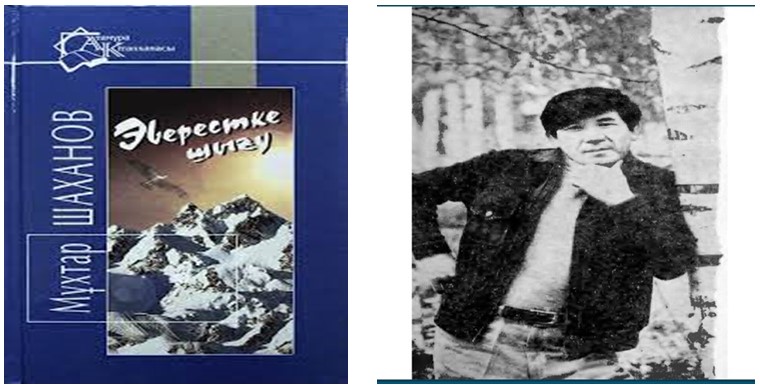
One of the most prominent Kazakhstani poets who supported and encouraged the maintenance of the Kazakh language, national identity and human values in society both in his poems and social engagement, was Mukhtar Shakhanov, whose book of poems “Climbing Everest” (Almaty: Atamura publishing house, 2003) (“Эверестке шығу” (poems) in Kazakh) are held at the University Library. Mukhtar Shakhanov wrote about national history, national language, tradition and misunderstanding/conflict and friendship, the contradictions of the human heart with itself etc. His poems, such as “The Fickleness of Himalyan Tigers or the Ballad of Human Courage,” “Ballad of Bright Pain,” “By the Laws of Retribution,” “Seventh Sense,” “Call to Courage,” “Shared Understanding,” and “Four Mothers,” were warmly received by readers.
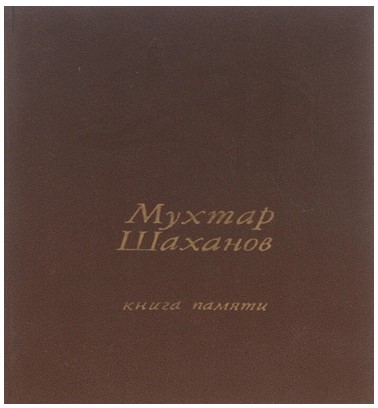
The book “Книга памяти” (“Book Memory” in English, Alma-Ata: Zhalyn, 1984) by Mukhtar Shakhanov contains a preface by Chingiz Aitmatov and his poems and epics of “Otrar poem about the defeated victor or Genghis Khan’s Miscalculation,” “Turkestan legend,” “Kingdom of trust,” and “Seikhundaria” in Russian.
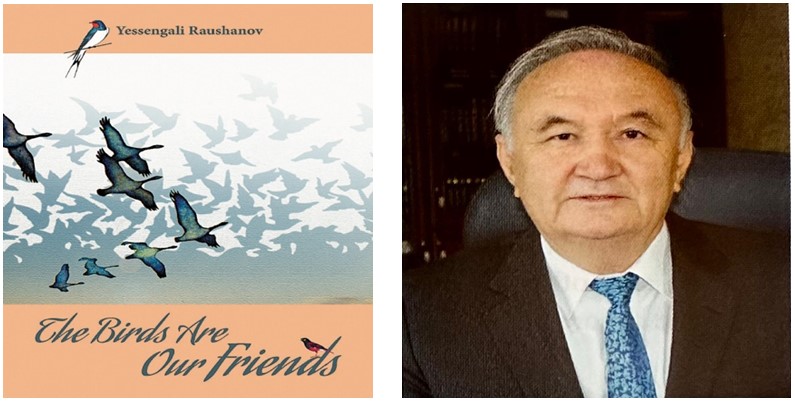
One of the most eminent Kazakh poets, a laureate of the State Prize of the Republic of Kazakhstan, the Alaš International Literary Award, is Yessengali Raushanov (1957-2021), in his book “The Birds are Our Friends” (Whittles Publishing, 2021) writes about several types of birds such as swans, swallows, storks, etc. based on artistic, scientific, mythical, folklore references/sources, etc. The poet narrates the perception of birds in different cultures and their characteristics as creatures. He is known for his books of poetry such as “The cruel Baldicoot” (in Kazakh “Қара бауыр қасқалдақ”) and “Angels and Birds” (in Kazakh “Періштелер мен құстар”) in Kazakh literature. In his poetry, the image of a bird is a symbol of freedom and beauty, and the poet, who yearns for freedom, tries to find a similarity between the nature of the poet and the bird. His book “The Birds are Our Friends” presents fascinating information about birds.
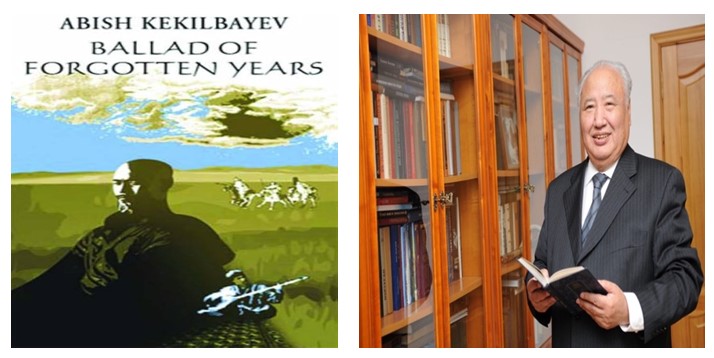
One of the writers whose craft of writing is highly valued in Kazakh literature is Abish Kekilbayev, whose book “The ballad of forgotten years” (London: Stacey International, 2008) was originally published in 1967; this novel was included in “The Ballads of Steppe” as the novel of Kui*. “Kui” narrates the stories of the battles fought between the Kazakhs (the western part of the Kazakh steppe) and the Turkmens in the earlier times. A Turkmen captured hero dies at the hands of the Kazakhs, and in return, the Turkmen capture the Kazakhs and use a particular form of torture. The captive’s hair is pulled back, and a camel’s skin is put on his clean-shaven head under the blazing sun. When the camel’s skin compresses a man’s head, he completely forgets his past. This method makes a person forget the past and turns it into a mankurt (akin to a Zombie in Haitian culture) after some days. A mankurt is a person who has lost his mind / his past and then fully obeys his master. In the literary piece, the character of Kuishi*, who plays kui at dombyra*, conveys violence on dissimilar levels. That is why the novel is called “Kui.” This mankurt symbolises and probably elucidates the consequences of colonial history on the human consciousness of the colonised people. This understanding of Mankurt was formed in Central Asian literature by Kazakh writer Abish Kekilbayev’s novel Kui and in the Kyrgyz writer Chingiz Aitmatov’s novels.

Women’s literary works are increasingly celebrated in Central Asian literature. The first anthology issued in English “Amanat: Women’s Writing from Kazakhstan” (New York: Gaudy Boy, LLC, Singapore Unbound, 2022) is edited and translated by Zaure Batayeva and Shelley Fairweather-Vega, with contributions from Sam Breazeale and Gabriel McGuire; this anthology includes more than ten Kazakhstani women authors, whose prose writings cover diverse themes and are written in Kazakh and Russian in the original. The stories of the collection “Amanat”* vividly embody the history of the (Post) Stalinist era of Kazakhstan (famine/collectivization, the Second World War, the consequences of nuclear tests in Kazakhstan during the USSR on people and the whole environment (Semey Polygon in Kazakh), the Jeltoksan (December) demonstrations of 1986) and the enriched and rapidly evolving culture of the Kazakh people in post-Soviet space. The collection includes a foreword by Prof. Gabriel McGuire and the translators’ introduction to the anthology.
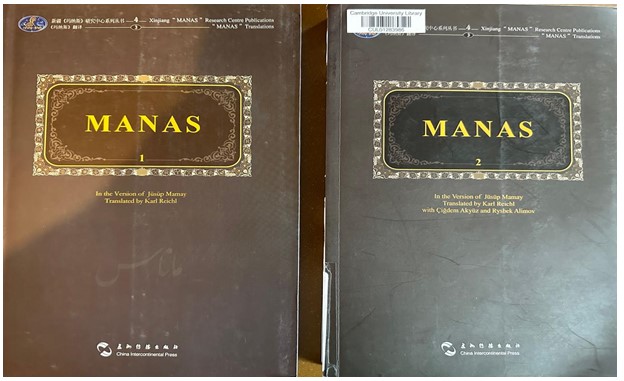
The Kyrgyz heroic epic of “Manas” (2 volumes, in the version of Jüsüp Mamay; translated by Karl Reichl with Çiğdem Akyüz and Rysbek Alimov, China Intercontinental Press, 2015) survived until this day in oral form, and it is said that its written version was published in the 19th century. “Manas” comprises three books: the first book is “Manas,” the second book is “Semetei,” and the third book is “Seitek,” and each book has over sixty versions. Manas is the name of the Kyrgyz Batyr / hero, Semetei is his son, and Seitek is his grandson. The epic of “Manas” narrates Manas’ and his descendants’ heroic actions and historical episodes of how they protected the land from foes such as the Oirat and the Karakytai nomadic tribes in the 16th and 17th centuries. The name of Manas Batyr is revered as a hero who protected his people from enemies. The Kyrgyz Republic celebrated the 1000th anniversary of Manas in 1995.
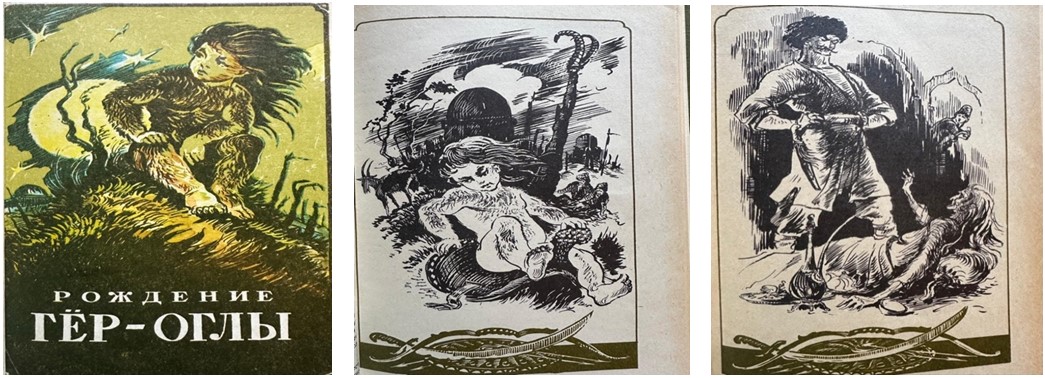
The heroic epic of “Koroglu” (the word “Koroghlu” means “courage” or “brave”) is a heritage that belongs to Turkmenistan, the other countries of Central Asia, and the Caucasus peoples, which reached us today in oral form. This epic has different versions among the Turkmens, the Kazakhs, the Uzbeks, the Karakalpaks, and the Azerbaijani. It is said that Koroglu Batyr lived in the Republic of Azerbaijan in the 16th and 17th centuries and fought against the Iranian Shah. The “Koroglu” epic entered UNESCO’s nonmaterial culture list.
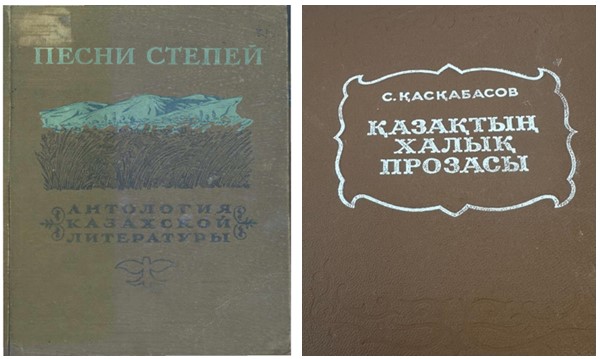
The collection “Songs from the Steppes: An Anthology of Kazakh Literature” (Moskva: Gosudarstvennoe izdatelʹstvo “Khudozhestvennai︠a︡ literatura,” 1940) includes a selection of Kazakh folktales and literary texts collated and edited by Leonid Sobolev in Russian. Although the book was published in the first half of the 20th century, it provides ample artistic information on Kazakh folklore and the works of writers from the 19th and 20th centuries. The collection includes the following folktales: “Koblandy Batyr,” “Er Sayin,” “Er Targyn,” “Kambar Batyr;” lyrical epic: “Kozy Korpesh – Bayan Sulu,” “Kyz Zhibek,” “Aiman-Sholpan;” ritual songs: “Zhar-zhar,” “Betashar,” “Estirtu;” fairy-tales: “Aldar Kose and the Greedy Bai’” “Ayaz Bi” etc. and a wide range of authors and literary works/heroic epics: Bukhar Zhyrau, Makhambet Otemisuly, Spandiyar Kobeyev, Sabit Donentayev, Sultanmakhmut Toraigyrov, Dikhan Abilev, Kasym Amanzholov, Jambyl Jabayev, Jumagali Sain, Kenen Azirbayev, Sabit Mukhanov, Gabit Musirepov, Gali Ormanov, Abu Sarsenbayev, Abdilda Tajibayev, etc.
Particular attention is paid to collecting, systematizing, and exploring cultural heritage in Kazakhstan. As a result, we must evoke the collection “The Word of Ancestors:” one hundred volumes published via the support of the state program of “Cultural heritage.” Moreover, the book “Kazakh non-fabulous prose” (Almaty: Gylym, 1984) by Kazakhstani folklorist scholar Seit Kaskabasov explores oral prose’s development and genre classification.
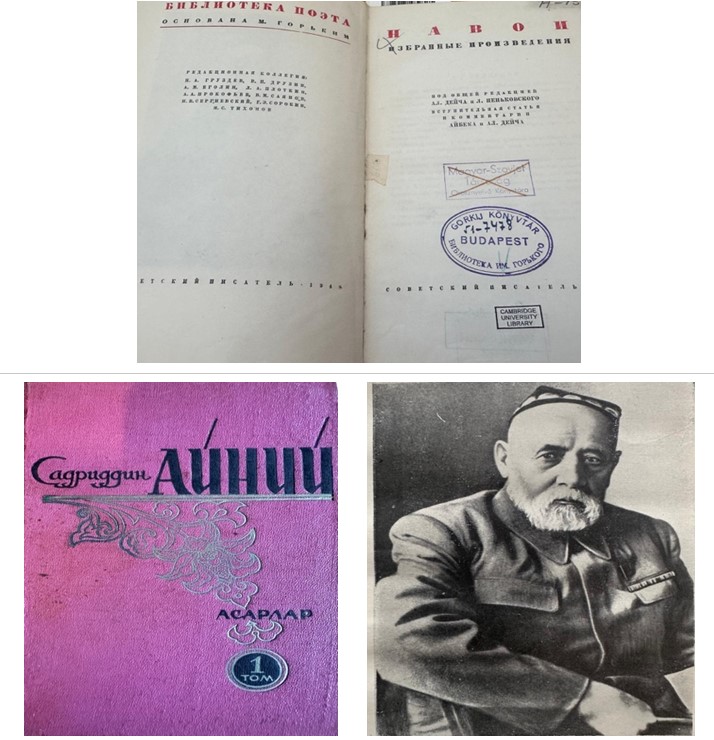
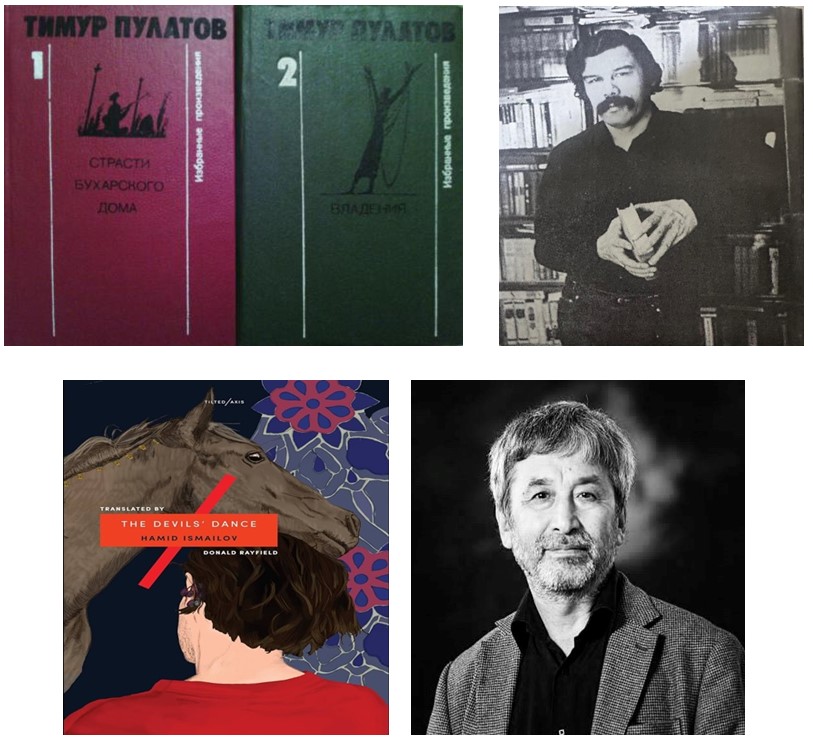
The following noticeable literary works by authors hailing from the Central Asian region can be found in the University Library catalogue. Notably, a poet belonging to the Turkic peoples – Uzbek poet Alisher Navoiy’s (1441-1501) Selected works – poems and lyrics (Sovetskiĭ pisatelʹ, 1948) in Russian, a prominent literary representative of Soviet Tajik literature Sadriddin Ayni’s (1878-1954) Volume 1 – 8 collection of works (Toshkent: UzSSR Davlat badiiĭ adabiët nashriëti, 1963) of works in Uzbek and Soviet and post–Soviet writer and screenwriter Timur Pulatov’s Selected works – “Strasti buharskogo doma,” “Vladeniia” (Tashkent: Izdatel’stvo literatury і iskusstva, 1990-1991) in Russian; Uzbek writer Hamid Ismailov’s novel “The devils’ dance” (translated by Donald Rayfield; poems translated by John Farndon) (London: Tilted Axis Press, 2018) in English are available.
Glossary
Amanat means that someone’s or the people’s unique and valuable properties or things are left to the next person/generation as an obligation (amanat) to maintain and nurture them for the future without harming or eliminating them. This notion has a capacious meaning, with religious, cultural, historical, and social connotations.
Dombyra (dombra) is a long-necked national musical string instrument of the Kazakhs and other Turkic peoples (the Kyrgyz, the Uzbeks, Nogay, etc.) made of wood. Dombra accompanies folk, traditional, classical, and modern songs and kui, which takes a valuable and essential place in Kazakh culture.
Jadidism, jadid is a movement formed by the Muslim Enlightenments of Central Asia in the first decades of the twentieth century. It was based on the “usual jadid” (a new teaching method). The Jadids’ primary purpose was to enhance the renewal of the traditional education model at schools and improve the quality of knowledge. The Jadids prefer to educate students in foreign countries, including the West, to progress in various areas of society. One of the paramount figures of Jadidism was Ismail Gasprinsky (1851-1914), who published the newspaper “Terciman” / “Tercüman” (The Translator). Representatives of Uzbek literature, such as Fitrat, Qodiri, and Cho’lpon, supported this movement. The Jadids opposed the colonial regime.
Kui is a traditional musical piece with a set of rhythms played by special instruments (dombra, kobyz, etc.), which are divided into different types. From ancient times to today, kui has been performed at several traditional and nontraditional festivals, personal events, and parties.
Kuishi is a musician who performs kui by accompanying national instruments (dombyra, kobyz, dutar, etc.). Prominent kuishi include Kurmangazy Sagyrbayuly, Dauletkerey Shygayuly, and Tattimbet Kazangapuly. Musical creativity is essential in Kazakh cultural history.
Turkic peoples are peoples (Kazakhs, Uzbeks, Kyrgyz, Turkmens, Tatars, Bashkurts, Nogais, Turks, Azerbaijans, Uygurs, etc.) who speak languages belonging to the Turkic family. Their language rules are very close, and they have been considered related people throughout history. Old Turkic inscriptions have been found near the Orhon River and Yenisey River. One part of the Turkic peoples – the Kazakhs (Kazakhstan), the Uzbeks (Uzbekistan), the Kyrgyz (Kyrgyzstan), and the Turkmens (Turkmenistan) – has been continuously inhabiting their indigenous historical land – called Central Asia at present.
Ainur Akhmetova,
Ph.D, Researcher at the Mukhtar Auezov Institute of Literature and Art (Kazakhstan) and a Visiting Scholar at the University of Cambridge (2023-2024)
 Languages across Borders