
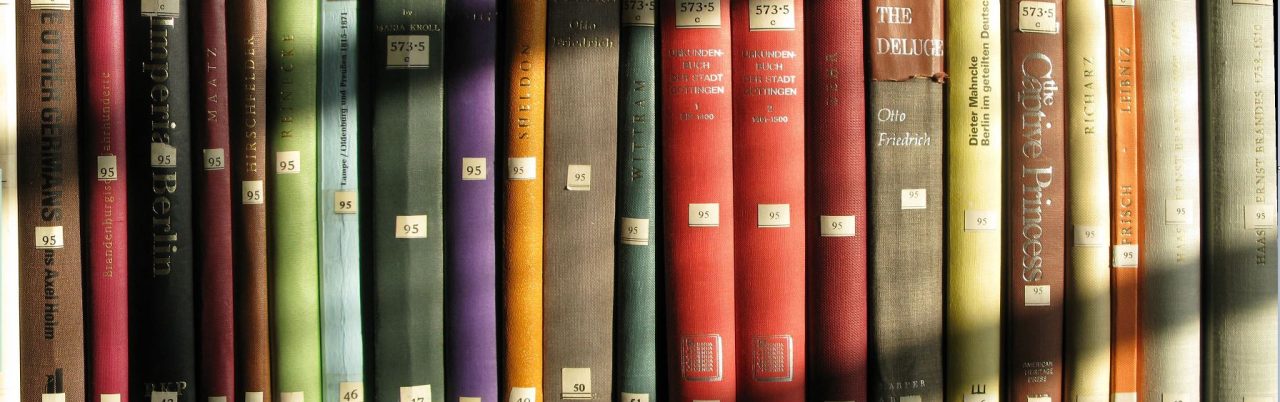
I recently completed cataloguing work on a collection of volumes of pamphlets on chiefly German political and economic history themes. These 560 pamphlets were collected and bound into 60 volumes by the economic historian Dr. William Otto Henderson and reflect his research interests. After his death they were part of a donation presented to the University Library in the 1990s by Downing College, Henderson’s undergraduate college. It was only more recently that departmental staff determined a way to deal with the volumes that allows all their contents to be discoverable in the catalogue without needing to use the dreaded “bound-with” workflow that would have involved 560 separate but interlinked records and an unfeasible amount of work.
One short pamphlet, The Nazi terror: a record by H.N. Brailsford, particularly caught my eye as I discovered that it dated from April 1933, not long after the Nazis came to power. Written for the Socialist League, it was not based on a personal visit to Germany but rather on information derived from established newspapers such as The Times and the Manchester Guardian.
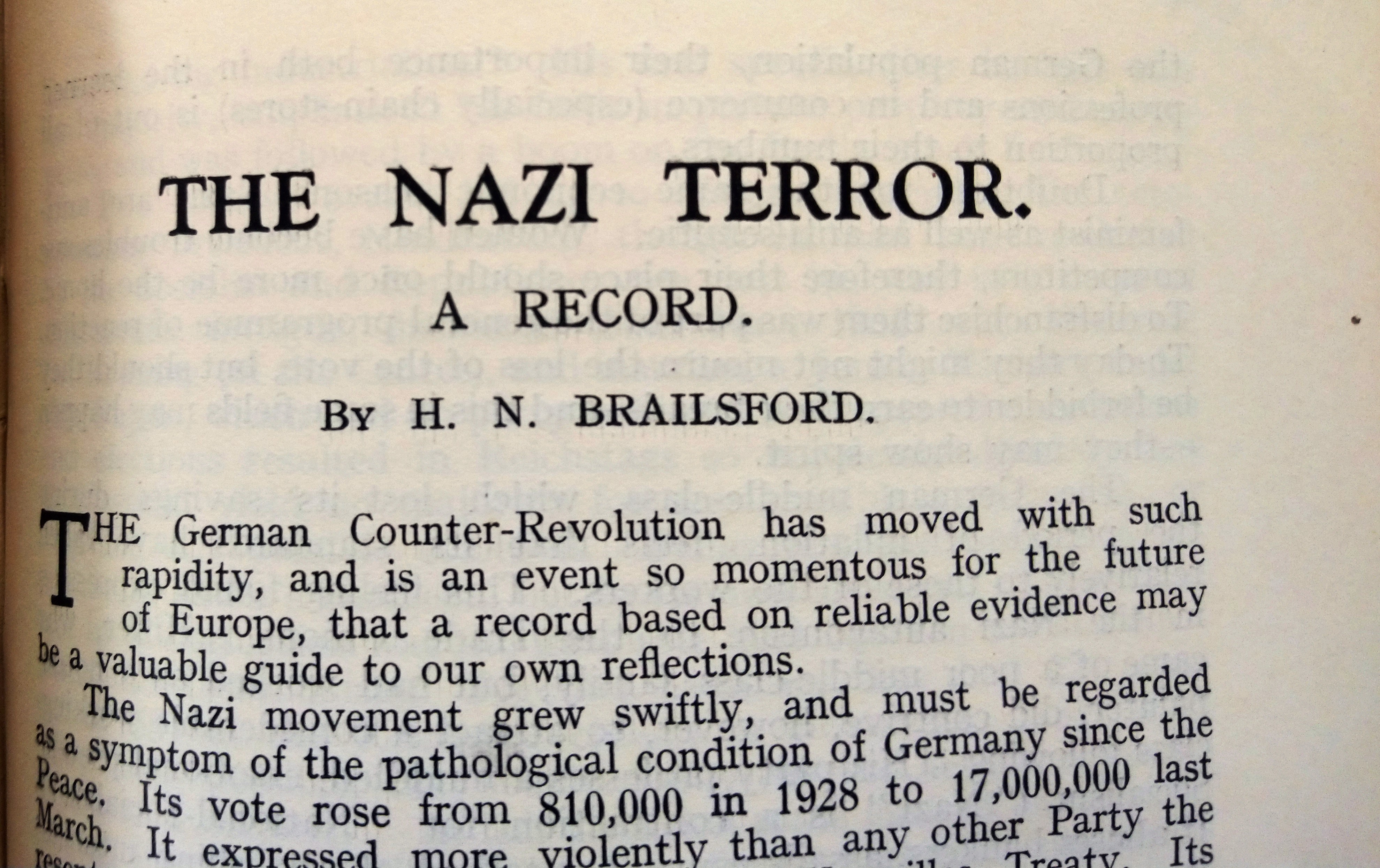
Ninety years on there is a perception that people in Britain did not know what was going on in Germany but this pamphlet shows that this was not the case. Brailsford reported attacks on socialists, Communists and Jews. I was surprised to read that Jews accounted for less than one per cent of the German population and yet Brailsford stated:
The Nazi policy seems to be to deprive the Jews of the means to live, and yet to compel them to starve on German soil. Many suicides of prominent Jews are reported.
Brailsford was a new name to me but when I looked him up I found him to be an interesting man. Like Egon Erwin Kisch (celebrated in an earlier blog post) he was a prolific writer who travelled widely including to the Soviet Union in the 1920s. In his 1921 The Russian workers’ republic (9500.d.384) he gave his personal impressions of Soviet Russia after spending two months in the autumn of 1920 there, in Petrograd, Moscow, Minsk and Vladimir (to the east of Moscow). His earlier Across the blockade: a record of travels in enemy Europe (9537.d.691) was an account of time spent in blockaded Europe between February and May 1919, making use of columns he had written for various newspapers. The book includes descriptions of Budapest under the First Hungarian Republic, a hunger-stricken Vienna, a discussion of the gulf between those he described as Poles and Jews in Warsaw, and three weeks in Germany, commenting more on the ensuing political situation than on the social conditions.
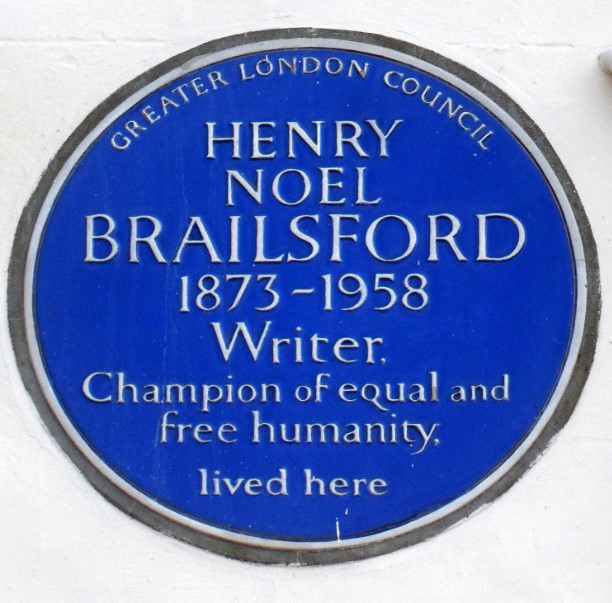
Henry Noel Brailsford was born in Yorkshire on Christmas Day 1873 and educated in Scotland. His father was a Methodist minister – Brailsford later rejected Methodism in favour of humanism. He excelled at Glasgow University and looked set to become an academic but opted instead for a career in journalism. Early on he worked for the Manchester Guardian under C.P. Scott’s editorship, including reporting from Paris on the Dreyfus affair. Throughout his career, alongside his writing for and editing of newspapers and magazines, he published numerous books on international relations, peace, and socialism and campaigned for international co-operation and human rights.
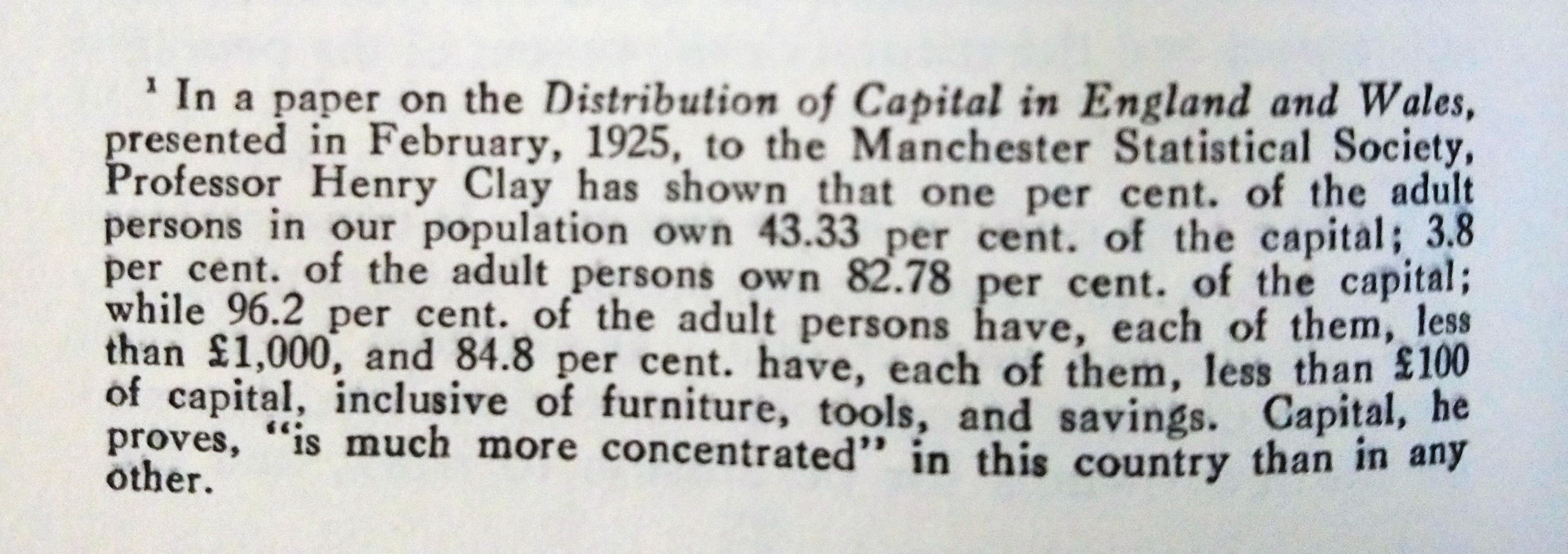
One book that is still fascinating to read now is his 1925 Socialism for to-day (9200.d.1201). This was based on articles that appeared in the New Leader (the weekly newspaper of the Independent Labour Party which Brailsford edited; contributors included Bertrand Russell and E.M. Forster). The book is short and this is explained thus by Brailsford: “my anxiety to produce the book at a price within the means of the manual worker has limited its length.” Brailsford’s criticism of capitalism includes descriptions of economic inequality which make for depressing reading almost 100 years on as very little seems to have changed (see The Equality Trust for current comparable figures):
 A statement of a constructive socialist programme included measures such as enforcing a minimum wage (but with the suggestion that it should vary depending on the size of a worker’s family) and the introduction of nationalised industry.
Brailsford’s personal life was complicated and often unhappy. His first marriage was to former student Jane Esdon Malloch. She did not appear to reciprocate his love, rejecting his first proposal but agreeing to marriage two years later. She did not want children (it is possible that the marriage was never consummated) and would not wear a wedding ring. She became an active suffragette and was supported in this by her husband. Indeed, in 1907 he was a founding member of the Men’s League for Women’s Suffrage and the University Library has a 1909 leaflet containing a letter by him – Forcible feeding: a letter to a Liberal member of Parliament (S245.b.90.1) in which he asserted “There is no statesmanlike policy save to concede what these women demand – the political rights which they have doubly merited by their courage and devotion.”
A book showing a lighter, less serious side to Brailsford is the 1911 Adventures in prose: a book of essays (9700.d.1531) which is dedicated “To Jane Esdon Malloch, the artisan to the inventor.” It contains essays which appeared in various newspapers on an eclectic mix of topics such as the purring of cats (posing the question “Does a cat purr in solitude?”), cycling in London, particular books and pieces of music and one piece entitled “On waterproof skin” in which a court case was considered:
… the adventures of a poor man who was charged with the crime of standing stripped to the waist in the rain… he had often maintained that he had a waterproof skin, and he had taken the only effective method which he could devise for convincing his more sceptical neighbours… The magistrate, unfortunately, took a somewhat severe view of this crude demonstration of a commonplace, and remanded the poor fellow for seven days.
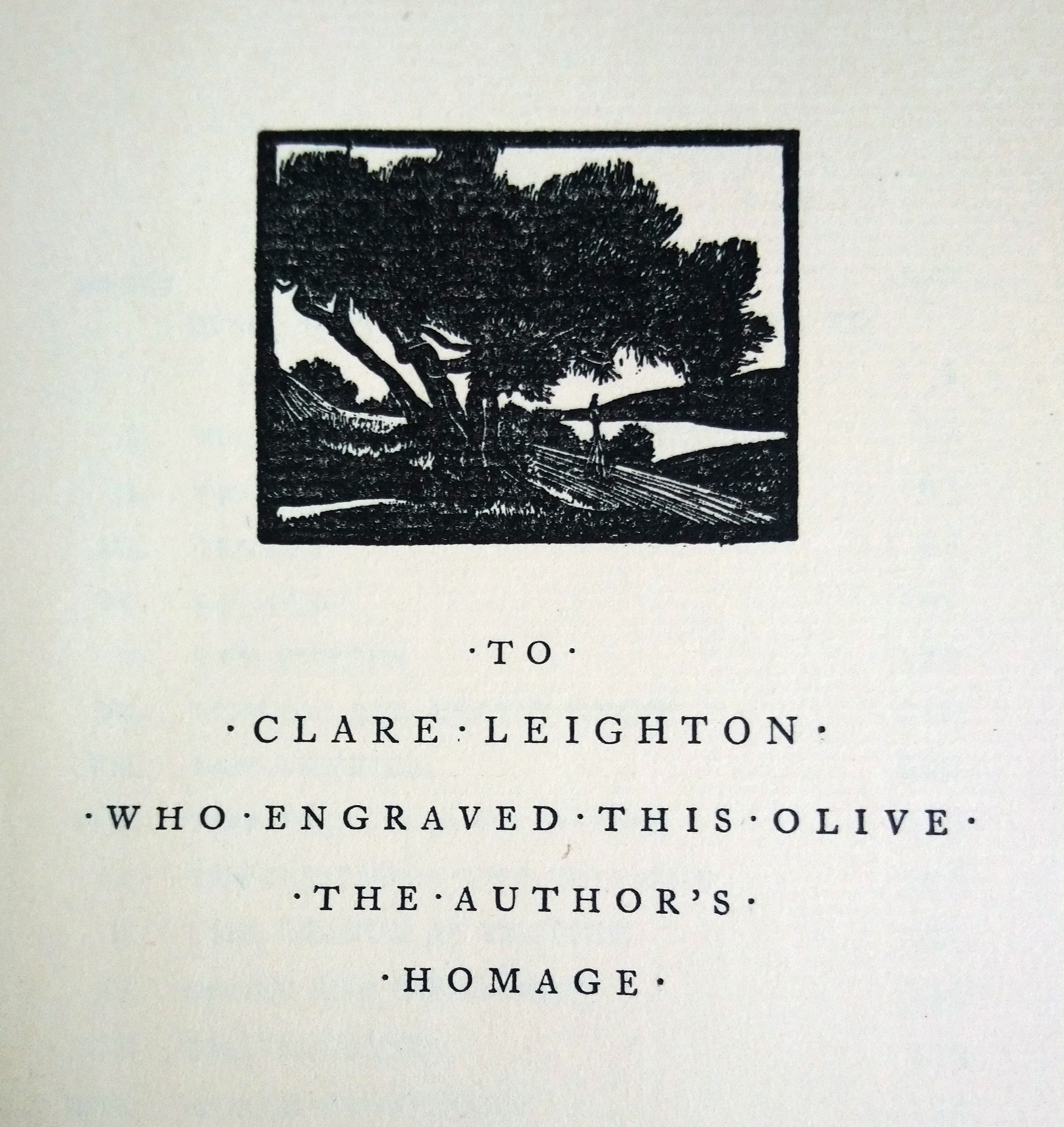 The couple lived increasingly separate lives, and separated for good in 1921 although Jane would not agree to a divorce. Brailsford subsequently met the artist Clare Leighton (her brother Roland was engaged to Vera Brittain when he was killed in action during World War One) and lived with her for several years, unable to marry her as Jane would still not consent to a divorce. His book Olives of endless age, being a study of this distracted world and its need of unity (214.c.92.48) was dedicated to Clare underneath an engraving of hers.
Jane became an alcoholic and died in 1937. At this point Brailsford was free to marry Clare but in fact he became consumed by feelings of guilt, had a breakdown and behaved in such a manner as to drive her away – she left him and emigrated to the United States in late 1938. During World War Two he met and fell in love with Evamaria Perlmann, a German refugee forty years his junior. They married in 1944 and despite significant ill-health as he got older his later years seem to have been filled with contentment. He continued working, mostly on a monumental book on the Levellers which was unfinished at the time of his death in 1958 but was published three years later: The Levellers and the English revolution edited and prepared for publication by Christopher Hill (543:4.c.95.5).
You can find out more about Brailsford’s life and work in the excellent biography The last dissenter: H.N. Brailsford and his world by F.M. Leventhal (705:6.c.95.101).
Katharine Dicks
 Languages across Borders
Goes to show that travelling is the key to opening one’s mind and heart to the people and problems of our world, because you can see things at different angles, and understand the bigger picture. Good journalists can help build bridges and spark interest in topics far from our daily reach. Sounds like he really wanted to make a difference. I’m sure his writing inspired many. Great article, and an interesting bloke.