
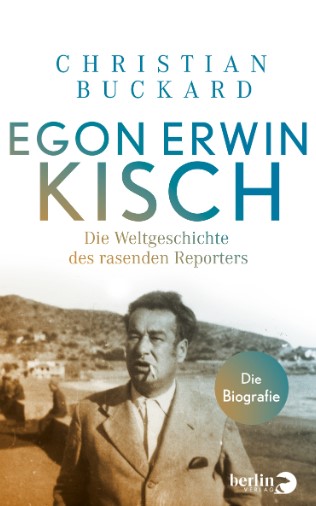
 We have just taken delivery of Egon Erwin Kisch: die Weltgeschichte des rasenden Reporters by Christian Buckard (C219.c.5125). A welcome addition to our collections of works on Kisch, this is a new biography of the writer who died 75 years ago in his native Prague, after a fascinating life packed full of travels and adventures. He was a prolific writer, chiefly of factual reportage, and had a reputation for lively and hard-hitting writing with politics at the forefront. Not especially well known now, he was after his death highly regarded in East Germany as he had been an exemplary communist but was perhaps overlooked in West Germany, although a journalistic writing prize set up by the founder of Stern magazine was named after him in the 1970s.
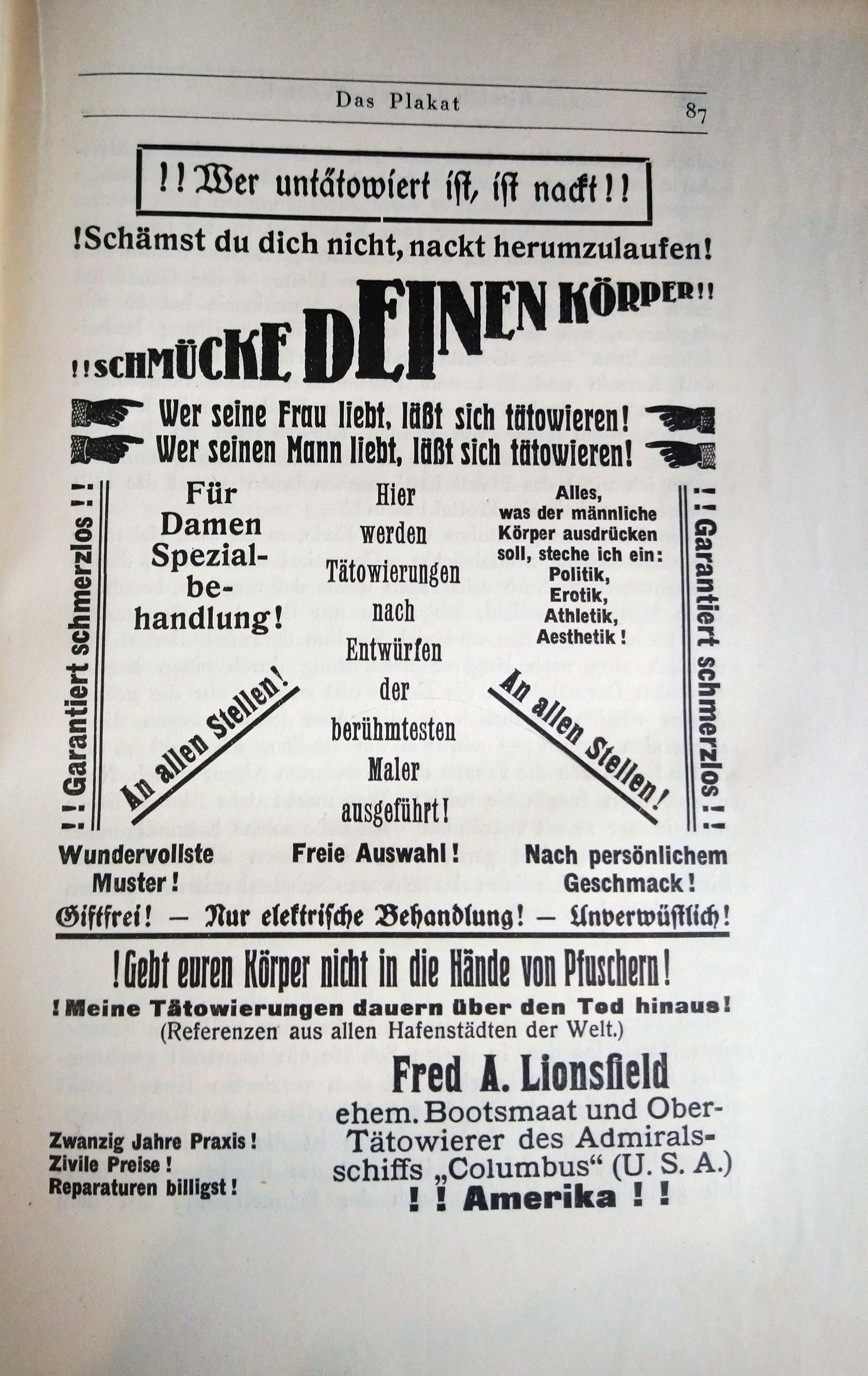
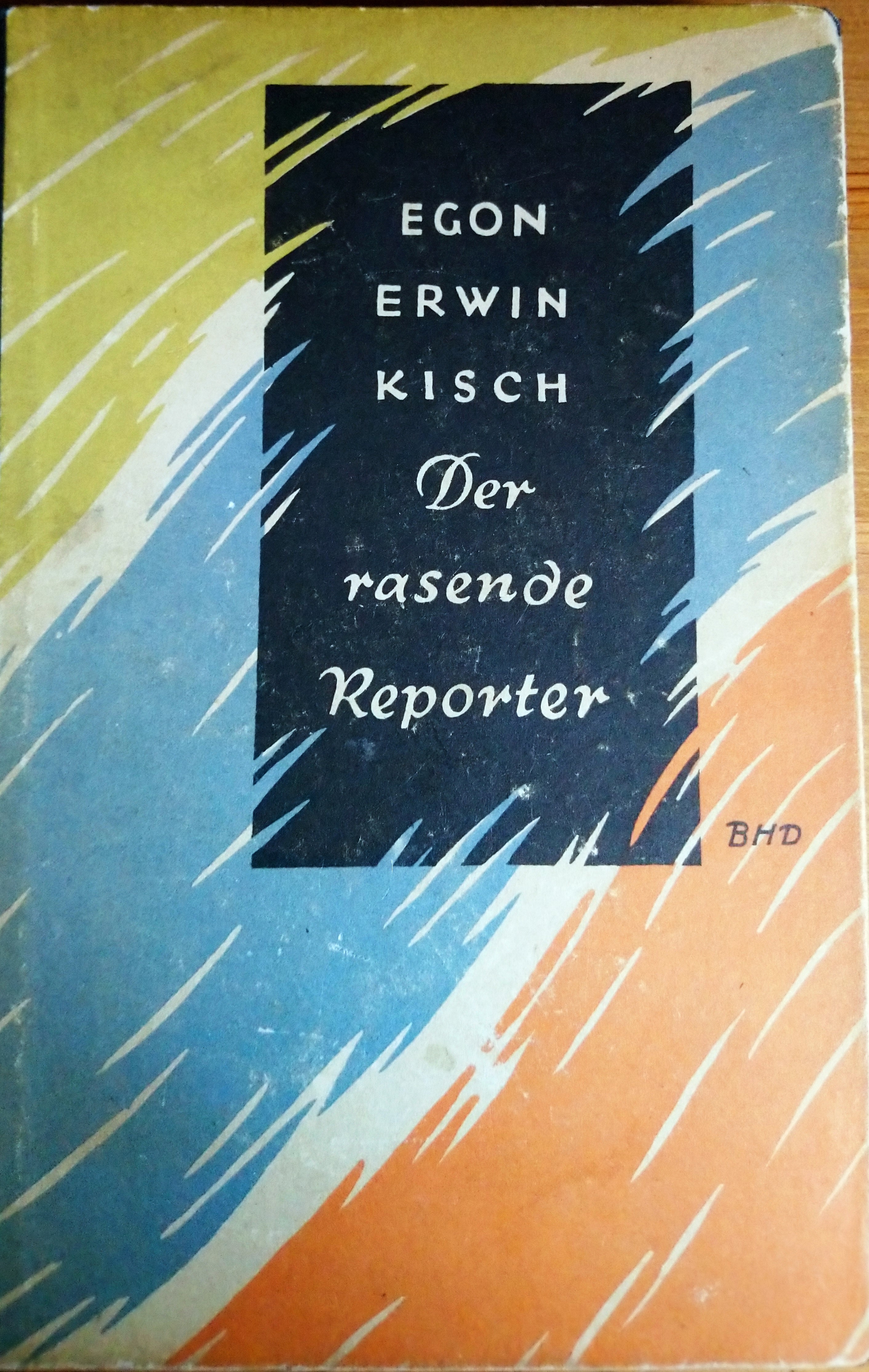 Kisch started out as a journalist in Prague, writing for the German language newspaper Bohemia. When World War One broke out he was 29 years old and conscripted into the Austrian army, serving in Serbia. He wrote of his wartime experiences in Soldat im Prager Korps (9746.d.167), also published later under the title “Schreib das auf, Kisch!”: das Kriegstagebuch (538.d.93.208). After the war he became a committed communist and moved to Berlin. He called himself Der rasende Reporter (the raging or frenzied reporter) and this was the title of a book of collected articles (9746.d.172), wide-ranging in subject and featuring summarising headings on each page. The book starts among the homeless of Whitechapel before covering for instance a Paris flea market, the steelworks in Bochum, the novelty of the relatively new Le Bourget airport, three weeks working as a hop-picker in Bohemia, catching herrings in the sea around Rügen. He also wrote a piece about his tattoos (captured in a 1928 portrait by the artist Christian Schad which can be viewed in the online collections of Hamburg’s Kunsthalle) and included the rather wonderful poster which had enticed him to get a tattoo while in Turkey:
 In the foreword to Der rasende Reporter Kisch states:
Der Reporter hat keine Tendenz, hat nichts zu rechtfertigen und hat keinen Standpunkt. Er hat unbefangen Zeuge zu sein und unbefangene Zeugenschaft zu liefern so verlässlich, wie sich eine Aussage geben lässt.
(The reporter has no bias, has nothing to justify, and has no point of view. He must be an impartial witness and give impartial testimony as reliably as testimony can be given.)
Later works though were perhaps coloured by his politics and less impartial. In the late 1920s and early 1930s he documented travels to the Soviet Union (Zaren, Popen, Bolschewiken; Asien gründlich verändert, 749:35.d.95.486), United States of America (Paradies Amerika, 664:1.d.90.6) and China (China geheim translated as Secret China, 201.c.93.228). His account of his time as a sailor on board a ship going from New York to Oregon via the Panama Canal caught my eye – he disembarked en route at Los Angeles and went on to meet Charlie Chaplin.
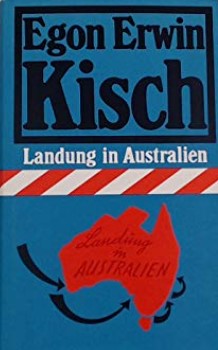 One particularly well documented event in Kisch’s life was his 1934 visit to Australia when he was invited to be a delegate at the Congress against war and fascism in Melbourne. Immigration authorities prevented him from landing; he then broke his leg jumping ashore from the ship and failed a language test which turned out to have been conducted in Scottish Gaelic. Legal appeals followed and the decision to treat him as an illegal immigrant was overturned. He himself wrote about these dramatic events in Landung in Australien (746:03.d.23.3), translated as Australian landfall (the UL has two copies – see images below for classmarks). His case was sufficiently notorious that even before his own account was published in 1937 the story had been told by an Australian journalist, Julian Smith, in On the Pacific front: the adventures of Egon Kisch in Australia (2000.7.879). I particularly like the description of this book on the dust jacket flap:
Reading like the plot of a cinema thriller, “On the Pacific Front” nevertheless deals with the actual adventures of a real man.


A fierce opponent of the Nazis, Kisch had been expelled from Germany soon after the Reichstag fire in 1933. He took refuge in Paris and later spent time reporting on the Spanish Civil War. When World War Two broke out he was able to reach Mexico where he was in exile throughout the war. During this time he reminisced about his earlier life in Prague and described his childhood and early days of reporting in the captivating memoir Marktplatz der Sensationen (749:35.d.90.34). He also wrote about his temporary home in Entdeckungen in Mexiko (670:12.d.90.10).


In 1946 Kisch was able to return to Prague but died only two years later.
An interesting side story developed as I was researching the UL’s copies of Kisch’s works. Our copy of Der rasende Reporter was one of a number of books donated to the library by the widow of Lieutenant-Colonel Richard Oldfield, a much decorated military man who had attended Pembroke College, Cambridge before his distinguished career. He died at the age of 41 after a routine operation to remove his tonsils. He bought the book in Prague in 1925 but I was especially intrigued that the donation label stated that he had died on 13th July 1933, the same day that the title page of the book was stamped as having been received. This seems very odd to me and not knowing the procedures of the library back in the 1930s (before its move to the current building) I can only speculate that the receipt date was backdated to 13th July as a mark of respect. This seems preferable to imagining his wife clearing his books out on the day he died!


Click on the images to see enlarged versions
Katharine Dicks
 Languages across Borders