
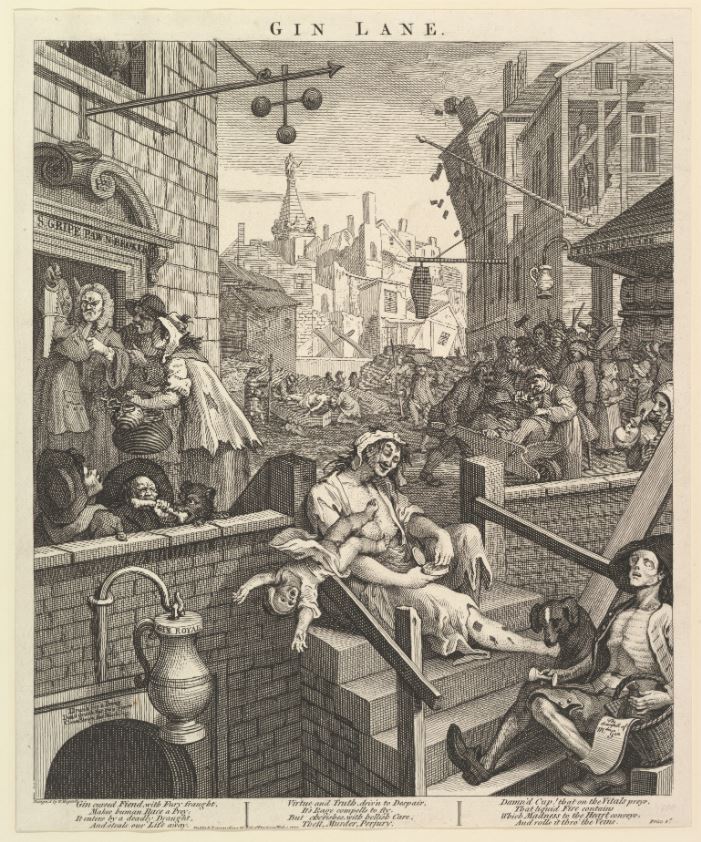
If the numbers are to be believed, millions of people are this week emerging from a “Dry January”, a response perhaps to an awareness that they drank more alcohol under lockdown. During my Christmas break, as I sipped the new gin I had been given, I read reports of research which showed that more than one third of adults had indeed increased their alcohol consumption. I then turned to another present, Ian Buxton’s book 101 gins to try before you die (my family know me well!) which reflects the recent rise in popularity of gin and the phenomenal growth in the gin market. I found myself comparing the current trend to the 18th century Gin Craze when the drinking of cheap gin by the masses became a social problem; this led me to investigate relevant resources in the Library. Our Rare Books department has a good number of books and documents from that time, but as these are not easy to access right now I will focus here on resources available online, of which there are plenty to choose from.
First, some background: English troops were exposed to genever, the juniper-flavoured distilled spirit, when they fought alongside the Dutch in the Thirty Years war in the early years of the 17th century. Indeed, the phrase Dutch courage may well date back to then. From 1688, when William of Orange arrived to be King William III, laws to promote distilling in England were passed while at the same time heavy import duties were imposed on spirits such as French brandy; unlicensed gin production soared and gin consumption rose significantly. The cheapness of gin made it particularly popular with the poor. There was a proliferation of gin shops, and in London much gin was distilled in private houses, none of which was subject to licensing. From 1729 until 1751 a series of laws were passed with varying degrees of success, attempting to deal with the problem of the social effects of excessive gin consumption. The 1736 Gin Act, in particular, resulted in an explosion of printed material, including political and religious pamphlets on both sides of the argument, as well as satirical literature.
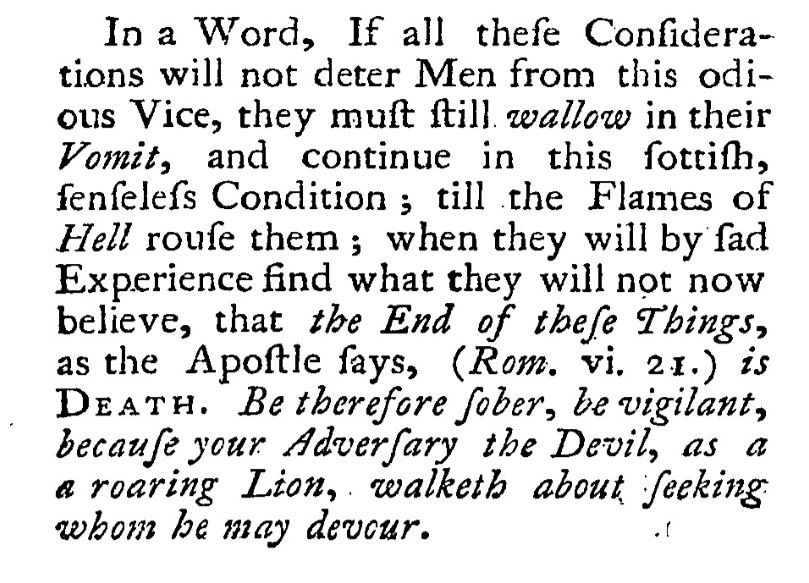
The moral reformer, Stephen Hales, wrote against gin and in support of the Gin Act in his tract A friendly admonition to the drinkers of gin, brandy, and other distilled spirituous liquors. In an unsparing attack he tackled both the physical and spiritual effects on drinkers and their families, but also included a brief appendix by a physician with advice for those who wished to break the habit.
Gin was personified in The life of Mother Gin by an anonymous author who wrote:
As the prosecution, or rather impeachment of Mother Gin, is likely to make so considerable a figure in the history of these times, I thought I could not do a more grateful and seasonable piece of service to my country, than in publishing the following account of her; which the reader may depend upon to be genuine, for I had a long and intimate acquaintance with her; I always lov’d her, and I have some reason to flatter myself, that she was not wanting in friendship and esteem for me; and, perhaps, I had as good a share of both as most of the authors about this town.
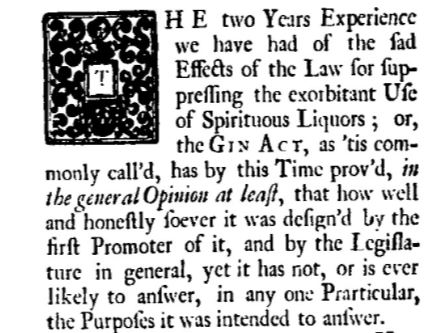
Two years after the 1736 Gin Act an anonymous pamphlet was issued, A short history of the Gin Act, citing many legal cases in support of its criticism:
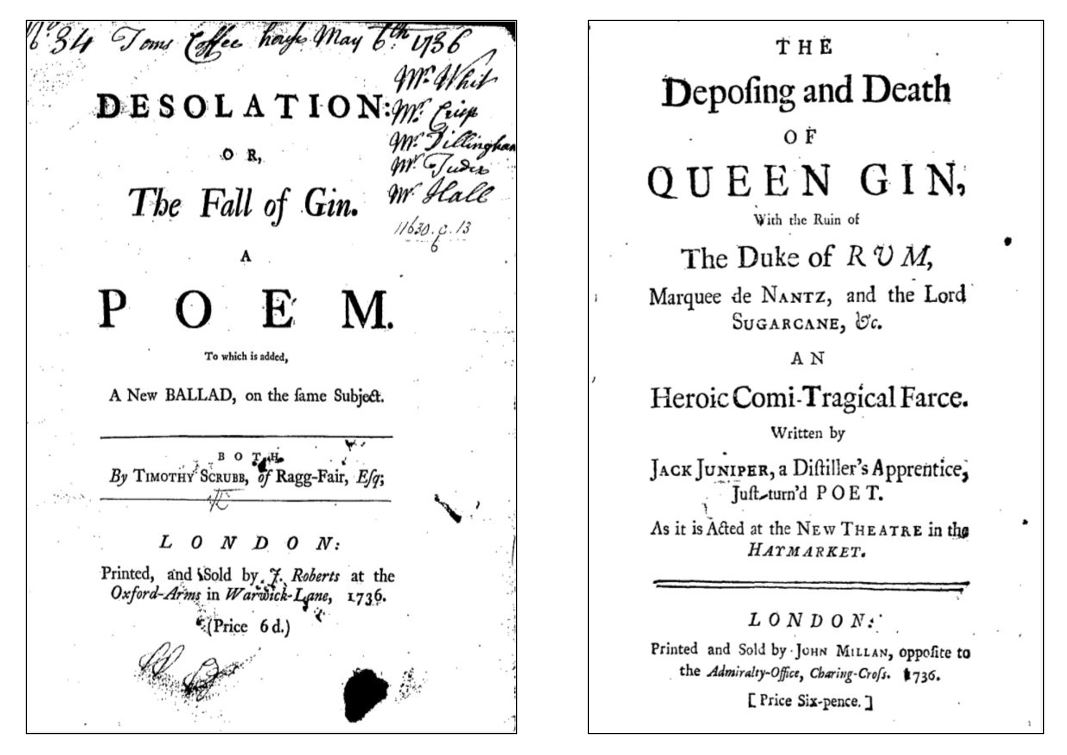
Literary responses to the 1736 Act included Desolation or, the fall of gin, a poem and The deposing and death of Queen Gin, a play, both written under pseudonyms:
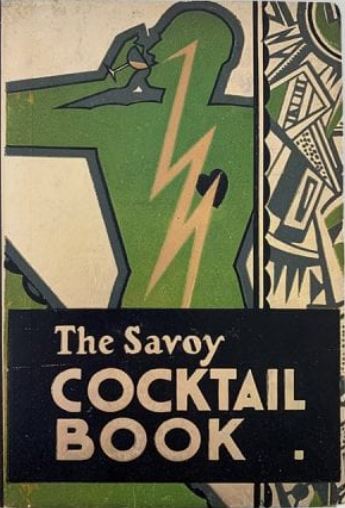 Although levels of gin consumption dropped in the 1750s it has certainly never gone away: from the extraction of quinine leading to the classic G & T, the sumptuous gin palaces of the 19th century through to the speakeasy gin joints and bathtub gin of the Prohibition era at the same time as the glorious cocktails of the Roaring Twenties right through to the huge numbers of present-day distillers, it has continued to be enjoyed. A classic book was Harry Craddock’s 1930 Savoy cocktail book with Art Deco illustrations by Gilbert Rumbold. A catalogue search for this only found 1980s facsimile editions; however, the Library did receive the first edition under Legal Deposit, and on a rare day working in the UL I was able to verify this in the Supplementary card catalogue (for pre-1978 items that were not considered to be of academic importance at the time of receipt). I am looking forward to a time when I can lay my hands on this book.
Katharine Dicks
Further reading
- The politics of alcohol: a history of the drink question in England by James Nicholls (chapter 3: A new kind of drunkenness: the Gin Craze)
- Mayhem: post-War crime and violence in Britain, 1748-53 by Nicholas Rogers (chapter 6: Tackling the Gin Craze)
- Liquid Pleasures: a social history of drinks in modern Britain by John Burnett (chapter 8: Spirits: “Water of life”)
- Alcohol: a history by Rod Phillips (chapter 6: Distilled spirits, 1500-1750: threats to the social order)
 Languages across Borders