
Ernesto Cardenal, Nicaraguan poet, priest and revolutionary, died on the 1st of March aged 95. He wrote numerous works of poetry, as well as essays and memoirs. His poetry embraced a great variety of topics, including but not limited to history, social justice, politics, love, mysticism and astronomy.
He was one of the most inspirational and widely translated poets of Nicaragua. Epigramas (Epigrams, 9743.d.1205), a series of short poems on love and longing with social and political undertones is his most representative work from his early poetry.
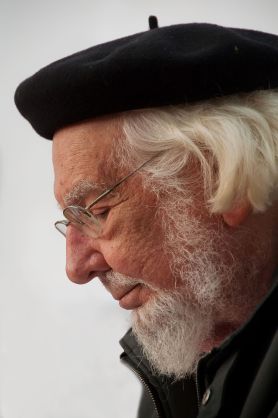
Cardenal was a highly controversial figure for his stance in politics as a supporter of the Nicaraguan revolution. His poetry is testimony to his fight for a more egalitarian society. When the Sandinista National Liberation Front (FSLN) ousted Dictator Antonio Somoza in 1979, Cardenal was appointed Minister of Culture, a position that he retained until 1987, when the government changed and the Ministry was closed. He is well-known for his works of poetry La hora cero (Zero Hour; on his Marxist political ideas, 9743.d.940), El Canto Nacional (National Canto; on the Sandinista movement, 9743.d.1127), El estrecho dudoso (The Doubtful Strait; on post-colonial history of Central America, 743:36.d.95.128) and Oráculo sobre Managua (Oracle on Managua; on the Nicaraguan reality under the Somoza dictatorship, 9743.d.1023).
His advocacy for liberation theology also gained him some critics, this time within the Catholic Church, which disapproved of his support for far-left politics and his Marxist-inspired vision. In 1984, Pope St. John Paul II suspended him from priesthood for mixing religion and politics (it was later lifted by Pope Francis in 2019). His religious poetry includes Salmos (Psalms, 743:36.d.95.129), Vida en el amor (Life in Love; on universal love, 744:75.d.95.196) and El Evangelio en Solentiname (The Gospel in Solentiname; dialogues on the Gospels between the author and community members of Solentiname, Nicaragua, 53:55.c.95.35).
Cardenal also embraced science in his poetry (biology and astronomy in particular). His 600-page poem Canto cósmico (Cosmic Canticle, 743:36.c.95.312) is one of his most celebrated works on the cosmos and the universe. Hijos de las estrellas (Children of the Stars, 2019.10.576) is his last published work in this category, beautifully illustrated by Nicaraguan abstract painter Ramiro Lacayo Deshón.


As well as a world-renowned poet, Ernesto Cardenal was an accomplished sculptor. He founded an artist’s colony in Solentiname Islands, where he preached to the local peasant community and encouraged activities in poetry, music and painting. His own sculptures depicted the religiosity, fauna and flora of the Americas, as shown in Cincuenta años de esculturas (Fifty years of sculptures, 2003.10.1065).
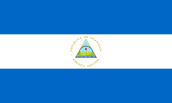
Nicaragua (often referred to as “the land of poets”) has an important literary tradition as far as poetry is concerned. The University Library holdings have embraced this tradition by acquiring works of some prominent Nicaraguan poets over the years.
The Library’s holdings on the universally acclaimed poet Rubén Darío are vast. Other Nicaraguan poets present in our collections include Gioconda Belli (one of the most important poets of the 20th century and a supporter of the Sandinista movement), Claribel Alegría (a most celebrated Central American poet/writer), Daisy Zamora (poet and supporter of the Sandinista movement) and Pablo Antonio Cuadra (one of the most famous poets in Nicaragua).
Sonia Morcillo
 Languages across Borders