
The University Library and ebooks@cambridge have recently purchased a full-text web-based Giordano Bruno collection, available on InteLex Past Masters.
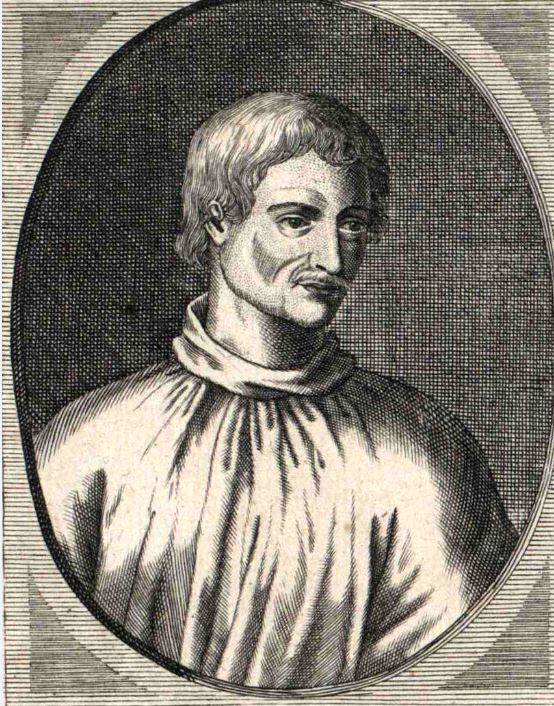
Giordano Bruno, the Italian author and philosopher, was born in 1548 at Nola, near Naples, and baptised Filippo. He joined the Dominican friars of Naples in 1562, taking ‘Giordano’ (Jordan) as his religious name. His adventurous thinking brought him under suspicion of heresy in the increasingly authoritarian atmosphere of the Italian Counter-Reformation, and in 1576 he fled northwards, finding his way via Switzerland to France. He taught for a while in Paris, and in 1583 crossed the Channel to England where, among other things, he became acquainted with Sir Philip Sidney, and lectured on the Copernican theory at Oxford. Inevitably, his name has been associated with that of Shakespeare, but there is no solid evidence to connect them.
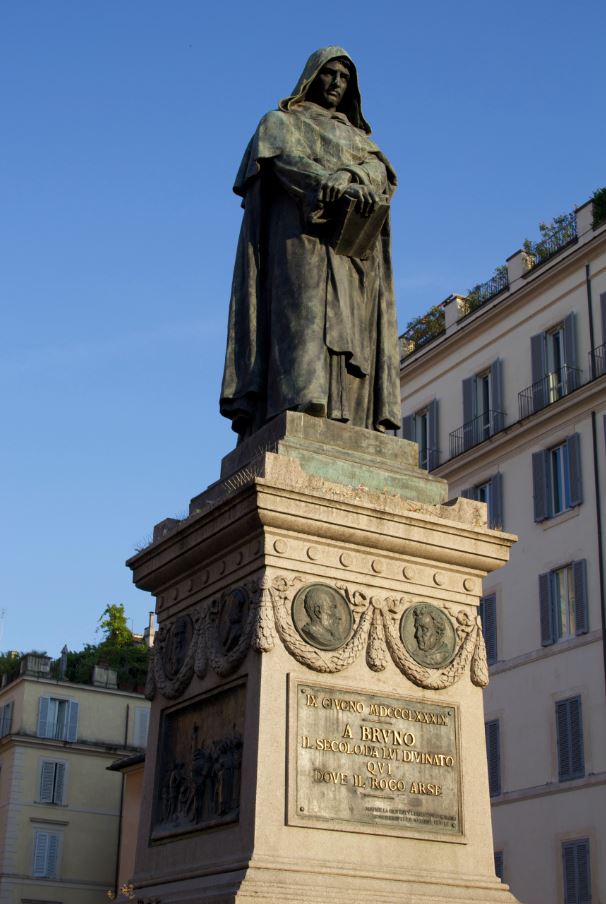
A master of the ‘art of memory’ (that is, of the mnemonic techniques that were often highly respected in the Renaissance era), Giordano Bruno was more a metaphysical or even ‘hermetic’ thinker than the pioneer of modern science into which he was transmuted by nineteenth-century historians. His thought had a profoundly pantheist character, and his speculations extended to the possible multiplicity of worlds and universes, which strikes something of a chord with recent thinking about the ‘multiverse’. Many of his writings date from his English period, and more of his works were published in London than anywhere else. He left England in 1585 and travelled through France to Germany, where he stayed for a while at Wittenberg. Having unwisely returned to Italy, he was arrested at Venice in 1592 and was extradited to Rome to be tried for heresy. His defence, based on the claim that his doctrines were philosophical rather than theological, was unsuccessful. On 17 February 1600 he was burned at the stake in Rome. As a victim of the Roman Inquisition, he became in the nineteenth century both a hero for the emerging Italian nation and a martyr for freedom of thought against obscurantism and oppression. The installation (1889) of a monumental statue of Bruno on the site of his execution, in the Campo dei Fiori, perfectly captured that moment in the evolution of his memory.
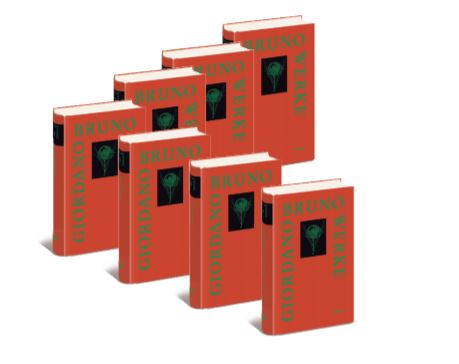 The edition of Giordarno Bruno’s works that is made available on the InteLex platform was originally published in print by the renowned philosophy publisher Felix Meiner. This bilingual German-Italian edition was worked on under the direction of Thomas Leinkauf, professor of philosophy at the Westfälische Wilhelms-Universität in Münster and a specialist in Renaissance philosophy. The Italian texts are based on the edition compiled by Giovanni Aquilecchia. For the German translations, it was possible to make partial use of existing individual editions, which were reviewed and, where necessary, revised while others were translated for the first time into German.
This scholary edition presents Giordano Bruno’s works according to the current state of research. It comprises, in chronological order, all Bruno’s writings devoted to natural philosophy and epistemology, ethics, religion and politics, published in quick succession between 1582 and 1585 in Italian. Where possible, the Italian works are supplemented by a selection of Bruno’s works in Latin. Each work is prefaced by an extensive introduction by the editor placing the work in its context and discussing its effect on the history of philosophy. Notes, name and subject indexes and bibliographies provide the reader with the tools to access the work.
This seven volume edition is hosted on the InteLex Past Masters platform, and is available from this authenticated link, on the ebooks LibGuide. The resource can be accessed both on and off campus and is available for unlimited concurrent users. The work will be searchable in iDiscover in due course. Users can view online and print PDFs of selections of the text.
This resource was purchased due to the collaborative effort of the Italian, German, and ebooks@cambridge budgets.
Bettina Rex, Christian Staufenbiel & Jayne Kelly
 Languages across Borders