Prizewinning “grandes dames” of Austrian literature and the next generation 

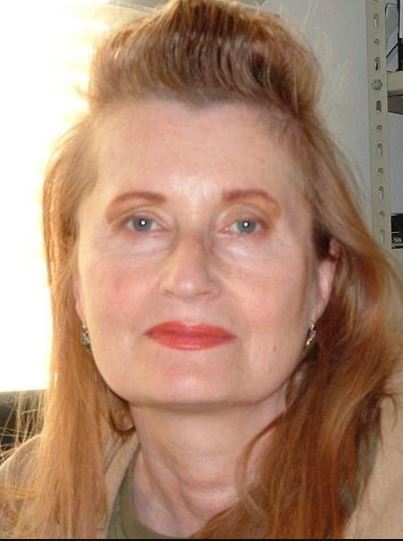
Elfriede Jelinek (picture by G. Huengsberg via Wikimedia Commons)

Earlier this month the Tanzanian novelist Abdulrazak Gurnah won the 2021 Nobel Prize in Literature. Elfriede Jelinek, whose 75th birthday it is this week, also won the Nobel Prize back in 2004, the first of only two Austrians to win it (her fellow Austrian, Peter Handke, subsequently won the award in 2019). The Swedish Academy citation referred to her “musical flow of voices and counter-voices”, perhaps a consequence of her highly musical childhood.

Jelinek, a reclusive figure, started out writing poetry before shifting to novels but is now best known as a playwright. As a former communist, known for her radical feminism and her criticism of the legacy of Austria’s fascist past, she has divided opinion in her home country over the years but has nevertheless been honoured with many important awards. The UL has copies of her major plays and novels, including some translations into English. We also have good holdings of books about her and her works, including several international conference proceedings. Two recent works to highlight are the 2013 Jelinek-Handbuch (747:4.c.201.12) and from 2014 Elfriede Jelinek: Werk und Rezeption (747:4.c.201.21), both by Pia Janke, director of the Elfriede Jelinek Research centre at Vienna University. Continue reading “Prizewinning “grandes dames” of Austrian literature and the next generation “

Italian literary prizewinners 2020

It seems odd thinking about literary prizes and awards at the moment, since awards conjure up images of presentations, speeches and joy. But many, many people have turned to reading for comfort and intellectual stimulation during the recurrent lockdowns. The giving and receiving of literary awards remains, as ever, important to readers and encouraging to authors. In Italy, despite a very difficult year, the major literary prizes were adjudicated and the following awards were made: Continue reading “Italian literary prizewinners 2020”

Francophone literary prizewinners, 2018-2019

Each year, Cambridge University Library acquires French and Francophone books that have won important literary prizes, usually awarded in the autumn, after the “rentrée littéraire”. While the books which have been awarded literary distinctions in 2020 are on order, here are the 2018 and 2019 prizewinners in the French-speaking world:

Comar d’Or: 2018: Les lendemains d’hier : roman by Ali Bécheur C205.d.3961; 2019: Jugurtha: un contre-portrait by Rafik Darragi C206.d.4272

Grand prix du roman de l’Académie française: 2018: L’été des quatre rois : juillet-août 1830 : roman by Camille Pascal C206.d.4319; 2019: Civilizations : roman by Laurent Binet C206.d.2438

Grand Prix du Roman Métis: 2018: Des ailes au loin : roman by Jadd Hilal C206.d.4269; 2019: Salina : les trois exils : roman by Laurent Gaudé C215.c.5760

Prix Carbet de la Caraïbe et du Tout-Monde: 2018 Là où les chiens aboient par la queue by Estelle-Sarah Bulle C206.d.4347; (no 2019 winner) Continue reading “Francophone literary prizewinners, 2018-2019”

Italian literary prizewinners for 2019-2020

With the awarding of the Bagutta prize for 2020 at the end of January, I was reminded of our annual focus on the major literary prizes of Italy. The Bagutta prize this year went to Enrico Deaglio for his work on the bombing in Piazza Fontana, Milan, in 1969. La Bomba : cinquant’anni di Piazza Fontana, published by Feltrinelli, was written to coincide with the 50th anniversary of the terrorist attack. It is now in the catalogue and stands at C215.c.8782.

Since our post last April, the other major Italian literary prizes have been awarded as follows: Continue reading “Italian literary prizewinners for 2019-2020”

Italian literary prizewinners for 2018-19

We highlighted last autumn the winner of the prestigious Strega prize, one of the most important literary prizes awarded in Italy. It was won for the first time in 15 years by a woman – Helena Janeczek for her novel La ragazza con la Laica (C213.c.6240).

The other four major literary prizes that we focus on were awarded in the last 12 months as follows: Continue reading “Italian literary prizewinners for 2018-19”

Literary translations in the library tower

The UL’s Tall Tales exhibition has opened up to public view some of the treasures held in the seventeen floors of the library tower. One of the cases, to which I contributed, concentrates on literary prizewinners, a topic with which regular readers of this blog will be familiar. When selecting items to go on display, the challenge was to pick half a dozen titles that could somehow reflect the astonishing diversity of material to be found in the tower collections: the serious and the intellectual sit alongside works that are altogether less highbrow. Similarly, the range of literary prizes that are out there to be won is mind-boggling: could I include the Romantic Novelists’ Association Awards? (There are eight categories each year.) The Waverton Good Read Award, handed out annually by the residents of Waverton (a village in Cheshire) to the best debut novel published in the past twelve months? (It was set up in 2003, inspired by Le Prix de la Cadière, a similar prize given out by the Provençal town of La Cadière D’Azur.) The Bad Sex in Fiction Award? (It goes to some unlikely recipients: in 2016, it was awarded to the Italian novelist Erri De Luca, for his novel The Day Before Happiness (Il giorno prima della felicità). A less illustrious prize, perhaps, than the others he has collected during his career, which include the Prix Fémina Étranger.) Continue reading “Literary translations in the library tower”

Princess of Asturias award: Fred Vargas

1024px-Fred_Vargas
By Marcello Casal via Wikimedia Commons

Fred Vargas (pseudonym of Frédérique Audoin-Rouzeau) has recently been awarded the Princess of Asturias award in its literary category. Cambridge Professor of  Classics, Mary Beard, received the corresponding award for Social sciences in 2016.

Although Fred Vargas is a historian and archaeologist, she is also known for being a successful crime novel writer. In fact, she started writing thrillers for fun, as an escape from her academic occupation. Her novelist career began with the publication of Les jeux de l’amour et de la mort (C205.d.7969) which won the Festival de Cognac novel prize. Continue reading “Princess of Asturias award: Fred Vargas”

Québécois literature and the first London edition of “Festival America”

The French collections at Cambridge University Library aim to capture a broad range of Francophone literature. Though quite a few Francophone writers have contracts with French publishing houses, we also buy publications from North Africa, the Caribbean, and Québec (readers’ recommendations for Cambridge University library, especially for Francophone material, are always welcome).

Continue reading “Québécois literature and the first London edition of “Festival America””

Strega prize 2018 – goes to a woman, for the first time in 15 years

In July the most prestigious of the Italian literary prizes was won by Helena Janeczek, for her work La ragazza con la Leica (C213.c.6240). Although many female authors have been nominated for the prize in the past, there has not been a female winner since Melania Mazzucco in 2003. La ragazza con la Leica is about Gerda Taro, a war photographer who died during the Spanish Civil war, and it had already won the Bagutta prize earlier this year. Continue reading “Strega prize 2018 – goes to a woman, for the first time in 15 years”

French and German prizewinners 2017

Following on from the recent post on Italian prizewinners, we now turn our attentions to the latest winners of major French (last covered in May 2017) and German (last covered in March 2017) prizes.

The Prix Goncourt was awarded to L’ordre du jour by Éric Vuillard (C205.d.4186).

The Prix Interallié went to Jean-René Van der Plaetsen for Nostalgie de l’honneur       (C205.d.4224).

Daniel Rondeau won the Grand prix du roman de l’Académie française for Mécaniques du chaos (C205.d.4223).

The Prix Médicis was awarded to Yannick Hanenel’s Tiens ferme ta couronne (C205.d.4222). Continue reading “French and German prizewinners 2017”