75 years of Premio Nadal

The Premio Nadal is the oldest literary prize in Spain, awarded by Ediciones Destino (since 1988 part of Planeta group) to the best unpublished novel. We can find many important 20th century Spanish writers among their list of awardees. Four of them have won the Cervantes prize as well (see our post on Premio Cervantes).
IMG_20191121_112541The prize is awarded every year on January 6. It was originally the idea of the journalist Ignacio Agustí, editor of the magazine Destino (belonging to the same publishing house) and best known for Mariona Rebull (743:01.d.17.285). The prize was created in order to discover new talent and provide a stimulus for literary creation in the post-war years. It was named after Eugenio Nadal, former editor of Destino, to honour the literature teacher who had then recently passed away at a young age.

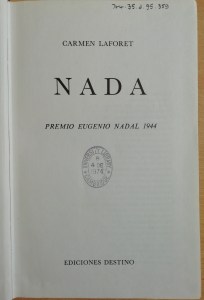
The prize was first given in 1944 to Nada (744:35.d.95.359), an existentialist novel by the young Carmen Laforet. Three years later, it was awarded to Miguel Delibes for La sombra del ciprés es alargada (744:35.d.95.300); he is a major figure in Spanish literature of the 20th century, who won the Cervantes prize in 1993. Continue reading “75 years of Premio Nadal”

Andrea Camilleri

By Marco Tambara via Wikimedia Commons

We were saddened to hear of the death of Andrea Camilleri, aged 93, one of Italy’s best-loved authors. For so many readers he had brought Sicily to life, capturing the difficult social problems of the island with affection and humour.

In 2014 we posted on this blog a piece to celebrate his Montalbano series. Since then we have continued to acquire further works in the series, the most recent being: Continue reading “Andrea Camilleri”

Arsène Lupin versus Sherlock Holmes

img_1951
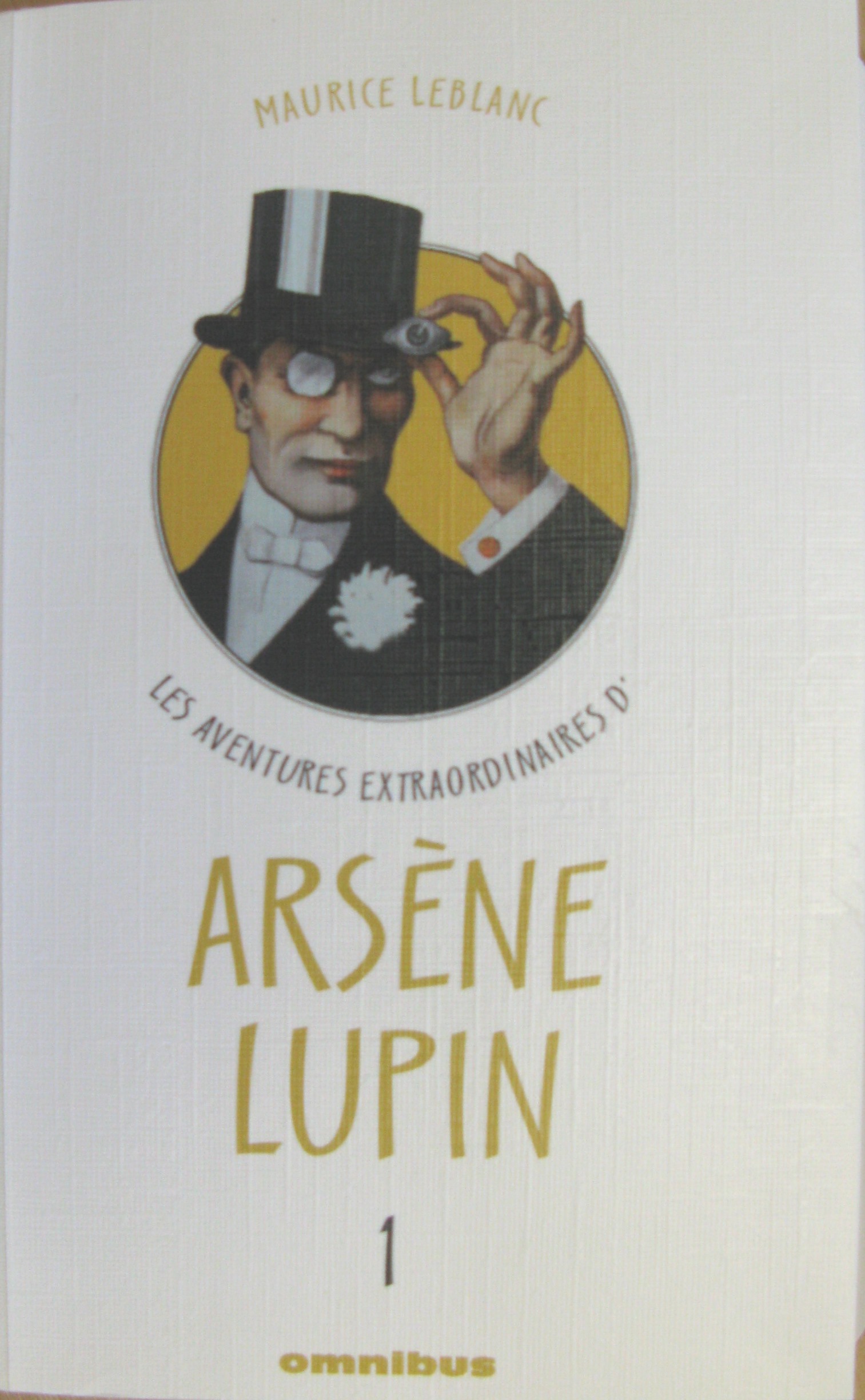
Cover of Lupin’s complete adventures (C201.d.5905-5907).

Who doesn’t like Sherlock Holmes? The whole world has embraced Sherlock Holmes, from the United States to Soviet Russia; he is the most portrayed character in the history of cinema, and every year brings its share of new adaptations including the latest on BBC1 starring Benedict Cumberbatch. Who could possibly hate Sherlock Holmes?

The answer is, of course: a Frenchman.

In 1905, the French writer Maurice Leblanc wrote the first adventure of Arsène Lupin, a dashing gentleman-thief for whom burglary is one of the fine arts. Several short stories and novels would follow and in 1908, Leblanc introduced two new characters in Arsène Lupin contre Herlock Sholmes: an English detective and his sidekick Dr Wilson. A barely disguised pastiche of Sherlock Holmes, Sholmes was also intended as a caricature of the typical Englishman as seen by the French at the time: red in the face, impassive to the point of apathy and slow of understanding. Lupin of course, was his exact opposite, having every quality of a not-so-respectable Frenchman: chivalrous, terribly charming, and just a little bit cocky. Continue reading “Arsène Lupin versus Sherlock Holmes”

Gregory Rabassa, 1922-2016

m3644431465923242
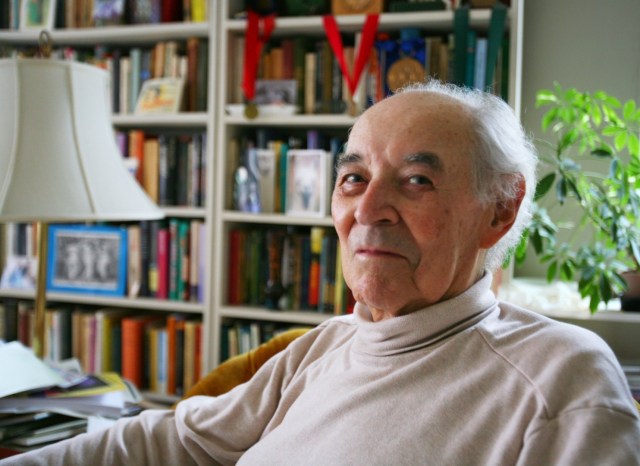
Gregory Rabassa in 2007 (Andrew Harrer/Bloomberg News)

Many of the Latin American Boom’s greatest writers owe much of their international acclaim to one man: Gregory Rabassa, who passed away last month.

Rabassa’s English translations of Julio Cortázar’s Hopscotch (9743.c.74), Mario Vargas Llosa’s The green house (9743.c.108) and, in particular, Gabriel García Márquez’s One hundred years of solitude (9743.c.116) sold millions of copies and brought these authors to a much wider audience. He enjoyed a particularly close and mutually appreciative relationship with Cortázar and also translated the great Brazilian authors, Clarice Lispector, Jorge Amado and Machado de Assis, amongst many others. Continue reading “Gregory Rabassa, 1922-2016”

Umberto Eco, 1932-2016

Umberto_Eco_04
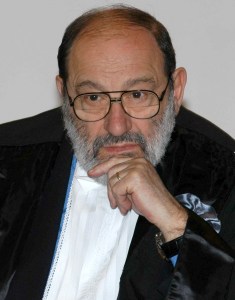
Picture by Università Reggio Calabria (GFDL), via Wikimedia Commons.

In the book Vertigine della Lista (S950.c.200.947 and S950.c.200.802 for the English version) published on the occasion of the exhibition he curated in 2009 at the Louvre in Paris, Umberto Eco (5 January 1932 – 19 February 2016) discusses the value and meaning of lists throughout history. The Italian author and philosopher argued in an interview with Der Spiegel that “through lists, through catalogues, through collections in museums and through encyclopaedias and dictionaries” human beings attempt to make infinity comprehensible. People describe the sky and try to list stars; poets and lovers endlessly search for words to describe their feelings, often making a list of things they love as a way of starting their pursuit. Continue reading “Umberto Eco, 1932-2016”

Slavonic item of the month : June 2014

The subject for June 2014 is Iurii Andropov, the Soviet head of state in the wake of Brezhnev’s death, who was born 100 years ago in June 1914.  When Andropov died nearly 70 years later, in February 1984, he had been in power for only 15 months. We look at two fictional works about him.

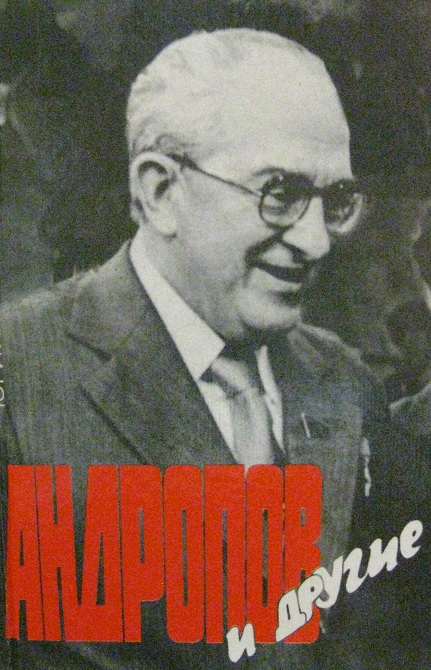
Cover of Iurii Teshkin's /Andropov i drugie/(Andropov and others; 9003.d.1849 )
Cover of Iurii Teshkin’s Andropov i drugie (Andropov and others; 9003.d.1849

Although Iurii Vladimirovich Andropov led the Soviet Union for only a short time, his was already a well-known name when he took power in late 1982.  He had been linked to the repression of the Hungarian Revolution in 1956 (Andropov was the Soviet ambassador to Hungary from 1953 to 1956) and to other international military interventions such as the putting down of the Prague Spring in February 1968.  By 1968, Andropov had become the head of the KGB, a position he was to hold for 15 years.

On the basis of Andropov’s pre-leadership career, then, he was seen as a Soviet hawk – and one with a KGB background to boot.  Stories from his leadership, though, suggest a possibly more liberal side.  A search for Andropov Gorbachev on our LibrarySearch+ catalogue of electronic resources, for example, comes up with a hit for a Guardian article from 1991 which reports a revelation by a government aide that Andropov saw the progressive Gorbachev as his successor and not the conservative Chernenko.

The uncertainty of what Andropov might have achieved had he not died so quickly after coming to power might, then, explain why two of the University Library’s holdings about Andropov are works of fiction.

Continue reading “Slavonic item of the month : June 2014”

RIP Gabriel García Márquez

Gabriel García Márquez passed away on April 17th 2014 at the age of 87. He was unquestionably Colombia’s greatest writer – his country’s president even described him after his death as “the greatest Colombian who ever lived” – and one of the most important of all Spanish language (and indeed world) authors. His influence and importance on the Latin American and world stage cannot be overstated, nor the full scope of his work easily summarised. Continue reading “RIP Gabriel García Márquez”

Where is 21st century Latin American fiction heading?

A screenshot of the collaborative online translation project “Palabras errantes” presented at the seminar.
A screenshot of the collaborative online translation project “palabras errantes” presented at the seminar.

What are the new trends in Latin American fiction? Can we go beyond the general conviction that, after the ‘60s “boom”, Latin American fiction experienced a steady decline both in the quality and quantity of literary works produced? How are researchers, librarians and publishers reacting to this in the UK? These and many more questions were answered at the seminar 21st Century Fiction from Latin America  held on Wednesday 12th of February 2014 at Senate House, London.

The panorama of 21st Latin American fiction is hugely vast and exciting, as was evidenced by the very stimulating contributions presented at the Seminar. Here we mention some of them. Continue reading “Where is 21st century Latin American fiction heading?”

Inspector Montalbano

Many of us will have been hooked by Luca Zingarelli’s portrayal of Inspector Montalbano in RAI TV’s recent adaptations. Set in Sicily, excellently cast and scripted, these detective stories have been one of the highlights of BBC 4’s foreign language drama series, cleverly broadcast with subtitles rather than dubbed, thus retaining the magic of the original.

Andrea Camilleri, born in Porto Empedocle, Sicily, in 1925, wrote his first in a long series of novels featuring the character of Inspector Montalbano, in 1994. Hugely popular, these novels and short stories, set in Vigata, a thinly disguised version of his birthplace, have captured the public’s imagination and have graduated from being popular bestsellers to being part of the canon of contemporary Italian literature. Continue reading “Inspector Montalbano”

‘A Poet and Bin Laden’, or Islamic militancy in Central Asia and Afghanistan

The latest set of CamCREES bibliographical notes look at Hamid Ismailov’s talk on 21 January 2014 about his novel Doroga k smerti bol’she, chem smert’ which has recently been published in translation (as A poet and Bin-Laden).  They look at some confusion for cataloguers caused by the book, and end on the subject of otherness.

The title page and cover of the Russian original (kindly donated by Mr Ismailov) and the English translation

The first CamCREES seminar of 2014 saw the return of a very popular speaker, Hamid Ismailov, the Uzbek poet and novelist.  Mr Ismailov had previously come to speak in 2011 on Soviet novels and Soviet reality, which included discussion of his own novel Zheleznaia doroga (9008.c.7320; the 2007 English translation (as The railway) is at C202.c.5616).

The 2014 seminar revolved around another work by Mr Ismailov which has recently been published in translation.  The Russian original was published in the UK in 2005, as Doroga k smerti bol’she, chem smert’ (The road to death is greater than death, C202.d.3553).  The novel tells the story of Belgi, an Uzbek poet who is radicalised by the Uzbek government crackdown in response to the 1999 bombings, and who ends up meeting Osama bin Laden in Afghanistan (the title of the translation is A poet and Bin-Laden).

  Continue reading “‘A Poet and Bin Laden’, or Islamic militancy in Central Asia and Afghanistan”