
Recently, our colleagues in the Maps Department of the University Library took delivery of Atlas uchyteli︠a︡ istoriï = Teacher’s atlas of history, a 2024 publication from Kyiv. The Head of Maps and I had agreed that it would be a useful and interesting purchase as an example of a teaching resource for Ukrainians particularly in terms of its coverage of the ongoing Russian war against Ukraine with the continued Russian occupation of Ukrainian territory. Continue reading “Teacher’s atlas of history : the August 2025 Ukrainian item of the month”
Tag: maps
Guide to searching material on North Africa in Cambridge University Libraries
Following the Francophone and Arabic display of books from North Africa, including books on textiles, organised at the University Library, this guide aims to facilitate more in-depth research into CULs’ print and electronic collections.
L’Algérie de nos jours. Alger : J. Gervais-Courtellemont, 1893 (S644.a.89.1)
Continue reading “Guide to searching material on North Africa in Cambridge University Libraries”
Books on North African Textiles at Cambridge University Library
The recent exhibition of books on and from North Africa in the UL brought together a fascinating selection of volumes on textiles. In putting the display together, Irene Fabry-Tehranchi kindly considered my interest in the topic. The fact that I teach on the (Un)clothed body module for the MMLL comparative paper CS5: The Body means that I am always looking for material that resonates with this subject area. My research in North African literature has always involved consideration of the ways in which social customs, including dress, are represented in literature, thought and art on or from the region.
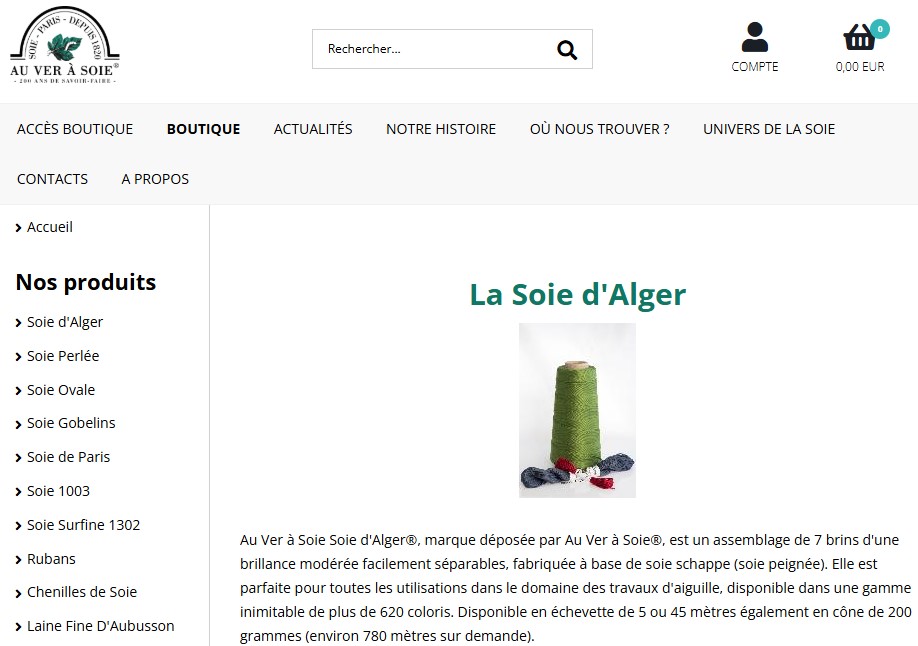
In addition to this, I am a keen amateur embroiderer and on a trip to Paris in recent years I discovered a silk embroidery floss called ‘soie d’Alger’ (Algiers silk), considered one of the finest silk embroidery threads available, produced by the family-owned firm Au ver à soie. Their website suggests that there is no connection between this stranded embroidery floss and the city of Algiers. The silk itself is imported from China, and the name ‘soie d’Alger’ is believed to be related to the process of spinning the stranded silk. But I am reluctant to accept this lack of geo-political connection without some investigation. Irene has pointed me in the direction of French press database Retronews and highlighted several articles on the French production of silk in Algeria under French rule. She also sourced a number of colonial exhibition catalogues and agricultural reports from the 19th and 20th centuries containing information on the production of fibres including silk, wool and cotton in French Algeria. Continue reading “Books on North African Textiles at Cambridge University Library”
North Africa in Cambridge University Library’s Francophone and Arabic collections
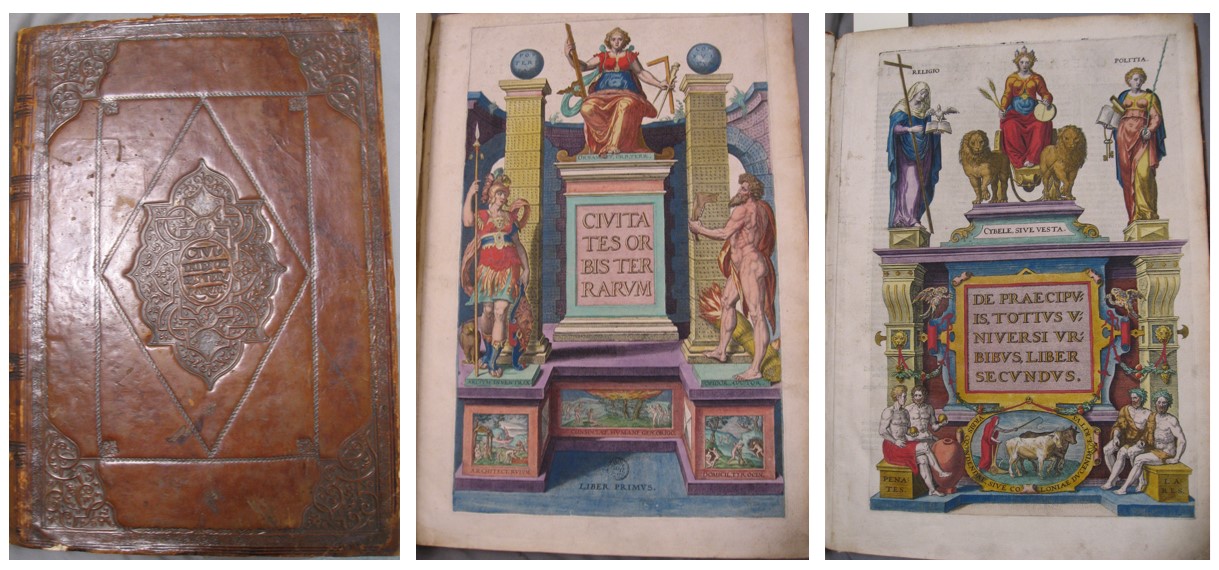
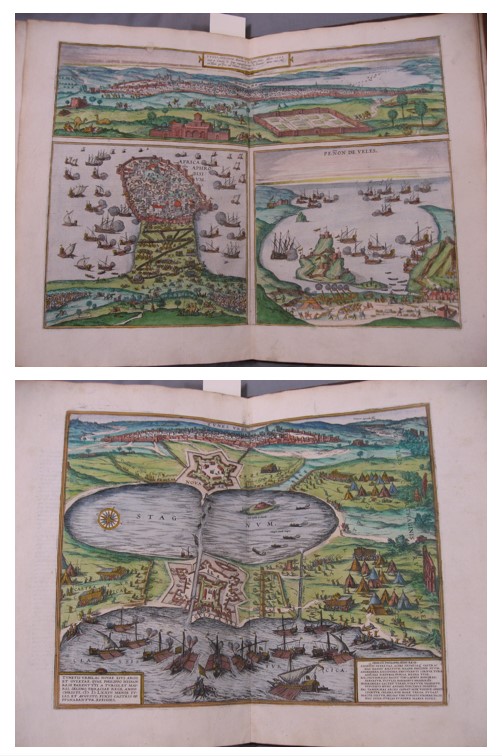
It has been a year since the Fitzwilliam Museum exhibition Black Atlantic: Power, People, Resistance, and the CCC network (Collections Connections Communities Strategic Research Initiative, which encompasses Cambridge University’s museums, garden, libraries, and archives) has just published a report on African Collections Futures, about Africa-related objects and materials present across the University of Cambridge. A few weeks ago, we organised at the library a display of books from North Africa, focusing on items about and from Morocco, Algeria and Tunisia (mainly Francophone, but including some Arabic material). This gave us the opportunity to showcase key collections among Cambridge University Library’s holdings. While older material often provided a Western perspective regarding the Maghreb, for 19th and 20th century works, we focused on publications emanating from these countries (historically marked by a strong colonial outlook); we still collect current Francophone publications from the region.
Continue reading “North Africa in Cambridge University Library’s Francophone and Arabic collections”
Haiti in Cambridge University Library’s collections
A few months ago, we were delighted to welcome two visitors from Haiti to Cambridge University Library: Jean-Claude Legagneur, painter and director of the Musée du Panthéon National Haïtien, and the historian and writer Daniel Supplice. They were invited to Cambridge by colleagues from the Fitzwilliam Museum, in preparation for the forthcoming Black Atlantic exhibition, and were able to meet colleagues from the Modern Languages and History faculty. This gave us the opportunity to exhibit some of Cambridge University Library’s holdings related to Haiti, including current publications focusing on Haitian literature and art, in Creole and French, but also English and Spanish (academic works, along with other material, such as children picture books translated into Haitian Creole, from the Legal Deposit collections). The display included books published in Haiti (this year we added a new supplier, Libros de Barlovento), the UK, France, Canada, etc., and works about the history of the island (aspects of its earlier history; studies of Taíno archaeological remains and the culture of this indigenous Caribbean people; or later emblematic political figures, such as Toussaint Louverture). The visit of Cambridge UL was followed by a tour of the Wren Library at Trinity College with a display of livres d’artistes from its Kessler collection.
Continue reading “Haiti in Cambridge University Library’s collections”
Ukraine, agriculture, and war
It is hard to believe that the three-month anniversary of the 2022 Russian invasion of Ukraine occurred this week. As the war slips down the headlines despite the ongoing intensity of fighting, air attacks, and civilian and military loss of life, it is more important than ever to talk about the war and share information about it and the country it is being waged against.
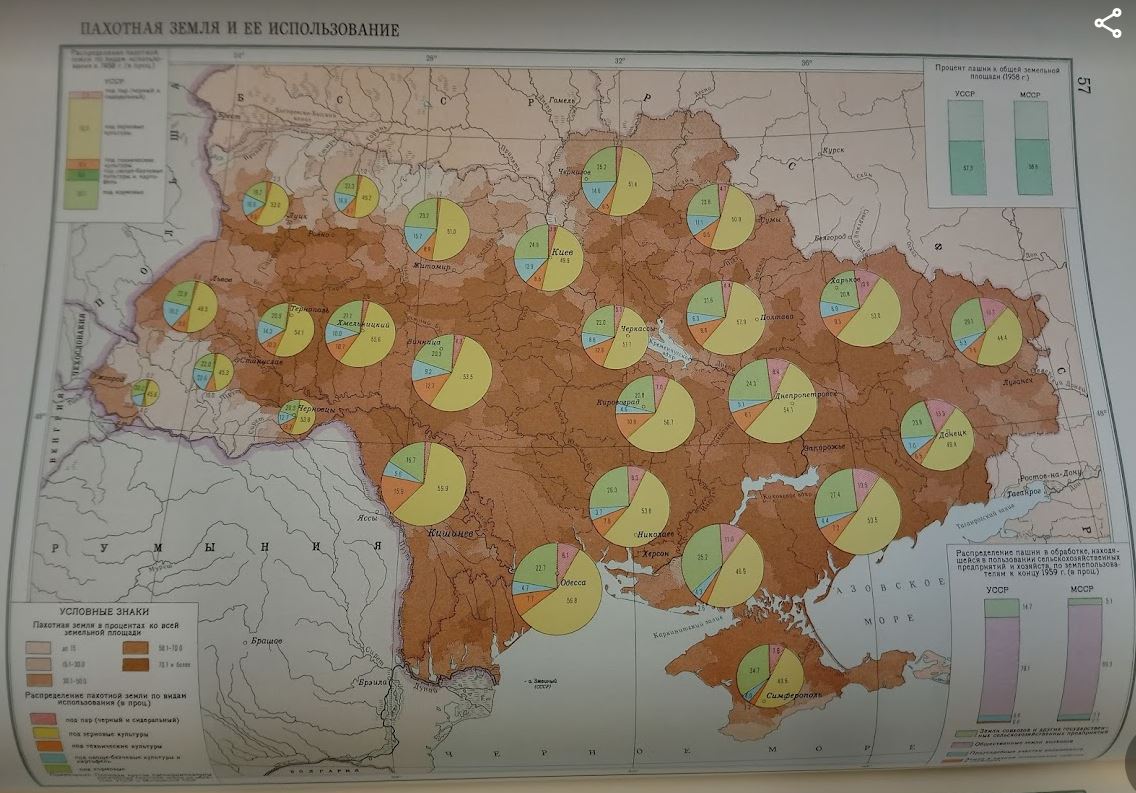
When I was recently in the UL’s Maps Room, looking at a map of Mariupol, I also spent some time looking through a 1962 Soviet atlas printed in Moscow about Ukraine and Moldova. It struck me again and again, as I studied thematic map after thematic map, how extraordinary and ridiculous it is that Ukraine – the largest country wholly situated within Europe – was so little known to the majority of the world until this year. Even the events of 2014 – the Maidan protests, followed by illegal annexation of Crimea by Russia and the outbreak of war in East Ukraine led by Russia-backed separatists – didn’t manage to put this huge and fascinating country on the map of most people’s minds, which is in part why the 2022 Russian invasion is often not understood as having had – despite the shock of the actual invasion – an 8-year lead in.


Mariupol : the April 2022 Slavonic item of the month
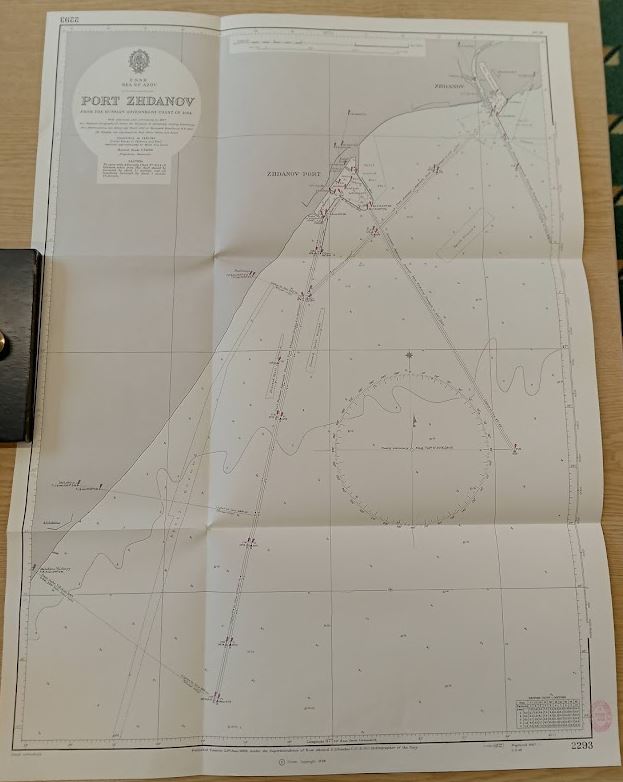 All of us have learned the names of Ukrainian cities and towns from the shocking and heartrending news about Russia’s war against Ukraine, and the name of Mariupol has appeared probably most frequently of all. This blog post – written while desperate attempts continue to be made to arrange safe passage at least for the civilians in the besieged Azovstal factory complex – looks at a map of Mariupol from 1967.
At that stage, Mariupol (Маріуполь) had another name, being one of many places renamed in the Soviet period after Soviet politicians – in Mariupol’s case after Andreĭ Zhdanov (1896-1948), who was born in the city. This map, then, has the city as Zhdanov (Жданов), which name it held from 1948 until 1989. Continue reading “Mariupol : the April 2022 Slavonic item of the month”
Pierre Boucher and New France
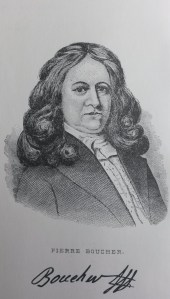
Pierre Boucher was born in Mortagne-au-Perche, France in 1622. When he was twelve, his family left to settle in New France (Canada). His father, Gaspard, worked for the Jesuits in Notre-Dame-des-Anges (Quebec) and they took care of the education of the children, especially Pierre. He was interested in the life of the native peoples and he became interpreter of Iroquoian languages, particularly Huron. He was a missionary assistant to the Jesuits in Huronia from 1637 to 1641.
Pierre Boucher, like New France pioneers Samuel de Champlain and Jean Talon, believed in miscegenation with the native peoples. Pierre married Marie-Madeleine Chrestienne (or Marie Ouebadinskoue) a Huron girl educated by the Ursulines, who later died in childbirth (1649) along with their child. In 1652 he married Jeanne Crevier, with whom he had fifteen children. From 1645 to 1667, he lived in the little settlement of Trois-Rivières (see View 1 below), founded in 1634 and second permanent settlement in New France after Quebec City. Boucher was twice-governor of Trois-Rivières (1653-58, 1662-67). Continue reading “Pierre Boucher and New France”
The Empire’s iron road : the October 2016 Slavonic item of the month
This post examines one of the exhibits in the online ‘Crime and Punishment at 150′ exhibition, a 19th-century map of the railway lines in Asian Russia. Location plays a major part in the novel and was a major focus of the exhibition in turn. Crime and Punishment is set chiefly in St Petersburg and is full of local detail about the imperial capital. The Siberian setting of the epilogue is anonymised, in obvious contrast. This vast map gives a good idea both of the scale of the Asiatic part of the Russian Empire but also of the work involved in laying down in iron the Romanovs’ reach to the East.
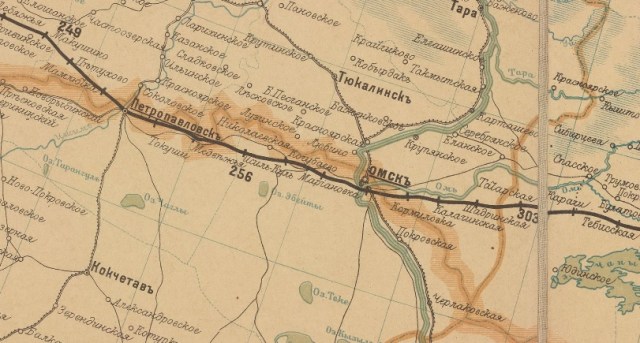
The map was produced in 1899 by the Ministry of Railways (the formal term for railways here, and in the name of the map, is “lines of communication”). The online image cannot quite convey the extraordinary size of the map. As its record on iDiscover shows, it is a vast 180 cm wide and 80 cm high. Our copy is cut into sections to allow the whole to be folded up; one of the internal seams can be seen towards the right in the close-up above. Dostoevsky served his own sentence in Omsk (shown centre-right here), and this is the location often imagined by readers of Crime and Punishment as Raskolnikov’s place of imprisonment.
As explained in a previous blog post on the exhibition, the captions were written largely by University of British Columbia undergraduates taking a Dostoevsky course. The caption for this item was written by Olivia Chorny. “As a convict (for his membership in the Petrashevsky Circle) in Siberia,” she wrote, “Dostoevsky suffered myriad health problems, frostbite, abuse from other prisoners, unimaginable filth, and starvation … Yet his Siberian experience also helped Dostoevsky develop his personal philosophy and ideas about inequality, the nature of freedom, and the importance of hope.” Continue reading “The Empire’s iron road : the October 2016 Slavonic item of the month”
Cataloguing: it’s hungry work
We try on this blog to give an idea about the depth and breadth of the collections of the University Library and other libraries in Cambridge University. We have old books and new books, big books and small books. Some are pleasant to look at, some are quite basic. Across the libraries of the University of Cambridge, we try to cover a broad range of subjects. We deal with some very quickly; others are more challenging to put in the catalogue. Some of these books (if I’m honest) appear to be boring and dry. Others make me salivate. This post focuses on the latter category. Continue reading “Cataloguing: it’s hungry work”
 Languages across Borders