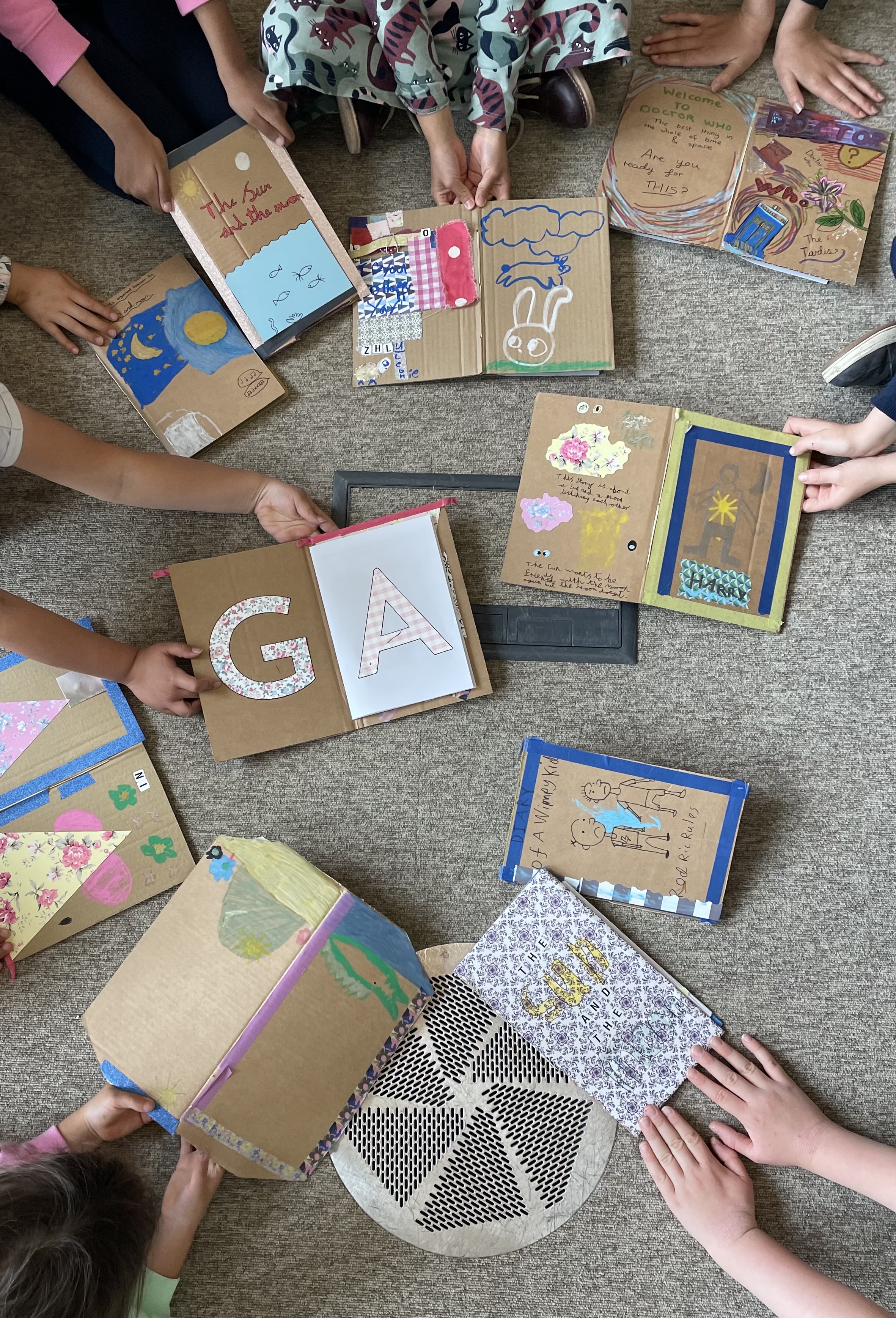
Since our team began collecting Latin American cartonera books, the question of how to promote engagement with this unique collection has always remained relevant. What is a meaningful and respectful way to engage with such a special kind of book? The team was able to continue exploring answers to this question after being awarded funds by the West Hub’s Small Grants Programme, which aimed to offer inclusive, creative, sustainable events with demonstrable community impact. Team member Clara Panozzo collaborated with PhD candidate Daniela Meneses-Sala (Centre of Latin American Studies) to design and organise three workshops delivered on 29th, 30th May and 3rd June in the fabulous West Hub premises.
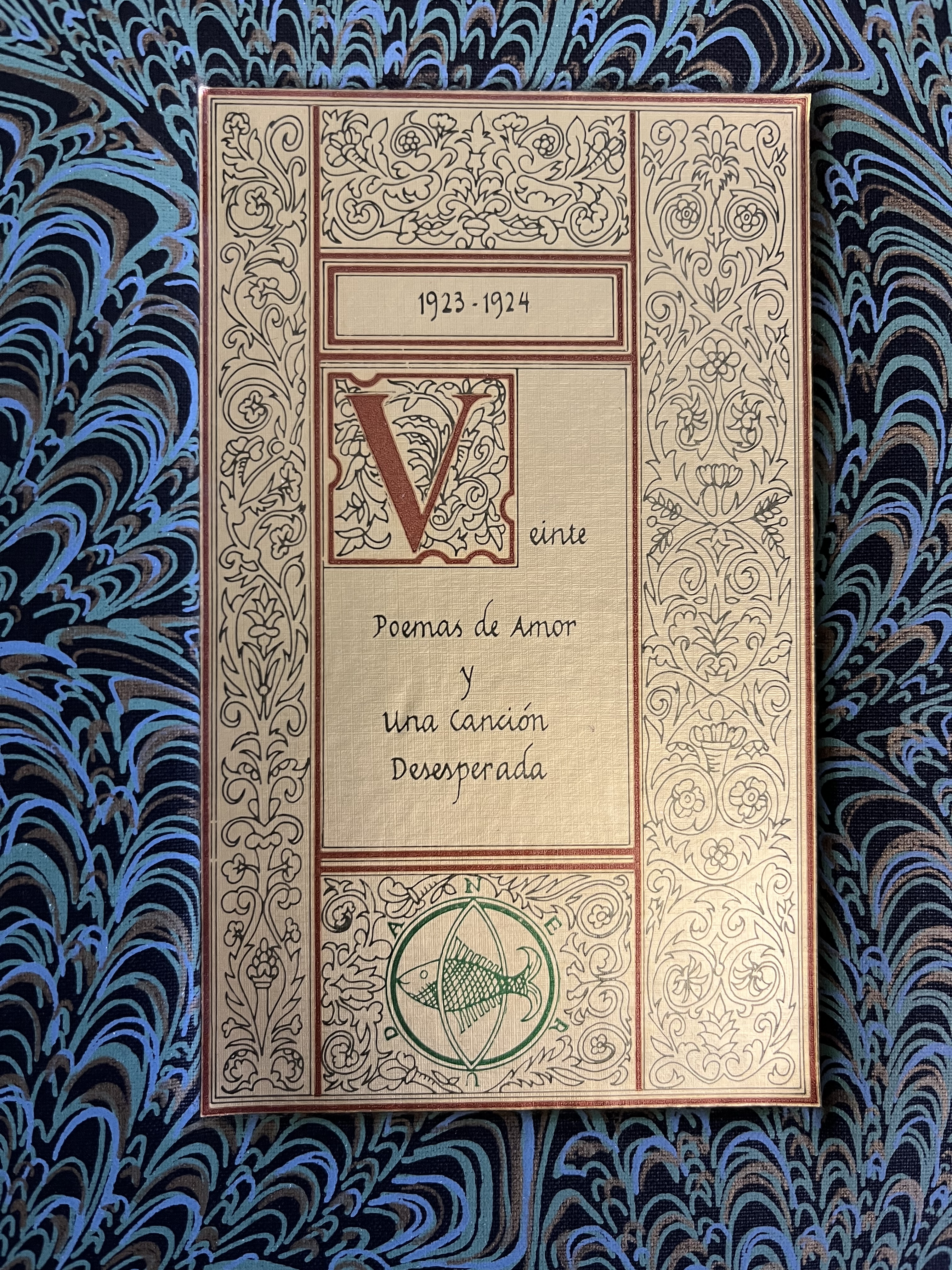
The University Library has recently received a special limited edition of Pablo Neruda’s Veinte poemas de amor y una canción desesperada. Presented to the University in 1991 by Patricio Aylwin Azócar, former President of Chile, this copy is no. 555 of 250 copies printed from 501 to 750 and features a dedication to the University of Cambridge by the Chilean president.
Front cover (RBM.19.a.2)
Pablo Neruda (Chile, 1904-1973) won the Nobel Prize for Literature in 1971. He is best known for his poetry, most notably this work, which he wrote in 1924 when he was just nineteen years old. Neruda’s works are widely represented in the Cambridge Libraries collections, both in Spanish and in English translation (click here to view our holdings in iDiscover).
This particular edition of Twenty love poems and ‘A song of despair’ was printed by Ismael Espinosa in 1990 in Santiago de Chile.[i] It is presented in elephant folio, with a satin ribbon, illustrated with eight original glazes by Chilean magical realism painter Hernán Valdovinos. The volume is beautifully bound in peacock-feather decorated cloth, with gold paper-title-label insert on the front panel and marbled endpapers.[ii] The calligraphy is by María Angélica Seguel.
In this post we will introduce the last addition to our series of posts on Latin American handmade books. We have been developing Cambridge’s cartonera collection since 2013. Ten years, various blog posts and events, a research project collaboration, a book chapter contribution and 271 books later the collection offers a broad panorama of the production of unique books made by hand often in a context of material scarcity and always channelling voices outside of the mainstream.
The bulk of the collection is represented by cartonera books, categorised as items made with hand painted cardboard covers and part of the big publishing movement that originated from Eloisa Cartonera in Argentina in 2003 and which chiefly came to the Library through the AHRC funded project “Cartonera Publishing: Relations, Meaning and Community in Movement project”. It is however important to point out that, of course, cartonera were not the first ever handmade books produced in Latin America and it was always our intention to give context to this collection by also purchasing contextual material that would provide examples of those publishers that came before and after, as a way to depict the wide and rich picture of Latin American independent publishing. It is with that intention in mind that the collection includes examples of Taller Leñateros from Mexico and of Ediciones Vigía from Cuba, which started their activities in the 1970’s and 1980’s, respectively.
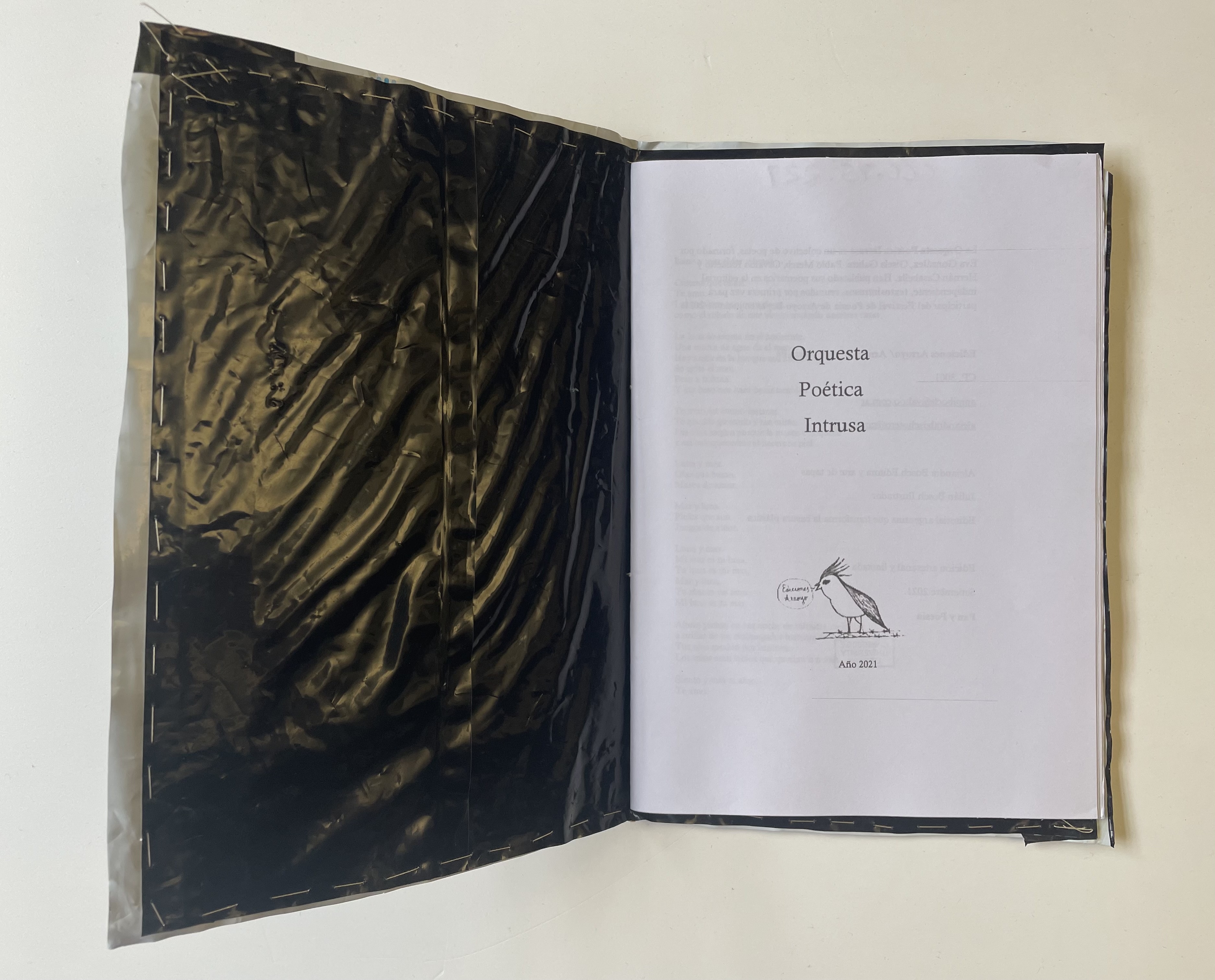
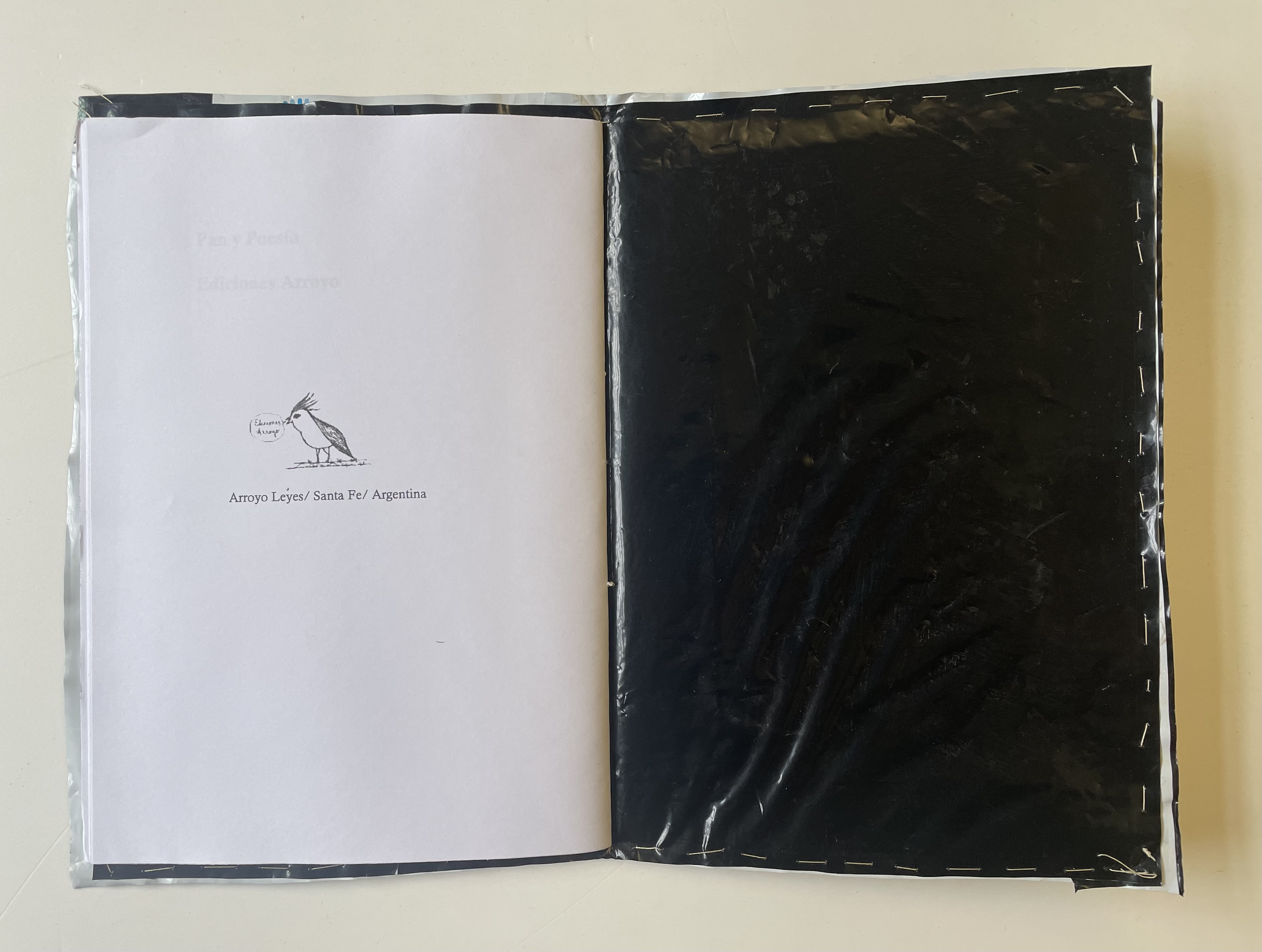
The last additions to the collection, and the focus of this blogpost, are 11 books published by Ediciones Arroyo, based in Arroyo Leyes, a village in the province of Santa Fe, in the heart of Argentina’s vast and intensively farmed lands. Ediciones Arroyo was funded by Alejandra Bosch in 2016 and she openly recognizes the influence the cartonera movement had in its creation. It does share many characteristics with cartonera books: they are handmade, they re-utilise otherwise wasted material and they publish mainly authors not known outside of the dominant media. However, Ediciones Arroyo follow their very own creative path: their covers are made by using cleaned milk cartons and sachets (inside-out), using a characteristic collage of coloured vinyl letters to add titles or authors’ names in their covers; they publish poetry written exclusively by authors from the provinces and they are all handmade and illustrated by Alejandra and her son, Julian Bosch, in their home in Arroyo Leyes, for zero profit. But to think that the publisher works in distant isolation would be a mistake. As well as publishing, Alejandra and Julian organise a yearly poetry festival in Arroyo Leyes in close and enthusiastic collaboration with local supporters (organisations that offer venues, businesses that cater for food, neighbours that offer free accommodation). The festival gathers poets from around the country, who in turn feed into the publishing selections, by writing poems and often contributing financially to the project and also by sending milk sachets and cartons by post to contribute to the material production of the chapbooks. These are donated by village neighbours too, as a single household milk consumption couldn’t possibly supply such a prolific publisher!
In a country where most of the cultural and political powers reside in the capital city of Buenos Aires, having a very active and creative independent publisher building strong artistic, social and affective networks from an “anonymous” village in a monotonously landscaped region otherwise dominated by the push to produce “high value goods” (Santa Fe province is Argentina’s major OGM soy exporter), is of major significance. In a very interesting article, Alejandra questions the idea of “being at the margins”:
“[…] I am not in a margin; I am at the centre. This is the political decision I have taken when it comes to manage [cultural activities]: to feel that I am at the centre of a territory that irradiates. If we place ourselves and accept that we work, write, publish and manage at the margins, then we are facilitating that conflict […] Arroyo Leyes is the centre of a world that many people have built together and that is being replicated in many other areas of the country.”
Our Library is the only library in the UK holding items by Ediciones Arroyo. We are extremely grateful to their creators and to our local bookseller, García Cambeiro, who facilitated their acquisition. Our selection aims to represent a small but hopefully faithful sample of the world they continue to create; we have chosen poets from different Argentine provinces:
Fernando Callero (Entre Ríos)
Francisco Bitar and Larisa Cumin (Santa Fe)
Aníbal Costilla (Santiago del Estero)
Micaela Godoy (La Rioja)
Dafne Pidemunt, Tamara Pradon and Fernando Noy (Río Negro)
Walter Lezcano and Gustavo Tisocco (Corrientes)
They are available to consult in the Rare Books reading room. If you have any questions, please do not hesitate to contact us: hispanic@lib.cam.ac.uk.
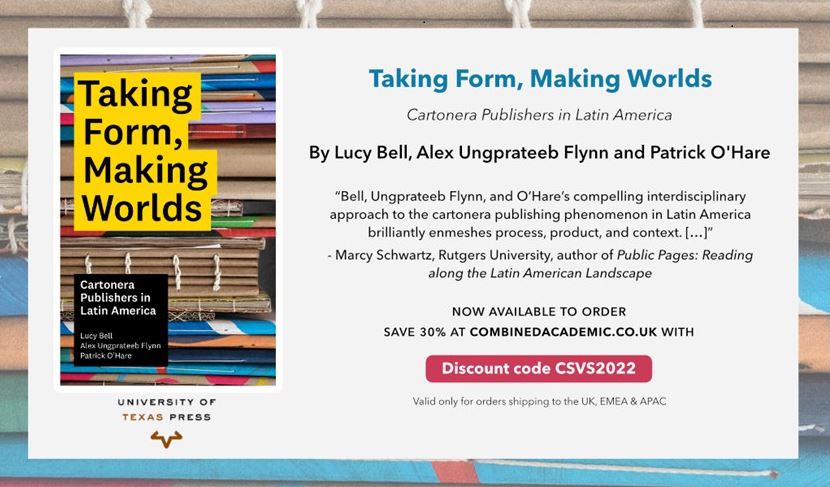
Lucy Bell (Senior Lecturer in Spanish and translation studies, University of Surrey), Alexander Ungprateeb Flynn (Assistant Professor of Anthropology and Contemporary Art, UCLA) and Patrick O’Hare (UKRI Future Leaders Fellow, University of St. Andrews) have collaborated with the University Library in the building up of our cartonera collection . They will be presenting and discussing their new book, the first comprehensive study of cartonera, in conversation with David Lehmann (University of Cambridge) and Clara Panozzo (Latin American and Iberian Collections, Cambridge University Library). The book is published by the University of Texas Press and is available online for Cambridge users here.
Drawing on interdisciplinary research conducted across Mexico, Brazil, and Argentina, the authors show how this hands-on practice has fostered a politically engaged network of writers, artists, and readers. More than a social movement, cartonera uses texts, workshops, encounters, and exhibitions to foster community and engagement through open-ended forms that are at once creative and social.




 Languages across Borders