Gregory Rabassa, 1922-2016

m3644431465923242
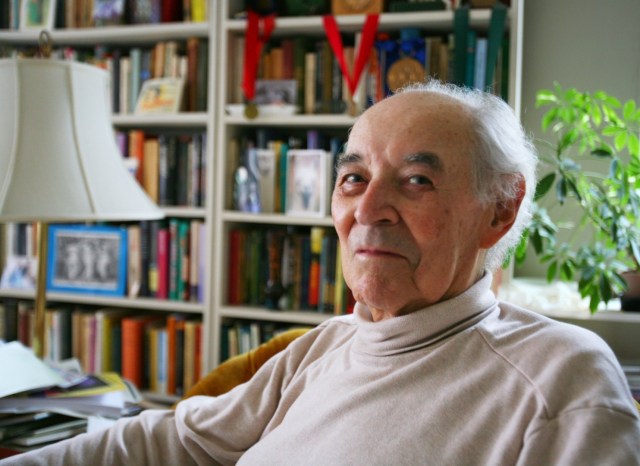
Gregory Rabassa in 2007 (Andrew Harrer/Bloomberg News)

Many of the Latin American Boom’s greatest writers owe much of their international acclaim to one man: Gregory Rabassa, who passed away last month.

Rabassa’s English translations of Julio Cortázar’s Hopscotch (9743.c.74), Mario Vargas Llosa’s The green house (9743.c.108) and, in particular, Gabriel García Márquez’s One hundred years of solitude (9743.c.116) sold millions of copies and brought these authors to a much wider audience. He enjoyed a particularly close and mutually appreciative relationship with Cortázar and also translated the great Brazilian authors, Clarice Lispector, Jorge Amado and Machado de Assis, amongst many others. Continue reading “Gregory Rabassa, 1922-2016”
Latin American Graphic Novels in the UL

This is a guest post by Joanna Page, Senior Lecturer in Latin American Cultural Studies and Director of the Centre of Latin American Studies.

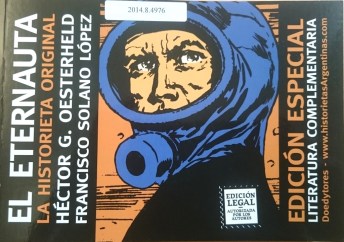
el_eternauta
Cover of our copy of El eternauta (2014.8.4976)

The graphic novel has been enjoying a boom in many regions of the world, and is increasingly finding a serious, adult readership. Following on from Art Spiegelman’s renowned Maus (1980-1991), which demonstrated as never before the potential in graphic fiction for the treatment of important political themes, writers such as Joe Sacco, Marjane Satrapi, Chris Ware and Alison Bechtel have found the graphic novel to be a very effective medium to reflect on contemporary topics from war and religion to social isolation and sexuality. Continue reading “Latin American Graphic Novels in the UL”

100 years without Rubén Darío

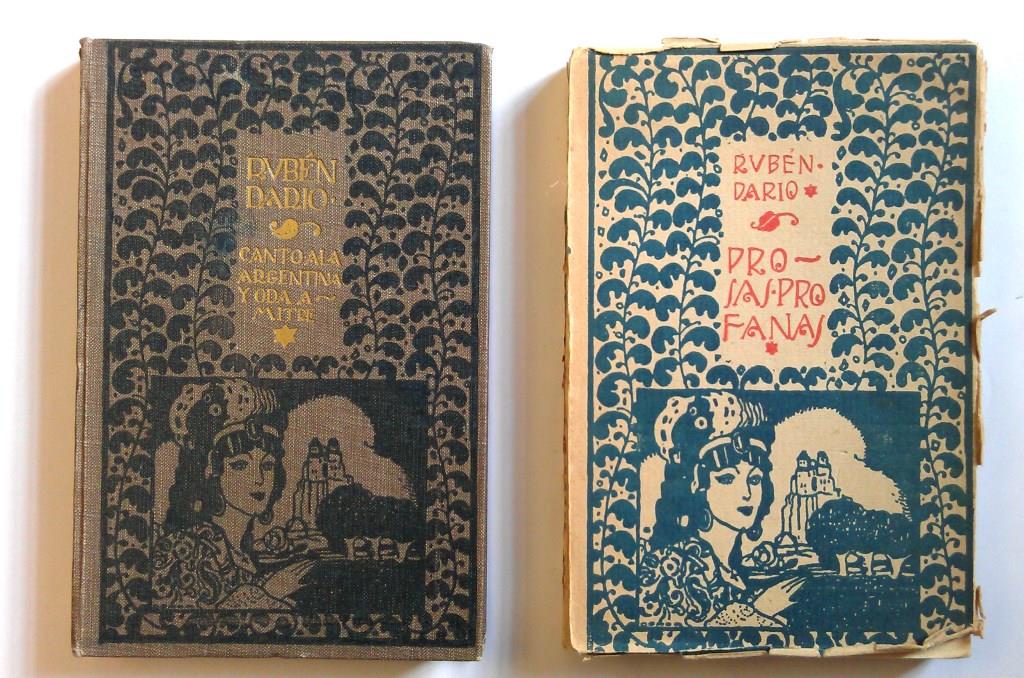
Covers illustrated by Enrique Ochoa.

Several Hispanic literary anniversaries will be celebrated in 2016 and these will give us a chance to talk about some very important writers and how they feature in our collections. The first in this series is Rubén Darío, the Nicaraguan writer, who died on February 6th 1916 aged 49 years old, after much pain due to illness related to his alcohol addiction. He was greatly honoured right after his death, his funeral lasting several days and he even had his brain removed to investigate the mystery of his artistic genius and to be kept as some kind of object of veneration.

The University Library has a few first editions of Rubén Darío’s work. La caravana pasa (744:75.d.90.64) is the earliest among them. The book was published in 1902 in Paris by Garnier Hermanos and is one of his least known works. It contains articles about Paris and his travels around Europe which he wrote for the Argentine newspaper La Nación, arranged thematically rather than chronologically with dates and titles removed. It gives valuable and interesting views on the Parisian Belle Epoque. The author also visited London, of which he says: “¡Capital fuerte y misteriosa! Cuantas veces la visitéis, siempre os dominará bajo el influjo de su severa fuerza.” (Strong and mysterious capital! Every time you visit it, it will always dominate you with the influx of its severe strength). Continue reading “100 years without Rubén Darío”

An influential polymath: Alexander von Humboldt

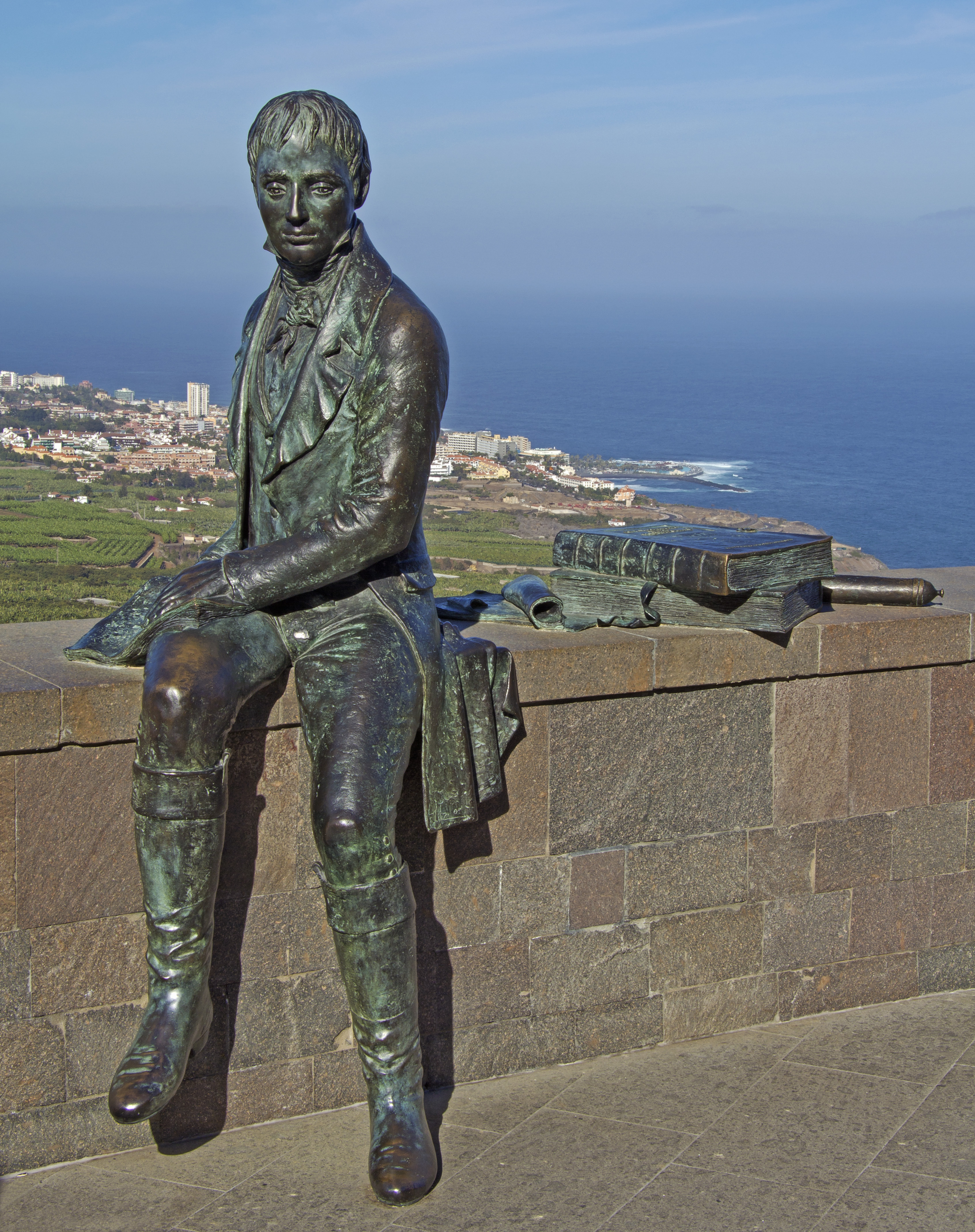
Mirador_Humboldt_01
Bronze sculpture of Humboldt by Ana Lilia Martin at Mirador Humboldt, northeast slope of Orotava valley, Tenerife where he stopped on his way to Latin America. Photo by Koppchen via Wikimedia Commons

Tuesday 26th January sees the announcement of the 2015 Costa Book of the Year winner. One of the books in the running for this prize is The Invention of Nature: Alexander von Humboldt’s new world by Andrea Wulf (382:2.c.201.21) which has already won the Costa Biography award for 2015 and would be a good starting point for finding out more about the life of Alexander von Humboldt (1769-1859).

Humboldt Penguin (Spheniscus humboldti)
Humboldt penguin. Photo by Gregory Moine via Wikimedia Commons

A renowned figure in Germany and across Latin America, he is less well-known in this country – we may have heard of the Humboldt penguin, named after him (along with countless other species, world geographical features and place names) but most people know very little about the life of this extraordinary naturalist, explorer and geographer. Continue reading “An influential polymath: Alexander von Humboldt”

Argentinian Acquisitions

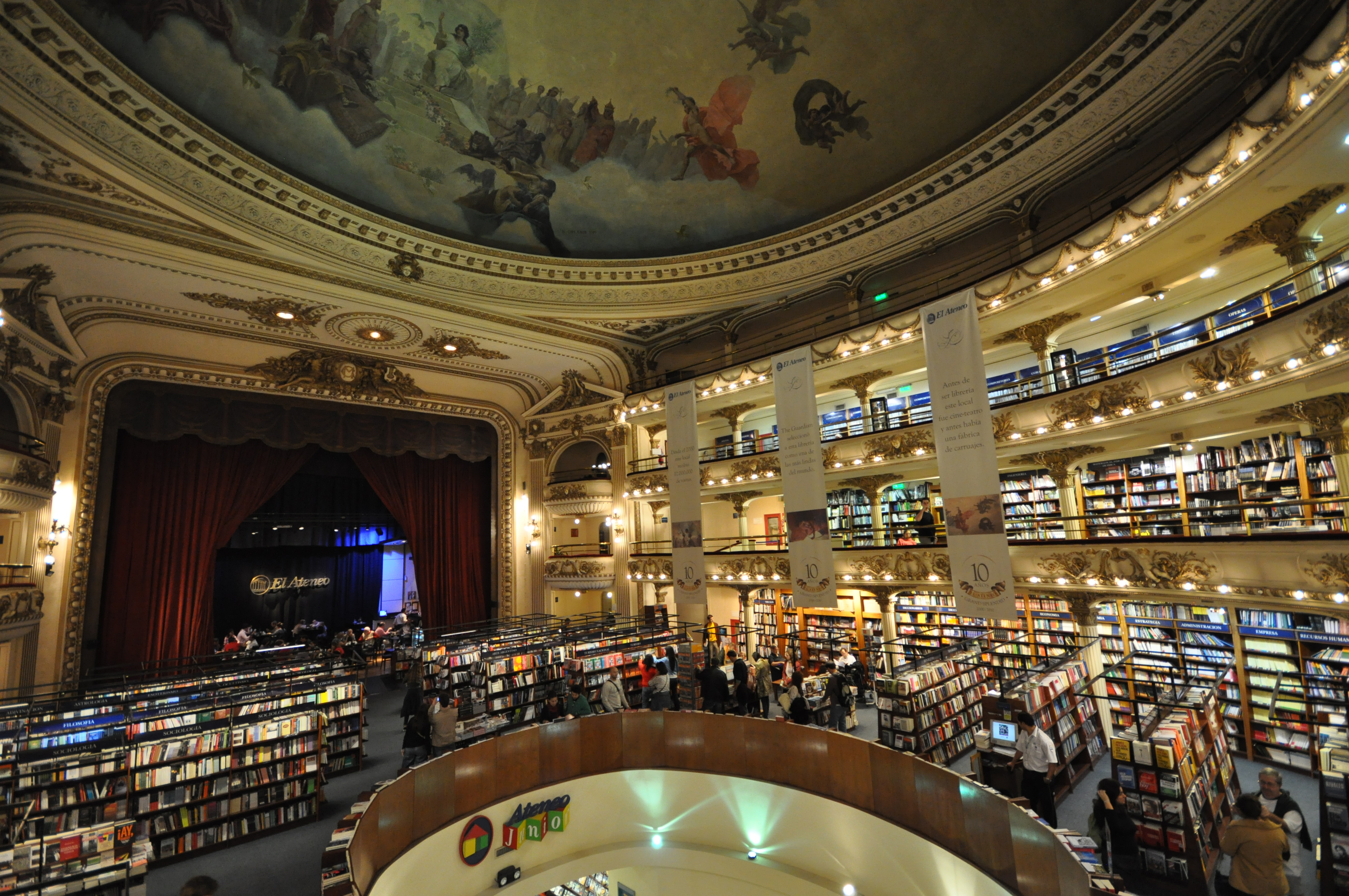
With a population of 2.8 million, Buenos Aires has 734 bookstores, an average of 25 for every 100,000 inhabitants. This is a staggering number – if compared with London, for example – with just 10 bookstores for every 100,000 people, as The Guardian reports. In the linked article, Uki Goñi argues that the exemption of books from standard sales tax in Argentina is partly responsible for the industry boom.

El Ateneo Grand Splendid, one of the most well-known bookshops in Buenos Aires. Photo by Flickr user Jorge Láscar.

Continue reading “Argentinian Acquisitions”

The secret lives of a poet: Olga Orozco

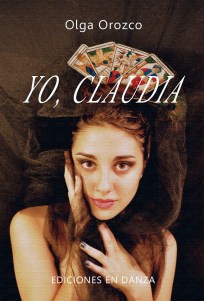
Browsing through our recently received Spanish books I came across the weird-looking cover of Yo, Claudia, a collection of articles published in the Argentinian monthly magazine Claudia, roughly between 1966 and 1970.

Yo, Claudia gathers a selection of letters and essays written by the poet Olga Orozco (1920-1999), who, during her life, undertook many jobs to

Yo Claudia
C210.c.2948

support her literary interests, from journalist to radio drama actress. Her work for Claudia, however, is particularly interesting. Claudia’s readership was interested in articles on fashion, entertainment, art, politics and literature, written by some of the most prominent intellectuals of the time. What originally was an asset eventually became a problem when in 1976 the publisher had to flee to Brazil, as it was accused by the Argentinian regime of supporting subversive journalists. Orozco’s collaboration was certainly valued, although, in order to please the publisher, she had to conceal her identity under eight different pseudonyms, each one for a different column. Continue reading “The secret lives of a poet: Olga Orozco”

General elections in Latin America

A major focus of the University Library’s collection development policy for material in Spanish and Portuguese is the history of Central and South America, as explained on the Latin American & Iberian Collection webpages on the UL website. Coverage of specific periods in history varies from country to country. Contemporary history and in particular politics and government, however, are areas where our collections are particularly strong. Continue reading “General elections in Latin America”

Digital Repository of the Economic Commission for Latin America and the Caribbean (CEPAL) freely available online

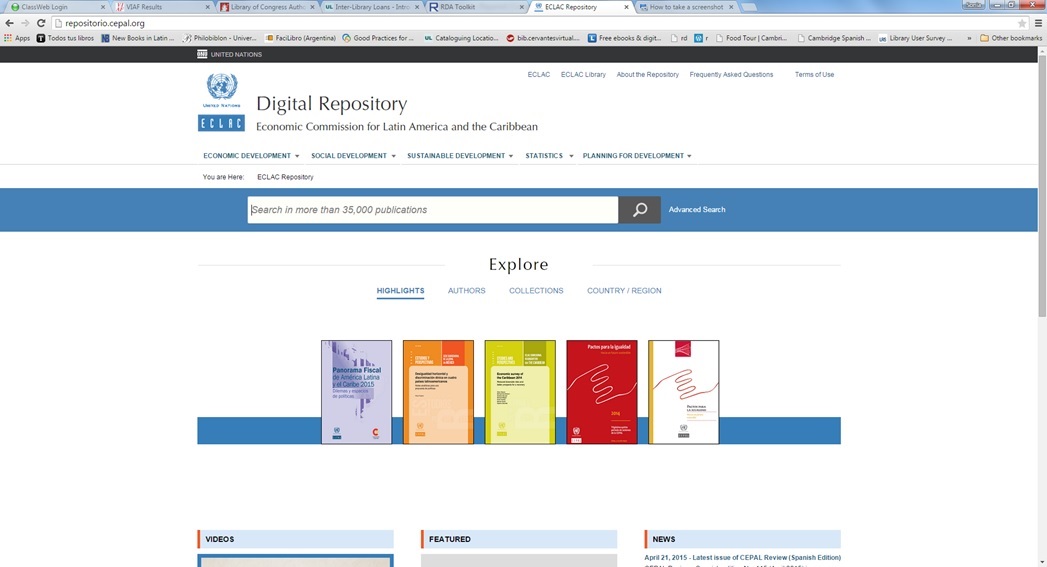
ECLAC Digital Repository homepage

The Digital Repository of the Economic Commission for Latin America and the Caribbean (ECLAC; CEPAL in Spanish) provides free online access to over 35,000 official documents at: http://repositorio.cepal.org/

Originally established in 1948 under the name Economic Commission for Latin America, ECLA later broadened its scope to include the Caribbean countries and became the Economic Commission for Latin America and the Caribbean (ECLAC). Continue reading “Digital Repository of the Economic Commission for Latin America and the Caribbean (CEPAL) freely available online”

Cartoneros

Libros_de_Eloísa_Cartonera_Noche_Librerias
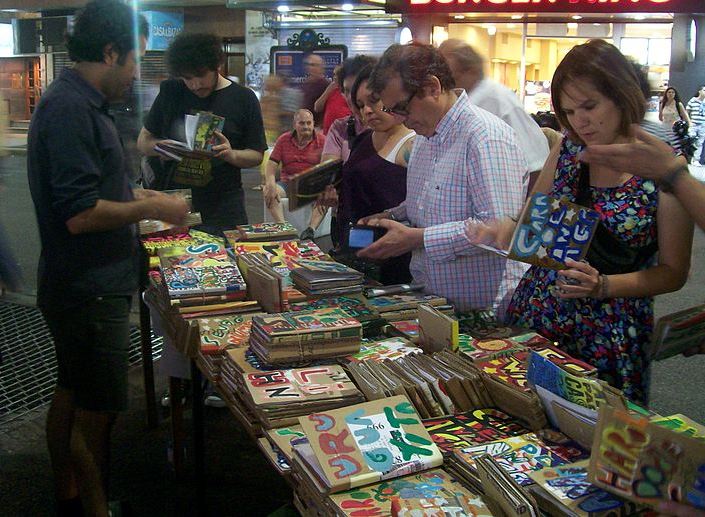
Colourful Eloisa Cartonera’s books at a stall at the “Noche de las Librerías”, 2011. (Image taken from Wikimedia Commons)

When in 2001 Argentina went bankrupt, thousands of families lost everything, or almost everything. Many had to find new ways of survival and many joined the cartoneros force, the street cardboard pickers who, after long hours of walk around the city with their carts, would sell what they had collected to be recycled. In these times of crisis, the country also saw the rise of diverse forms of cooperativism and solidarity within communities (such as barter groups, communitarian urban allotments or the collective running of closed factories).

In this context, two writers and an artist in Buenos Aires (Washington Cucurto, Fernanda Laguna and Javier Barilaro), who would normally self-produce and self-publish their work but couldn’t do so anymore because of the highly increased price of paper, created in 2003 an independent non-lucrative cooperative publishing house: Eloisa Cartonera. Continue reading “Cartoneros”

Goodbye to the Chilean queen

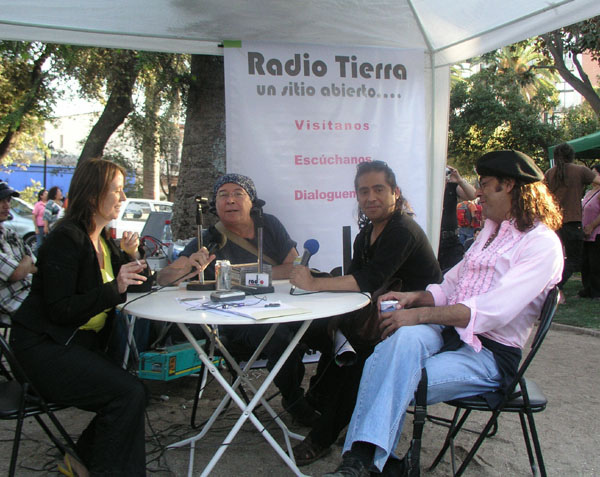
On Friday 23 January the Chilean writer, artist and activist Pedro Lemebel died of cancer. One of the most important and provocative queer voices of Latin America, Lemebel’s anti-establishment writings and performances are landmark works. Diamela Eltit, Visiting Simón Bolívar Professor at the Centre of Latin American Studies, wrote this piece on him (published originally in Spanish in the Chilean magazine “The Clinic”) and has kindly agreed to its posting on our blog. To see a list of works by and on him held at the Library, please click here.

OLYMPUS DIGITAL CAMERA
Pedro Lemebel (second from left) in conversation, 2011 (Image taken from Wikimedia Commons, click to enlarge).

It seems unreal writing about Pedro Lemebel, when only a few days have elapsed since his death. Perhaps it isn’t real, as in the world of the arts the notion of death remains ambiguous. This is precisely because, faced with absence, there remains the presence of an oeuvre that is very much still there – alive, available and ready to inhabit the varied presents of the future.

Las yeguas del apocalípsis (1987) signalled the founding of a collective (Pedro Lemebel and Francisco Casas) that would reveal the transvestite body as both the object and subject of critical intervention. Their performance art, staged in various ways, maintained a relationship with their predecessors, who had portrayed the homosexual body from an aesthetically challenging perspective. Continue reading “Goodbye to the Chilean queen”