
As many of us resign ourselves to a 2021 ‘staycation’, how about taking the opportunity to travel through the UL’s French-language collections instead? A number of recent acquisitions conveniently explore travel history and narratives!
Continue reading “Bon voyage! New French-language travel history books in the University Library”Tag: French literature
New French ebooks resource!
The past year, with its challenges of library closures and restriction of movement, has highlighted for us all the importance of remote accessibility to library collections and the benefits of e-resources. Traditionally, French-language ebooks have been harder for institutions like the UL to procure, as our established ebook suppliers primarily focus on English-language material. Most French publishers individually provide their own online resources without institutional access, and where ebooks are made available they are often unfeasibly more expensive to purchase than the print equivalent. As a result, the UL’s French-language acquisitions, up to now, have had to rely heavily on printed editions.
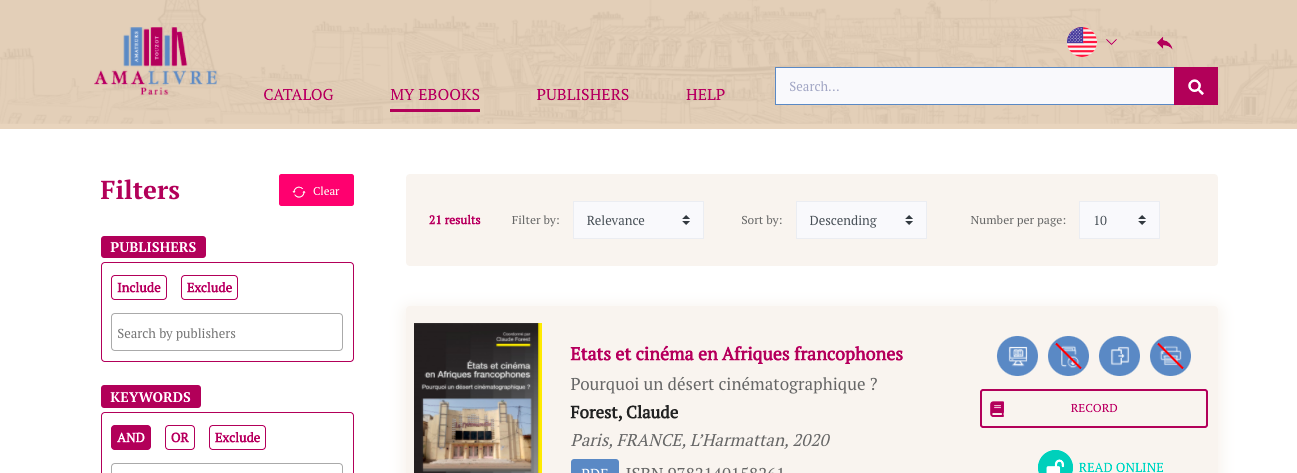
In the last month, however, French book supplier ‘Amalivre’ has launched its own ebooks platform, offering a wide selection of material from over 70 publishers, such as L’Harmattan, Honoré Champion and CNRS! All of the available publications currently permit unlimited readers to access them at once and from anywhere in the world, provided the user is logged into iDiscover.
Continue reading “New French ebooks resource!”A follow-up on the latest Francophone prizewinners post
Although it may not look like it, a certain amount of thought went into the latest blog post on Francophone literary prizewinners. Five French overseas and francophone prizes were added to the list of mainland French prizes that we usually feature:
- Comar d’Or: a Tunisian prize for Tunisian novels running since 1997. Each year, one novel written in French and one written in Arabic are selected.
- Grand Prix du Roman Métis: created in 2010 by the city of Saint-Denis in La
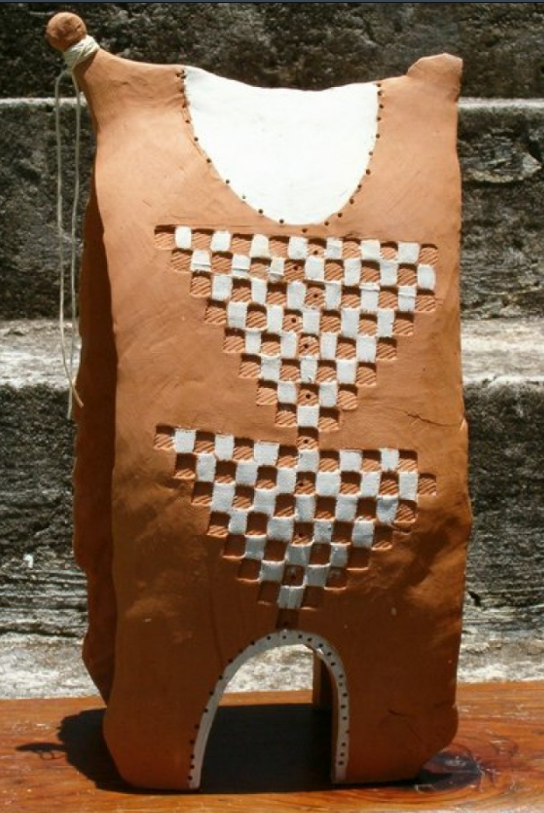
Bonbon Chouval by Victor Anicet, trophy of the Carbet prize (source: Victor Anicet’s website)
Réunion (Indian Ocean island and a French overseas territory), it is awarded to a novel written in French that highlights values of diversity, exchange and humanism, and aims at strengthening links between francophone writers. - Prix Carbet de la Caraïbe et du Tout-Monde: created in 1990, administered by l’Institut du Tout-Monde, it is given to an essay or work of fiction illustrating both the plurality and unity of the Caribbean and the Americas. Works selected are written in (or translated into) French or French Creole. The Institut du Tout-Monde was founded by Martinican writer Édouard Glissant, who first directed the prize.
- Prix des 5 continents de la Francophonie: created in 2001 by l’Organisation internationale de la Francophonie, the prize aims to highlight the cultural and editorial diversity of the French language around the world. The Organisation serves 88 countries; its foundations were laid in 1970 by the president of Senegal and poet Léopold Sédar Senghor, the president of Tunisia Habib Bourguiba, the president of Niger Hamani Diori and the king of Cambodia Norodom Sihanouk.
- Prix littéraire Fetkann! Maryse Condé, “Mémoire des Pays du Sud, Mémoire de l’Humanité”: created in 2001 by the Centre d’Information, Formation, Recherche et Développement pour les Originaires d’Outre-Mer (CIFORDOM), it is awarded to literary works highlighting republican principles and preserving the memory of countries of the Global South. It is open to writers of any country. The CIFORDOM was founded by Guadeloupean engineer, politician and activist José Pentoscrope to advocate for and support overseas citizens coming to the mainland.
Continue reading “A follow-up on the latest Francophone prizewinners post”
Francophone literary prizewinners, 2018-2019
Each year, Cambridge University Library acquires French and Francophone books that have won important literary prizes, usually awarded in the autumn, after the “rentrée littéraire”. While the books which have been awarded literary distinctions in 2020 are on order, here are the 2018 and 2019 prizewinners in the French-speaking world:
Comar d’Or: 2018: Les lendemains d’hier :  roman by Ali Bécheur C205.d.3961; 2019: Jugurtha: un contre-portrait by Rafik Darragi C206.d.4272
Grand prix du roman de l’Académie française: 2018: L’été des quatre rois : juillet-août 1830 : roman by Camille Pascal C206.d.4319; 2019: Civilizations : roman by Laurent Binet C206.d.2438
Grand Prix du Roman Métis: 2018: Des ailes au loin : roman by Jadd Hilal C206.d.4269; 2019: Salina : les trois exils : roman by Laurent Gaudé C215.c.5760
Prix Carbet de la Caraïbe et du Tout-Monde: 2018 Là où les chiens aboient par la queue by Estelle-Sarah Bulle C206.d.4347; (no 2019 winner) Continue reading “Francophone literary prizewinners, 2018-2019”
Droz online: trial access to the series Textes Littéraires Français, Humanisme et Renaissance, and Calvin
Librairie Droz is a Francophone academic publisher founded by Eugénie Droz in Geneva in 1924. It specialises in Medieval and Renaissance studies, literary criticism, art history, history of the book, and social sciences (in particular economic history). Cambridge University Library has a number of standing orders to its print collections, such as Bibliothèque des Lumières, Bibliothèque de l’École des Chartes, Diderot studies, Hautes études du monde gréco-romain, Hautes études médiévales et modernes, Hautes études orientales, Histoire des idées et critique littéraire, Publications romanes et françaises, Seuils de la modernité or Travaux du Grand Siècle. We are starting a one-month trial to its three series available as ebooks: Textes Littéraires Français; Humanisme et Renaissance; and the Calvin database.
The Martin Stone collection of French poetry. Part 2: More than a century of French poetry
In order to give a better view of the collection’s distribution in time, here are the numbers of books per decade:
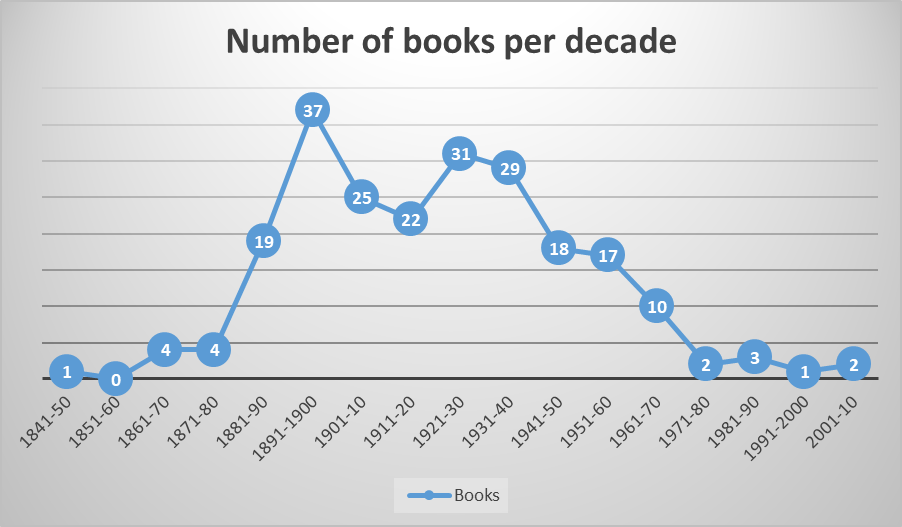
Most of the collection was published between 1881 and 1970. We can see two peaks: the last decade of the 19th century and the interwar period. These were the core times of two important poetic movements, respectively symbolism and surrealism.
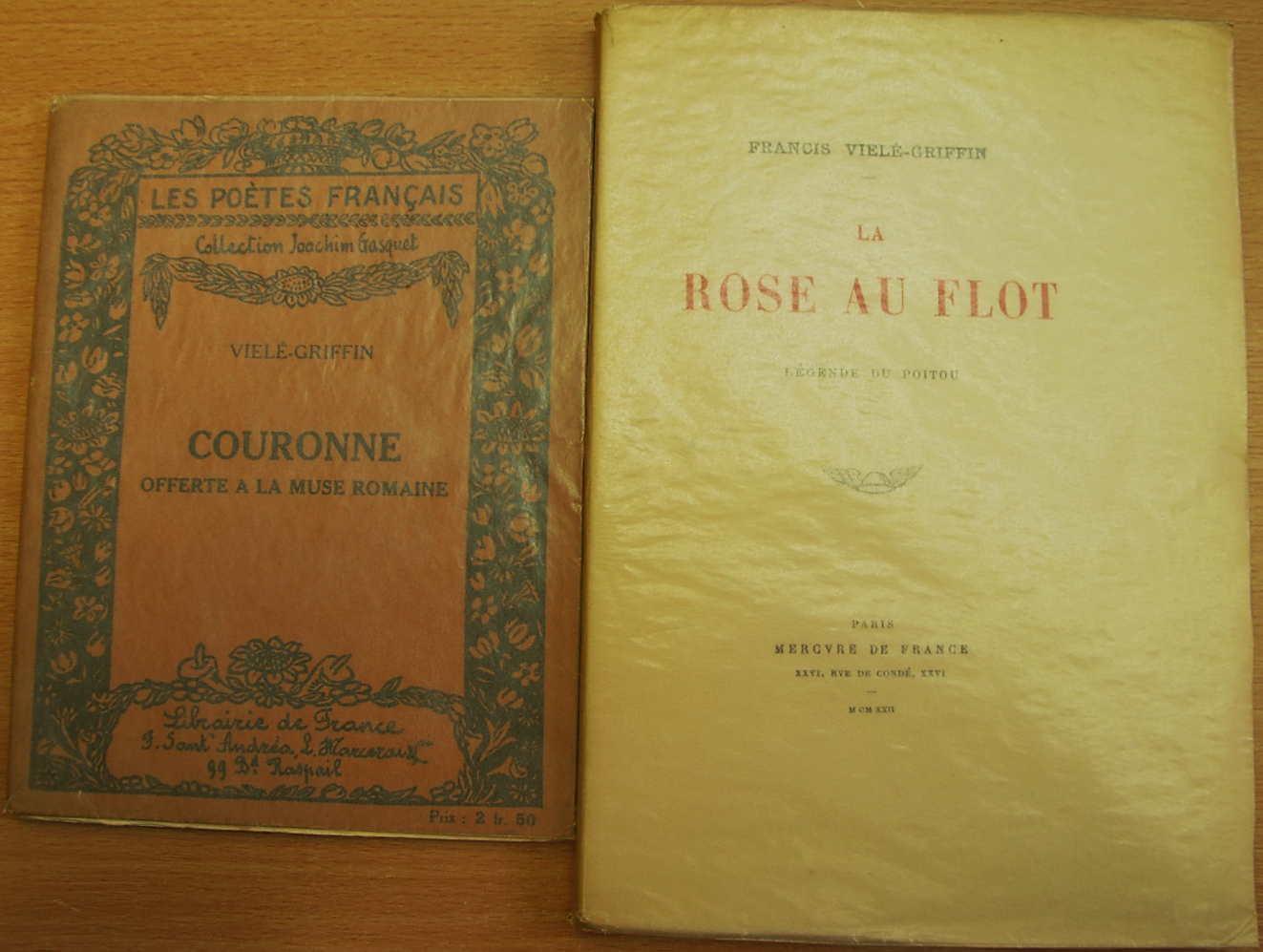
Here are a few topics which can be explored using books from the Martin Stone collection.
Continue reading “The Martin Stone collection of French poetry. Part 2: More than a century of French poetry”
The Martin Stone collection of French poetry. Part 1: A collection of appeal to the bibliophiles
The Martin Stone collection of French poetry
Martin Stone was an English guitarist and rare books collector who had a strong interest in French poetry. Cambridge University Library bought his French poetry collection this year through the bookseller Justin Croft after Stone’s death in 2012.
This collection of French poetry contains 225 books.[1] The oldest one is Odes et ballades by Victor Hugo, published in 1841, the most recent is Sept, written by Andrée Chedid and illustrated by Erik Bersou, published in 2009. Martin Stone focused on purchasing illustrated books, first editions and rare works by authors now long forgotten.
In the past three months, while cataloguing these books, I wanted to showcase the features of these books which appeal to a bibliophile clientele. I will now describe here these characteristics with some examples from this collection.
The Liberation of Paris, 19-29 August 1944: “Images de notre délivrance” by Georges Duhamel and Claude Lepape
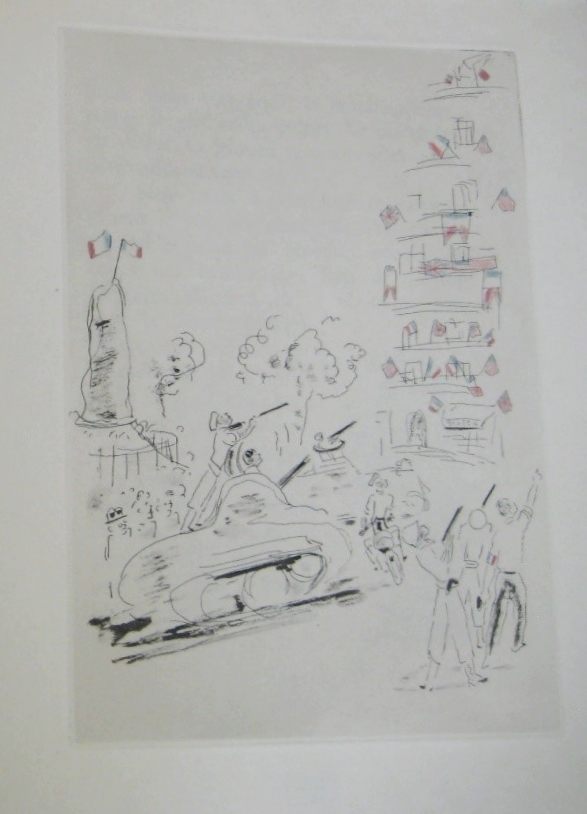 On the 75th anniversary of the Liberation of Paris, we would like to talk about Images de notre délivrance (Liberation.a.7), published in December 1944 by the Editions du Pavois (the publisher in 1946 of L’Univers concentrationnaire by David Rousset, which was awarded the Renaudot prize, Liberation.c.119 and Liberation.c.918). The book, clearly of a bibliophile nature, is presented by the editor as a documentary, the result of an accidental collaboration between a writer, Georges Duhamel (1884-1966), and an artist, Claude Lepape (1913-1994), both reacting to a unique historical event:
Ce livre est un document. Il est né de la rencontre fortuite de deux sensibilités. L’Ecrivain et le Dessinateur ne se sont pas concertés, mais leurs réactions, si diverses et en même temps si proches, constituent l’un des documents les plus émouvants sur les glorieuses journées de la libération.
“Sombre est noir” by Amy Bakaloff and Óscar Domínguez (1945): war poetry, from anthologies to illustrated collections
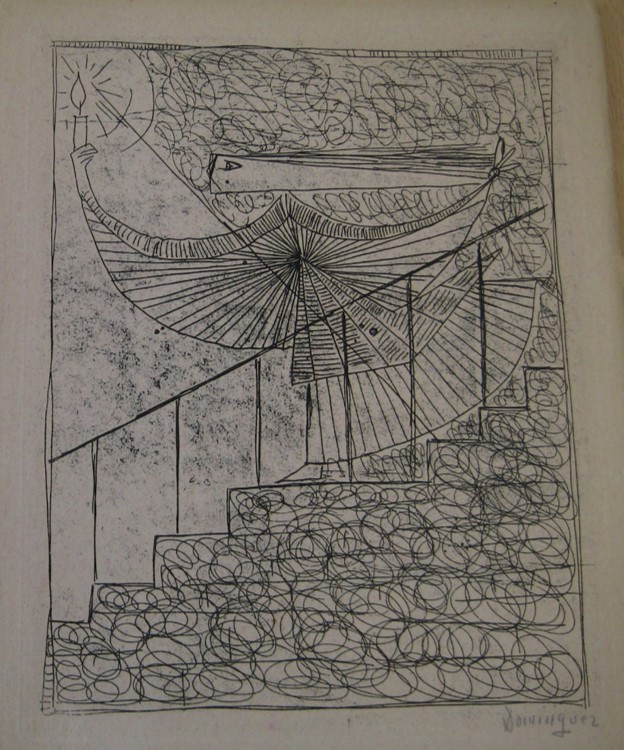
One of the last books acquired through the Liberation collection is Amy Bakaloff’s Sombre est noir (Liberation.b.356), a collection of French poetry written during the Second World War and dedicated to Paul Éluard and Georges Hugnet, a writer and publisher engaged in the Résistance. It includes an engraving signed by Óscar Domínguez and two drawings. It is a rare work, one of 232 copies, some numbered on Annam paper, some on blue vellum, and some on vélin des Marais. Continue reading ““Sombre est noir” by Amy Bakaloff and Óscar Domínguez (1945): war poetry, from anthologies to illustrated collections”
“Soyez réalistes, demandez l’impossible” May 1968 France
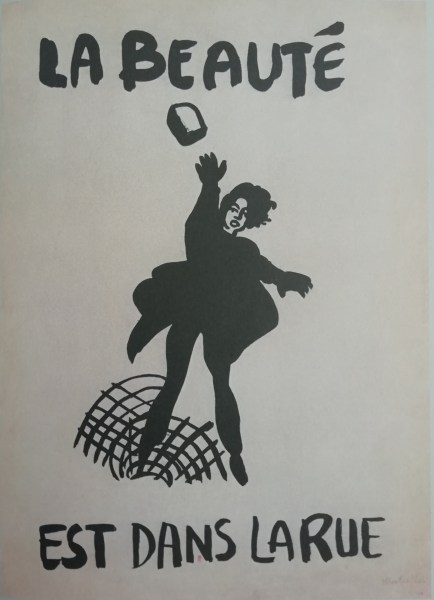
“Be realistic, ask the impossible” was one of the many slogans of the French unrest in May-June 1968. May last year was the 50th anniversary of the upheaval, which arouses mixed feelings in French society, depending on the political ideas of each individual. There was a debate in 2017 about Emmanuel Macron’s idea of celebrating May 68, when it had been an anti-governmental, non-institutionalised movement; it certainly led to many cultural events in 2018, including the BnF exhibition: The spirit(s) of May 68. Cambridge University Library purchased many of the publications on May 68 which came out around the time of the anniversary, including 1968 : de grands soirs en petits matins (C214.c.7787) and L’esprit de mai 68 (C205.d.9998). Here we highlight some of the books we have received in the past year or so. Continue reading ““Soyez réalistes, demandez l’impossible” May 1968 France”
 Languages across Borders