From the Russo-Ukrainian War to French-Ukrainian cultural initiatives and publications : the February 2026 Ukrainian items of the month

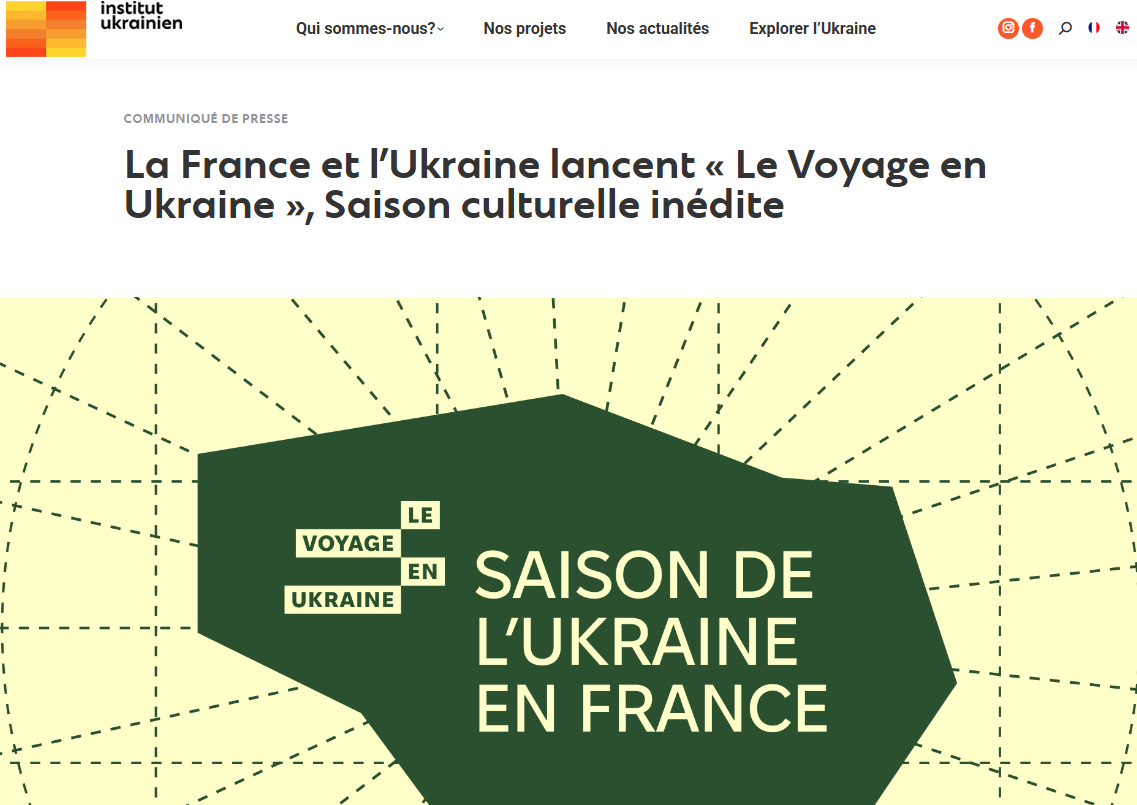
Today, on the 4th anniversary of the launch of Russia’s full-scale invasion of Ukraine (24 February 2022), we would like to highlight French-language publications on the topic as well as a series of cultural events organised in France by the Institut français and the Institut Ukrainien. The programme  Le Voyage en Ukraine – la culture contre-attaque will take place From December 1, 2025 to March 31, 2026, with the support of the French and Ukrainian Ministries of Foreign Affairs and Culture. This includes film, with a retrospective of Oleksandr Dovjenko / Dovz︠h︡enko (see the critical works by Barthélemy Dovjenko (1970) and Marcel Oms (1968) at the UL and earlier blog posts about him), music, theatre, dance, literature, exhibitions, and conferences.

Ukrainian writers involved include:

  • Serhiy Jadan / Serhiĭ Z︠H︡adan (1974-), whose works are available in both Ukrainian and English
  • Sofia / Sofii︠a︡ Andrukhovych (1982-), author of Amadoca (Lʹviv: Vydavnyt︠s︡tvo Staroho Leva, 2020) and Tout ce qui est humain (Montrouge: Bayard, 2023) among others
  • Maryna Kumeda (1985-), author of L’amour en temps de guerre. Récits d’Ukraine (Éditions de l’Aube, 2025)
  • Luba Yakymtchouk / Li︠u︡bov I︠A︡kymchuk (1985-), author of Apricots of Donbas (Sandpoint, Idaho: Lost Horse Press, 2021) and contributor to
    Oda do Ukraïny (2022)
  • Yuliia/Iuliia Iliukha (1982-), author of My Women (128 LIT, Brooklyn, New York, 2024) which was BBC News Ukraine Book of the Year.
Continue reading “From the Russo-Ukrainian War to French-Ukrainian cultural initiatives and publications : the February 2026 Ukrainian items of the month”

Albert Robida’s Gazette du Vieux Paris at Cambridge UL

Albert Robida (1848-1926) was an illustrator, a caricaturist, an engraver, a journalist, and a novelist who developed a highly imaginative sci-fi and fantastical production. His work demonstrated a fascination for the Middle Ages, but also anticipated many later 20th and 21st century technological developments, including television and cinema, internet and remote teaching, flying cars and urban transports. Some of his books are very original material artefacts.

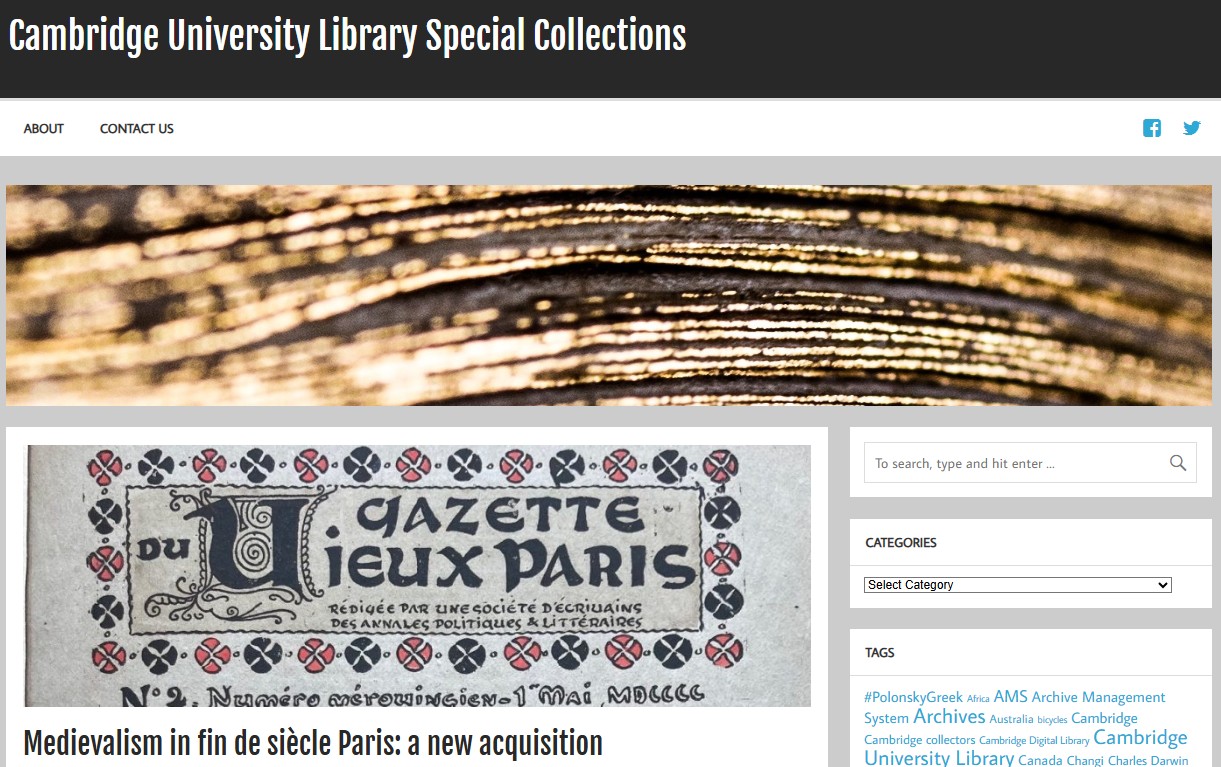
We are delighted to share a new acquisition from Cambridge University’s Special collections: a bound issue of the newspaper Gazette du Vieux Paris, published around the 1900 Paris Exposition and the exhibition on historical Paris created on the occasion. The Gazette experiments with many interesting designs inspired by historical styles from Gallo-Roman times to the Napoleonic period. It also features prominent contemporary French writers. You can read more about this new acquisition in the blogpost “Medievalism in fin de siècle Paris: a new acquisition”  by Liam Sims.

Continue reading “Albert Robida’s Gazette du Vieux Paris at Cambridge UL”

French Collections in UK Libraries and at the BL

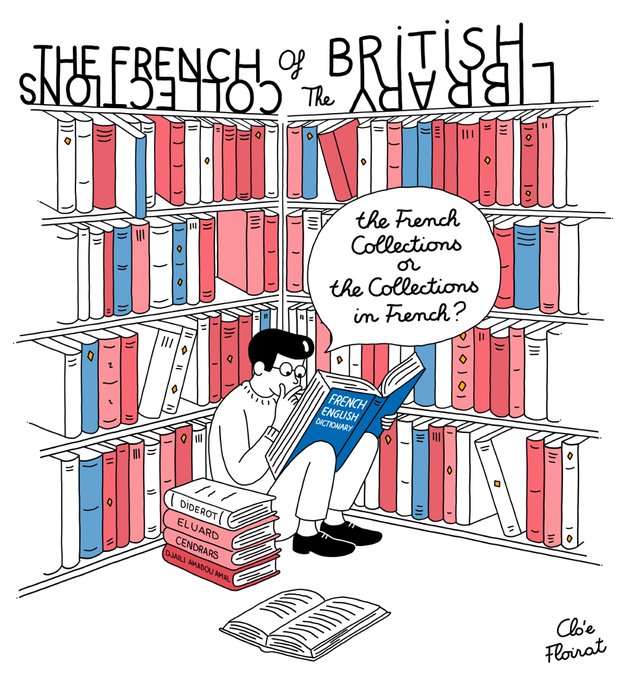
About a year ago, the study-day “French Collections in UK Libraries: Discovery, Research, Dissemination” was held at the Institut Français in London. We are looking forward to the symposium on “Collections in French at the British Library” which is happening tomorrow and whose speakers include, among others, acclaimed author Michel Pastoureau and Professor William Marx, who will be talking about “The World Library”. Both events have been sponsored by the French Studies Library Group, which aims to bring together librarians, information professionals, academics and the wider public to provide access, promotion and preservation of printed and digital French Collections in the UK.

Some of the papers given at last year’s study day will soon be published in a Special issue of  Paper Trails: The Social Life of Archives and Collections. We are  delighted to announce that some of the presentation from the event are now available on the French Studies Library Group’s Events and Resources page. These cover a wide range of French collections in UK libraries, from caricatures of the Franco-Prussian war in Cambridge University Library, the British Library and the University of Glasgow Special collections, to recordings from WW2 resistants in the Archive of Resistance Testimony at the University of Sussex, and archives from the Barbier family at the University of Cardiff or Georges de Peyrebrune holdings at the Taylor Institution (Bodleian Libraries). They also include collections of digital material such as the UK Web Archive and its London French Special collection.

Irene Fabry-Tehranchi

Event “French Collections in UK Libraries: Discovery, Research, Dissemination” at the Institut Français (London)

We are delighted to share the programme and free online registration for a one-day seminar which will take place at the Institut Français in London on the 20th of November 2023, with the sponsorship of the French Studies Library Group. Cambridge French collections are very well represented, as it includes talks on University Library collections, the 1870-71 Franco-Prussian caricatures and Chadwyck-Healey Liberation collection (1944-45), as well as Trinity College holdings, with the Crewe Collection of English and French literature and the Kessler artist books collection.

Book in library with open textbook,education learning concept
Mon, 20 Nov 2023 09:15 – 18:30 (French Institute, 17 Queensberry Place, London SW7 2DT)

This event brings together leading specialists from academia, libraries and the book trade to explore French printed, archival, and digital collections in all their richness and diversity from across the United Kingdom. Found in major public institutions as well as hidden in lesser-known collections, they reflect the British Isles’ continuous engagement with France. Themes include collections of caricatures; the Second World War; Artists’ Books; Anglo-French collectors and their collections; and the French community in Britain. We will also consider how libraries shape research, and how they can play a role in cultural diplomacy. The event, which will provide a unique opportunity to foster the interpretation, promotion, and enjoyment of these collections, is aimed at a wide audience and will include ample time for discussion and networking. Continue reading “Event “French Collections in UK Libraries: Discovery, Research, Dissemination” at the Institut Français (London)”

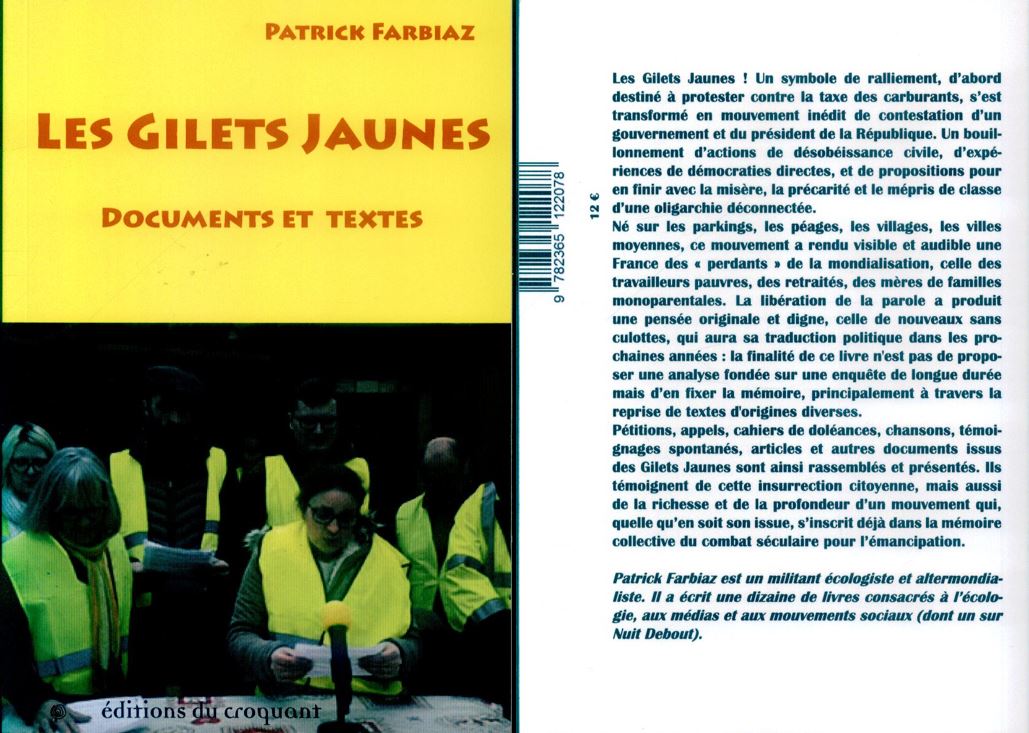
Les Gilets jaunes: reading list. Social protest and discontent in France (2018-2019)

The Gilets jaunes appeared as a populist, grassroots protest movement that developed in France in the autumn of 2018. Fuelled by social media, it crystallised on 17 November 2018, with the organisation of mass demonstrations and the blocking of roads, which continued through the winter of 2019.

Continue reading “Les Gilets jaunes: reading list. Social protest and discontent in France (2018-2019)”

“The book as world and the world as book” at the Warburg Institute

Alberto_Manguel_no_Fronteiras_do_Pensamento_2014_(15695479736)
Alberto Manguel, picture by Fronteiras do Pensamento [CC BY-SA 2.0 (https://creativecommons.org/licenses/by-sa/2.0)%5D via Wikimedia Commons
Last Friday 20th April the Warburg Institute in London organised an event that focused on books and readers in the Spanish speaking world, entitled The book as world and the world as book. The keynote of the event was a delightful -to say the least- conversation between the Warburg’s director, Bill Sherman, and Alberto Manguel, writer and Director of the National Library of Argentina. Coincidentally, Manguel’s book Packing my Library featured as “Book of the week” on BBC Radio 4 at the beginning of the month (the UL copy stands at C205.d.5241). Their discussion, of course, was all about books, writing, reading and libraries and also about Manguel’s experiences as a young man when he read aloud to an old and blind Borges. The book With Borges (a copy is held at Jesus College’s Quincentenary Library) offers memories of the encounter and of Borges’ life beyond his writings. The  Spanish edition of the work, translated by Eduardo Berti can be found at C202.c.5582. Alberto Manguel’s holdings at the University Library are reasonably complete, both in Spanish and English, and demonstrate his flair as a writer, editor and translator (click here to see all 62 titles). Continue reading ““The book as world and the world as book” at the Warburg Institute”