
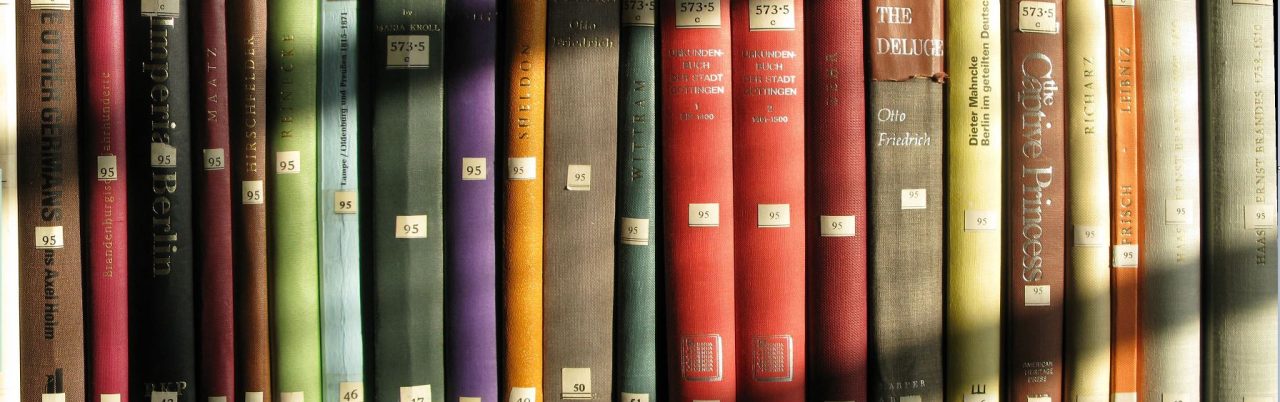
I wrote in January of a very generous donation of items that had belonged to Denis Mack Smith and had been passed on to us by the Bodleian. A couple of weeks ago we took delivery of a further nine boxes of material, the third instalment of what is proving to be a truly fascinating addition to our collections. The boxes keep arriving, and it is a real joy to browse through the items and to make them available to readers as swiftly as I can (these donated items can be found in Library search using the search terms Denis Mack Smith and former owner). Continue reading “Our window onto 19th and early 20th century Italy opens wider”
Category: Italian
Thousands of Italian ebooks available in LibrarySearch
In the light of increasing numbers of Italian language ebooks becoming available and the growth in ebook production in Italy, we have set up a facility whereby our readers can easily recommend such titles for purchase.
The University Library has signed up for a mediated patron driven acquisition scheme (PDA) making 13,000+ ebook titles available for users to recommend for purchase. This scheme is available now and will run for the foreseeable future. This is how it works… Continue reading “Thousands of Italian ebooks available in LibrarySearch”
Hollywood in rural Italy
When we posted about the silent film journal Griffithiana back in April 2014, about 50% of the A.G. Parker Film History Collection had been catalogued. Now about 80% has been processed. Scholars who have used the collection so far have appreciated the wide range of languages covered, and have stressed to me the scarcity and value of the many imprints from the 1920s and 1930s which are included.
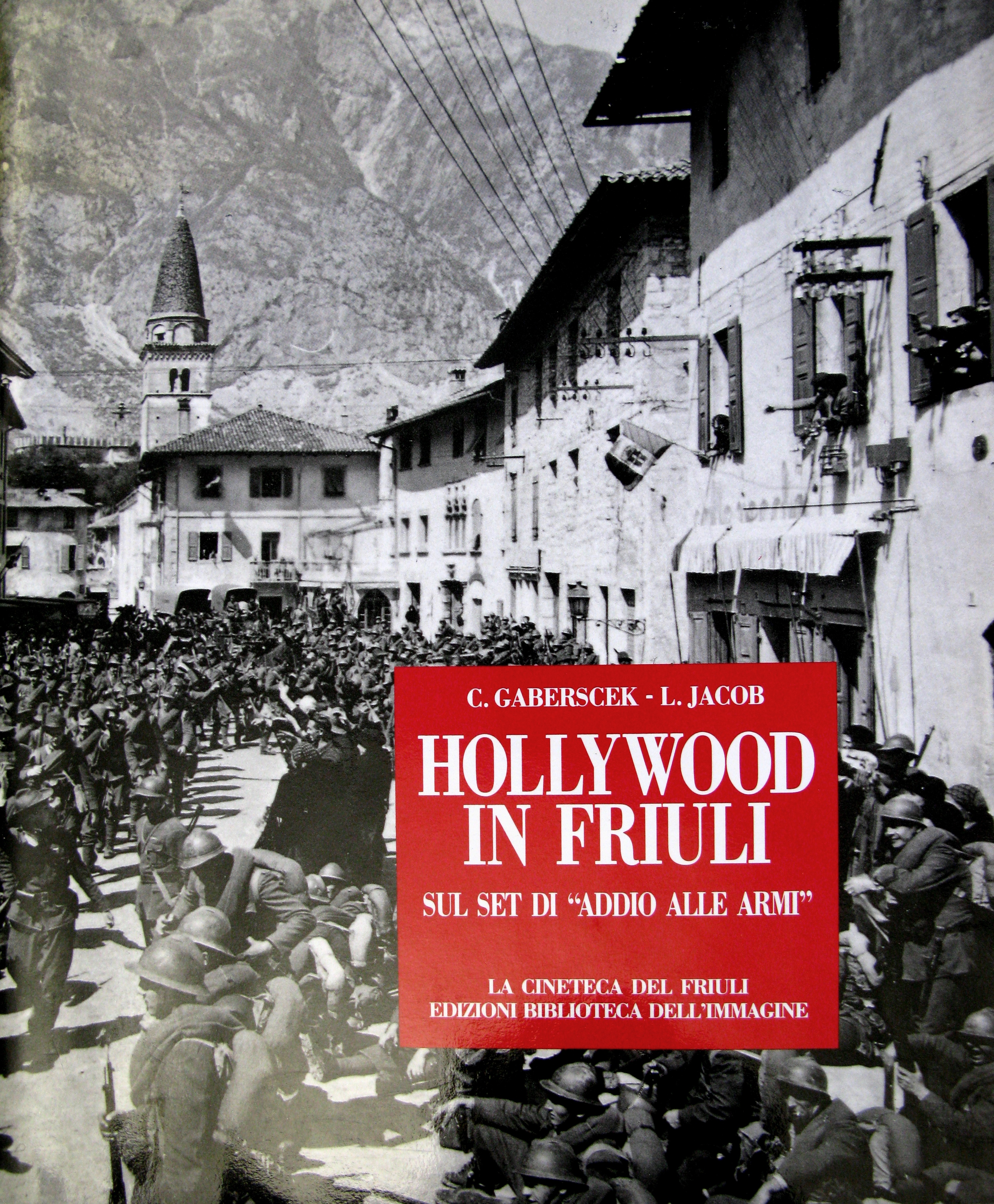
The Italian component consists so far of 334 titles. Coverage of books on silent cinema is particularly strong, with a number of titles relating to the Pordenone Silent Film Festival. The earliest Italian imprint in the collection is from 1932, Introduzione a un’estetica del cinema by Alberto Consiglio (CCC.56.100). Many of these books are, of course, lavishly illustrated and of quite a large format, so they are interesting and rewarding to process. They are sometimes produced by fairly small, specialist Italian publishers, and are often not held by any other British library. One such volume which meets all these criteria is Hollywood in Friuli : sul set di Addio alle armi, published by La Cineteca del Friuli in 1991. (CCA.56.314)

A stylish pocket-sized tribute
It was interesting to notice the 1000th volume in the series “La memoria” published by Sellerio editore. Entitled, La memoria di Elvira, it celebrates the series, honouring the woman behind it, Elvira Giorgianni Sellerio (1936-2010).
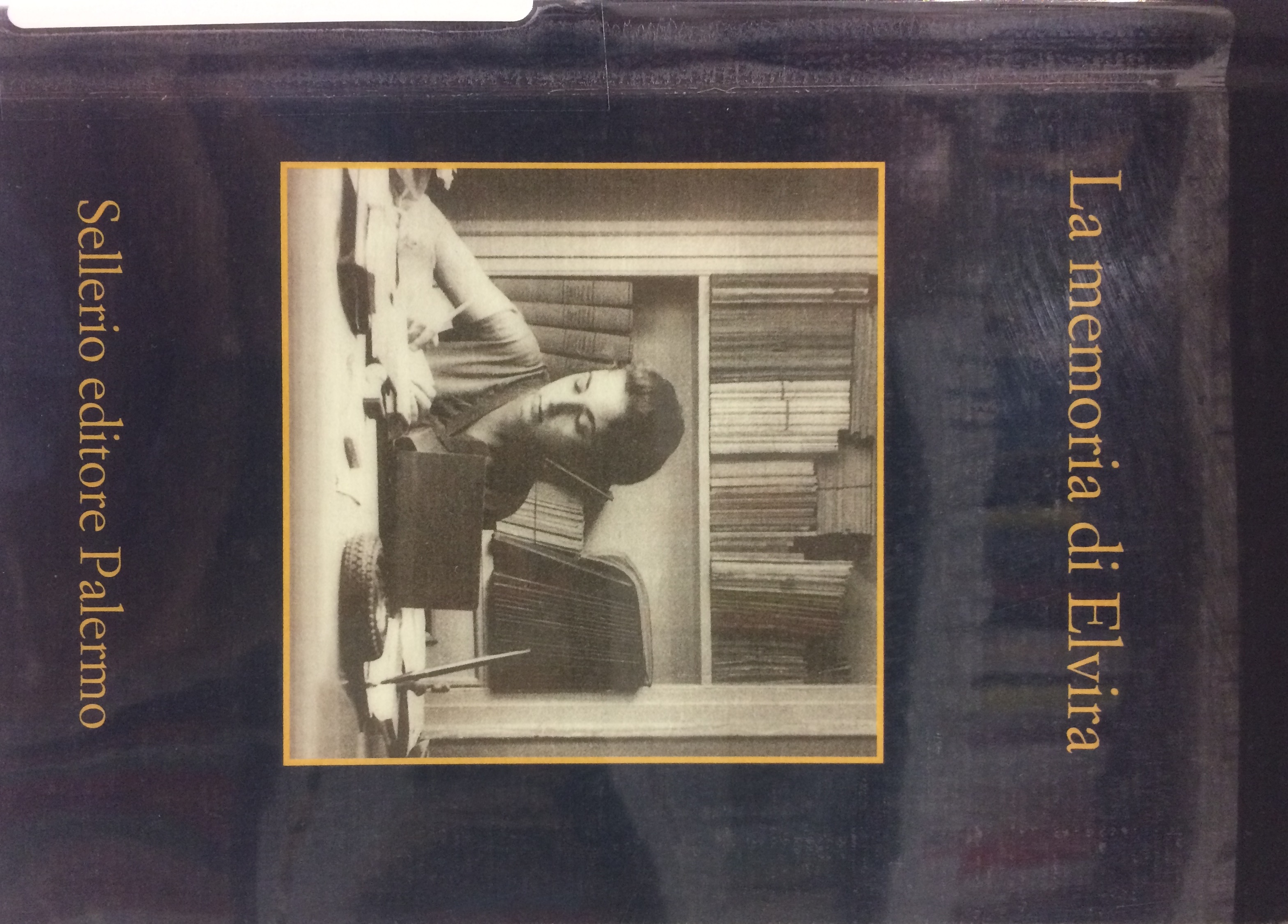
Elvira Giorgianni and her husband Enzo Sellerio, a renowned photographer, founded the publishing firm of Sellerio editore in 1969 in Palermo, very much with the support and collaboration of the writer Leonardo Sciascia and the anthropologist Antonino Buttitta. In 1979 the series “La memoria” was born, its very title making the reader aware of how memorable these selected authors and texts are. Known as “la Signora”, Elvira was passionate about stories, and became an expert at identifying and gathering stories that she judged right for her series, whether by Italian authors or authors in translation. In 1981 “Diceria dell’untore” by Giovanni Bufalino (741:35.d.95.244) won the prestigious Premio Campiello. When in 1983 the business was divided between Elvira and husband, he took over the art and photography side of the business, while she was left in charge of the narrative side (fiction and essays). Important writers continued to be featured in the series, such as Andrea Camilleri, with his numerous short stories and novels.
A series of little blue books, the “La memoria” series signalled a change in book design. The characteristic deep blue of the covers with a picture in the centre was revolutionary and elegant. The books were small and stylish, designed to fit easily in a jacket pocket.
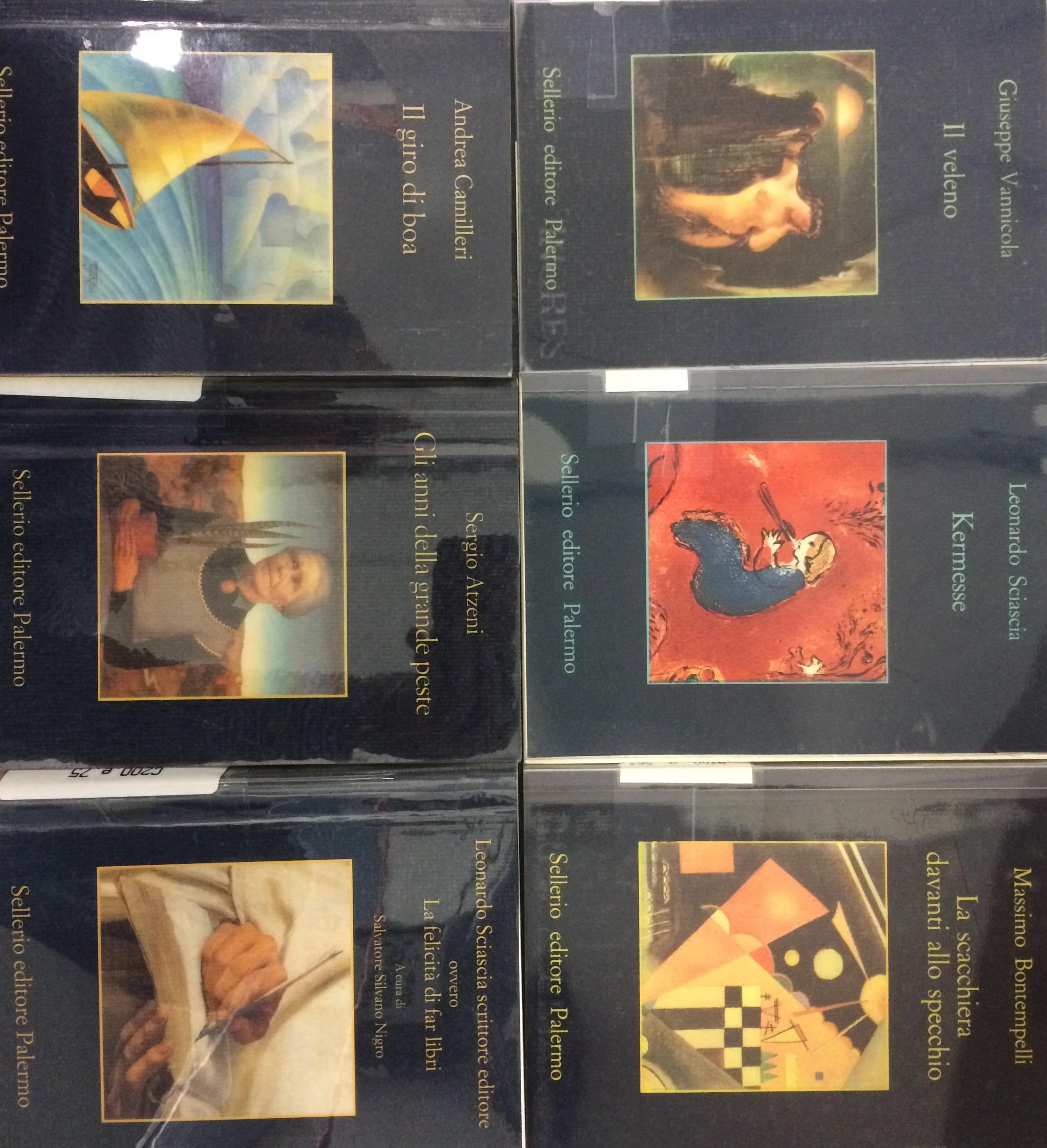
“La memoria di Elvira” (C204.d.1412), with as a centrepiece a photo taken in the late fifties of Elvira working at her desk, is made up of texts by twenty-three authors who contributed to the series over the years: Luisa Adorno, Maria Attanasio, Attilio Brilli, Antonino Buttitta, Andrea Camilleri, Vincenzo Campo, Luciano Canfora, Francesco M. Cataluccio, Remo Ceserani, Masolino d’Amico, Gianfranco Dioguardi, Daria Galateria, Alicia Giménez-Bartlett, Maria José de Lancastre, Alessandra Lavagnino, Salvatore Silvano Nigro, Santo Piazzese, Gianni Puglisi, Francesco Recami, Giuseppe Scaraffia, Adriano Sofri, Sergio Valzania and Piero Violante. It is a fitting tribute to a remarkable woman.
Bettina Rex
Sebastiano Vassalli (1941-2015)

“Not reading at all is better than reading certain books. I have always been wary of that marketing advertising books like milk, as in Fellini’s Dolce vita: ‘Read more books, books are good for you!’, and so on. Reading what? You can’t generalise. There is a moment in one’s life, however, when distinctions are of no use. It’s when a kid starts reading. We fall in love with reading before we fall in love with books: and it’s not useful, it’s not appropriate to demand a choice from a ten, eleven-year-old.” Continue reading “Sebastiano Vassalli (1941-2015)”
European literature in English translation : recent prizewinners
A recent blog post on Brazilian authors at the Paris book fair contrasted the numerous works of contemporary Brazilian literature in French with the far smaller number of titles which have appeared in English. It should be recognised, however, that the Society of Authors, with support from the Arts Council and a number of other funding bodies, administers prizes for published translations into English from Dutch, French, German, Greek, Italian, Spanish and Swedish. Not all prizes are awarded annually, however, which accounts for the different years in the list of awards which follows. It is standard procedure in our catalogue entries to give an access point for all literary translators as well as authors, as well as to provide the title of the original work wherever possible.
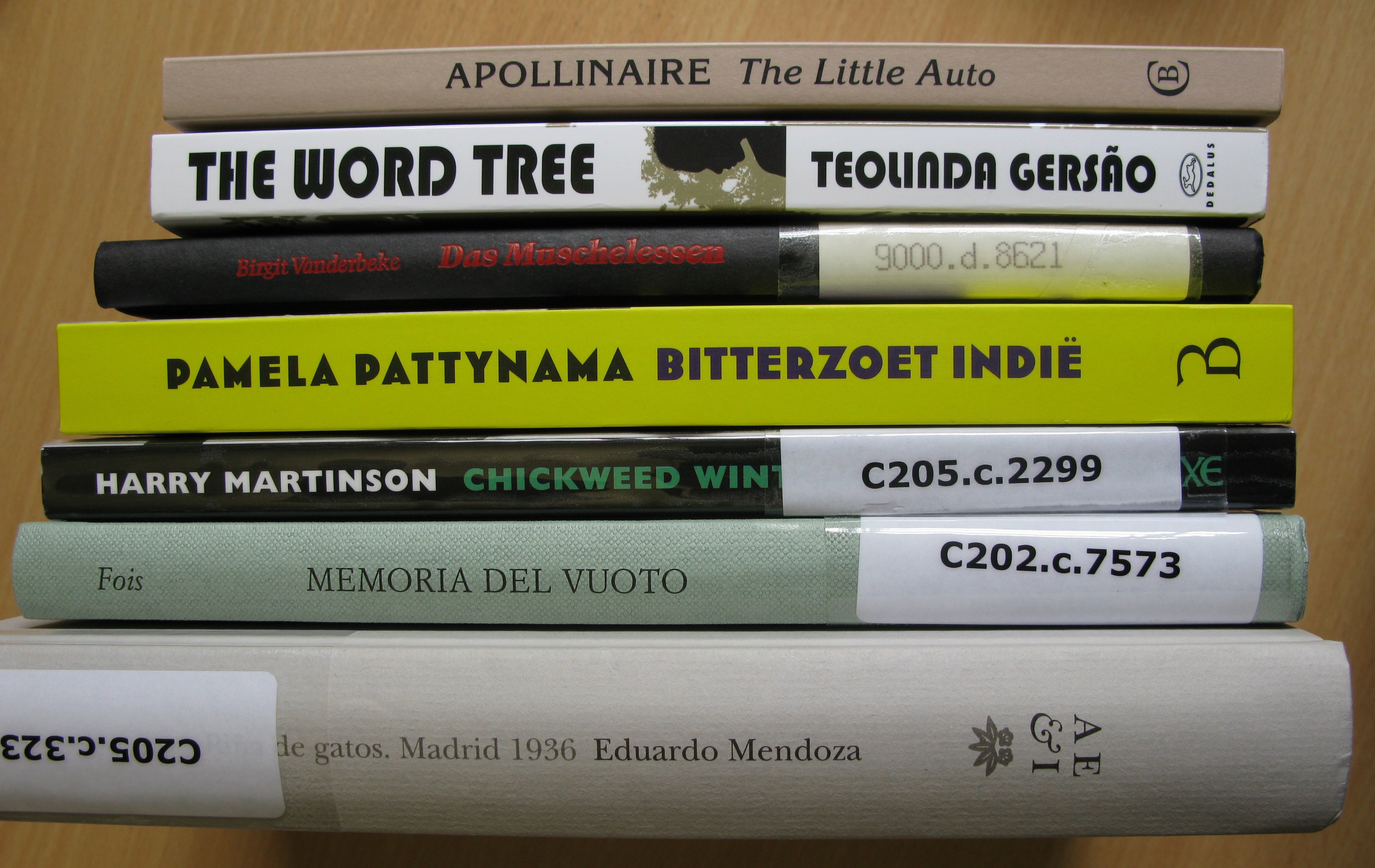
Vondel prize for Dutch translation
Winner in 2013: David Colmer for his translation of The misfortunates by Dimitri Verhulst (Portobello). 2012.8.1300
Original: De helaasheid der dingen. [On order]
Continue reading “European literature in English translation : recent prizewinners”
Strega Prize 2015
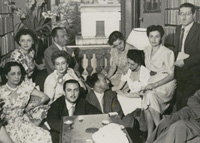
In a post last September we gave an overview of the most important literary prizes awarded in Italy, the most prestigious being the Strega prize. Last night the 2015 Premio Strega was awarded to Nicola Lagioia for his novel La ferocia.The Premio Strega was established in 1947 by the journalist Guido Bellonci and his wife, the novelist Maria Villavecchia Bellonci, with the financial support of Guido Alberti, the owner of the firm Strega, which still produces a popular herbal liqueur. In the aftermath of the Second World War and after twenty years of cultural oppression under the fascist regime, their hope was to revitalize a free intellectual debate with the help of their Amici della Domenica or ‘Sunday friends’, a group of artists and intellectuals who formed a literary salon in the Bellonci residence in Rome. This group included, for example, Massimo Bontempelli, Guido Piovene, Carlo Bernari, Paola Masino, Paolo Monelli, Palma Bucarelli and Alberto Savinio.
Pierpaolo Pasolini : a lecture on his relationship with the city of Rome
A lecture will be given by journalist and biographer Ian Thomson on Pierpaolo Pasolini on Monday 29th June.
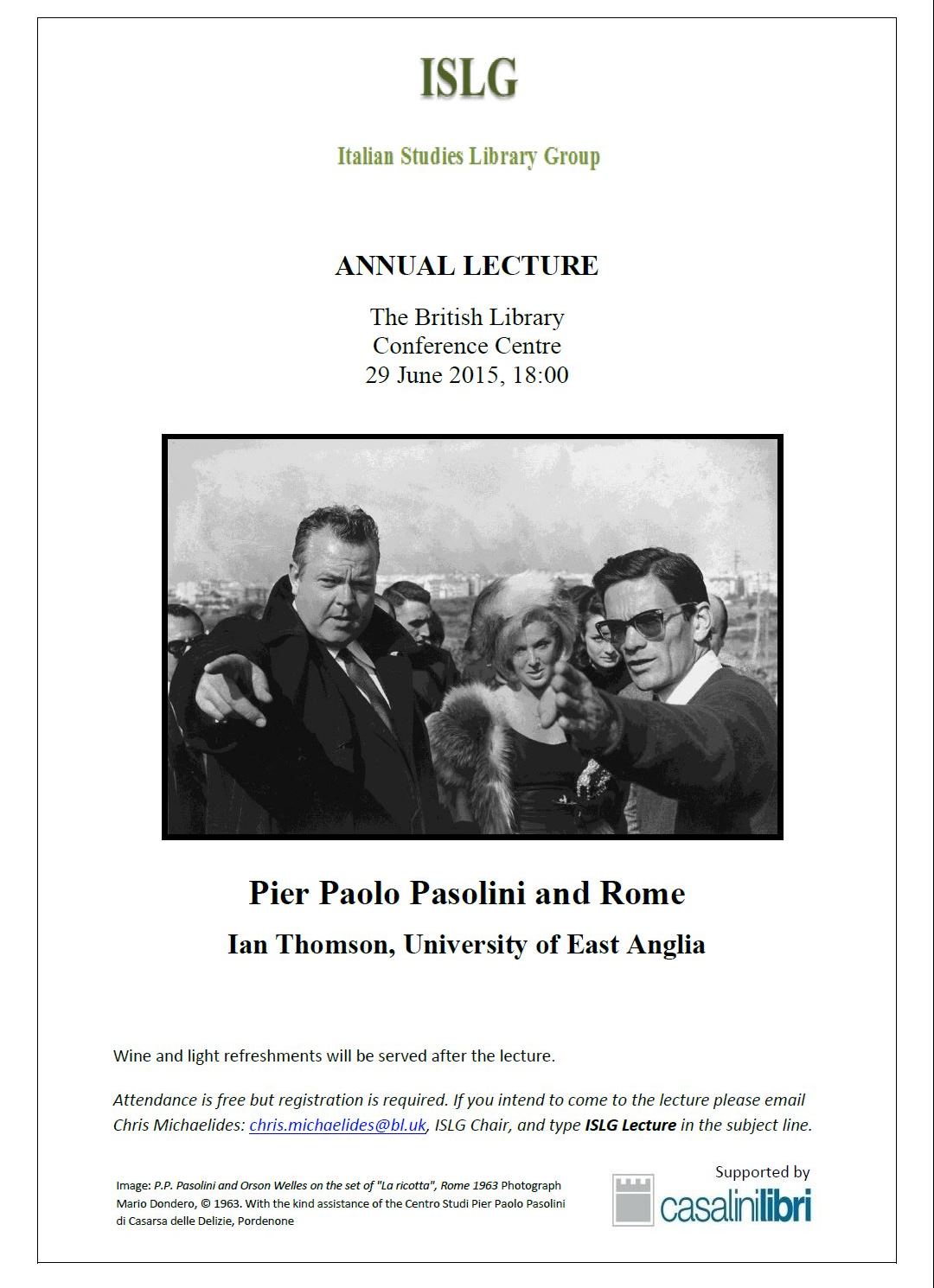
Continue reading “Pierpaolo Pasolini : a lecture on his relationship with the city of Rome”
25 April 1945-2015: literature and history on the 70th anniversary of Liberation Day
On 25 April this year Italy celebrates the 70th anniversary of Liberation Day, now a national holiday commemorating the end of the Nazi occupation and of the Second World War.

The Nazi occupation of Italy followed the armistice between Italy and the Allied armed forces on 8 September 1943. Whilst the German army was fighting to get control of the main cities of the Italian peninsula, the antifascist movements, which had been secretly operating against Mussolini’s regime for over 20 years, gathered under the umbrella of the Comitato di Liberazione Nazionale or CNL (National Liberation Committee). The CNL eventually represented the Italian Resistance movement: all the partisan forces active on mountains, in the countryside and in urban areas, for a total of 70,000-80,000 people by May 1944. These groups were all moved by different ideologies – communists, monarchists, socialists, liberals, republicans, anarchists, Catholics – but they were all antifascist. They took the form of underground movements in cities and of guerrilla on mountainous regions and carried out actions of various kinds such as sabotages, armed attacks, occupations of villages and small cities, with the support of civilians and of the Allied forces through air supply dropping operations. Continue reading “25 April 1945-2015: literature and history on the 70th anniversary of Liberation Day”
Italian medieval and early Renaissance art
No matter how hard we try to be consistent in collecting, by following our collection policy, meeting the needs of the academic community and remaining abreast of current publications, we have to face the fact that there are inevitably gaps in our collections, gaps perhaps from previous decades, gaps which can be very hard to fill. It is a joy indeed, therefore, when an academic, seeking to slim down his own collection of books, makes us the very generous gift of items he no longer needs.
Professor Nigel Morgan, of the Department of History of Art, has done just that. He has most generously donated to us material he has gathered over the years, which he knows we are missing and which will be of interest to scholars using the Library. The wealth of material donated, on medieval and early Renaissance art, comes in a variety of languages. Most of the items are in Italian; some in English; some in German; some in Spanish; with a few in French. Notable among the English items are 10 volumes of the set “A critical and historic corpus of Florentine painting“, published in Florence, begun in 1984 by Richard Offner and later reprinted. Offner’s research on Florentine art culminated in this project, a description of Florentine renaissance artists, methods, and workshop production, and it is wonderful to have acquired these important volumes.
Continue reading “Italian medieval and early Renaissance art”
 Languages across Borders

