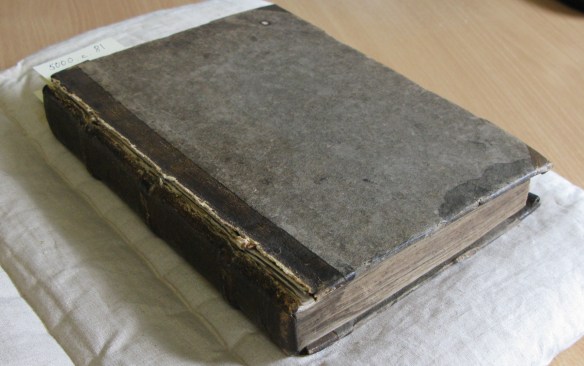
Recently I was happy to catalogue a rather special volume (5000.c.81) containing German Reformation pamphlets.
5000.c.81
We received this volume as a generous donation from the library of the late Donald William Nicolson. Mr Nicolson was a classics teacher with a keen interest in languages which is reflected in his library. He also trained in bookbinding, and we might assume that he was planning to repair this volume as its front board is detached.
The idea for this blog post started with a postcard which I recently rediscovered among letters sent home from my year abroad in the 1980s, bought on a visit to the Kunsthalle in Mannheim. The postcard is a reproduction of a painting by Fritz von Uhde (1848-1911), one of a number that he did of his three daughters and the family dog in the garden of his country house near Munich. It was the impressionistic treatment of the sunlight which drew me to it and which reminded me of more familiar works by French impressionist painters.
Die Töchter im Garten, 1906, public domain via Wikimedia Commons
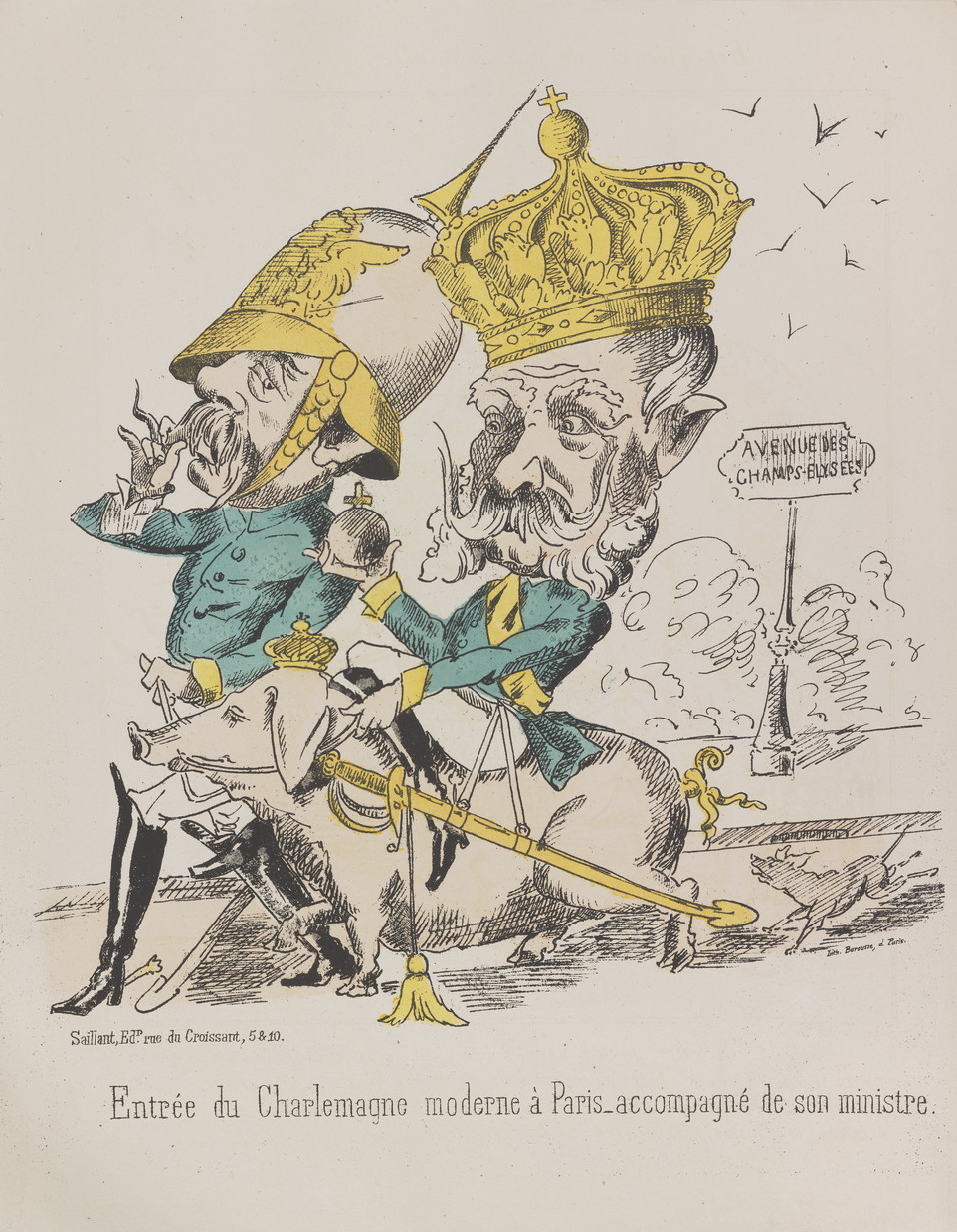
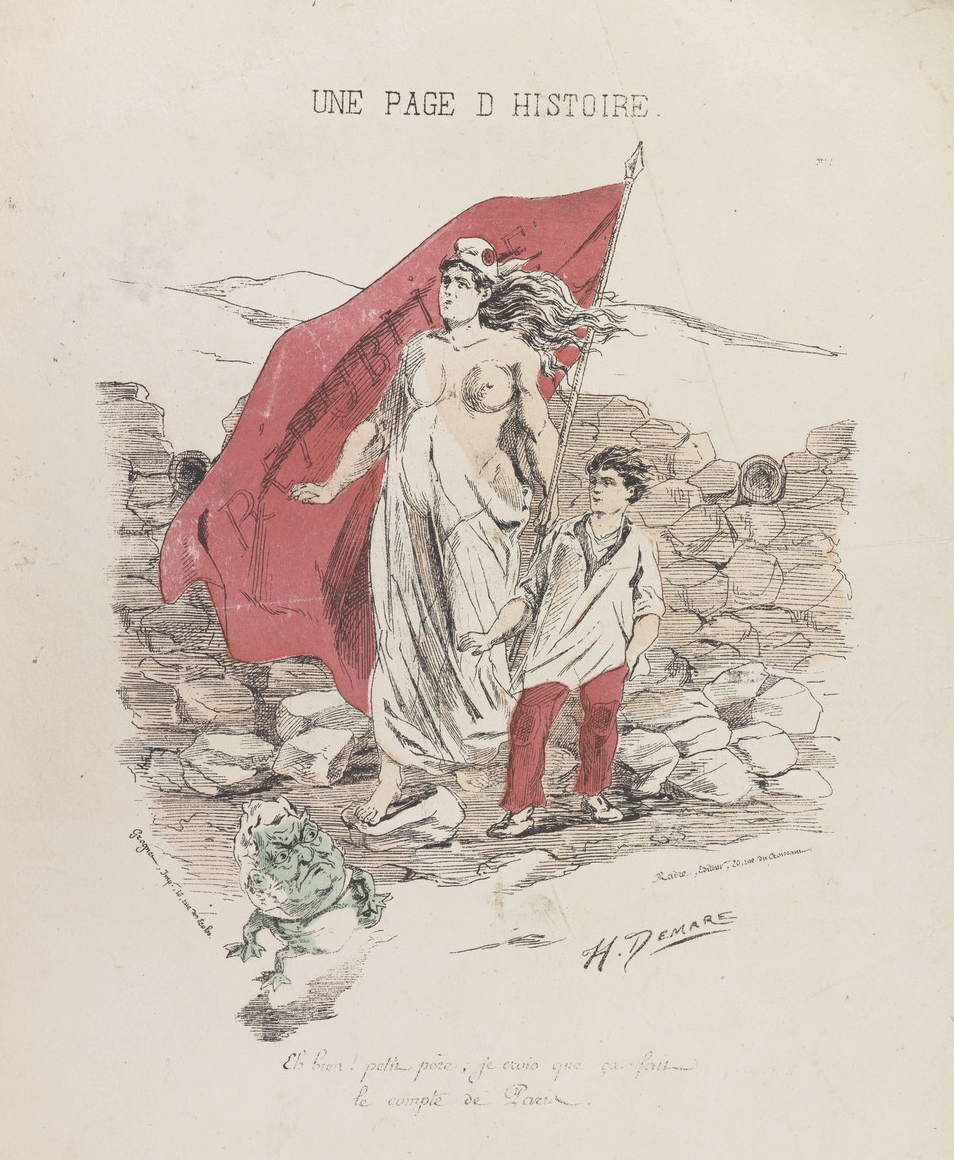
A display of our collection of Franco-Prussian caricatures, is on until 7 May 2022 on the first floor of Cambridge University Library, for readers and visitors. The online exhibition is now also available, providing a snapshot of how 1870-71 caricaturists represented the overthrown Napoleon III and the imperial family (a favourite object of ridicule), or the Prussian enemy (Wilhelm I and his Chancellor Otto von Bismarck, featured, along with German soldiers, as comical yet relentless conquerors and plunderers).
W. Alexis, Triumphal entry in Paris of Bismarck and Wilhelm I, 1871 CUL, KF.3.10, p. 58
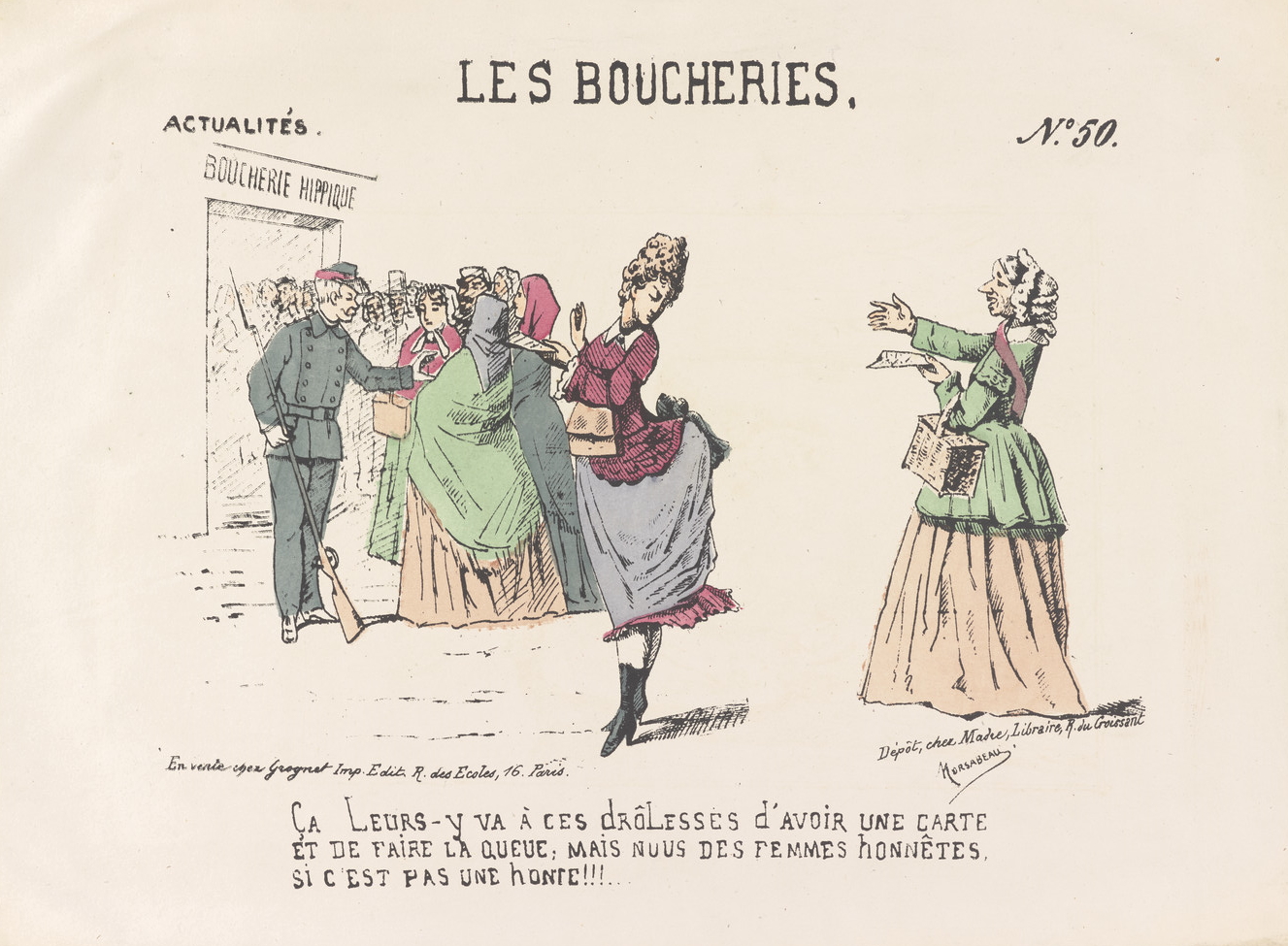
The virtual exhibition gives a glimpse of Paris under siege, through the role of women, who often carried the burden of dealing with penury and food shortages, and helped in the war effort, working as nurses, or even volunteering to form battalions of female soldiers. They were also blamed for their frivolity and treachery…
Morsabeau (Eugène Rosambeau), “Les Boucheries”, 1870, CUL, KF.3.11, p. 17
We look at how the cartoonists depicted the transition from the Second French Empire to the Third Republic, divided between the moderate Thiers government, based in Versailles, and the more radical and progressive members of the Paris Commune, established in the spring of 1871… Here is thelinkto the virtual exhibition.
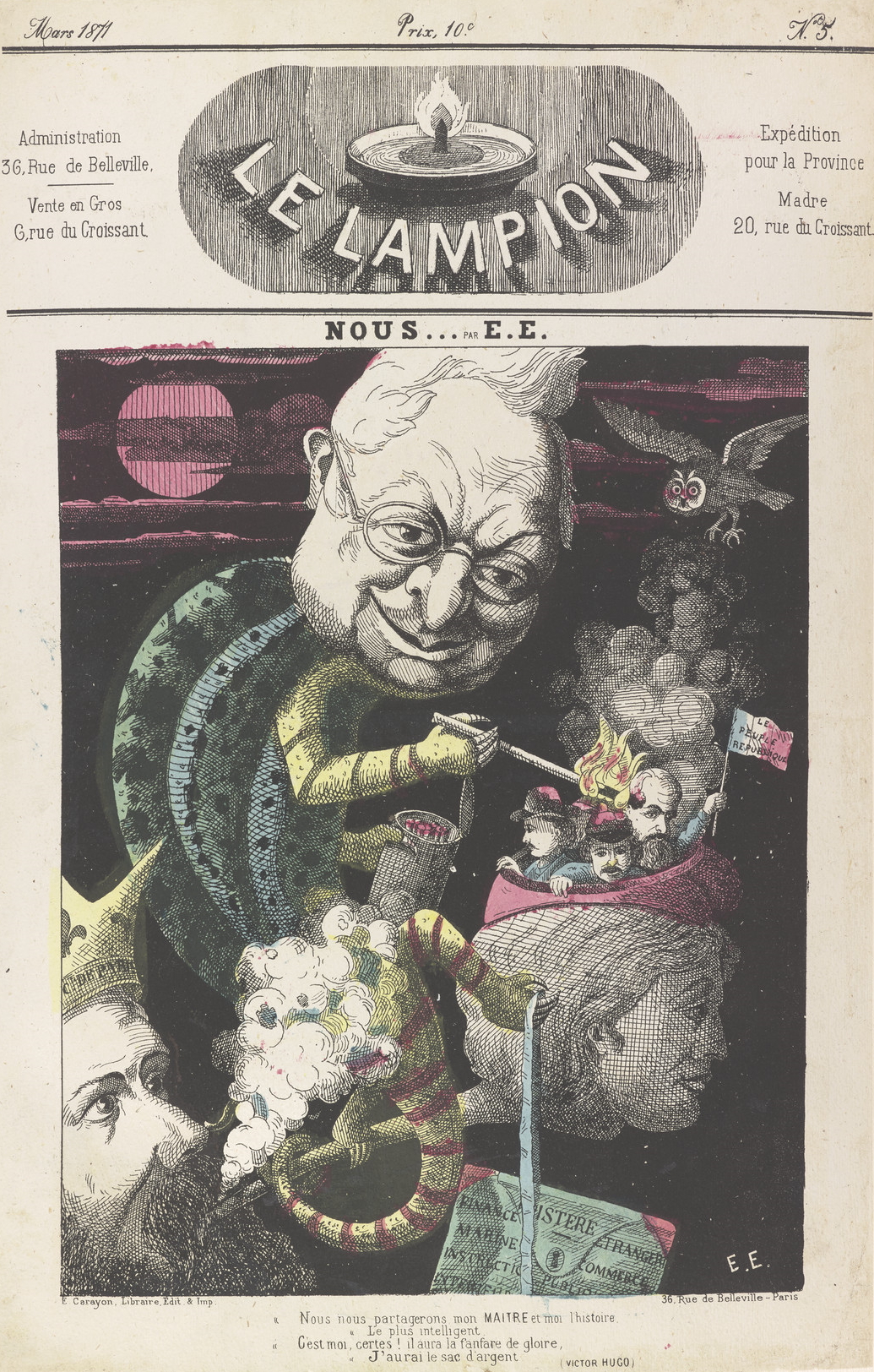
Adolphe Thiers (Head of the Republican government) as a cameleon lighting the fire of the Paris Commune… Le Lampion, March 1871, CUL, KF.3.10, p. 168
Finally, don’t forget the talk ‘Allons enfants de la patrie’: Children and the Wars of 1870-71, Thursday 31 March, 5-6 pm in the Milstein room. We have a couple of spaces left for a tour of the library’s Historical printing room led by its curator Colin Clarkson before the event: if you are interested please get in touch (french@lib.cam.ac.uk)!
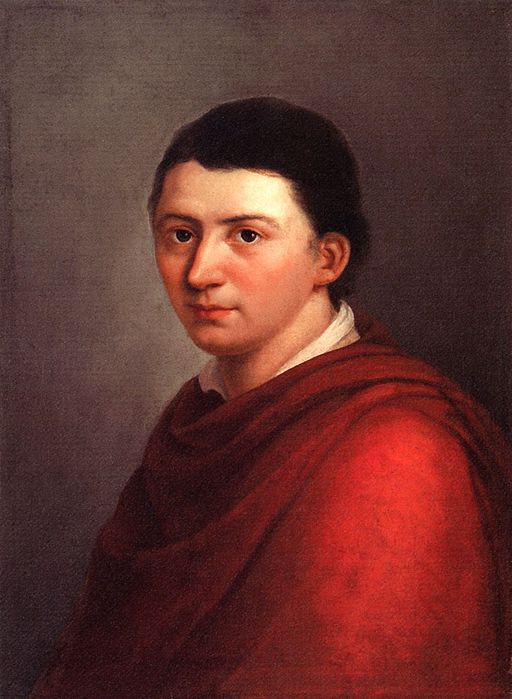
250 years ago, on March 10, 1772, Friedrich von Schlegel was born in Hanover. Schlegel was a key figure of the Romantic movement and a highly original thinker and philosopher whose ideas are still influential today. But while his work still stimulates academic research and debate it seems that he does not capture the public imagination anymore. This might explain why hardly any events are planned to mark this anniversary. As far as I can make out only the Deutsches Romantik-Museum in Frankfurt am Main is marking Schelling’s 250th birthday with a small exhibition.
Friedrich von Schlegel’s life and work, however, is quite fascinating. He studied law in Göttingen and Leipzig, and it was in Leipzig that he became friends with Novalis. He then lived for a while in Dresden before joining his equally influential brother August Wilhelm in Jena. Here he met Goethe, Fichte, Herder and Wieland, and also had a dispute with Schiller about aesthetics which proved crucial for the development of Romanticism. Together with his brother he edited Athenaeum (1798-1800), one of the most important periodicals of the Romantic movement.
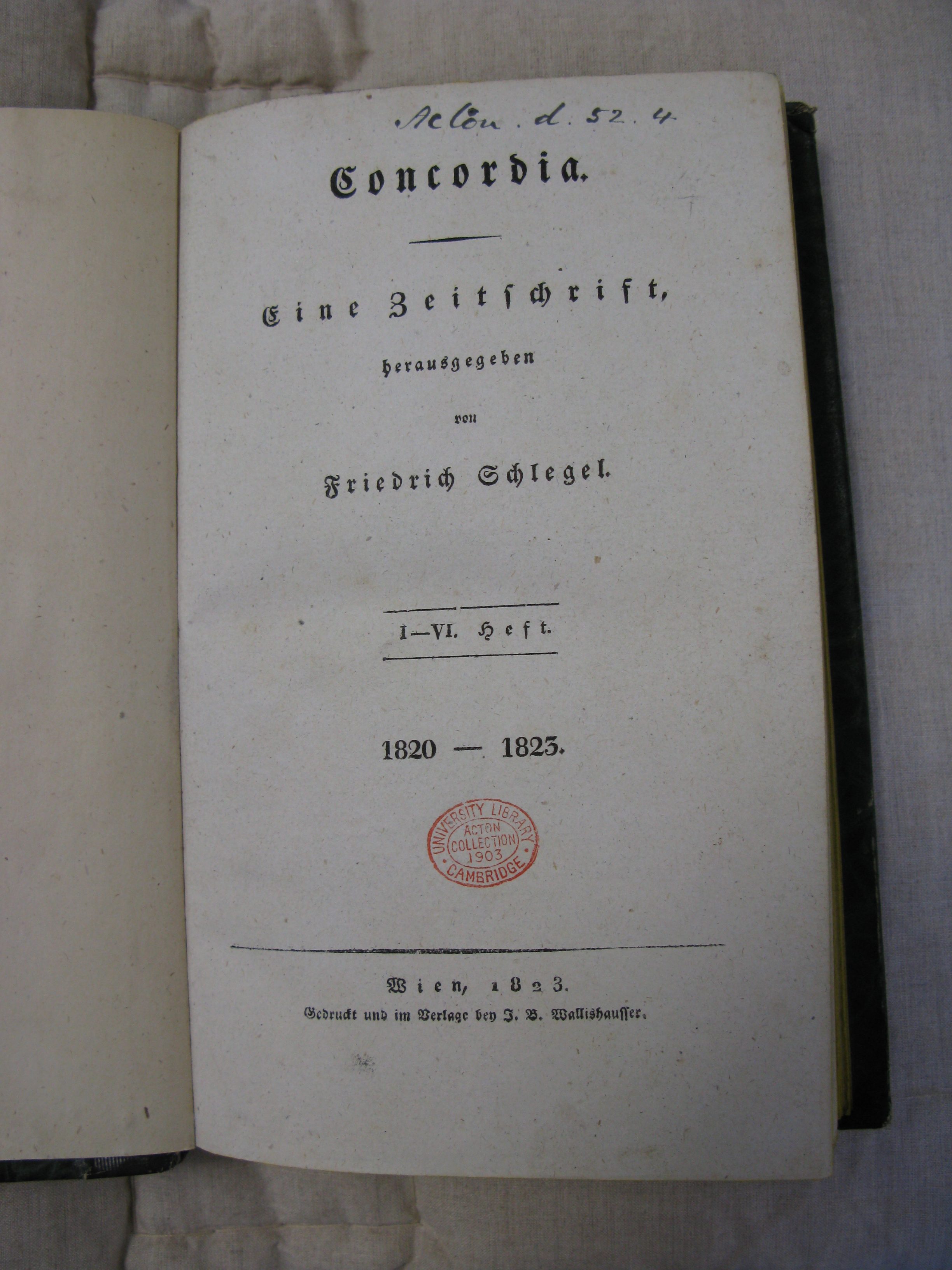
From 1797 until 1798 he lived in Berlin where he met his future wife Dorothea Brendel Mendelssohn in the famous salon of Rahel Levin and became friends with Ludwig Tieck and Friedrich Schleiermacher. In 1799 he returned to Jena to give lectures on philosophy, having gained his post-doctoral Habilitation qualification. From 1802 until 1804 he lived in Paris where he founded the journal Europa (1803-1805) and studied Sanskrit. After getting married in 1804 he settled in Cologne. In 1808 he and his wife converted to Catholicism and finally settled in Vienna where he joined the Civil Service. Here he gathered the followers of the Romantic movement around the periodical Concordia (1820-1823). In his final years he attempted to present his philosophical ideas in several lecture cycles. He died on January 12, 1829, in Dresden where he was giving a series of lectures on the philosophy of language. To me the life of Friedrich von Schlegel presents itself as one of constantly being involved in new projects (he founded and edited four journals) and maintaining a wide circle of friends to develop and promote his ideas.
Hh.39.27-28
Hh.39.31
Hh.39.26
Anyone interested in Schlegel’s life and work will find abundant material at the University Library; over 200 titles are listed in our online catalogue with Friedrich Schlegel as either author or subject. Our holdings of original editions of Schlegel’s writings are sadly not comprehensive; however, we hold several works he published in the later part of his life. We are particularly proud to have the set of volumes collecting his philosophical lectures, namely: Philosophie des LebensHh.39.31 (lectures held in 1827, published in 1828), Philosophie der GeschichteHh.39.27-28 (lectures held in 1828, published in 1829) and Philosophische Vorlesungen, insbesondere über Philosophie der Sprache und des WortesHh.39.26 (lectures held in December 1828/January 1829, published in 1830).
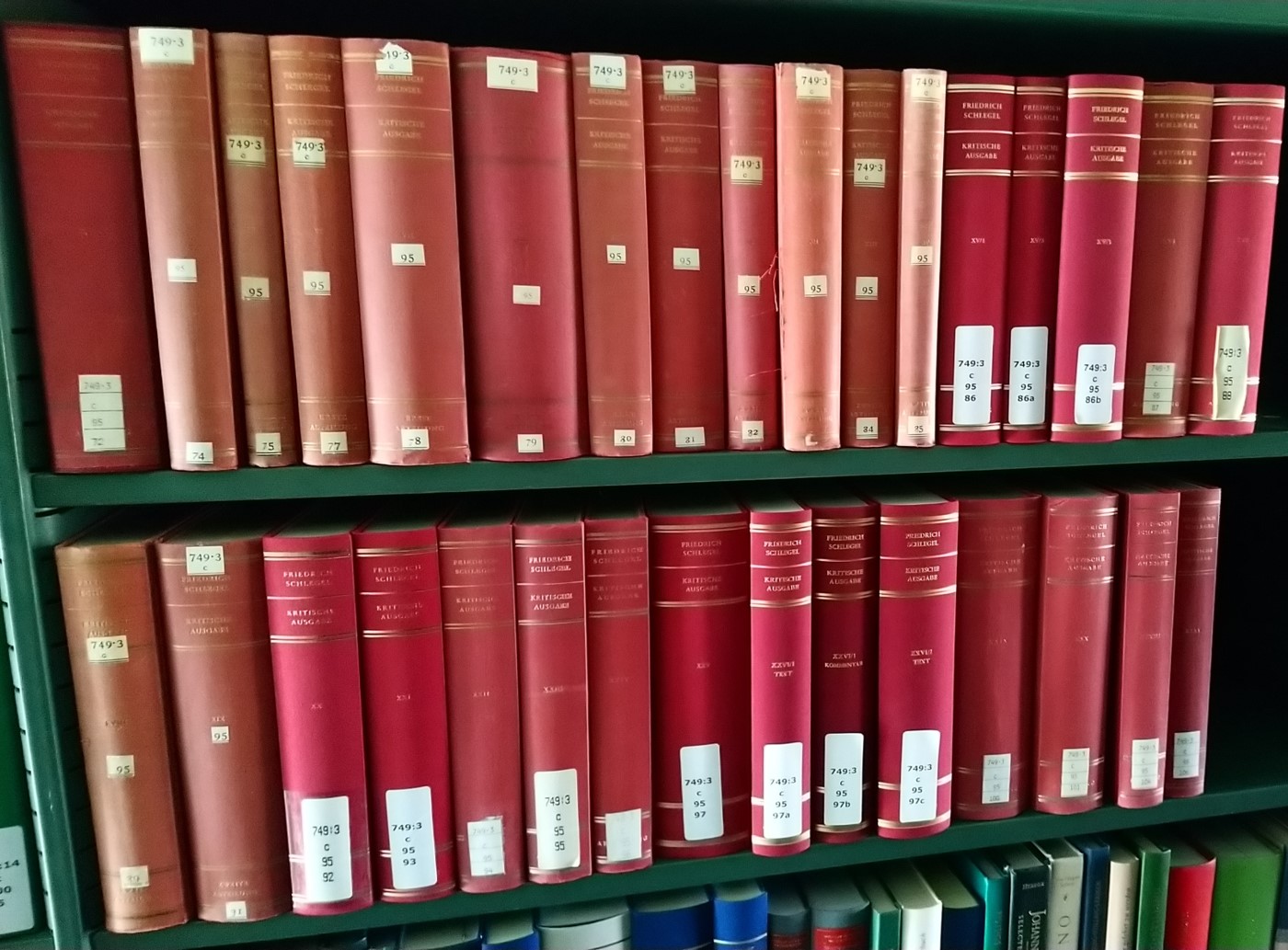
The main resource for Schlegel scholars is of course the critical edition of his works and correspondence: Friedrich Schlegel: kritische Ausgabe seiner Werke (749:3.c.95.72-106). Sadly, like many other German critical editions the progress of publication is slow. Having begun publication in 1958 it is still not complete. However, sections 1 and 2 presenting the works published in Schlegel’s lifetime and the unpublished papers are complete. The outstanding volumes are for section 3 which contains the correspondence of Dorothea and Friedrich Schlegel. It would be nice if the 250th anniversary might provide the impetus for the completion of this critical edition.
As part of the Cambridge Festival 2022 programme, you can now book a place to attend a talk exploring the representations of French children during the Franco-Prussian War and the Paris Commune. It will take place on Thursday 31 March from 5 to 6 pm in the Milstein room. We will be using literary and visual material from a historical collection of caricatures that will be on display at Cambridge University Library from 10 March to 7 May 2022.
From September 1870 to May 1871, the siege of Paris by the Prussians was followed by a civil war which opposed the radical left-wing members of the Paris Commune to the more moderate Republicans leading the French government. The French military defeat, the hardships of life under prolonged sieges, and the political experiments of the Paris Commune –which ended in a massacre–, had a profound impact on the daily lives of Parisian people and especially children.
Their perspective is reflected in the works of writers such as Alphonse Daudet and Guy de Maupassant. In Paris, this fuelled the production of a flurry of caricatures which circulated widely, often disseminated by the illustrated press. They portray children as victims of the war as well as privileged witnesses of the historical events unfolding around them. If children are often used as beacons of hope, torchbearers for the progressive aims of the Commune, they are also invested with the ideology of revenge against the Germans…
We are also delighted that a long awaited display of the Franco-Prussian caricatures, featuring, among others, Emperors Napoleon III and Wilhelm I, and Chancellor Otto von Bismarck, will take place from 10 March to 7 May 2022 in one of the Royal enclosures on the first floor of the University Library. Members of the University need to bring their blue card. External visitors can sign in and get a lanyard from the Reader Services Desk in the entrance hall, in order to come and see the small exhibition. If you cannot make it in person, here is a link to the virtual exhibition!
This week marks the 75th anniversary of the death of Hans Fallada, pseudonym of Rudolf Ditzen (1893-1947), the writer perhaps best known for the novels Kleiner Mann – was nun? (Little man, what now?) and Jeder stirbt für sichallein (Every man dies alone/Alone in Berlin). In this post I will look back at the short and difficult life he led, and explore how his literary reputation has changed over time. Initially considered to be a popular writer and perhaps therefore neglected by academics, it seems that more recently he and his writings have received renewed interest and sparked research. This is certainly borne out by the fact that the vast majority of the UL’s holdings of both editions of his works (in German and translation) and critical works date from the last thirty years.
Fallada’s life was dramatic and marked by much instability; at various times he was dependent on alcohol or drugs and he spent time in both psychiatric units and prison. Significant events early in his life doubtless shaped him: Continue reading “Hans Fallada: a troubled life and a revival of interest”→
Picture by Marcel Antonisse/Anefo via Wikimedia Commons
Twenty years ago, on December 16, 2001, the renowned Jewish-German author Stefan Heym died while visiting Israel. Heym is regarded as one of the most important 20th century German authors and is particularly significant to Cambridge University Library as it holds the Stefan Heym Archive, acquired from the author in December 1992. The archive is extensive and includes manuscripts, correspondence, first editions, newspaper cuttings, audio cassettes and video tapes. The acquisition of the archive was marked with an exhibition held at the Library in 1994.
In his life Stefan Heym witnessed some of the key events of the 20th century. Born in 1913, he grew up in Chemnitz, Saxony, and had to flee from Nazi Germany in 1933, emigrating via Prague to the United States. Continue reading “Remembering Stefan Heym”→
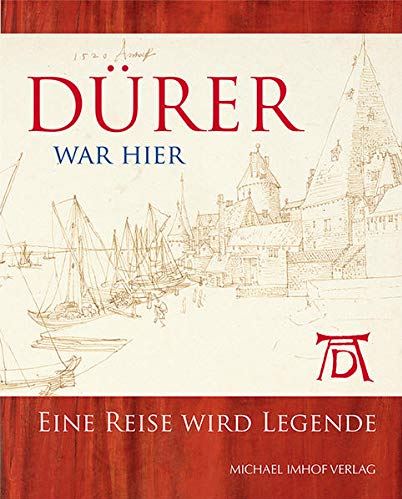
Dürer’s Journeys: Travels of a Renaissance Artist is a new exhibition at the National Gallery which opened last month and runs until the end of February. It allows us to gain an insight into the artist’s travels across Europe and his encounters with other artists and patrons. On show are paintings, drawings and prints as well as written documents, many of them on loan from museums and private collections around the world.
The exhibition has been organised in partnership with the Suermondt-Ludwig Museum in Aachen which hosted a different version of the exhibition earlier this year, concentrating on just one year-long trip around the Low Countries. The Aachen exhibition was originally intended to open in autumn 2020, coinciding with the 500th anniversary of Dürer visiting Aachen for the coronation of Charles V. We know so much about Dürer’s time in the Low Countries because he kept a detailed journal, and while only page fragments remain of the original journal (loaned to the exhibition by the British Library), two transcriptions survive. Continue reading “Celebrating Albrecht Dürer’s travels”→
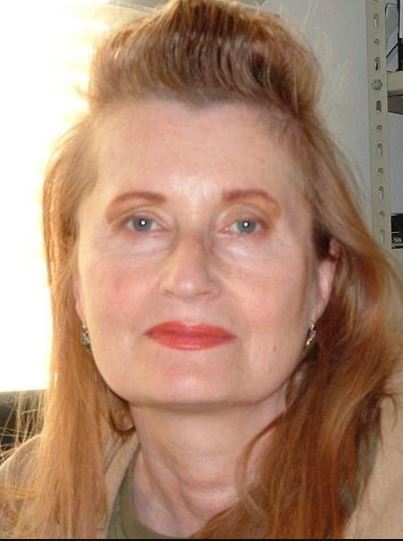
Elfriede Jelinek (picture by G. Huengsberg via Wikimedia Commons)
Earlier this month the Tanzanian novelist Abdulrazak Gurnah won the 2021 Nobel Prize in Literature. Elfriede Jelinek, whose 75th birthday it is this week, also won the Nobel Prize back in 2004, the first of only two Austrians to win it (her fellow Austrian, Peter Handke, subsequently won the award in 2019). The Swedish Academy citation referred to her “musical flow of voices and counter-voices”, perhaps a consequence of her highly musical childhood.
Jelinek, a reclusive figure, started out writing poetry before shifting to novels but is now best known as a playwright. As a former communist, known for her radical feminism and her criticism of the legacy of Austria’s fascist past, she has divided opinion in her home country over the years but has nevertheless been honoured with many important awards. The UL has copies of her major plays and novels, including some translations into English. We also have good holdings of books about her and her works, including several international conference proceedings. Two recent works to highlight are the 2013 Jelinek-Handbuch (747:4.c.201.12) and from 2014 Elfriede Jelinek: Werk und Rezeption (747:4.c.201.21), both by Pia Janke, director of the Elfriede Jelinek Research centre at Vienna University. Continue reading “Prizewinning “grandes dames” of Austrian literature and the next generation “→
While ebook publishing of academic titles in Germany has been lagging behind in comparison to the anglophone world, great strides have been made in the last few years and now most of the major academic publishers offer their titles in ebook format. However, one major problem is that institutional access to ebooks can often be much more expensive than purchasing the print version. The University Library has been acquiring an increasing amount of German language ebooks. We have access to many German language ebooks through our EBA (Evidence Based Acquisition) scheme with de Gruyter and we acquire numerous individual titles from the major aggregator platforms.
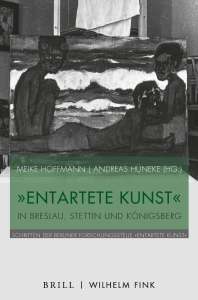
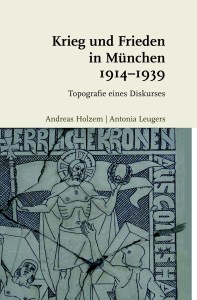
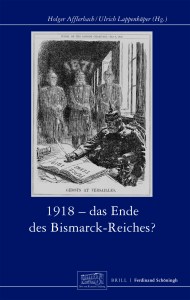
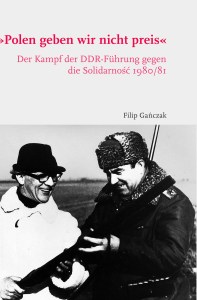
Recently we have purchased our first ebook packages. These are the Schöningh and Fink ebook collections which are offered by Brill. Ferdinand Schöningh and Wilhelm Fink are renowned academic publishing houses with Schöningh focusing on history, theology and philosophy while Fink concentrates on philology and media studies. The ebook collections are organized by subject and issued annually. We have acquired the 2020 and 2021 collections for the subject areas Early Modern & Modern History and Literature & Culture, giving us access to 240 titles. Records for these titles can be found in iDiscover. Below we list a selection of titles from the collections to give an idea of the range of topics covered; follow the hyperlinks under the cover images for access.









 Languages across Borders
