Collected works of Giordano Bruno

The University Library and ebooks@cambridge have recently purchased a full-text web-based Giordano Bruno collection, available on InteLex Past Masters.
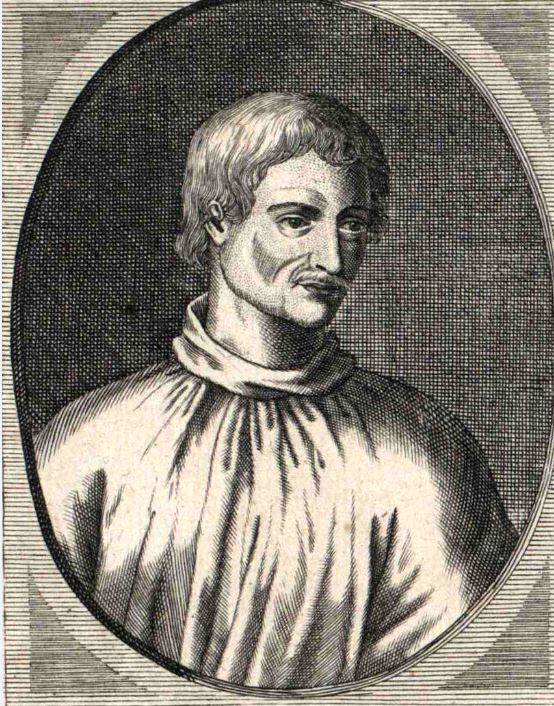
Giordano Bruno, engraving by Johann Georg Mentzel (1677-1743) via Wikimedia Commons

Giordano Bruno, the Italian author and philosopher, was born in 1548 at Nola, near Naples, and baptised Filippo. He joined the Dominican friars of Naples in 1562, taking ‘Giordano’ (Jordan) as his religious name. His adventurous thinking brought him under suspicion of heresy in the increasingly authoritarian atmosphere of the Italian Counter-Reformation, and in 1576 he fled northwards, finding his way via Switzerland to France. He taught for a while in Paris, and in 1583 crossed the Channel to England where, among other things, he became acquainted with Sir Philip Sidney, and lectured on the Copernican theory at Oxford. Inevitably, his name has been associated with that of Shakespeare, but there is no solid evidence to connect them. Continue reading “Collected works of Giordano Bruno”

Trial access: Biographisch-Bibliographisches Kirchenlexikon (BBKL)

ejournals & databases services's avatarejournals & databases services

The University of Cambridge has trial access on campus only to the Biographisch-Bibliographisches Kirchenlexikon (BBKL) to April 12, 2018.

The link to the trial is here:

http://www.bautz.de/kirchenlexikon

We regret that we cannot provide off campus access to this resource.

Please send your feedback on the encyclopedia to library@divinity.cam.ac.uk.  Thank you.

The BBKL is the largest ecclesiastical encyclopaedia worldwide, including more than 20.000 entries about deceased personalities of ecclesiastical history – in the area of theology, religion, philosophy, art history and related subjects.

View original post

Sara Gallardo, recently rediscovered Argentine writer

OLYMPUS DIGITAL CAMERA
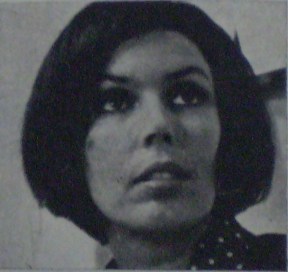
Sara Gallardo (1931-1988). Image from Wikimedia Commons

This is a guest post by Jordana Blejmar (University of Liverpool) and Joanna Page (University of Cambridge). 

Sara Gallardo was born in Buenos Aires in 1931 to an aristocratic Catholic family, with illustrious antecedents such as General Bartolomé Mitre, the writer Miguel Cané, the politician and biologist Ángel Gallardo, all key figures in the constitution of the Argentine nation. Her striking and eclectic fiction has been recently ‘rediscovered’, and the University Library has acquired many of her most important works (see here).

Gallardo travelled extensively in Latin America, Europe and Asia, published five novels, one book of short stories, several chronicles and four books for children. Her love for literature started in childhood. She was constantly ill and spent several days in bed reading books that would later influence her writing, including adventure stories, animal fables and classic works by Walter Scott, Rudyard Kipling and others. In 1950 she became a journalist; in 1958, she published her first novel, Enero (UL classmark: 2016.7.388), the story of a humble maid working on an estancia (a ranch), who falls pregnant following a rape and considers having an abortion. Gallardo presents a portrait of the relationship between patrones and employees without sentimentalism or a patronising gaze, and deals sensitively with issues of prejudice and guilt. Continue reading “Sara Gallardo, recently rediscovered Argentine writer”

International Women’s Day

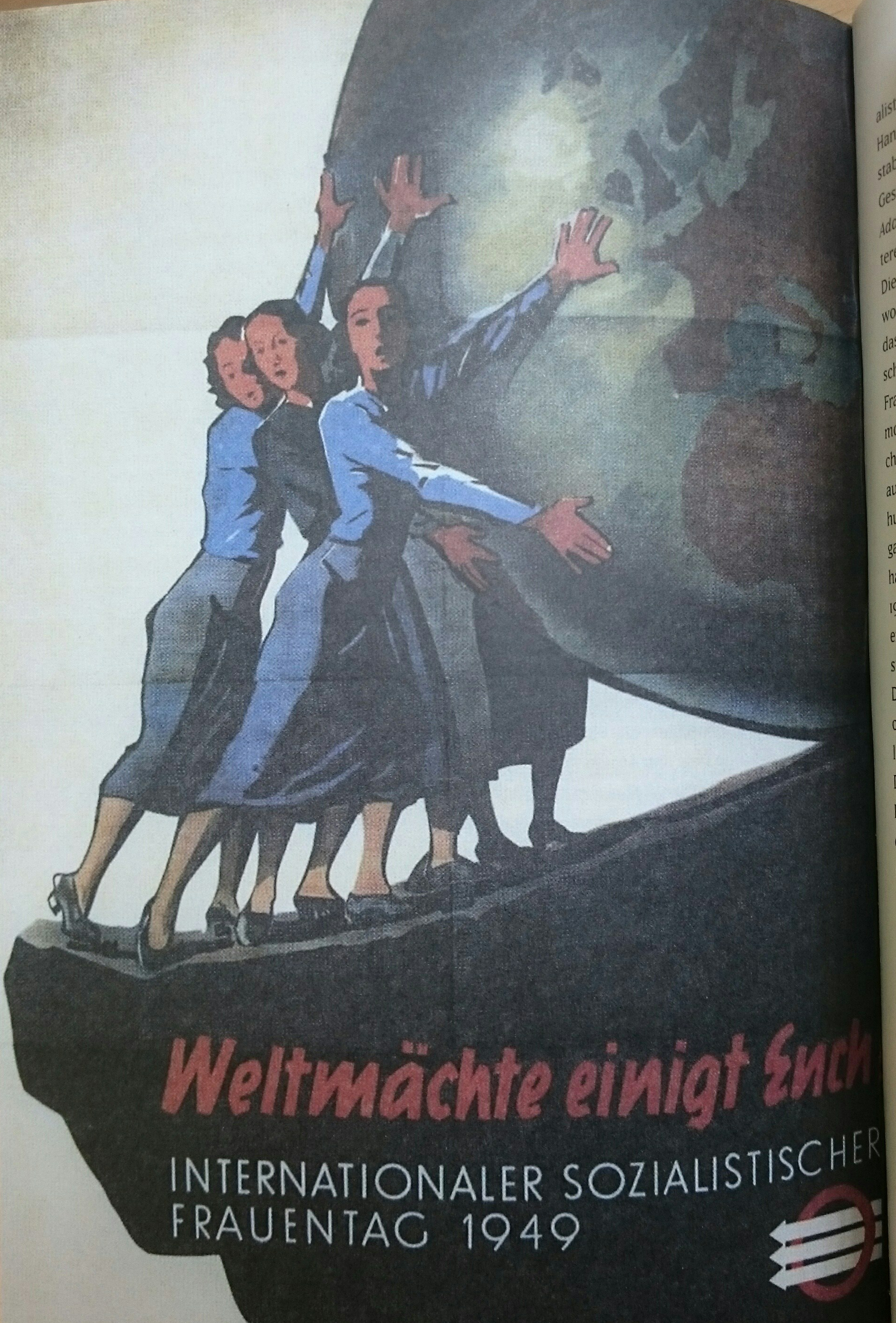
From Frauentag! Erfindung und Karriere einer Tradition

To commemorate International Women’s day today, and to follow up on the huge success of the University Library’s exhibition featuring women’s suffrage posters, in this blogpost we are going to showcase two diverse items that deal with the visual representation of women, their freedom, rights and role in society.

Frauentag! Erfindung und Karriere einer Tradition (C212.c.8465) was published in 2011 to accompany an exhibition entitled Feste. Kämpfe. 100 Jahre Frauentag, held at the Österreichisches Museum für Volkskunde. The exhibition marked 100 years since the first International Women’s Day was observed in 1911, when in Vienna women marched on the Ringstrasse, carrying banners. The exhibition (and book) focused in particular on the history of the women’s movement in Austria and included a whole section on the variety of posters relating to International Women’s Day. Continue reading “International Women’s Day”

Pierre Boucher and New France

2018_33
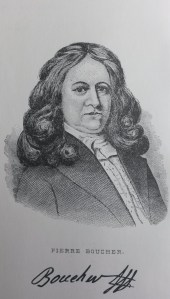
Portrait and signature of P. Boucher (from 662:3.c.95.10).

Pierre Boucher was born in Mortagne-au-Perche, France in 1622. When he was twelve, his family left to settle in New France (Canada). His father, Gaspard, worked for the Jesuits in Notre-Dame-des-Anges (Quebec) and they took care of the education of the children, especially Pierre. He was interested in the life of the native peoples and he became interpreter of Iroquoian languages, particularly Huron. He was a missionary assistant to the Jesuits in Huronia from 1637 to 1641.

Pierre Boucher, like New France pioneers Samuel de Champlain and Jean Talon, believed in miscegenation with the native peoples. Pierre married Marie-Madeleine Chrestienne (or Marie Ouebadinskoue) a Huron girl educated by the Ursulines, who later died in childbirth (1649) along with their child. In 1652 he married Jeanne Crevier, with whom he had fifteen children. From 1645 to 1667, he lived in the little settlement of Trois-Rivières (see View 1 below), founded in 1634 and second permanent settlement in New France after Quebec City. Boucher was twice-governor of Trois-Rivières (1653-58, 1662-67). Continue reading “Pierre Boucher and New France”

Best wishes from Trotsky : the February 2018 Slavonic item of the month

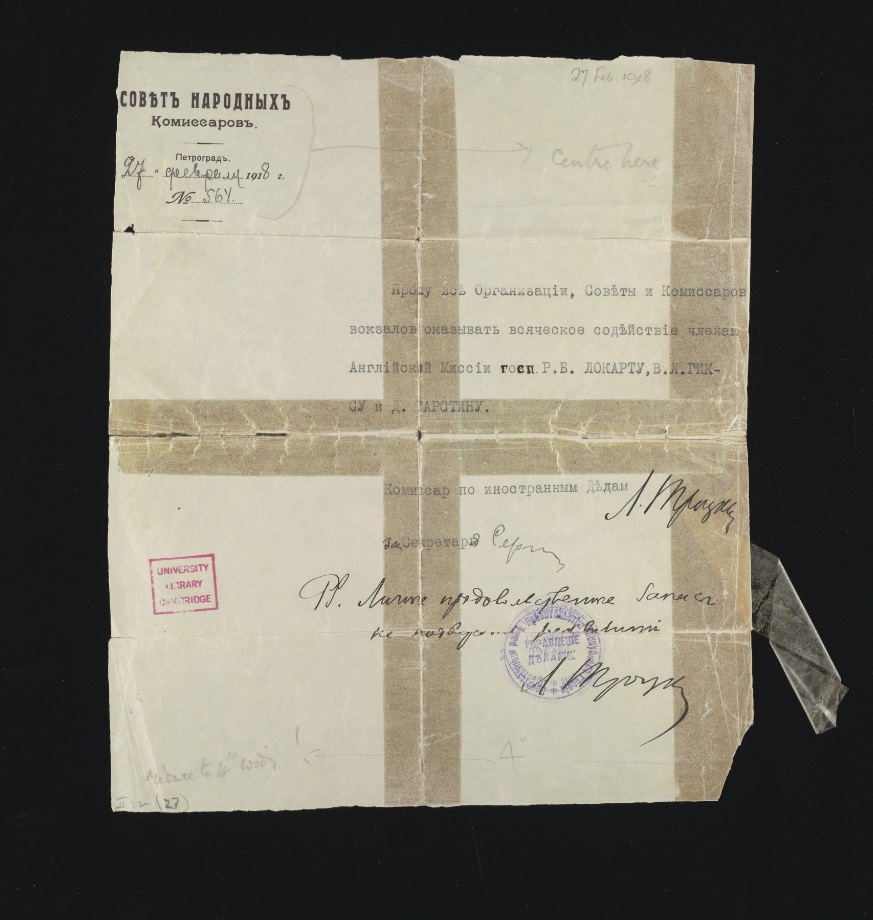
Among the February 1918-related exhibits soon to be added to the University Library’s Revolution exhibition is a letter from Leon Trotsky.  The letter came to the Library as part of the papers of the Conservative politician, Sir Samuel John Gurney Hoare (1880-1959), second Baronet, and first and last Viscount Templewood.  Hoare was in Russia as an intelligence officer in 1916, and his interest in the country continued long after his departure.  Quite how this letter, which is dated 27 February 1918 and refers to the work of the agent Bruce Lockhart, came to be amongst Hoare’s papers is only one of its mysteries.

Templewood II:2(27)

Continue reading “Best wishes from Trotsky : the February 2018 Slavonic item of the month”

Talk on the Liberation Collection, 22nd February

Originally posted on the Special Collections blog:

On Thursday 22nd February Sir Charles Chadwyck-Healey will give a talk to the Cambridge Bibliographical Society on ‘The power of the image in liberated France, 1944-46’.

His talk is inspired by imagery from the collection he has put together (recently presented to the University Library) on the German occupation of France during the war and its liberation by the allied forces. Beautiful books began to be published immediately after the liberation of Paris in August 1944 even though the war was still being fought in France. Once Paris was free and the Vichy government had collapsed, censorship came to an end, and it is the immediacy of this response and the quality of the books themselves that makes this period so interesting for the history of the book.

Talk starts at 17.00. Tea from 16.30 before the talk.

Free event, no booking required. Members and non-members of Cambridge Bibliographical Society welcome.

Milstein Seminar Rooms, Cambridge University Library
Thursday, 22 February, 2018
17.00-18.00

All welcome; booking not required

Victoire, numéro special (Paris, 1945)

Carnival in Uruguay

Murga1
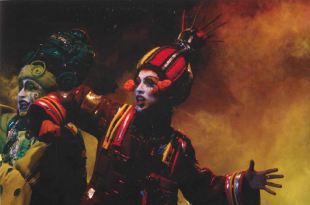
From Montevideo, Capital Iberoamericana del Carnaval (classmark: 2010.11.1880)

Carnival traditions in Latin America are immensely rich. For millions of people, February is linked to heat, music, water fights and a feast of colours. From Oruro’s celebrations in Bolivia to the most internationally renowned parades of Rio de Janeiro, their counterpart in Montevideo (Uruguay) is just as compelling and certainly more enduring, lasting for 40 days. Montevideo’s carnival not only traditionally allows for a general reversal of everyday norms, but also brings together the very diverse pot of cultures that shape Uruguayan society (see: El carnaval de Montevideo: folklore, historia, sociología, classmark: UR.18, at the Seeley Library’s Latin American studies collection; and at the University Library: Identidad y globalización en el carnaval, at 676:85.c.200.83). Continue reading “Carnival in Uruguay”

France and female authors

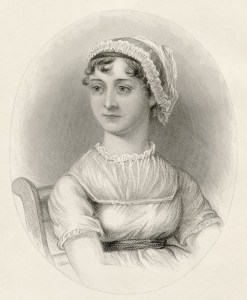
800px-Jane_Austen,_from_A_Memoir_of_Jane_Austen_(1870)
Britain celebrated Jane Austen’s bicentenary last year; but who could be her French counterpart?

A few months ago, a colleague, tongue-in-cheek, slammed a newspaper article on my desk with these words: “This doesn’t surprise me about the French at all: so misogynist!”. The article was about the French baccalauréat exam and revealed that 2017 was the very first year in which a text by a female author had been included in the official syllabus.

This doesn’t surprise me either. The French female authors I studied at school and university were indeed very thin on the ground. But I’ve always been uneasy at dismissing it as pure sexism. Could it not be that women have simply been less likely to embrace a literary career in France? When I compare with Britain, I am struck by how many female authors seem to have been around in the 18th and 19th centuries: Ann Radcliffe, Jane Austen, Mary Shelley, George Eliot, Elizabeth Gaskell, Anne, Charlotte and Emily Brontë… You can barely find one or two women writers for the same period on the other side on the Channel. Have they all been forgotten? Or did they simply never exist in the first place? And why would that be? My theory is that religion played a part in this. Protestants, more prevalent in England, were encouraged to study the Bible for themselves and taught to read and interpret the text, whether male or female – whereas Catholics, more prevalent in France, were not. Indeed, five of the British authors I’ve just named were clergymen’s daughters. Maybe having a history with a few ruling queens in it wasn’t harmful either, something that could never have happened in France because of the French interpretation of the Salic law. Or maybe there really were as many female authors in France and we just don’t know about them. Continue reading “France and female authors”

New additions to the Revolution exhibition : the January 2018 Slavonic items of the month

In late 2017, we announced on this blog the start of Revolution : the First Bolshevik Year, a new online exhibition at the University Library tracking the dramatic events unfolding one hundred years ago.  Since then, two new batches of items have been added.  Most recently, six pieces have gone up which link to developments in December 1917 and January 1918 (this doubling up will cease with the next month’s batch, since the Soviet adoption of the Gregorian calendar took place in February 1918).  Stamps, books, music, and a satirical cartoon, the new items relate to the formation of the Red Army and the increasing activity of the White movement, revolution and the arts, and the short-lived Constituent Assembly.

The preceding batch looked at the December 1917 armistice for the Eastern Front, the rapidly unravelling situation in Ukraine, and the introduction of revolutionary economy.

Full captions for all the items featured in this post can be found on the exhibition site.

Before long, the most exciting stage of work on the exhibition – the involvement of undergraduates as co-curators – is due to begin.  A further report on progress will appear on this blog before long.

Mel Bach