Ukrainian ceramicist Olʹha Rapaĭ-Markish : the January 2024 Slavonic item of the month

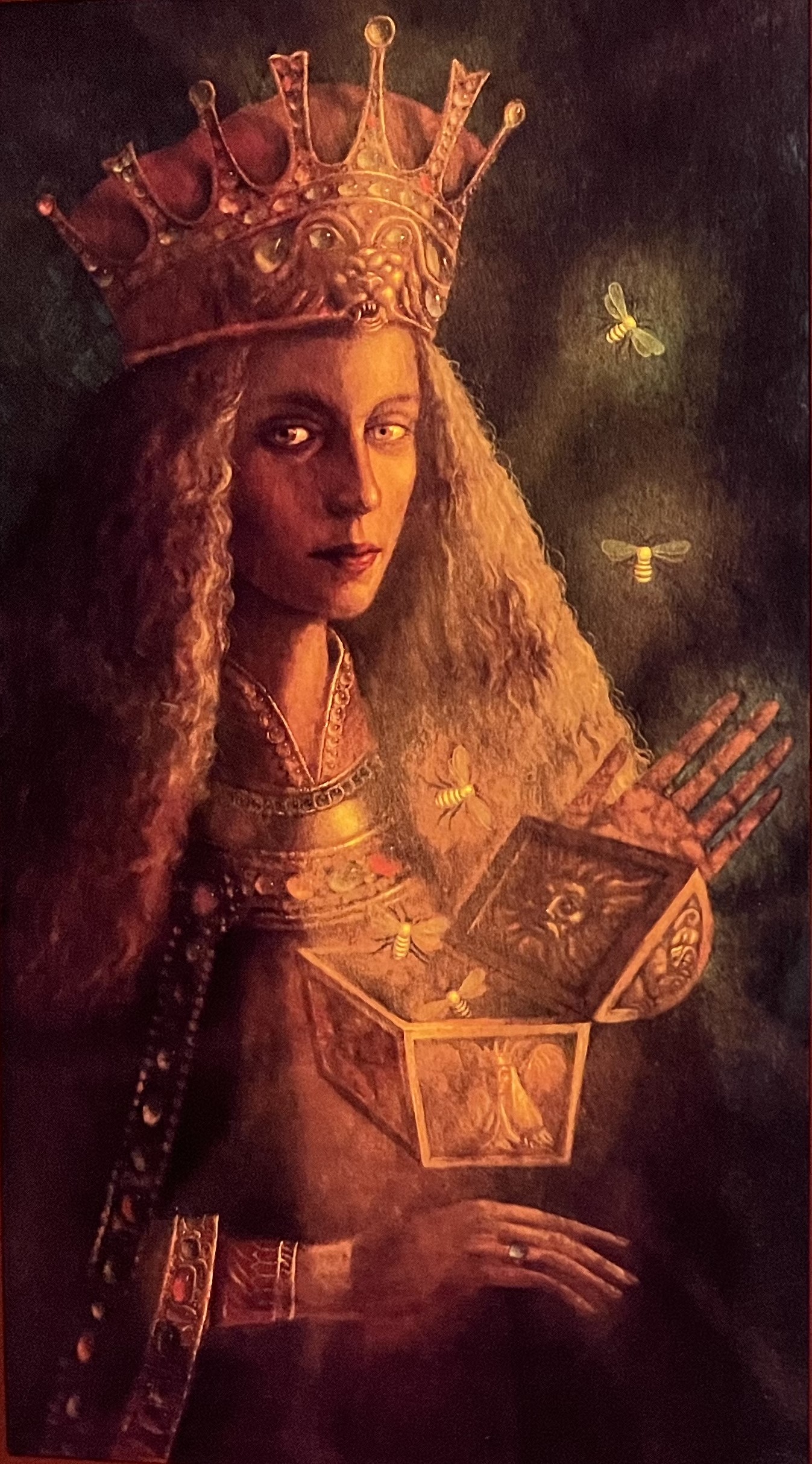
The 2018 publication Olʹha Rapaĭ-Markish arrived in Cambridge later that same year but I only recently managed to take a proper look.  Olʹha Rapaĭ-Markish (also known as Olʹha Rapaĭ or the anglicised Olha/Olga Rapay), 1929-2012, was a Ukrainian artist most known for her ceramics, large and small, and this book explores her often tragic life and her delightful work.  [Note that her father, Peret︠s︡/Peretz Markish, the major Yiddish writer who was shot in Moscow in 1952 during the Night of the Murdered Poets, features in the book, and that we have other books by/about him here.]

It’s impossible to do justice to the book’s reproductions of the artist’s work with only a phone camera, but hopefully the images here give some kind of tempting idea.  Rapaĭ-Markish’s work ranged from the large-scale (featuring in and on several buildings in Kyïv) but this book’s reproductions focus more on her small-scale work, especially the wonderful figurines she produced, full of life and joy – and cats (the book includes a photo of the artist with her cat muse).  This is our only book about Rapaĭ-Markish’s work, and definitely worth calling up to consult in the UL.

Mel Bach
A deluxe edition of ‘Twenty love poems and A song of despair’ for Cambridge

The University Library has recently received a special limited edition of Pablo Neruda’s Veinte poemas de amor y una canción desesperada. Presented to the University in 1991 by Patricio Aylwin Azócar, former President of Chile, this copy is no. 555 of 250 copies printed from 501 to 750 and features a dedication to the University of Cambridge by the Chilean president.

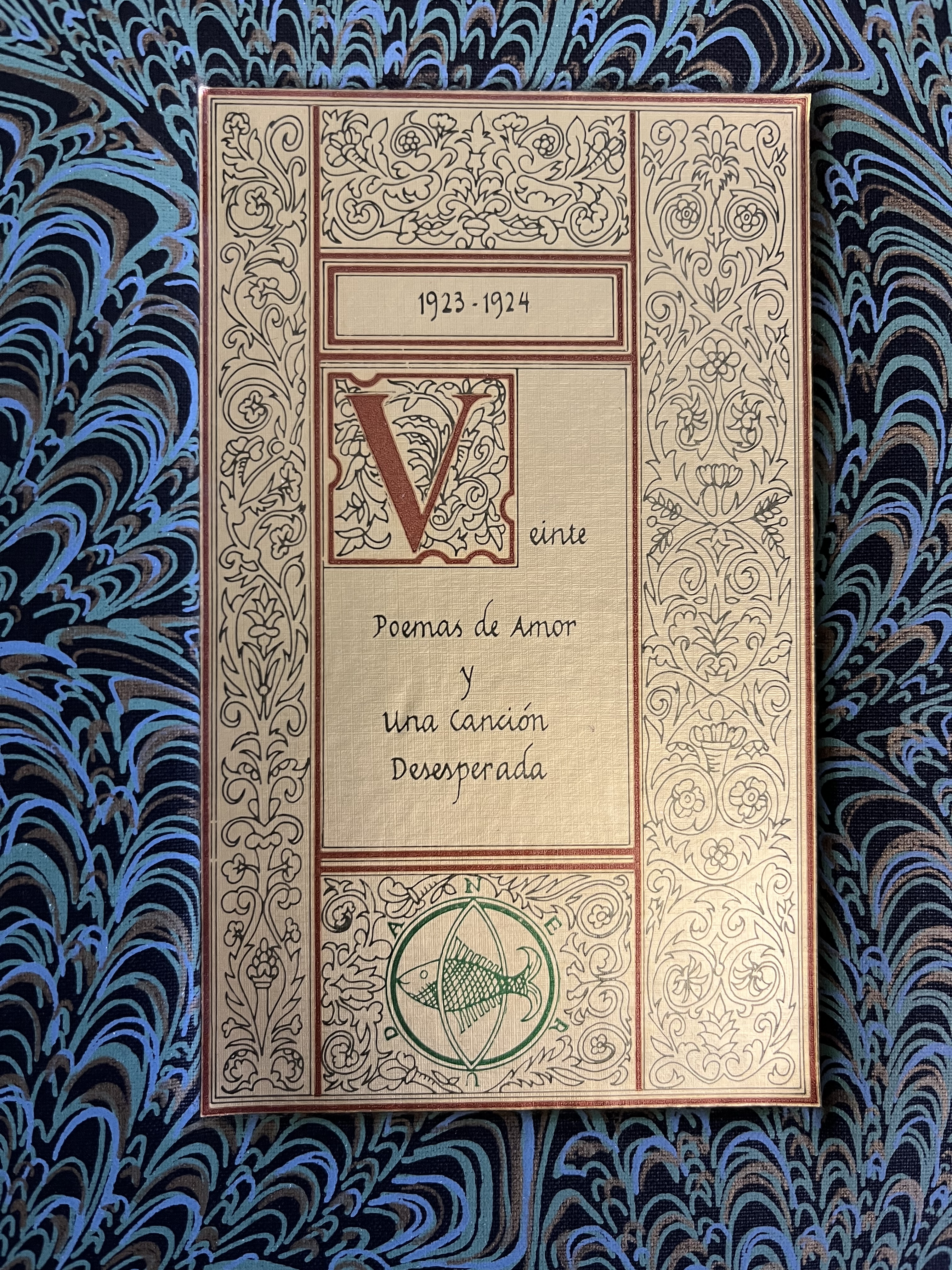
Front cover (RBM.19.a.2)

Pablo Neruda (Chile, 1904-1973) won the Nobel Prize for Literature in 1971. He is best known for his poetry, most notably this work, which he wrote in 1924 when he was just nineteen years old. Neruda’s works are widely represented in the Cambridge Libraries collections, both in Spanish and in English translation (click here to view our holdings in iDiscover).

This particular edition of Twenty love poems and ‘A song of despair’ was printed by Ismael Espinosa in 1990 in Santiago de Chile.[i] It is presented in elephant folio, with a satin ribbon, illustrated with eight original glazes by Chilean magical realism painter Hernán Valdovinos. The volume is beautifully bound in peacock-feather decorated cloth, with gold paper-title-label insert on the front panel and marbled endpapers.[ii] The calligraphy is by María Angélica Seguel.

Sonia Morcillo


[i] Ismael Espinosa talks about this edition in Revelaciones de un editor de Neruda, El Mercurio, Sept. 25, 1988, p. E16 (available online at: https://www.bibliotecanacionaldigital.gob.cl/bnd/628/w3-article-297688.html)

[ii] Description details source: The Edmonton Book Store, Canada.

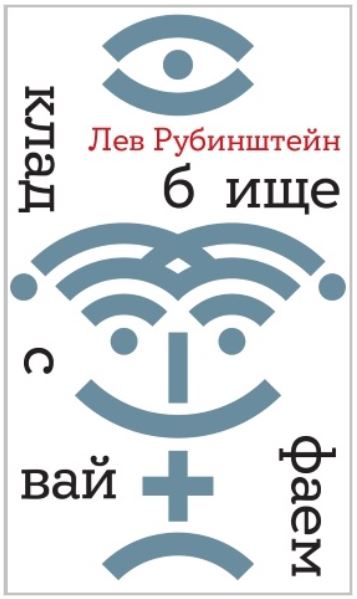
Lev Rubinshteĭn (1947-2024) : an anti-war Moscow poet with Ukrainian Jewish roots

This week saw the death following a road accident of the poet and activist Lev Rubinshteĭn (Rubinstein).  Rubinshteĭn is most closely associated with Russia and especially Moscow, where he lived and died and and whose son he was most famous as through his status as one of the founders of Moscow conceptualism.  Yet while Russia’s dissident and artistic scenes have lost a shining light through his death, Ukraine has also lost a friend (he consistently spoke out against Russian aggression again Ukraine) and a son too: Rubinshteĭn was born in Moscow to Jewish parents who both came from Ukraine. Continue reading “Lev Rubinshteĭn (1947-2024) : an anti-war Moscow poet with Ukrainian Jewish roots”

The reverse Grand Tour: women travelling to Britain

Back in the pandemic summer of 2020 I wrote about the Grand Tour experiences of various women who travelled to mainland Europe in the 18th and 19th centuries. In this post I will look at the writings of some women who came to Britain from abroad around the same time, sharing some of their thoughts and impressions.

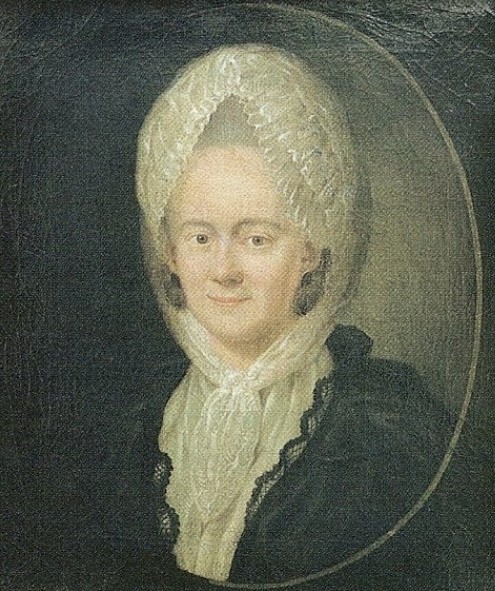
1778 portrait by Georg Oswald May, via Wikimedia Commons

First is Sophie von La Roche (1730-1807), an important figure of the German Enlightenment, credited with being the first female novelist in Germany with her 1771 work Geschichte des Fräuleins von Sternheim which was published by Christoph Martin Wieland, a cousin to whom she had previously been briefly engaged. She was also the grandmother of Bettina von Arnim and Clemens Brentano, siblings who were famous Romantic writers. By the 1780s, already in her 50s, La Roche’s youngest child had left home and she was able to travel more easily, first in 1784 to Switzerland, then to France in 1785 before a trip to the Netherlands and England (London and its environs) in 1786 which she wrote about in Tagebuch einer Reise durch Holland und England. Quotes below are taken from an English version of this: Sophie in London 1786 translated from the German by Clare Williams (484.d.93.3). Continue reading “The reverse Grand Tour: women travelling to Britain”

The vyshyvanka returns

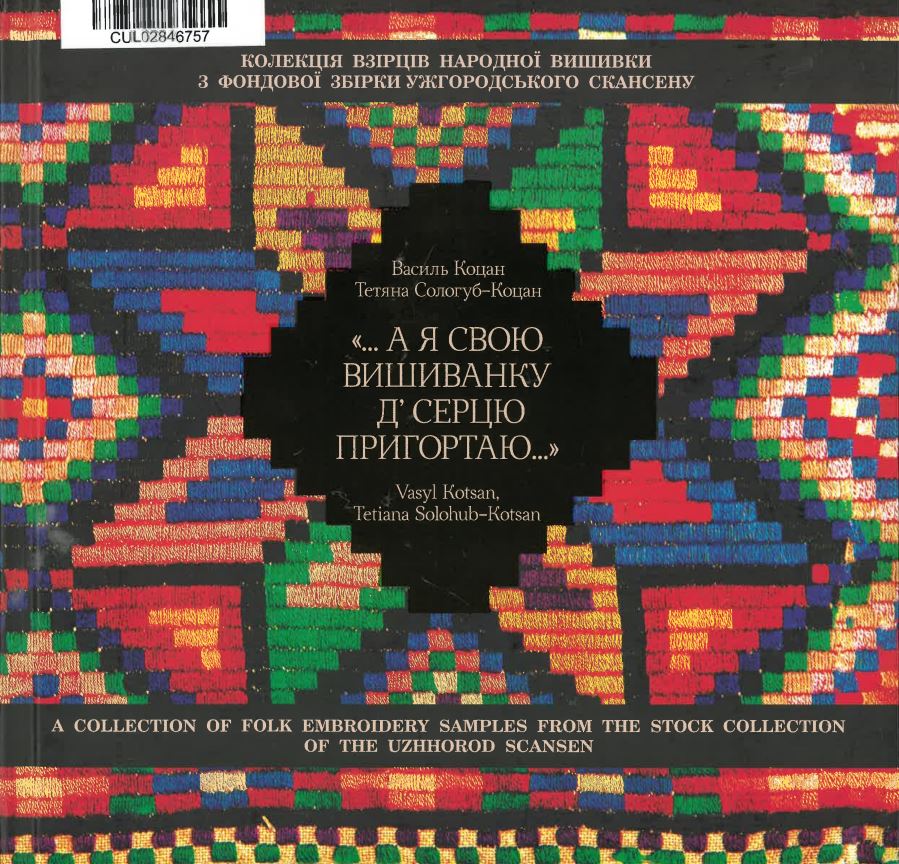
This week, we look at a newly arrived and beautifully illustrated book about Ukrainian embroidery in terms of the vyshyvanka, the traditional decorated shirt that I wrote about in 2022.

“–A i︠a︡ svoi︠u︡ vyshyvanku d’ sert︠s︡i︠u︡ pryhortai︠u︡…” : kolekt︠s︡ii︠a︡ vzirt︠s︡iv narodnoï vyshyvky z fondovoï zbirky uz︠h︡horodsʹkoho skansenu =
My vyshyvanka is close to my heart… : a collection of folk embroidery samples from the stock collection of the Uzhhorod scansen is a bilingual Ukrainian-English catalogue written by Vasylʹ Kot︠s︡an and Teti︠a︡na Solohub-Kot︠s︡an.  It is based on a collection held within the wider Zakarpatsʹkyĭ muzeĭ narodnoï arkhitektury ta pobutu (Transcarpathian Museum of Folk Architecture and Life).  Our copy describes itself as a second edition, but from what I can see, Cambridge currently holds the only copy of any edition in any UK or US academic library. Continue reading “The vyshyvanka returns”

“Chameleonic games” in the 1870-71 caricatures collections  

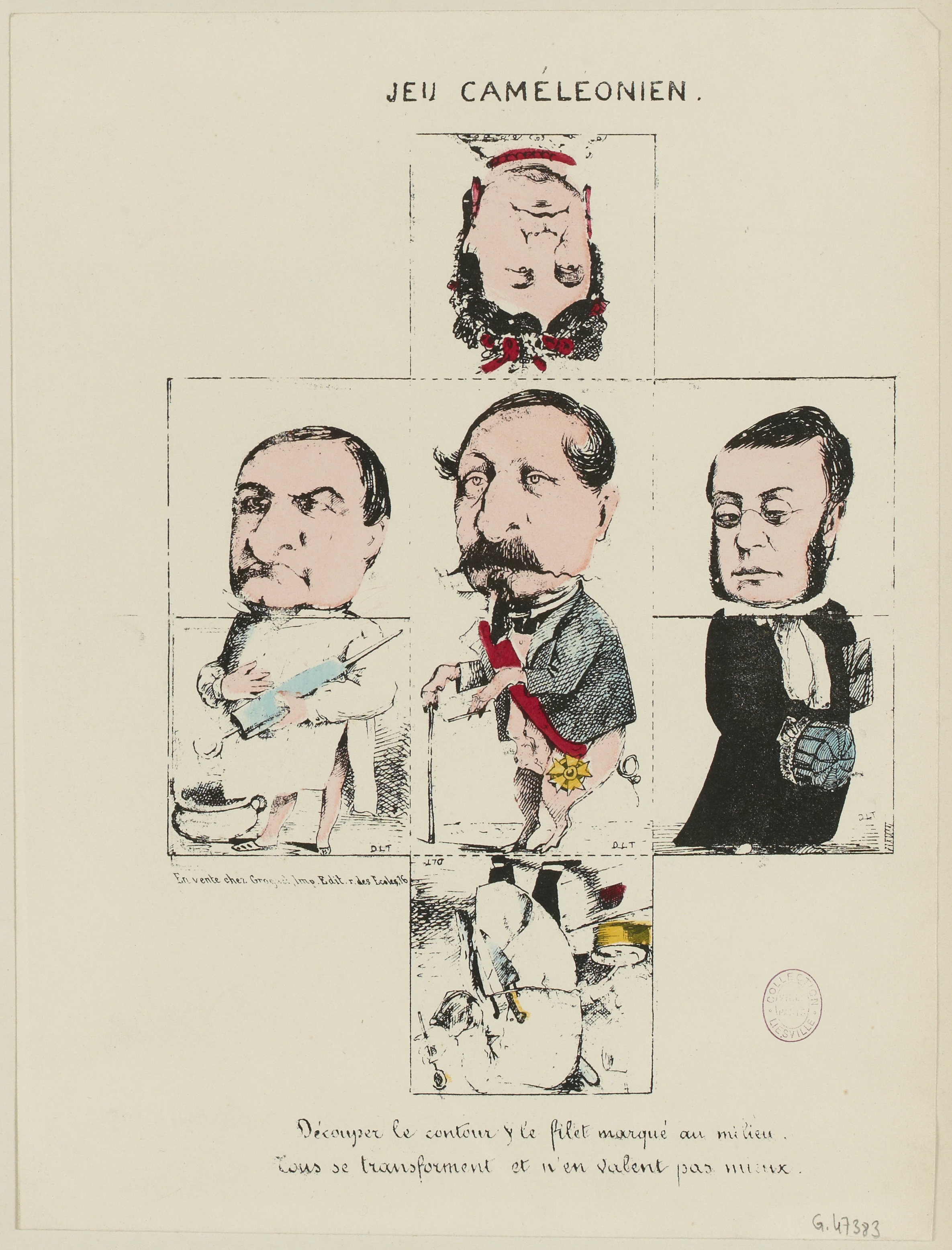
If over the recent holidays you have been roped into playing party games, which ones would you have encountered in 1870-71? Among the latest paper cut-out games and board games, fully engaging with contemporary historical and political events, Parisians of the time could have tackled the two “Jeux caméléoniens”, or Chameleonic Games by Louis-Valentin-Émile de La Tremblais, a painter and draughtsman probably of aristocratic origin.

Louis-Valentin-Emile de La Tremblais, Jeu caméléonien [Second French Empire] (recto), lithograph, [1871], Paris, Musée Carnavalet, G.47384.
Continue reading ““Chameleonic games” in the 1870-71 caricatures collections  “

The wonderful woodcuts (and more) of Frans Masereel

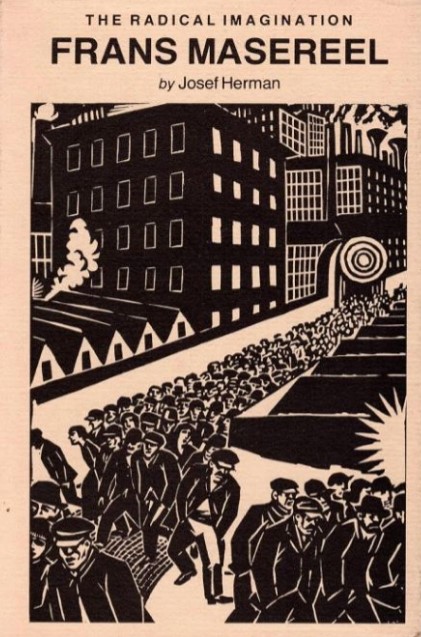
Cover of Uc.6.3506

Woodcuts are an attractive art form to me and have featured in our blog before – see Twentieth century German woodcuts – so I was delighted to come across a book featuring woodcuts by Frans Masereel (1889-1972) while writing the recent post on Till Eulenspiegel, and to discover that the UL has a good selection of other works by him which will be explored in this post. Masereel’s name is not a familiar one now but in the 1920s he was very prolific and well-known, employing a distinctive Expressionist style in illustrations for books by other authors as well as in his own novels without words which were influential forerunners of the graphic novels of today. Continue reading “The wonderful woodcuts (and more) of Frans Masereel”