Decolonisation and Russia’s war against Ukraine

When the Cambridge University Libraries Decolonisation Working Group was set up in September 2020, its members agreed that the group’s terms of reference should include the following: “We recognise that while the primary colonial legacy in Cambridge libraries relates to the British Empire, Cambridge also holds material relating to other colonial powers, past and present, and this is also part of our decolonisation focus.”  The wording came about because I was keen to ensure that non-British colonial legacies should not be overlooked when we hold such extensive collections from all around the world.

The Library of Congress authority name heading for Kyïv, previously listed as Kiev.

Russia’s full-scale invasion of Ukraine is a devastating reminder of these other colonial legacies.  Putin has openly compared his “military operation” against Ukraine to Peter I’s wars of expansion (or, more specifically, wars of reclamation, in Putin’s narrative).  In the library context, decolonisation work to address the colonial past and its violent embracing in the present involves many areas of library activities.  This post provides just a few initial suggestions, and I hope that future posts will pick up specific defined and achievable projects that come out of these. Continue reading “Decolonisation and Russia’s war against Ukraine”
German theatre premières in 1922

One hundred years on, 1922 is remembered as perhaps the most important year for modernist literature, with the publication of both Ulysses by James Joyce and T.S. Eliot’s The Waste Land. Media attention around the anniversary of Ulysses earlier this year (and 16th June’s Bloomsday) prompted me to wonder what was happening in the German-speaking literary world during 1922. Focusing on drama, this post features some noteworthy first productions that theatre-goers might have seen that year, some more successful than others.

By 1922, the fashion for Expressionist drama, which had dominated the German scene for a number of years, was tailing off but expressionist elements still remained. This must have been an interesting time to work in the theatre as many of the actors and directors were also dipping their toes in the waters of cinema (many later went to the United States, either for political reasons or because of the draw of Hollywood – or both). It would also have been a challenging time economically as four years into the Weimar Republic inflation was starting to take hold. It is important to note that the premières took place in a number of different cities, not just Berlin, reflecting the importance of theatre across the whole of Germany (and Austria). I am also struck by how young some of the playwrights were – four of the six featured here were under the age of 30, Brecht being only 24. Continue reading “German theatre premières in 1922”

Ukrainian literature in translation

Following on from my recent post about new English-language acquisitions relating to modern Ukrainian history, I wanted to highlight a small sample of our holdings of modern Ukrainian literature in translation. (Click on the titles below to be taken to the record in iDiscover.)

One author whose works have gradually made their way into English translation is Oksana Zabuzhko, who has won a number of awards, including the Shevchenko National Prize. Her output spans novels, short stories, poetry, and non-fiction; we have recently acquired both her short story collection Your Ad Could Go Here and her Selected Poems, both of which appeared in English for the first time in 2020, and both of which are the work of multiple translators.

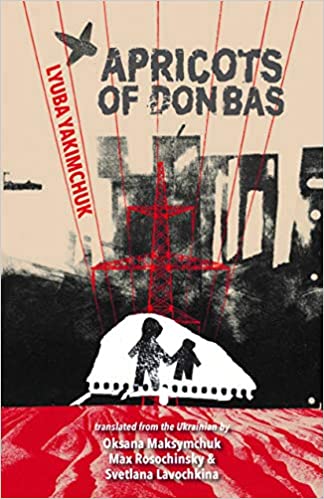
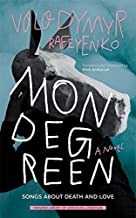
The stories in Your Ad Could Go Here deal with the Euromaidan protests and the war with Russia since 2014. Other literary responses to the conflict include Lyuba Yakimchuk’s book of poetry, Apricots of Donbas; Volodymyr Rafeyenko’s novel Mondegreen : Songs About Death and Love; and Oleg Sentsov’s short story collection, Life Went on Anyway. Each author has been personally affected by the war: Lyuba Yakimchuk’s parents and sister were forced to flee their home in the Luhansk region when it was occupied by Russian-backed militants; Volodymyr Rafeyenko moved from his native Donetsk to near Kyiv at the outbreak of war; and Oleg Sentsov was arrested on terrorism charges in Crimea in 2014 and sentenced to 20 years’ imprisonment (he was released in a prisoner swap in 2019). Continue reading “Ukrainian literature in translation”

Book publications on French politics and political figures, ahead of the 2022 parliamentary elections 

On the 12th and 19th of June 2022, French citizens are electing their 577 Members of Parliament, shortly after the re-election of President Emmanuel Macron (see previous blogpost). If a candidate obtains more than 50% of the votes with a participation of at least 25%, he can be elected as MP in the first round. Otherwise, the second round includes the two candidates who obtained the most votes in the first round, and possibly others who have received more than 12.5 % of the votes of registered electors. This system, which relies on majority rather than proportionality, favours the candidates of the leading political parties, but can also lead to strategic alliances. Continue reading “Book publications on French politics and political figures, ahead of the 2022 parliamentary elections “

New English-language acquisitions relating to Ukrainian history

As the Russian war against Ukraine continues, I thought it would be useful to highlight some new English-language acquisitions which focus on recent Ukrainian history. While it will obviously take some time for books to be written about the invasion and this new and terrible stage in the conflict between the two countries, there has been a war ongoing in Ukraine since 2014, and we have a number of titles, predominantly ebooks, dealing with the subject. (Click on any of the titles to be taken through to the iDiscover record.)

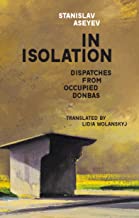
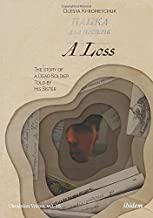
Last year, Harvard University Press launched the Harvard Library of Ukrainian Literature, “a new book series dedicated to publishing outstanding Ukrainian literature in English translation”; we will, of course, be looking to acquire each work in this series as it is released. The very first title to be published was the journalist and writer Stanislav Aseyev’s In Isolation: Dispatches from Occupied Donbas, a collection of essays originally written between 2015 and 2017: a recent review in the TLS describes it as “a rare and unsettling insider’s account of conditions in the ‘Donetsk People’s Republic’”. It ends with his capture and imprisonment, and a subsequent work (The Torture Camp on Paradise Street) detailing his experience of incarceration is due for publication later in the year. Another first-person account of the conflict in Donbas, this time from Glagoslav Publications, is Artem Chekh’s Absolute Zero, based on the diary he kept during his time as a soldier there; and, as a previous blogpost highlighted, we hold A Loss : The Story of a Dead Soldier Told by His Sister, a memoir by Dr. Olesya Khromeychuk.

Continue reading “New English-language acquisitions relating to Ukrainian history”

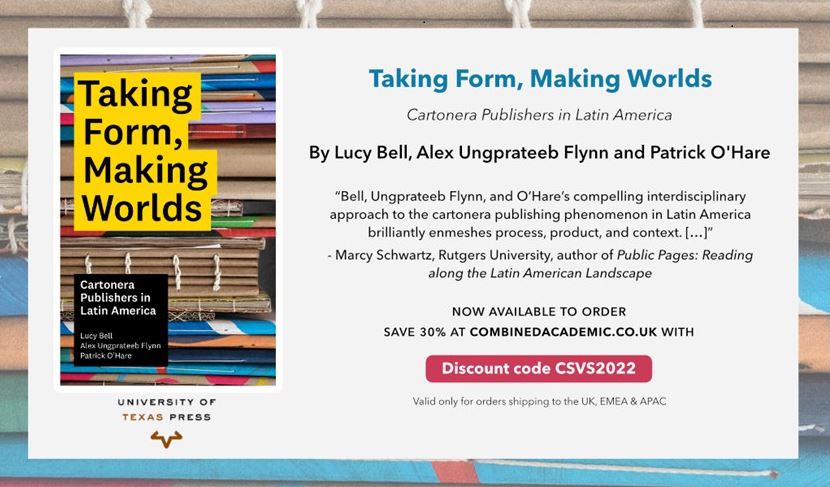
The first comprehensive study of the cartonera phenomenon

We are very pleased to announce the launch of the book Taking Form, Making Worlds: Cartonera Publishers in Latin America, on Friday 10th June at 4pm at Centre of Latin American Studies (Alison Richard Building, Seminar Room 204). 

Lucy Bell (Senior Lecturer in Spanish and translation studies, University of Surrey), Alexander Ungprateeb Flynn (Assistant Professor of Anthropology and Contemporary Art, UCLA) and Patrick O’Hare (UKRI Future Leaders Fellow, University of St. Andrews) have collaborated with the University Library in the building up of our cartonera collection . They will be presenting and discussing their new book, the first comprehensive study of cartonera, in conversation with David Lehmann (University of Cambridge) and Clara Panozzo (Latin American and Iberian Collections, Cambridge University Library). The book is published by the University of Texas Press and is available online for Cambridge users here.

Drawing on interdisciplinary research conducted across Mexico, Brazil, and Argentina, the authors show how this hands-on practice has fostered a politically engaged network of writers, artists, and readers. More than a social movement, cartonera uses texts, workshops, encounters, and exhibitions to foster community and engagement through open-ended forms that are at once creative and social.  

(from the publisher’s description) 

You are all kindly invited to attend! 

Clara Panozzo