This month, I wanted to draw attention to a growing open access resource called Prozhito which provides diaries written by the great and the good and the ordinary. At the time of writing, Prozhito (“Lived”, the passive past participle) contains diaries in Russian by 5755 authors, in Ukrainian by 104, and in Belarusian by 58.
A volunteer-led initiative which started in 2014, Prozhito has since 2019 been a joint project with the European University in St Petersburg. The latter’s English-language summary of the project is here. The Russian-language Prozhito “About” page is here.
Following on from last week’s post on Dutch material, this post will present some material on Germany’s colonial history and race relations.
While Germany’s colonial period was relatively brief the legacy was nevertheless devastating. Reassessment of Germany’ colonial history has been a focus of research in Germany during the last 20 years.
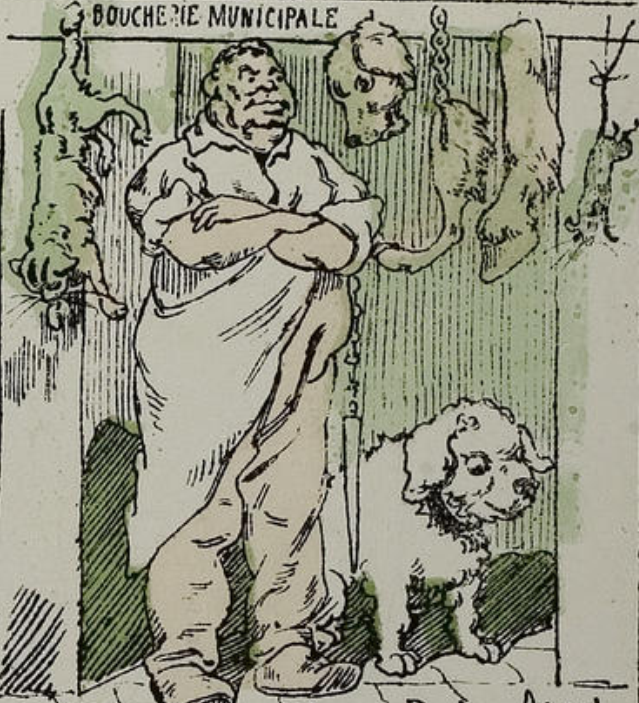
In a previous blog post, we talked about series of caricatures held in Cambridge University Library and other collections (such as Heidelberg University Library) depicting food shortages during the 1870-1871 siege of Paris. The Parisian diet was considerably and disturbingly altered and extended during this time, as people resorted to eating rats, cats, dogs, and horses. The current lockdown, due to the COVID-19 outbreak, with obvious economic consequences, is predicted to increase social inequalities, despite government measures such as the furlough scheme or the extension of free school meals vouchers over the summer holidays. Did the siege of Paris level or increase social differences, and how were they perceived by contemporary caricaturists? Satirical prints specifically targeted the way privileged classes coped with the situation of penury and food shortages. The relative suffering of the wealthy, bourgeois or aristocrats, is treated humourously in many of the caricatures produced at the time. They stress the fact that, though they also experienced rationing, hardship and privations, certain categories of the population did manage to avoid starvation and, as restaurants were open, were still able to enjoy behaviours of their previous life.
In the Album du siège, Cham depicts a manservant informing his lady, reclining languidly in a chair, that her horses are ready – on the dinner table. A print of Paris assiégé shows a helpful manservant jovially reassuring his mistress, a marchioness surrounded by her domestic ménagerie (dogs, cats, fish and birds) that with such an entourage, she need not fear hunger…
150 years ago, in the midst of the Franco-Prussian war and the Commune, the besieged population of Paris experienced situations of lockdown and hardship which to some extent resonate with the confinement we have been through recently. During the COVID-19 outbreak, our confinement may have altered some of our eating habits and consumption, but despite initial panic buying, UK supermarkets have still been stocked and food has been plentiful, whereas the circulation of people, goods and provisions to and from besieged Paris was completely impeded.
Collection de caricatures et de charges pour servir à l’histoire de la guerre et de la révolution de 1870-1871. Heidelberg UL, vol. 2, p. 91 ; Cambridge UL, KF.3.10
Cambridge University Library, as well as a number of institutions and museums in the UK, France, Germany and the US, holds an important collection of caricatures of the Franco-Prussian war and the Paris Commune, (hand-coloured) lithographs, most of them produced in series. Those focusing on the first siege of Paris include “Souvenirs du siège” (30 prints) and “Paris assiégé: scènes de la vie parisienne pendant le siège” (31 prints) by Draner; the “Album du siège” (39 prints) by Cham and Daumier, and two series by Faustin: “Paris bloqué” (24 prints) and “Les femmes de Paris assiégé (idylles et épopées)” (8 prints). In the context of a research project on 1870-71 Franco-Prussian caricatures, Cambridge Digital Library has already digitised the first of the six volumes of the Cambridge prints, and Cambridge Digital Humanities has funded the photography of the remainder of the collection, due when the library reopens. In the meantime, we can refer to other digitisations of this material, in particular that of Heidelberg University Library.Continue reading “Eating cats and dogs during a lockdown: caricatures of besieged Paris (September 1870 – January 1871)”→
Last week’s blog post Black Lives Matter : some ebooks looked at a selection of anti-racism English-language titles. Today’s post will be the first of a series looking at titles in other languages, with a focus today on Dutch material.
The Netherlands and Belgium share with the UK a history of colonisation and slavery and are addressing uncomfortable issues of ongoing racism. Dutch ebooks available to Cambridge staff and students are very few, so the suggestions below include translations into English and books published in English by Dutch-language authors. Continue reading “Dutch titles on race and decolonisation”→
With the awarding of the Bagutta prize for 2020 at the end of January, I was reminded of our annual focus on the major literary prizes of Italy. The Bagutta prize this year went to Enrico Deaglio for his work on the bombing in Piazza Fontana, Milan, in 1969. La Bomba : cinquant’anni di Piazza Fontana, published by Feltrinelli, was written to coincide with the 50th anniversary of the terrorist attack. It is now in the catalogue and stands at C215.c.8782.
The killing of George Floyd and others in the US and the protests that have followed there and around the world have seen, among many other positive actions, advice being shared about reading material to aid understanding of modern-day and historical Black experience. Olivette Otele, Professor of History of Slavery at the University of Bristol, published a list of “12 classics from the anti-racist canon” in the Sunday Times yesterday. Through her Twitter profile, Professor Otele provided a snapshot of the list here.
This post looks at the availability (where possible) of these titles electronically for Cambridge staff and students, and then ends with a brief list of some further ebooks we have recently purchased. Continue reading “Black Lives Matter : some ebooks”→
East View have opened up access to their Rossiĭskaia gazeta Digital Archive, Novaia gazeta Digital Archive, and Essential Russian Classics e-book collection to Cambridge staff and students until the 31st of July.
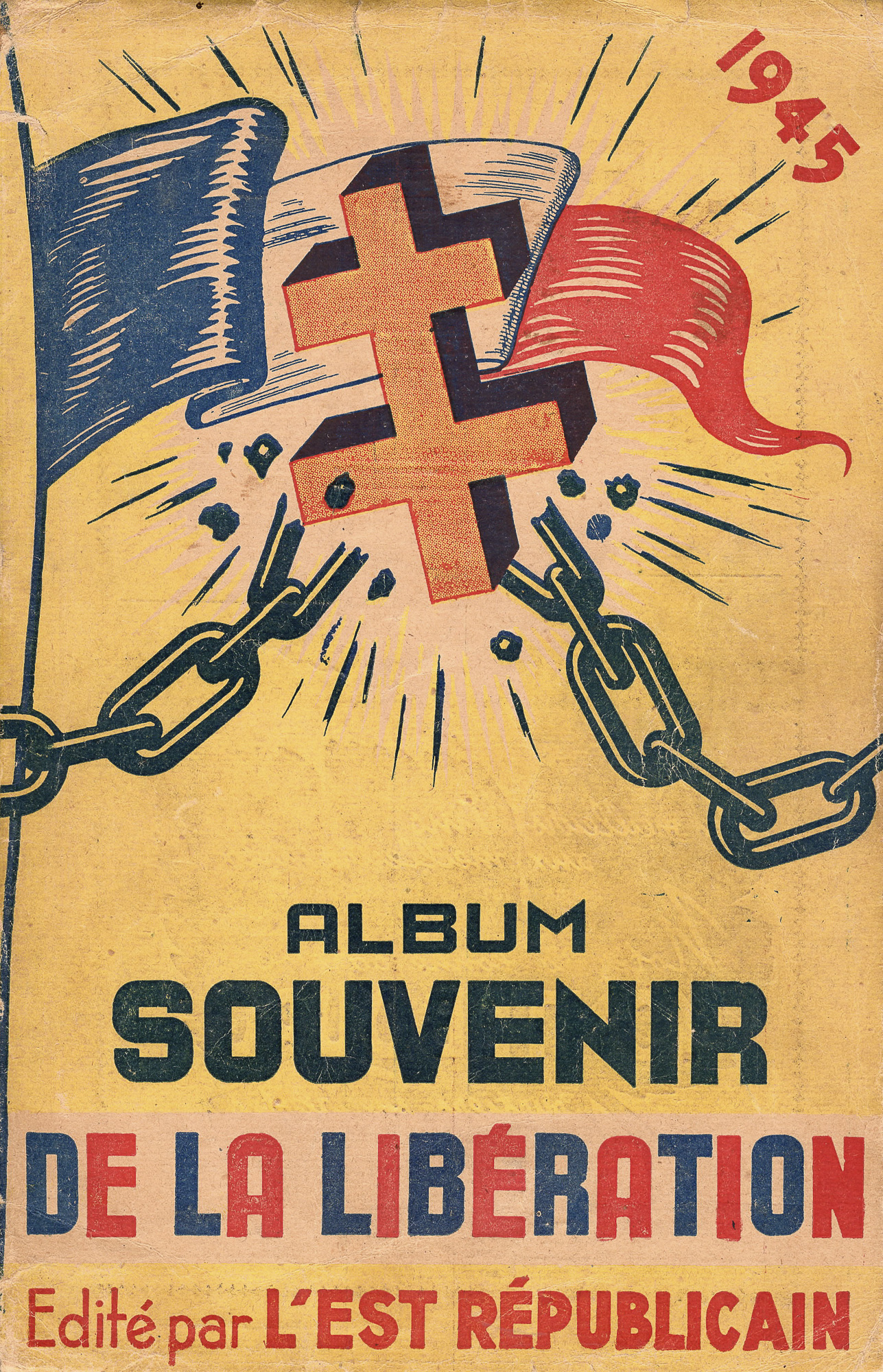
In the first part of my blog-post on working with the Liberation donation, I explored the fragmented and sometimes contradictory vision of history that the books in the collection offer, each point of view representing only a tiny portion of the actual events. In this second part, I want to expand on the odd feeling I sometimes had that the entire collection itself, despite offering quite a complete view of the period’s publishing landscape in France, was only a fraction of the whole story. I don’t mean to diminish the importance of the collection; indeed, what it doesn’t say is just as interesting from a historical point of view as what it does say.
In 2019, I spent 9 months helping to process the Liberation collection, a donation of over 3000 books in French published at the end of the Second World War. As this project is coming to an end, and with the current atmosphere lending itself to pause and reflection, now seemed a good time to share my experience of working with the collection. This will not be a full and objective review of what you can expect to find in it, but rather a more personal spotlight on what struck me the most.
When I started cataloguing it, I expected the donation would give me a complete and accurate view of what these extraordinary times were like in France. Yet if there is one thing that I will take away from it, it is that it is impossible to have a full understanding of history when you are caught in the middle of it. Continue reading “History in the making – thoughts on cataloguing the Liberation collection (Part 1)”→

 A volunteer-led initiative which started in 2014, Prozhito has since 2019 been a joint project with the European University in St Petersburg. The latter’s English-language summary of the project is here. The Russian-language Prozhito “About” page is here.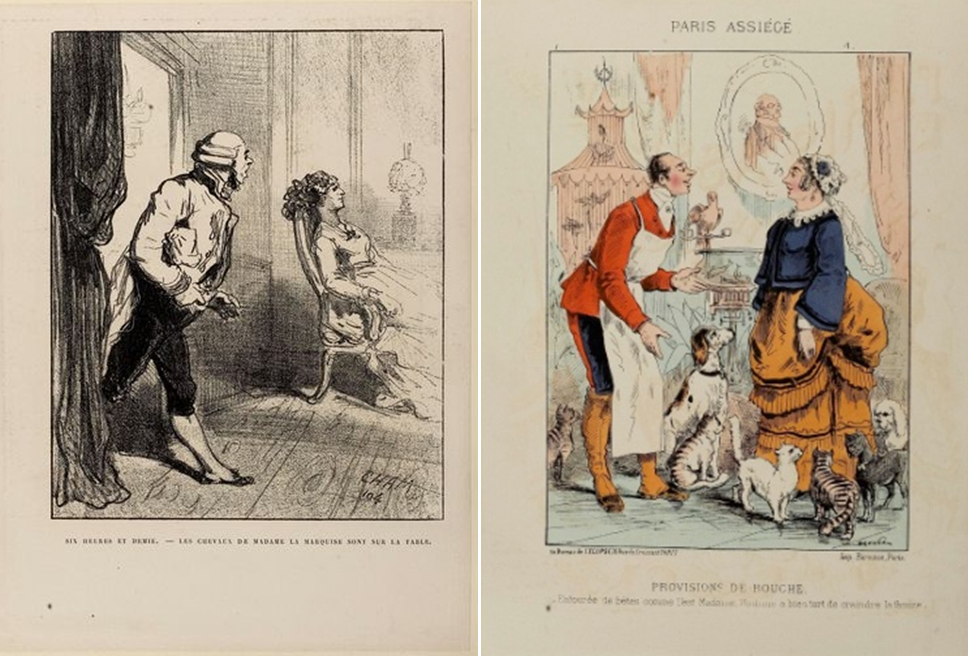


 Languages across Borders