
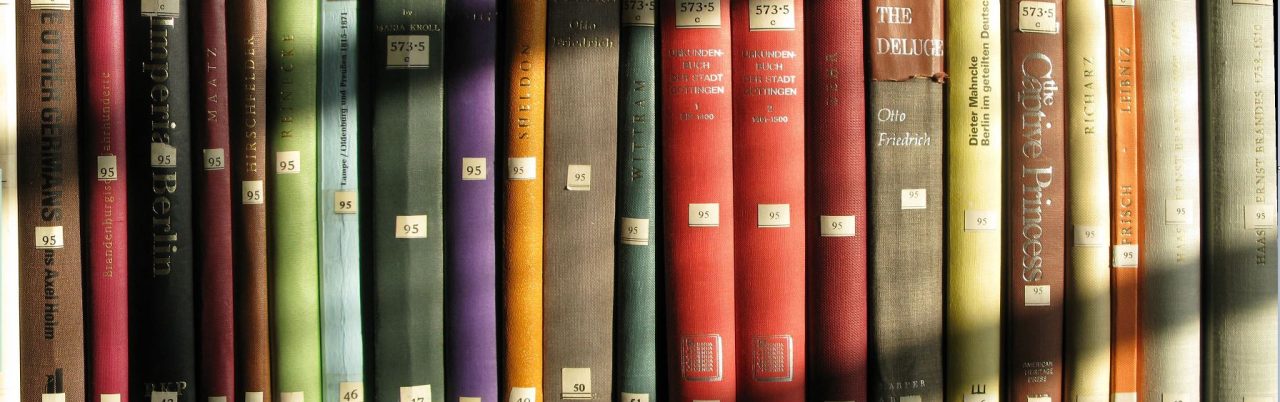
 Having initially wanted our lockdown-era posts to focus on e-available material only, I am now going one step yet further away myself by writing about books held by the UL neither electronically nor physically… This post instead looks at Slavonic translations of British detective fiction I have picked up for myself over the years. Getting used to reading in another language can take time, and I for one found that worrying about the plot as well as the words really held me up. What I came to discover was that reading a familiar detective novel translated into the language took the pressure off, and it’s a trick I have stuck to ever since. Continue reading “Inspektor Mors and Mis Marpl : the May 2020 Slavonic item(s) of the month”
Month: May 2020
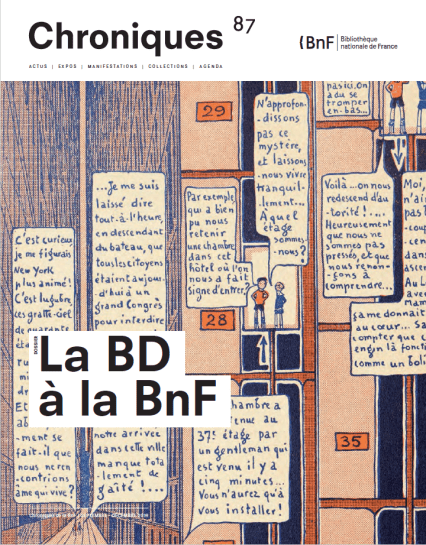
History and memory: French comic books and graphic novels at Cambridge University Library
Comic books (bandes dessinées or BDs) and graphic novels (romans graphiques) are a very important and successful part of French and Francophone publications. A report on the Bande Dessinée was commissioned by the French Ministry of Culture and published in January 2019, ahead of BD 2020, l’année de la bande dessinée. It contained several proposals for better symbolic and institutional recognition for the “9th art”: a stronger local, national and international dissemination and promotion, and an ambitious education policy. 2020 is thus officially « L’année de la bande-dessinée à la BnF »: the French national Library has engaged in a series of printed and online publications as well as events on the topic (prolonged up to 31st June 2021 because of the coronavirus crisis) and has even developed an app, “BDnF, la Fabrique à BD“, for you to try and create your own comic book. The app is accompanied by tutorials, and examples of creations in different sub-genres (including comic strip, manga, webtoon…), based on a selection of digital images from archival BnF documents. You can also read entire comic books online: during the lockdown, publishers such as La Boite à Bulles or Dargaud opened up some of their collections; every month, you can access a free volume on the website of Les Humanoïdes Associés. You can also read online comic books on the Institut Français digital library Culturethèque (sign up for free with your email address), or browse the digitised collections of the Cité internationale de la bande dessinée et de l’image, based in Angoulème, where takes place a major annual International Comics Festival.
Droz online: trial access to the series Textes Littéraires Français, Humanisme et Renaissance, and Calvin
Librairie Droz is a Francophone academic publisher founded by Eugénie Droz in Geneva in 1924. It specialises in Medieval and Renaissance studies, literary criticism, art history, history of the book, and social sciences (in particular economic history). Cambridge University Library has a number of standing orders to its print collections, such as Bibliothèque des Lumières, Bibliothèque de l’École des Chartes, Diderot studies, Hautes études du monde gréco-romain, Hautes études médiévales et modernes, Hautes études orientales, Histoire des idées et critique littéraire, Publications romanes et françaises, Seuils de la modernité or Travaux du Grand Siècle. We are starting a one-month trial to its three series available as ebooks: Textes Littéraires Français; Humanisme et Renaissance; and the Calvin database.
Ernst Barlach
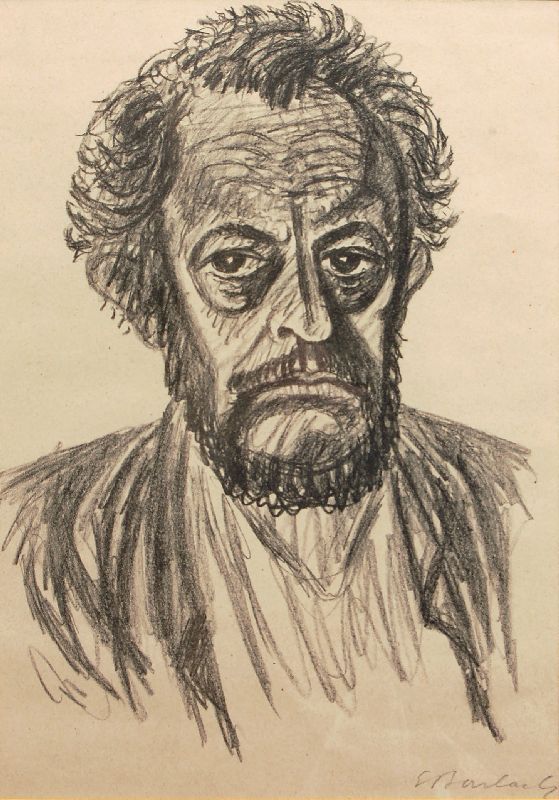
In earlier blog posts on German art the name of Ernst Barlach has been referred to. This is not surprising as he is one of the most important German artists of the 20th century. While best known as a sculptor he also created a substantial oeuvre as a graphic artist and a literary author. He is often referred to as an exponent of Expressionism but his work transcends narrow stylistic boundaries.
Barlach was born in 1870 in Wedel near Hamburg. He studied art in Hamburg and Dresden. A journey to Russia in 1906 was pivotal for the development of his unique style. In 1910 he settled in the small town of Güstrow in Northern Germany where he lived until his death in 1938. Continue reading “Ernst Barlach”
Songs of the Liberation for VE Day
The Chadwyck-Healey Liberation Collection (1944-46) consists mainly of books, but also contains a number of French and English songs and music scores, some with striking illustrations. They appear either in individual leaflets or in larger compilations, including the lyrics and in some cases notated music. On the 75th anniversary of VE Day (Victory in Europe), on 8 May 1945, we would like to shed light on two illustrated covers for songs of the Liberation that we displayed on the occasion of the 2019 Liberation lecture (Normandy ’44 by James Holland).
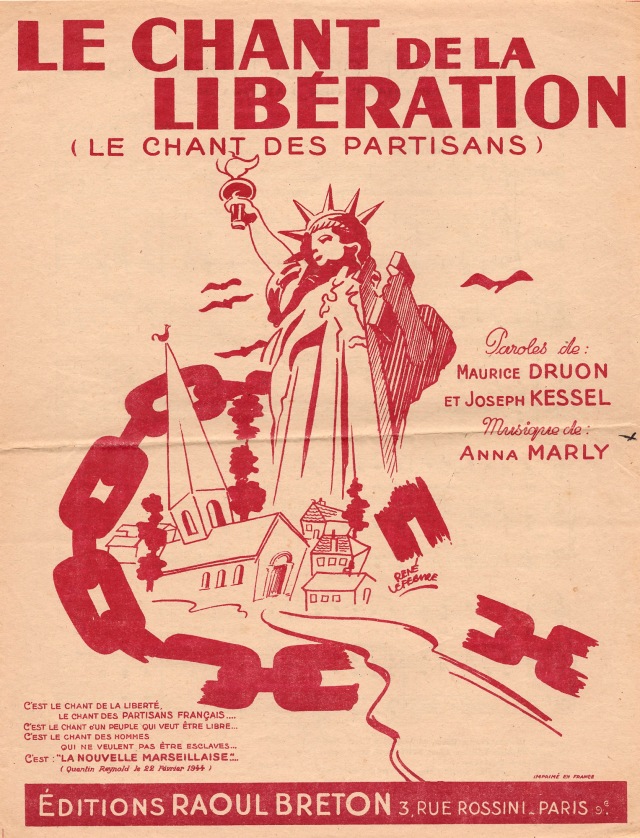 Le chant de la libération : le chant des partisans, paroles de Maurice Druon et Joseph Kessel, musique de Anna Marly. Paris : Éditions Raoul Breton, 1945. Liberation.a.104
ebooks po-russki : the April (to 1 June) 2020 Slavonic items of the month
Russian ebooks are a novelty for Cambridge, and it is fantastic that our University staff and students can now try out three ebook platforms supplied through the vendor MIPP until 1 June. This blog post gives an overview of the databases. Do please give feedback about any/all of them.
This platform contains over 70,000 arts, humanities, and social sciences ebooks, plus journals, audiobooks, reference works and digital maps. A general search box is available at the top, with an advanced search option below it on the right; note that searches do not seem to include ebook contents but rather their title and author information only. A list of subjects is provided on the left; each subject can be expanded to show subdivisions. When you click on a specific subdivision, you can see sample books and then, beneath them, a list of the books in that subdivision. Continue reading “ebooks po-russki : the April (to 1 June) 2020 Slavonic items of the month”
 Languages across Borders