On the one true faith : the December 2019 [Old Church] Slavonic item of the month

The opening page of the book, complete with woodcut and ornamental lettering.

Earlier this year, the Friends of the National Libraries generously funded the purchase by the University Library of a 1648 book called Kniga o vere edinoi istinnoi pravoslavnoi [Book on the one true Orthodox faith].  The volume, bought from a major dealer, had latterly been part of the Macclesfield library at Shirburn Castle in Oxfordshire.

This exceptionally rare book of Orthodox liturgy and theology in Old Church Slavonic is an exciting addition to the collection of early Slavonic books found across collegiate Cambridge.  Much of the content is is derived from the earlier writings of Zakhariia Kopystens’kyi, Archimandrite of the Kyivo-Pechers’ka Monastery.  The book, printed by Stefan Boniface (Stefan Vonifat’ev), a prominent protopope, was published in febrile times for the Russian Orthodox Church. Within only a few years, the great Raskol (schism) occurred, triggered by the official church’s re-alignment of practices with their Greek roots, a schism which saw the emergence of the Old Believers movement.  The fact that this book, which contains a synthesis emerging out of the encounter between Orthodoxy and Latin (Jesuit) education in the Polish-Lithuanian Commonwealth, appeared just as this restoration of practices rooted in the Greek tradition was gaining speed might explain why so few copies remain.  Ours is one of only six recorded copies worldwide. Continue reading “On the one true faith : the December 2019 [Old Church] Slavonic item of the month”

The Martin Stone collection of French poetry. Part 2: More than a century of French poetry

In order to give a better view of the collection’s distribution in time, here are the numbers of books per decade:

Stone7

Most of the collection was published between 1881 and 1970. We can see two peaks: the last decade of the 19th century and the interwar period. These were the core times of two important poetic movements, respectively symbolism and surrealism.

Here are a few topics which can be explored using books from the Martin Stone collection.

Stone8
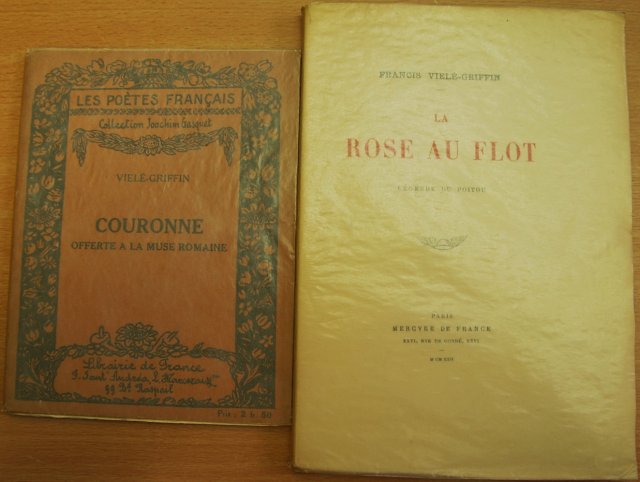
Francis Vielé-Griffin is a prolific symbolist poet, six works of whom can be found in the collection, including: Couronne offerte à la muse romaine, Paris, F. Sant’Andréa, L. Marcerou, 1922 and La Rose au flot, Paris, Mercure de France, 1922

Continue reading “The Martin Stone collection of French poetry. Part 2: More than a century of French poetry”

The Martin Stone collection of French poetry. Part 1: A collection of appeal to the bibliophiles

The Martin Stone collection of French poetry

Martin Stone was an English guitarist and rare books collector who had a strong interest in French poetry. Cambridge University Library bought his French poetry collection this year through the bookseller Justin Croft after Stone’s death in 2012.

This collection of French poetry contains 225 books.[1] The oldest one is Odes et ballades by Victor Hugo, published in 1841, the most recent is Sept, written by Andrée Chedid and illustrated by Erik Bersou, published in 2009. Martin Stone focused on purchasing illustrated books, first editions and rare works by authors now long forgotten.

In the past three months, while cataloguing these books, I wanted to showcase the features of these books which appeal to a bibliophile clientele. I will now describe here these characteristics with some examples from this collection.

Stone1
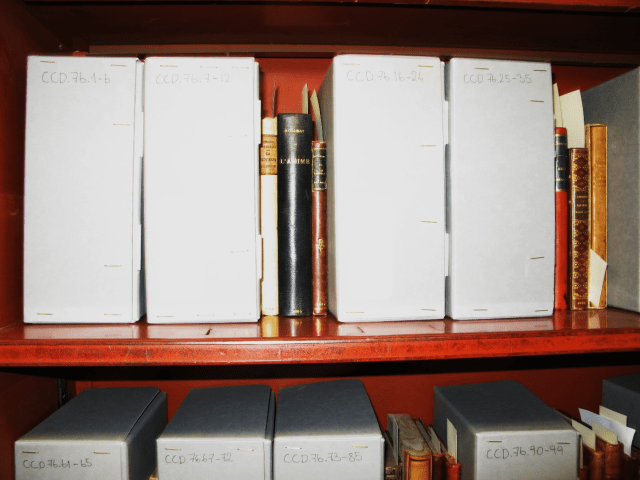
The first thirty-eight books of Martin Stone collection. Except for the bound books, they all are protected by acid-free boxes.

Continue reading “The Martin Stone collection of French poetry. Part 1: A collection of appeal to the bibliophiles”

Jujutsu for the Swiss

Working on a donated collection of books can sometimes be a repetitive task – as collectors usually focus on one theme in particular, donations may consist of hundreds of books studying the same subject from slightly different angles. Occasionally though, we come across something entirely unexpected and sometimes amusing. I had such a moment a few days ago when I discovered, among the collection of art books donated by Professor Jean Michel Massing, a 1906 illustrated Swiss manual of jujutsu. The Japanese martial art is here shown performed by two portly, mustachioed, middle-aged European men who have somehow decided that a three-piece suit with bow tie was the best outfit for this kind of activity. It makes for some amazing pictures :

Continue reading “Jujutsu for the Swiss”

Christmas greetings: the story of Christmas cards

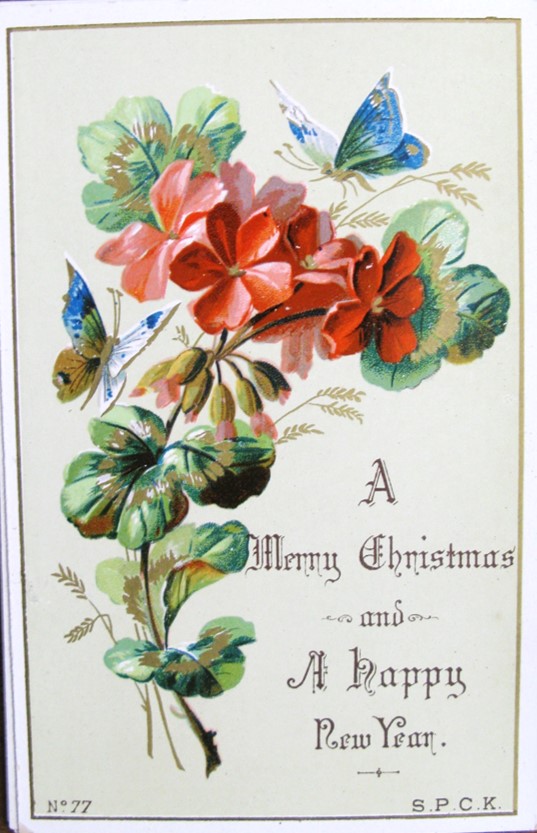
The sending of physical Christmas cards has been reported to be in decline in recent years, due to an increase in postage prices, concern for the environment and changing social habits with email and social media being favoured. Many people, however, still like to send and receive cards at Christmas, thus continuing a tradition first started in the 1840s.

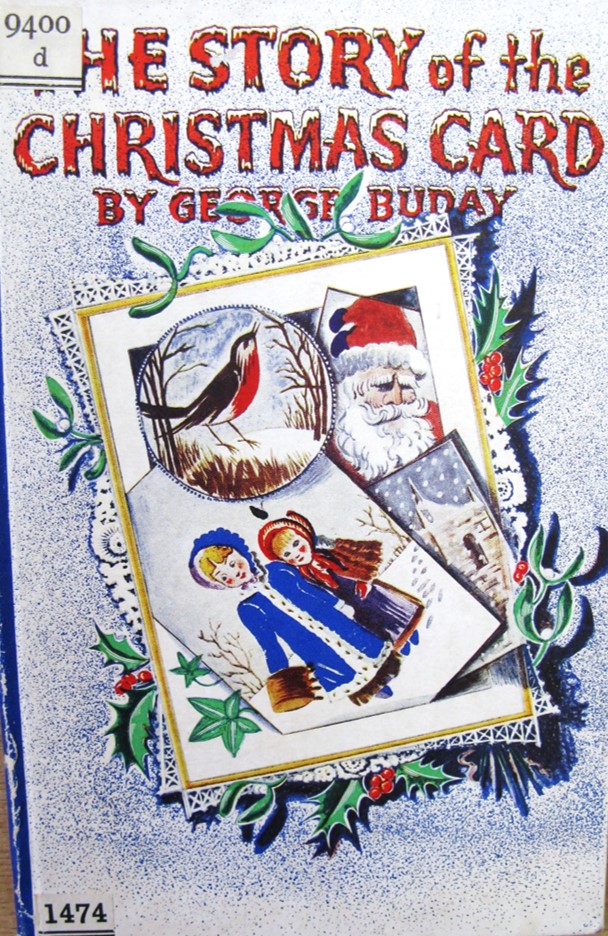
The very first Christmas card appeared in 1843, designed by John Callcott Horsley for Henry Cole, an important figure who later played a key role in the 1851 Great Exhibition and in the establishment of the Victoria and Albert Museum. Cole had assisted Rowland Hill in the setting up of the Penny Post in 1840. Hill’s post office reform was a significant factor in the growth of the Christmas card industry as it made it cheaper than before to send post that was now paid for in advance (previously the burden of paying had been imposed on the recipient). Christmas cards really took off with the development of colour printing by George Baxter, and the makers of St Valentine’s Day cards, which were already commercialised, saw the potential of extending their range to Christmas cards. Continue reading “Christmas greetings: the story of Christmas cards”