Polish archaeologists and Palmyra : the June 2019 Slavonic item of the month

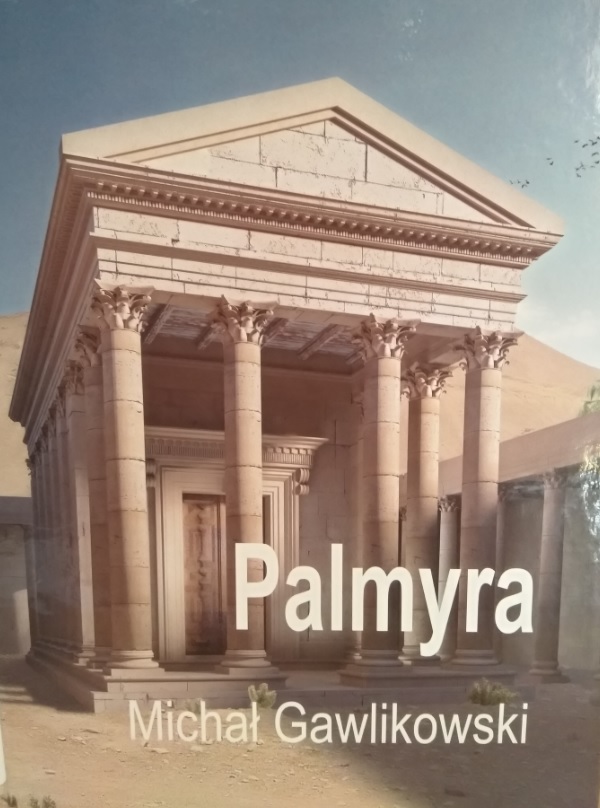
The book’s cover, showing a digital reconstruction of the temple of Allat

In early 2016, a few months after the destruction of much of Palmyra, our former colleague Josh (now at UC Irvine) wrote about Palmyra and Henri Seyrig. A new arrival, unpacked this week and purchased at the request of a researcher in the Classics department, is a good reminder of the Polish contribution to Palmyra research.

The requested book, Palmyra by Michał Gawlikowski, was written in 2010.  It is only 131 pages long and well illustrated and provides a general introduction (in Polish) to what was then still a well-maintained site of great importance.  The book starts with a history of Polish involvement in the site, dating back to 1959 when Kazimierz Michałowski, the founder and head of the Polish Centre of Mediterranean Archaeology, set up an archaeological team there.  The Polish team at Palmyra was later led by Gawlikowski, from 1973, and suspended with the beginning of the Syrian civil war in 2011.  Palmyra ends with a bibliography, with many entries for Michałowski and Gawlikowski; some of those by the latter were co-written with Khaled al-Asaad, once chief archaeologist of Palmyra, who would be murdered by ISIS in 2015. Continue reading “Polish archaeologists and Palmyra : the June 2019 Slavonic item of the month”
Franco Zeffirelli (1923-2019)

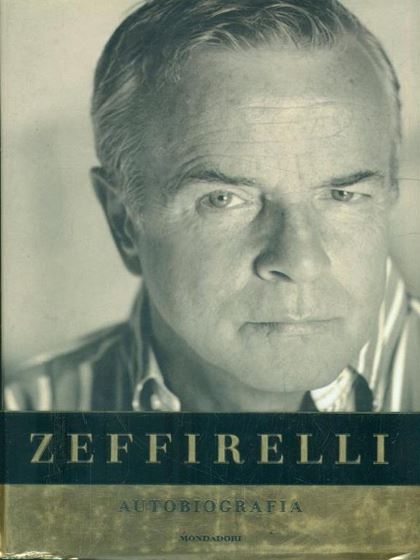
We were sad to hear of the recent death of Franco Zeffirelli, one of the best known Italian directors and producers of film and opera of the 20th century. Hugely influential and iconic, he stood at the heart of Italian film for decades.

Born Gian Franco Corsi Zeffirelli, he was the illegitimate child of a fashion designer and Florentine wool and silk merchant. After the death of his mother when he was six, he was brought up by the English expatriate community in Florence, who took him under their wing – this part of his story was immortalised in his semi-autobiographical film Tea with Mussolini, set in the pre-war Florence of the “scorpioni” (the English community there, represented by the inspirational Maggie Smith, Judi Dench and Joan Plowright) and in the Tuscany of the war years as war took hold. He enrolled to study art at the University of Florence, and when war broke out he joined the partisans, later acting as translator to the occupying British forces. After the war he turned towards the theatre, inspired by seeing Laurence Olivier in Henry V, and it was whilst working as a scenic painter that he met Luchino Visconti who was to have a profound influence on him. He worked in London and New York, designing and directing plays, and then turned to film, directing Elizabeth Taylor and Richard Burton in The Taming of the Shrew. In 1968 he directed Romeo and Juliet – hugely popular and a massive box-office hit. From Shakespeare he moved on to other themes, directing such films as Brother Sun, Sister Moon, about St Francis of Assisi and St Clare, and the mini-series Jesus of Nazareth. Continue reading “Franco Zeffirelli (1923-2019)”

The Alhambra: its visitors and its influence

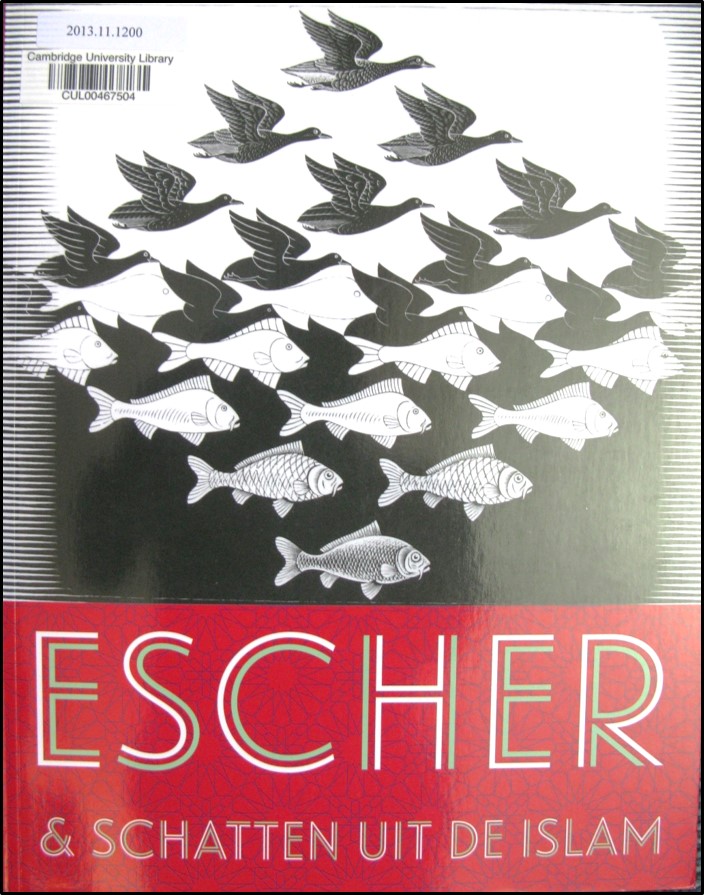
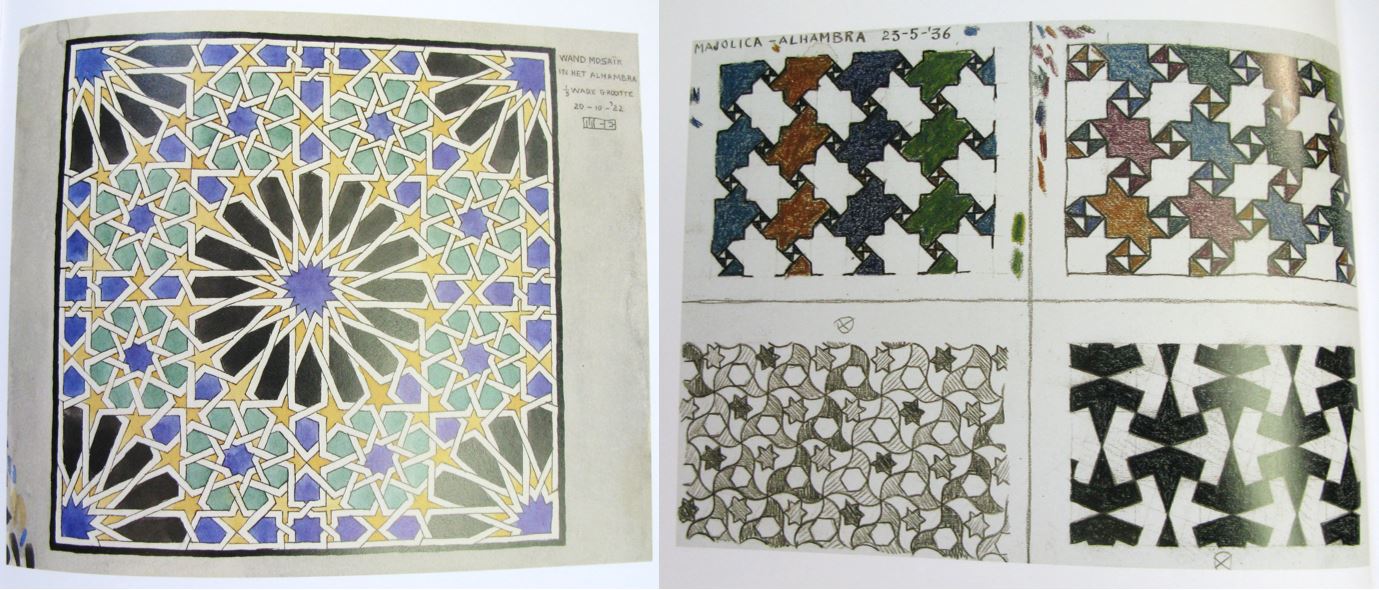
We recently added to our catalogue Escher & schatten uit de islam, a catalogue of an exhibition held a few years ago at the Escher in Het Paleis museum in The Hague. This demonstrates well the influence of Islamic art on M.C. Escher. He was undoubtedly inspired by two visits he made in 1922 and 1936 to the Alhambra, the palace complex built at Granada by Spain’s last Muslim rulers. The images below show detailed sketches he made during his trips. Escher was not the first person to be impressed by the wonders of the Alhambra; this post looks at some earlier travellers to the fortress and their related work.

Continue reading “The Alhambra: its visitors and its influence”

Performance reviews, pictures and advertisement: La scène (Paris, 1877-1888)

Cambridge University Library recently acquired the French periodical La scène: revue des succès dramatiques, décorations complètes, costumes coloriés, directed and illustrated by Jules Gaildrau and written by his colleague E. Grand, ranging from October 1877 to January 1888 (Rare books, 8000.a.95). The publication (43 issues in total) was intended to appear twice a month; in reality, though, it was more irregular, with fewer reviews in 1880-1882 and 1885-1888 (and no review at all in 1887). It is a very rare set, as far as we know, only held at the Bibliothèque nationale de France in Paris.

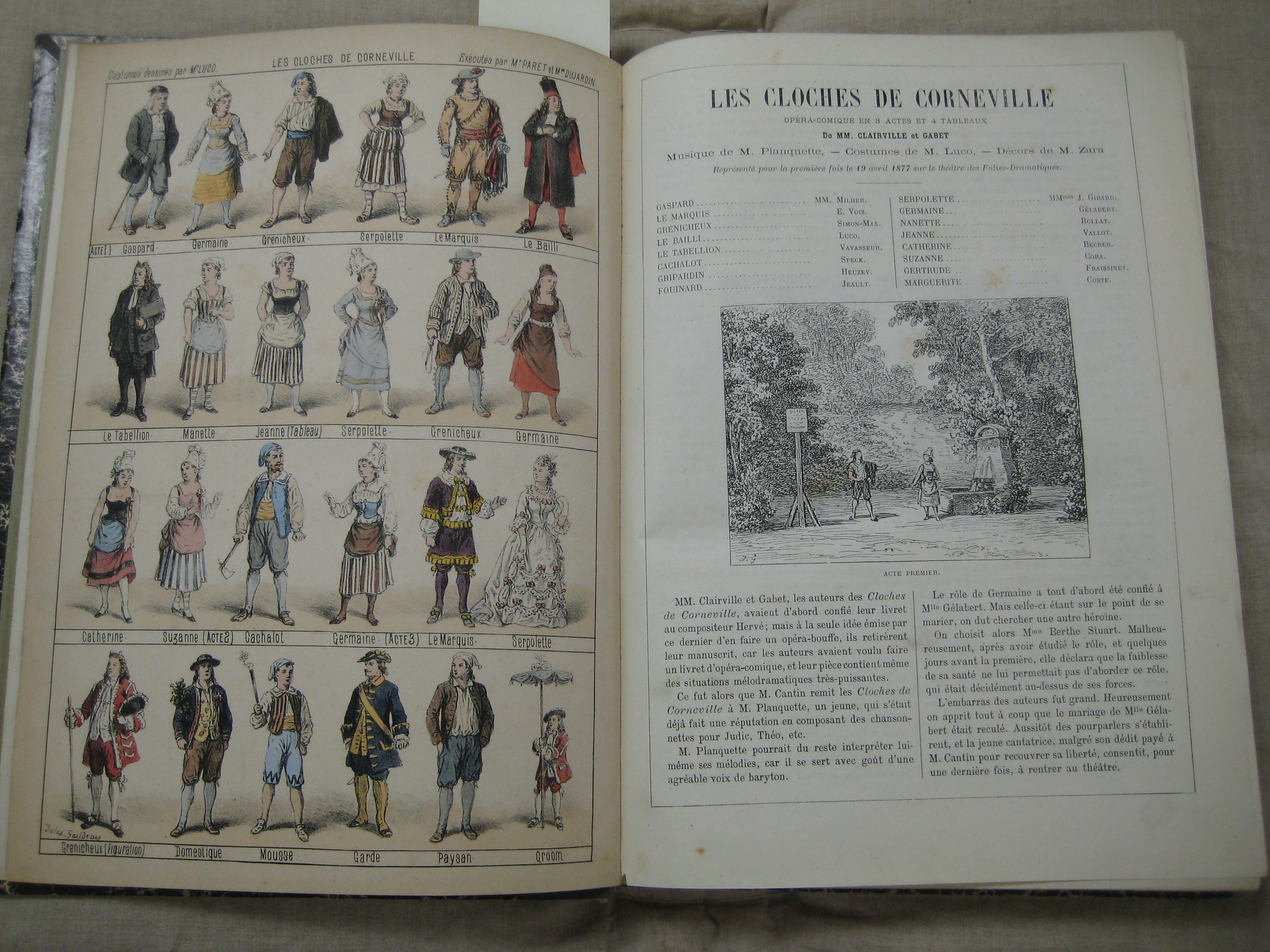
T. 1 no 1, 1877: Review of the opéra-comique Les cloches de Corneville (Robert Planquette), p. 1

La scène is a wonderful source recording the Parisian theatrical life of the second part of the 19th century, telling us of its “dramatic successes”, and including information such as the date and place of the first performance, the names of music directors, costume designers, dressmakers, set designers, as well as those of the actors. Each issue is made up of four pages of text summarising the plot and reviewing the performance of the actors or singers and the staging, with black and white illustrations of the different sets; four pages of advertisements; and a coloured plate divided into four levels featuring the actors in their costumes. The periodical was available for purchase (for 1 franc, and later 1 franc 50) at the head office as well as in bookshops, and customers could pay for subscriptions of three months, six months, or a year. In the later period, advertisements encouraged the retrospective purchase of a whole set of the publication. Continue reading “Performance reviews, pictures and advertisement: La scène (Paris, 1877-1888)”

Splitting the world in two: the 525th anniversary of the Treaty of Tordesillas

Tordesillas1
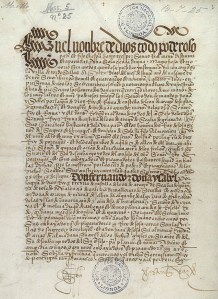
P. 1 of the Spanish version (click to see enlarged)

The 7th June marks the 525th anniversary of the signing of the Treaty of Tordesillas. The treaty was named for the Castilian town near Valladolid where it was signed by the Catholic Kings (Isabella I of Castile and Ferdinand II of Aragon) and John II, King of Portugal. The signing of this treaty divided those parts of the world newly “discovered” by Spain and Portugal between the empires of the two kingdoms along an imaginary meridian 370 leagues west of the Cape Verde islands. The lands to the east of this line corresponded to Portugal and those to the west to Spain.

The Treaty of Tordesillas had a precedent, the Treaty of Alcáçovas (1479), that followed the War of Castillan Succession, and already marked the division of the Atlantic into two spheres of influence, one for Spain and the other for Portugal, with the exception of the Canary islands (Spanish, but in the Portuguese sphere). This was confirmed by the papal bull Aeterni regis (Sixtus IV, 1481) which recognised as Portuguese some disputed territories in the Atlantic (Guinea, Madeira, Azores and Cape Verde). More importantly, the treaty recognised Portugal exclusive right of navigation south of the Canary islands. Continue reading “Splitting the world in two: the 525th anniversary of the Treaty of Tordesillas”