Farewell and thanks to David Lowe

The head of our department, David Lowe, retires today, after a career at the University Library stretching back more than forty years.  This afternoon, the Library gave him a grand send-off attended by scores of current and former staff, with speeches from former full and acting University Librarians among those given, ending with a lovely speech by David himself.

Apart from one year at library school in Sheffield, David has been in Cambridge since he left school to study German and French at Jesus College.  He first came to the University Library as a trainee for one year; after completing his library course, he returned to take up employment at the UL once again.  He was appointed as the German specialist in 1979 and held this role for over twenty years, during which time he had a crucial role in accessions such as the Stefan Heym archive and he led work with other UK libraries to set up the German Studies Library Group.  He then moved up to become head of the new European Collections and Cataloguing department, which recently merged with English Collections to become Collections and Academic Liaison.  Through these roles, David has had a fundamental effect on the University Library’s collections, either through direct selection, through careful instruction to new staff regarding selection, or through the negotiation of both small and vast donations. Continue reading “Farewell and thanks to David Lowe”
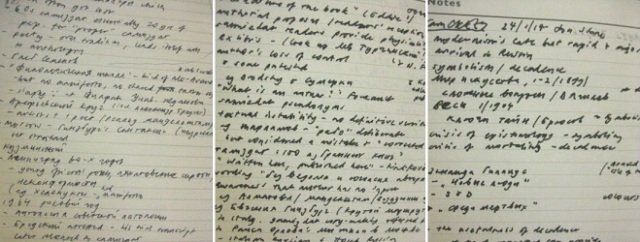
Forms of modernism and samizdat : bibliographical notes on recent CamCREES seminars

The CamCREES bibliographical notes have lapsed of late, with many of the 2016 seminars missed due to trips away, but it is a pleasure to resurrect them to discuss the three seminars which the Lent Term provided – a talk on early Russian modernism and two on Soviet underground literature.

2017_Lent_notes
The live bibliographical notes.

Continue reading “Forms of modernism and samizdat : bibliographical notes on recent CamCREES seminars”

Parker Cinema Collection

Processing the A.G. Parker Cinema Collection is almost complete.  A few fragile volumes await conservation and cataloguing and a residue of journal runs are currently being added to the catalogue, but the end is clearly in sight.

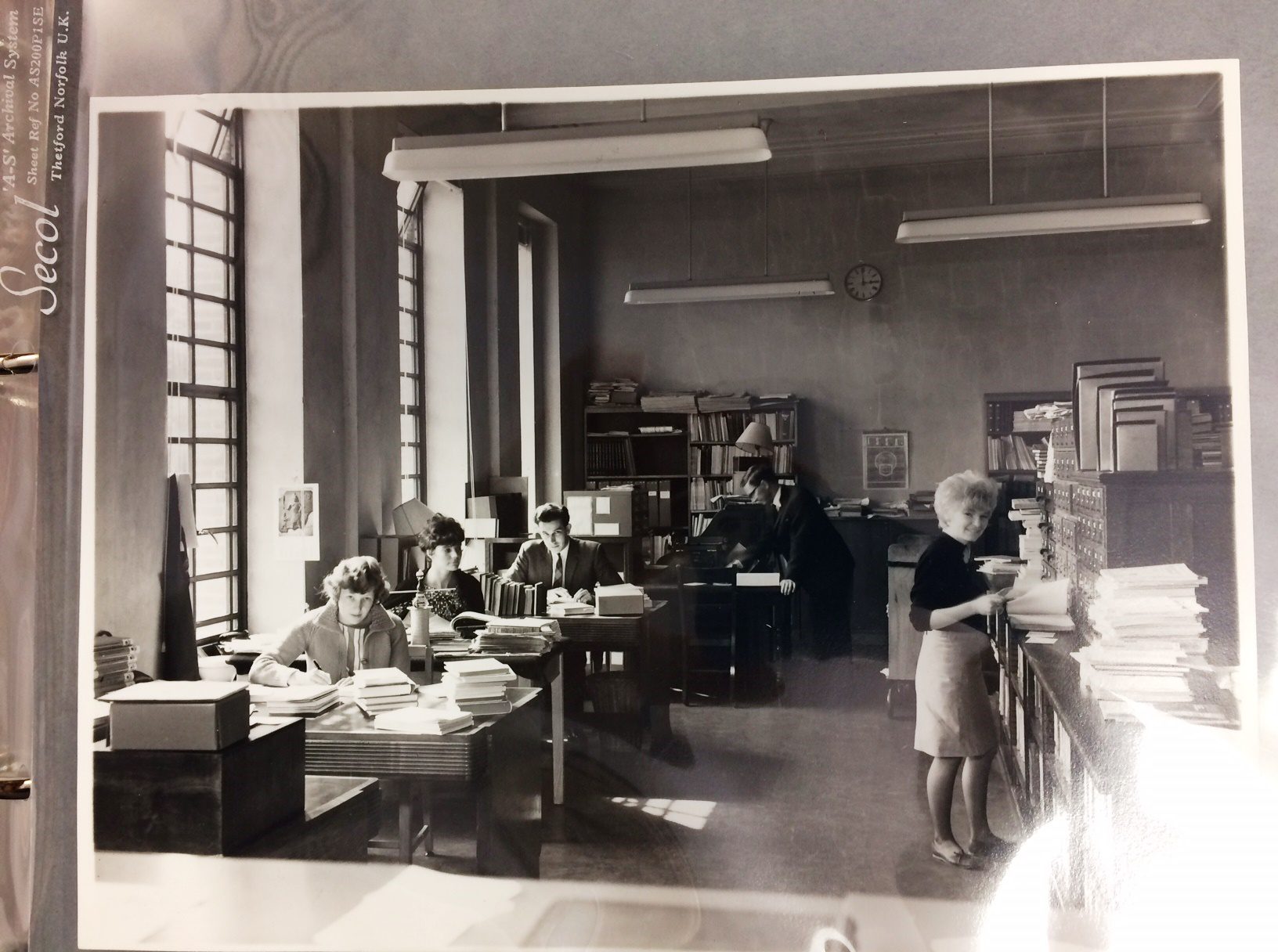
Glynne Parker (second from right) in the Periodicals Department in August 1963, when located on South Wing 1.

Continue reading “Parker Cinema Collection”

Reinaldo Arenas: 50 years of Celestino

Reinaldo Arenas (1943-1990) was one of Cuba’s most important and controversial writers. His debut novel Celestino antes del alba celebrates its 50th anniversary this year. Arenas is best known outside the Spanish-speaking world for his posthumously published 1992 autobiography, Antes que anochezca / Before Night Falls (adapted into an award-winning film in 2000 by Julian Schnabel). This documented the horrific persecution he faced under Fidel Castro, both for his openly homosexual lifestyle and for his public antipathy towards the leader’s regime, and his eventual escape to the USA as part of the infamous Mariel Boatlift.

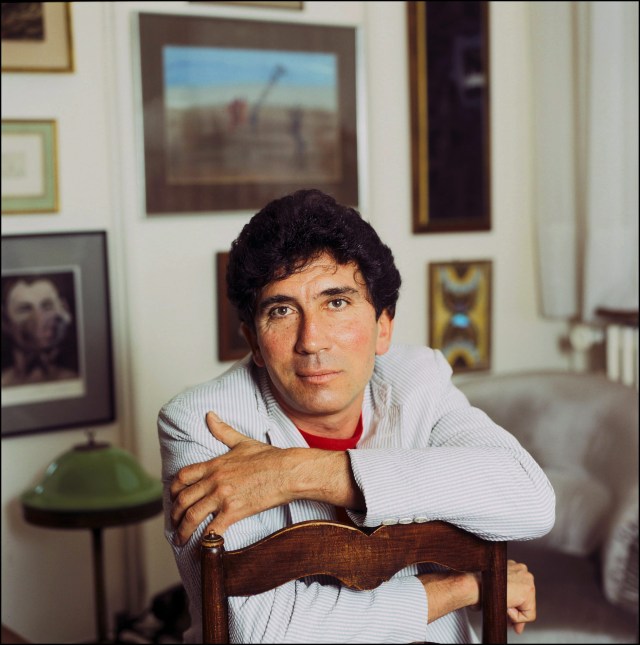
The cuban writer Reinaldo Arenas in France in June, 1988.
Reinaldo Arenas in France in June, 1988. (Photo by Louis MONIER/Gamma-Rapho via Getty Images)

Continue reading “Reinaldo Arenas: 50 years of Celestino”

Gete = Goethe in Russian : the April 2017 Slavonic item(s) of the month

In the last couple of weeks, we have taken delivery of a wonderful new addition to our collections: the earliest published Russian translation of Goethe’s Faust (1838).  This joins two similar relative newcomers – the first full(ish) Russian Faust (1844) and the first Russian translation of another Goethe work, Götz von Berlichingen (1828).

The title page of the 1844 translation of Faust.

Continue reading “Gete = Goethe in Russian : the April 2017 Slavonic item(s) of the month”

Jean Lurçat (1892-1966): a singular surrealist

jl1
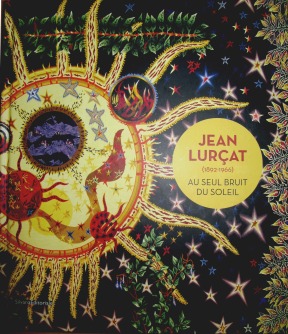
The exhibition catalogue stands at S950.a.201.4730

In 2016, I was lucky enough to visit an exhibition presenting some of the most striking works of art I had ever seen: monumental pieces, several square metres each, all bursting with incredibly vivid colours. What surprised me the most was that these masterpieces were by an artist I had only vaguely heard of before, his talent apparently eclipsed by that of his more famous contemporaries. Perhaps this was due to the nature of most of his works: they were not paintings, but tapestries.

Tapestry in France was at its highest point in the late medieval period, with famous examples such as La Dame à la licorne and the Tenture de l’Apocalypse but was more or less a forgotten art by the beginning of the 20th century. A great admirer of this medieval tradition, Jean Lurçat, the artist whose works I was admiring, sought to revive it by borrowing many of its themes for his tapestries. The “mille-fleurs” for example, a style that consists in weaving hundreds of flowers, all different, around the main subject of a work, features heavily in his art. Fantastic creatures were a recurring theme in medieval tapestry and Lurçat created an entire bestiary in his main works. But he also enriched this medieval tradition by the addition of a surrealist twist, many of his tapestries presenting a disconcerting, oneiric, highly symbolical landscape. Continue reading “Jean Lurçat (1892-1966): a singular surrealist”