Illustrations for Soviet children (and postcards for Christmas!) : the December 2016 Slavonic item of the month

‘Kniga dlia detei 1881-1939’ (Books for children, 1881-1939; S950.a.200.4173-4174) is a huge two-volume set which contains reproductions of excerpts from beautifully illustrated Russian children’s books.  It was produced in 2009 but is a only a recent arrival in the University Library.

The two volumes (right) and a winter scene (left).

The set is based on the collection of a New York Russian emigre.  Aleksandr Lur’e (or Sasha Lurye) has collected hundreds upon hundreds of late imperial and early Soviet children’s books, a great many of which researchers would struggle to track down in libraries today.  The two volumes follow a roughly chronological order in terms of the books their sections study. Continue reading “Illustrations for Soviet children (and postcards for Christmas!) : the December 2016 Slavonic item of the month”
Fighting windmills – new virtual exhibition on Don Quixote at the University Library

The virtual exhibition ‘Fighting windmills: the many interpretations of Don Quixote’ was launched yesterday to commemorate Miguel de Cervantes Saavedra’s 400th death anniversary. It features some rarely seen and beautifully illustrated material from a wide number of collections within the University Library, and its main aim is to highlight some of the ways in which Don Quixote has been appropriated by readers, artists and other writers throughout the centuries.
rs1901_pr-waddleton-c-00009-00615-000-00002-tif-launch_header
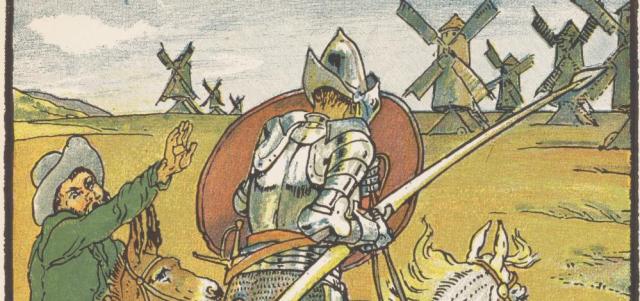
Illustration by Walter Crane from ‘Don Quixote of the Mancha’; London: Blackie&Son, 1900 (Waddleton.c.9.615)

Continue reading “Fighting windmills – new virtual exhibition on Don Quixote at the University Library”

Camus is outmanoeuvred

preface-ac
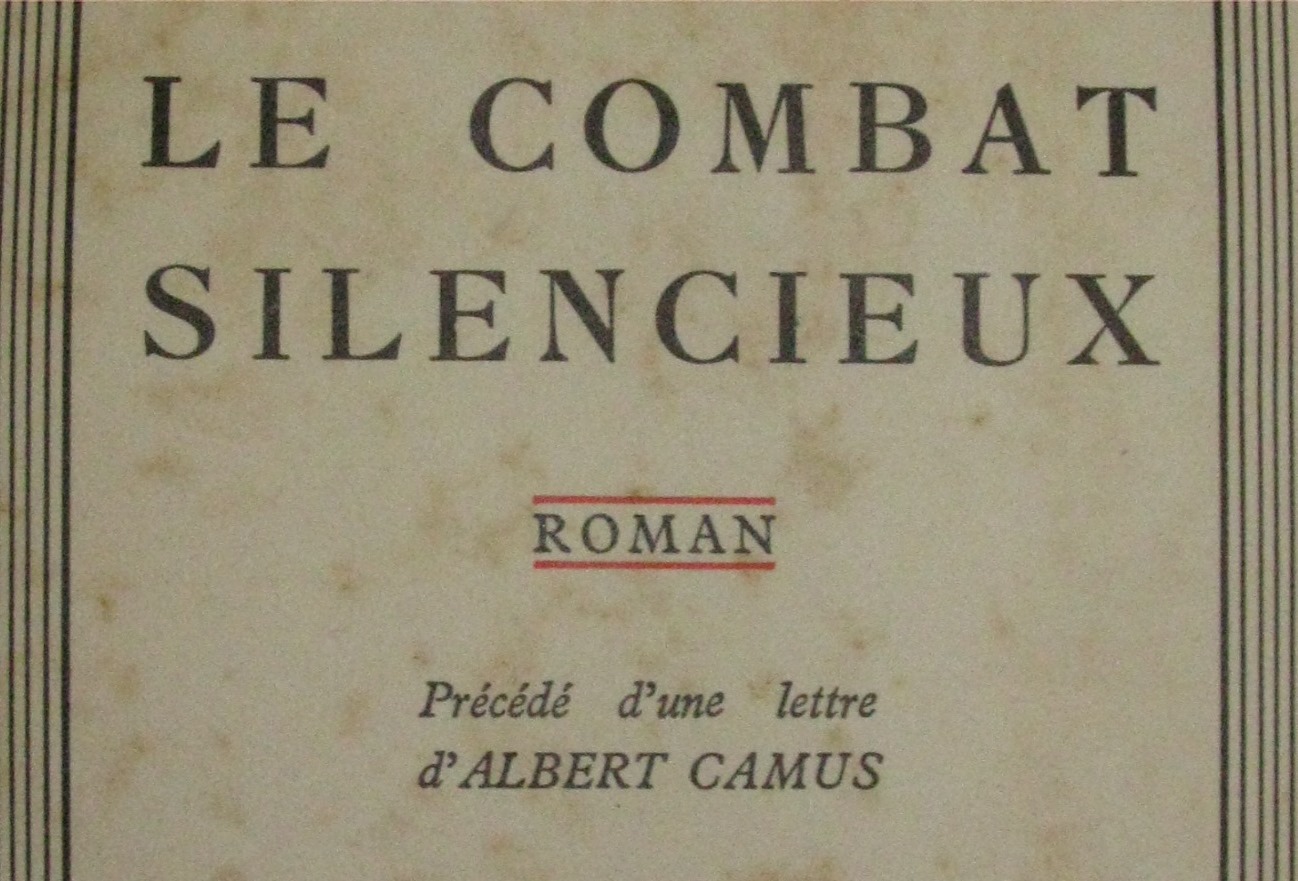
Camus’ name appears prominently on the cover of Salvet’s novel.

Albert Camus had spent the period from April 18 to May 7 1945 in Algeria.  When he returned to his home in the rue Sébastien-Bottin, he found the manuscript of a novel about the French Resistance by André Salvet, together with a letter from the author asking Camus to supply a preface. Camus replied courteously, indicating that he felt such an introduction would not be entirely appropriate.  “J’ai risqué beaucoup moins que votre héros, et ce n’est pas à moi de le présenter.”  He also questioned the desirability of producing any sort of commentary on a novel which should stand alone. “Est-ce à l’écrivain que vous vous adressez?  Mais, dans ce cas, il m’a toujours semblé qu’un livre, surtout lorsqu’il témoigne comme celui-là, devait se présenter seul et sans commentaires.” Continue reading “Camus is outmanoeuvred”

The Lisbon earthquake of 1755

7000-d-195311-1
Title page of Carta em que se mostra a falsa profecia (7000.d.1953(11)) Click on image to enlarge.

The University Library has acquired a first edition of Carta em que se mostra a falsa profecia do terremoto do primeiro de Novembro de 1755 (1756). This is a rare pamphlet by the Portuguese historian and writer Pedro Norberto de Aucourt e Padilha (1704-1759) published the year after the great Lisbon earthquake. Writing under the pseudonym of ‘Epicureo Alexandrino,’ the author dismisses the prophecies that, in the aftermath of the event,  claimed that the natural disaster was God’s work.

The Lisbon earthquake struck in the morning of All Saints Day 1755. With a magnitude estimated at eight points in the Richter scale, it opened cracks on the ground of up to five metres wide and destroyed eighty five percent of the city. It was followed by three tidal waves that engulfed the port and the city centre. There were also multiple fires, many of them started by the candles lit in churches to pray for the dead. The fires lasted for five days. Continue reading “The Lisbon earthquake of 1755”

Fidel Castro, 1926-2016

image1
672:45.c.95.2

On Friday November 25th, exactly 60 years since he set forth from Mexico on the yacht Granma, one of the most influential, divisive and long-standing public figures of the last century passed away. This year also marked 10 years since Fidel Castro began to step down from his position as president of Cuba, a country he had led for well over half a century. However, his influence and image still loomed large over his country – and world politics in general – in the intervening years and will continue to do so for years to come.

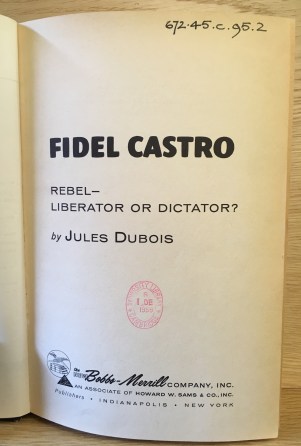
The University Library has always strongly collected material from and about Cuba, especially since the Revolution – in fact, the earliest book that we hold concerning Fidel Castro dates from 1959, the very year that Castro and his rebels finally ousted Fulgencio Batista from power: Fidel Castro: rebel–liberator or dictator? by Jules Dubois (672:45.c.95.2). Continue reading “Fidel Castro, 1926-2016”