20th-century Polish art : the April 2016 Slavonic item(s) of the month

201604_small mix
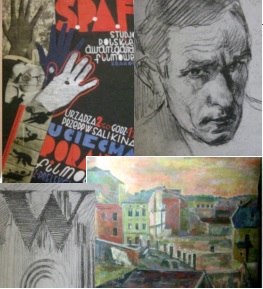
Images from the three featured books

Polish book selection in the University Library focuses on the history and culture of Poland, with art a well-represented subject.  This month, we look at 3 recent arrivals, books on Tadeusz Peiper, Bruno Schulz, and Zygmunt Radnicki.

Our first item, ‘Papież awangardy’ (Pope of the avant-garde; S950.c.201.695) was published as a companion volume for the exhibition of the same name held in Warsaw in 2015.  The exhibition examined the role played by Tadeusz Peiper in European culture, particularly the Polish and Spanish avant-garde.  Peiper was a seriously influential figure in 1920s art and literature, chiefly in his native Poland but also in Spain – where he spent some years – and further afield.

Continue reading “20th-century Polish art : the April 2016 Slavonic item(s) of the month”
Celebrations and Trepidations

In May 2016 the Queen’s 90th birthday party will take place in the private grounds of Windsor Castle. Traditionally, royal celebrations have been a grand affair. These were occasions of pomp and pleasantry, times in which courtiers and citizens expressed loyalty and affection to the monarch (real or otherwise). Immigrants played a notable role in such festivities.

IMG_1438
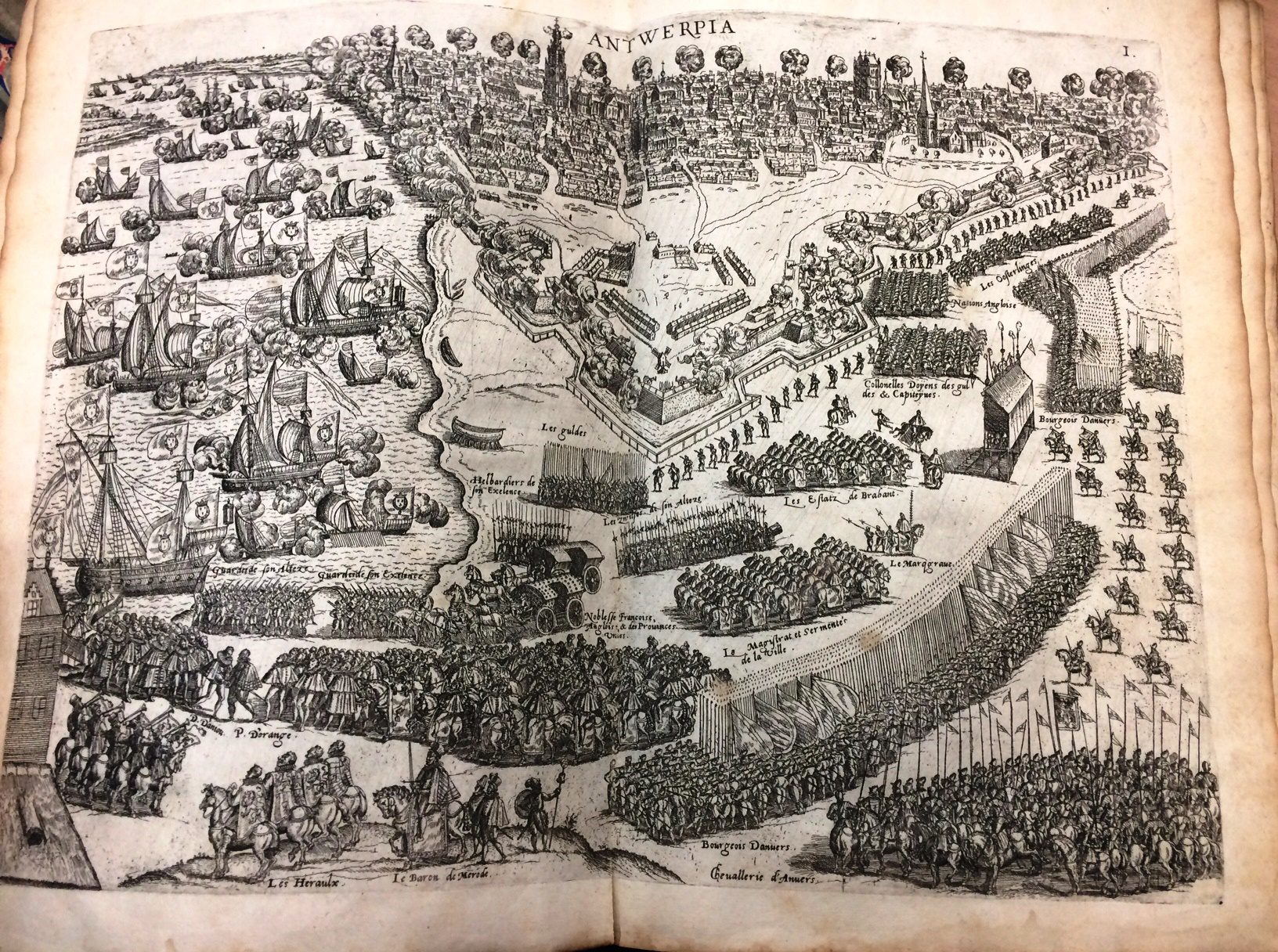
Festival in Antwerp LE.34.43

The early history of urban celebrations has a colourful history. Religious festivals took place on significant dates in the Church calendars. Fetes were organized when royals made a formal entry into a city, either at home or abroad. Festival books were the printed accounts of these occasions. Impressive entries like those of the Habsburg princes in Antwerp and Brussels produced albums that are the most splendid specimens of the Renaissance book.*

Continue reading “Celebrations and Trepidations”

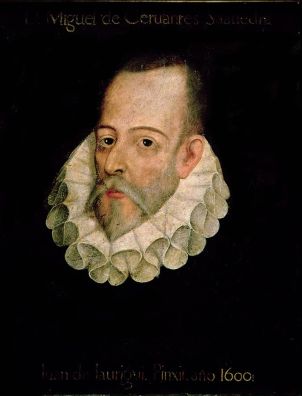
Miguel de Cervantes Saavedra, 1547-1616

Cervates_jauregui
Attributed to Juan de Jáuregui y Aguilar (circa 1583 – 1641) [Public domain], via Wikimedia Commons. Although we are not sure this is actually Cervantes, many subsequent portraits were based on this one.

Four hundred years ago on this day Miguel de Cervantes Saavedra, the most influential writer in the Spanish language, died in Madrid. This blogpost gives a taste of the future online exhibition that will feature the rich variety of material held at the Library by, and related to, Cervantes. We hold multiple versions and interpretations of everything that he wrote, but of course most of it relates to his masterpiece, El ingenioso hidalgo don Quijote de la Mancha.

Little is known about the birth of Miguel de Cervantes Saavedra, but he was baptised in Alcalá de Henares on October 9, 1547. The first part of his life was adventurous, marked by travels around the Mediterranean and 5 years of captivity in the hands of Ottoman pirates before his return to Spain in 1580. There, he remained unsuccessful in his attempts at supporting himself through his writing (although he won first prize – three silver spoons – in a poetry competition in 1595). All would change with the publication of El ingenioso hidalgo Don Quixote de la Mancha. Continue reading “Miguel de Cervantes Saavedra, 1547-1616”

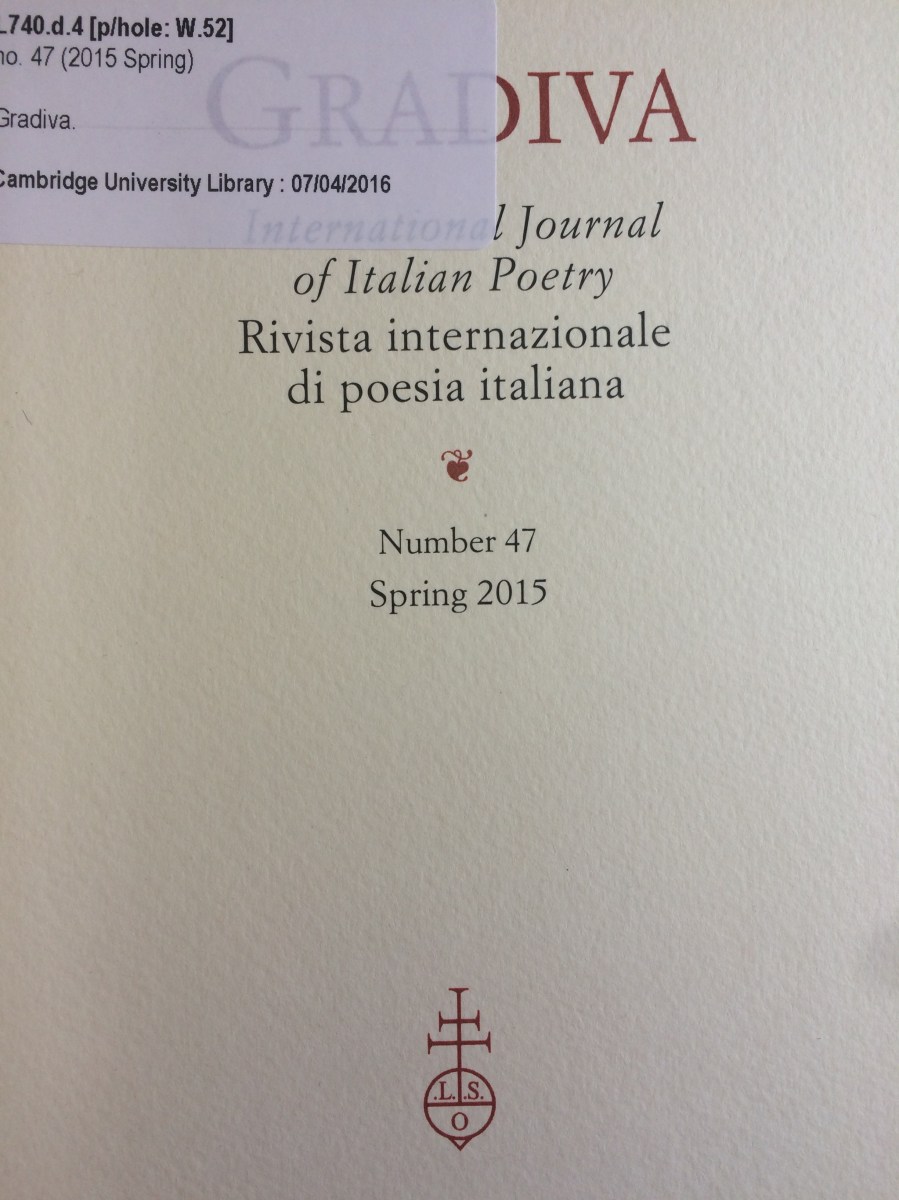
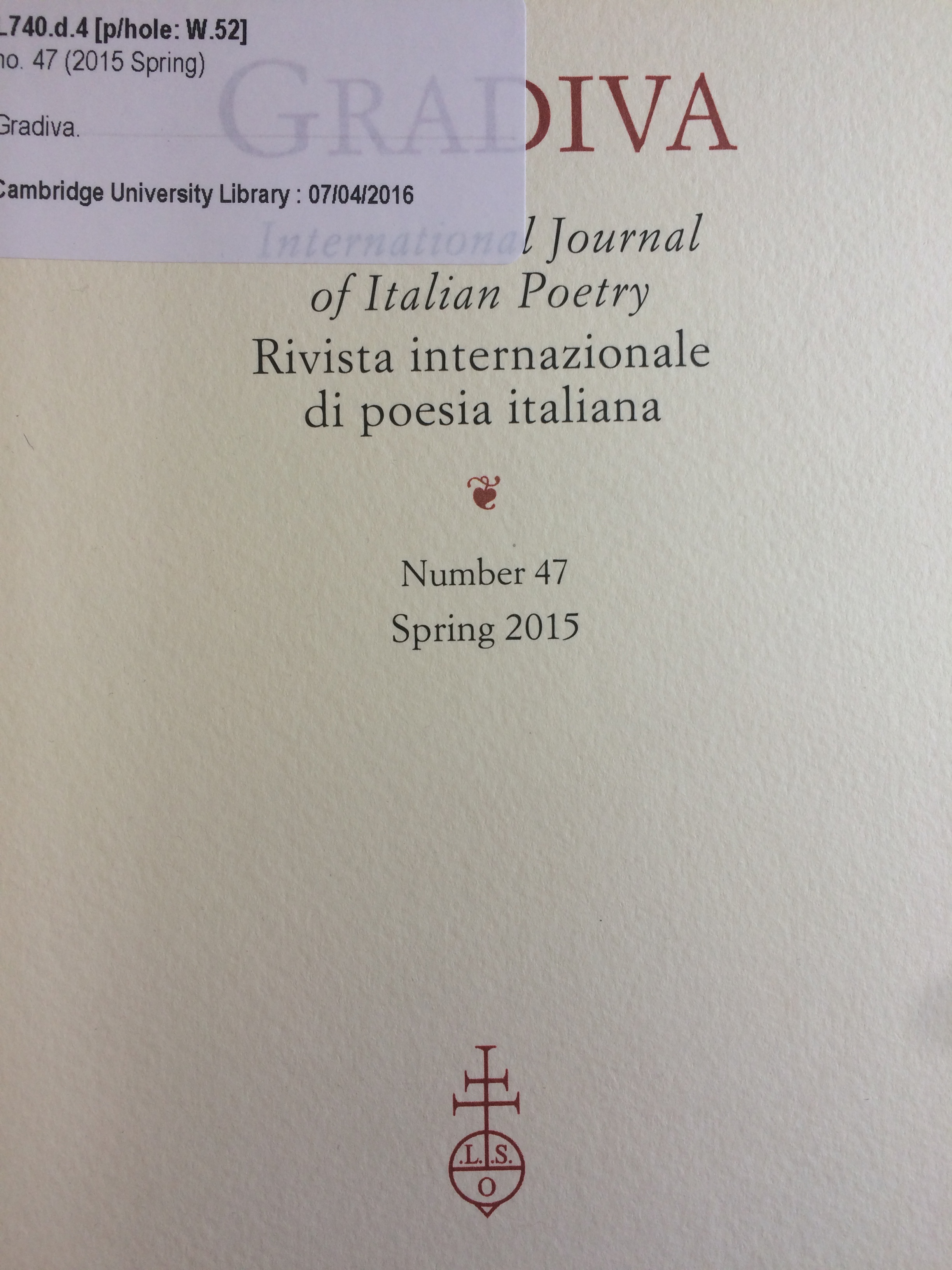
A recent issue of Gradiva

Gradiva, international journal of Italian poetry

The University Library has recently taken out a subscription to the journal Gradiva : international journal of Italian poetry.

A recent issue of Gradiva

Created in 1975 by Adriano Berengo, the first issue was released in the summer of 1976. The first series of Gradiva ran from 1976 to 1982, and the main focus of the journal was to explore the relationship between psychoanalysis and literature. In 1982, with the second series and under new editorship, the journal became essentially a periodical of Italian literature and from that year on started to include creative texts. From the year 2000 to the present, the journal has devoted itself exclusively to Italian poetry and poetics, with an emphasis on the twentieth century and beyond.

Recently, it was taken over by the publishing house, Leo S. Olschki of Florence. The editor-in-chief of the journal is Luigi Fontanella, professor of Italian at Stony Brook University, and amongst the important international figures on the editorial board is the poet Valerio Magrelli. Now semi-annual, its issues include poems by Italian poets (with or without accompanying English translations) and poems by authors of Italian descent, as well as essays, translations, reviews, and interviews. It is an important resource for students of Italian contemporary poetry and the Italian poetical scene.

The journal stands at L740.d.4, with the latest issues in pigeon hole W.52 in the West Room.

Bettina Rex

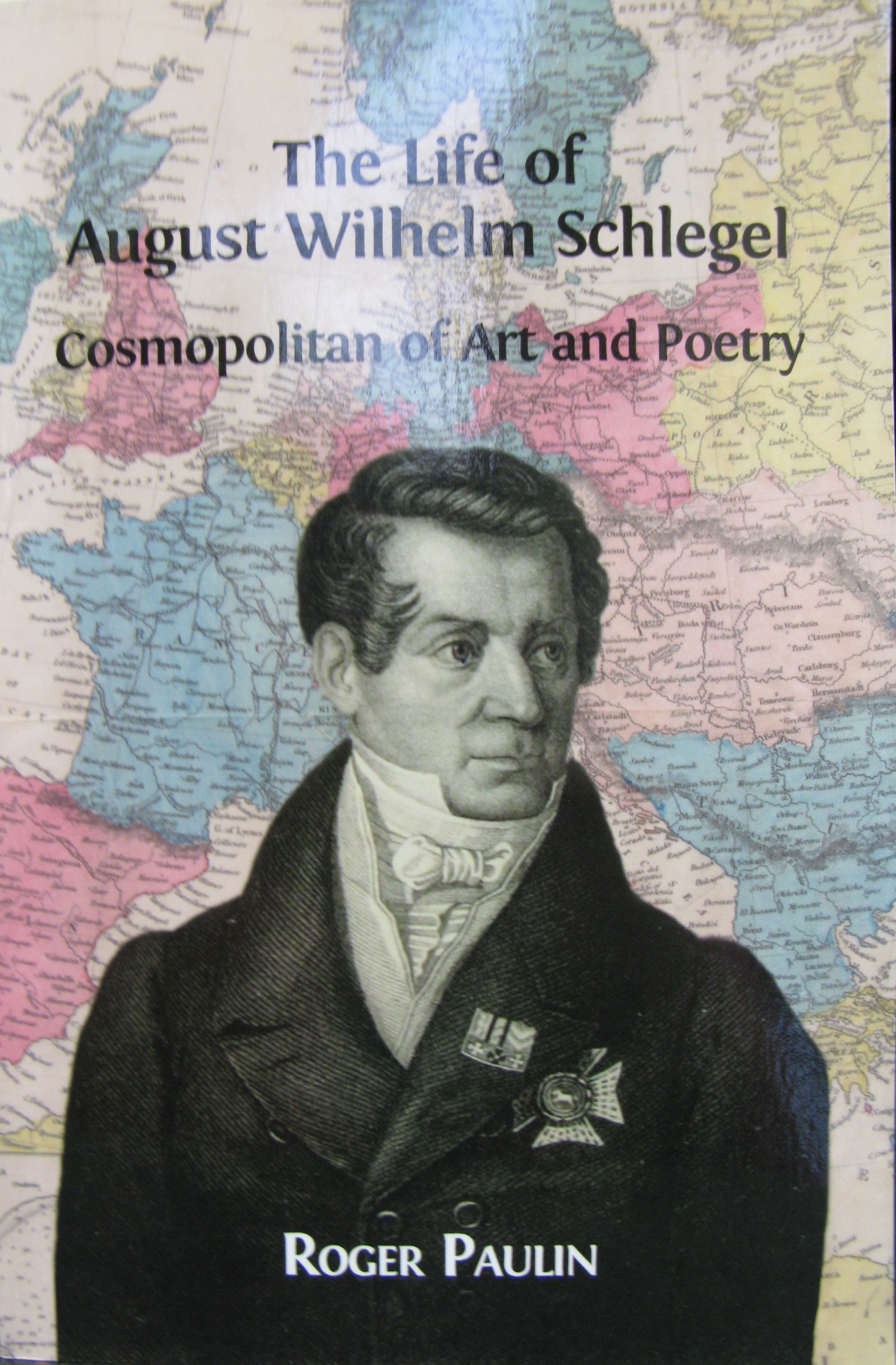
Schlegel, Open Access and ISBNs galore

Front cover of 749:32.c.201.31

Ten years ago receiving material under legal deposit was a fairly clear-cut matter.  Where the publisher had a choice, the only vagary was whether we would receive a paperback or a hardback.  However, from April 2013 British publishers have had the choice of depositing print or electronic versions of their texts, so monitoring new titles is not so straightforward.  When I was asked recently whether we would receive a print copy of the latest publication by Professor Roger Paulin, Emeritus Schroeder Professor of German, The life of August Wilhelm Schlegel, I couldn’t give an immediate answer.

In fact the publisher of this title, Open Book Publishers, based here in Cambridge, promotes open access for full academic monographs in the humanities and social sciences, and therefore deposits electronically.  Continue reading “Schlegel, Open Access and ISBNs galore”

Palmyra and Henri Seyrig

Following the destruction of many of the ruins of the ancient city of Palmyra in autumn 2015, Paul Veyne, historian and specialist in ancient Rome, wrote Palmyre : l’irremplaçable trésor (C204.d.3861). He writes in the introduction:

Ayant eu pour métier l’étude de l’Antiquité gréco-romaine, je n’ai cessé de rencontrer Palmyre sur mon chemin professionnel. Avec la destruction de Palmyre par l’organisation terroriste Daech, tout un pan de notre culture et mon sujet d’étude viennent brutalement de voler en éclats.

Malgré mon âge avancé, c’était mon devoir d’ancien professeur et d’être humain de dire ma stupéfaction devant ce saccage incompréhensible et d’esquisser un portrait de ce que fut la splendeur de Palmyre qu’on ne peut plus désormais connaître qu’à travers les livres.

The Cambridge University Library has many of those books that Veyne mentions. Organisations involved in archaeological excavations in Syria and Egypt have published series of books that the UL has been collecting consistently for decades, and in many cases for over 100 years. These include some of the most important works about excavations in Palmyra—all the more important now that the archaeological site is no longer intact.

Plates from S516_01_a_1_25 (3)
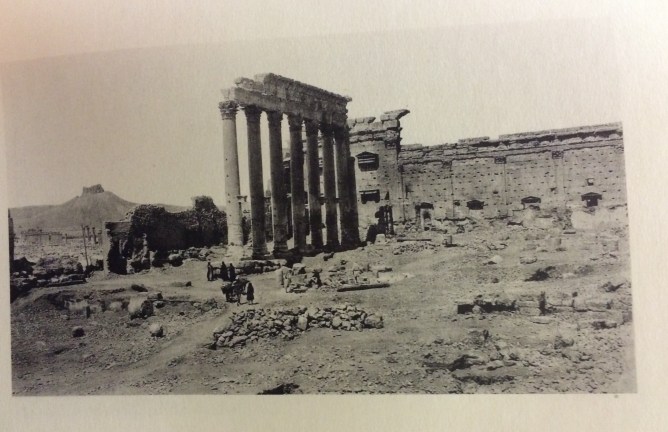
An early photo of the Temple of Bel, photo by Henri Seyrig (S516:01.a.1.25)

Henri Seyrig began the French excavations in Palmyra in 1929. A fascinating figure, later to be named head of the direction des Musées de France by André Malraux, and a founder of the Institut français d’archéologie du Proche-Orient (now the IFPO), the UL has almost a dozen books by Seyrig or with his contributions. Most of these relate to Syrian archaeology or numismatics, with a significant number relating to Palmyra. A conference was held on the subject of Seyrig at the BNF and at the Académie des Inscriptions et Belles-Lettres (AIBL) in October 2013. Unfortunately, a book hasn’t (yet?) been published as a result of the conference, however the programme is available from the AIBL. Further information regarding Seyrig is available from the AIBL, where he was an academician. Continue reading “Palmyra and Henri Seyrig”

Getting hold of the books

The way we used to order
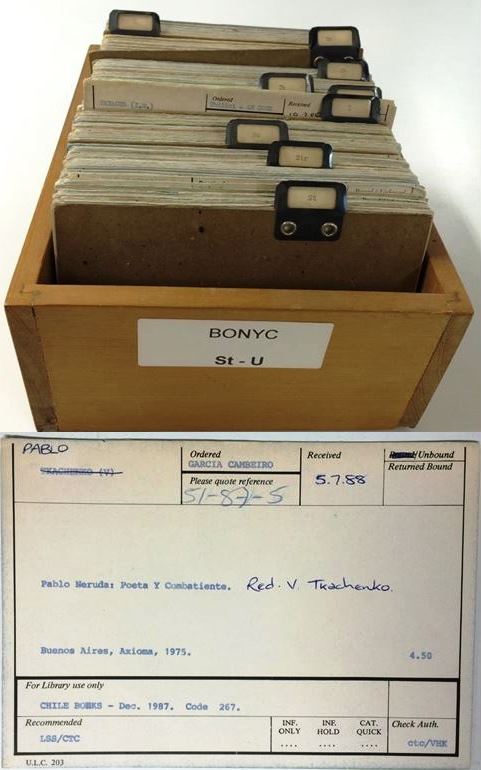
How we used to order in pre-computer days

Many of our readers, familiar with the ease of book purchasing over the internet, often with a next-day delivery service, assume that the buying of new titles by the Library is invariably straightforward.  The internet has certainly facilitated the way in which we work. Ordering 20 books on-line usually only takes a few minutes. It is much easier to establish whether a title is still in print, although publishers’ and vendors’ websites are often not completely up to date in the detail they provide.  The websites of many suppliers enable us to track our requests, seeing the dates on which they order, acquire and dispatch a book.  Sites such as Abebooks and Chapitre can make the acquisition of many out-of-print items far easier.

It shouldn’t be assumed, however, that the Library can always replicate the experience of the private individual, particularly in terms of e-books.  Continue reading “Getting hold of the books”

Newsflash! Hitler lied!

Hitler a menti - Cover
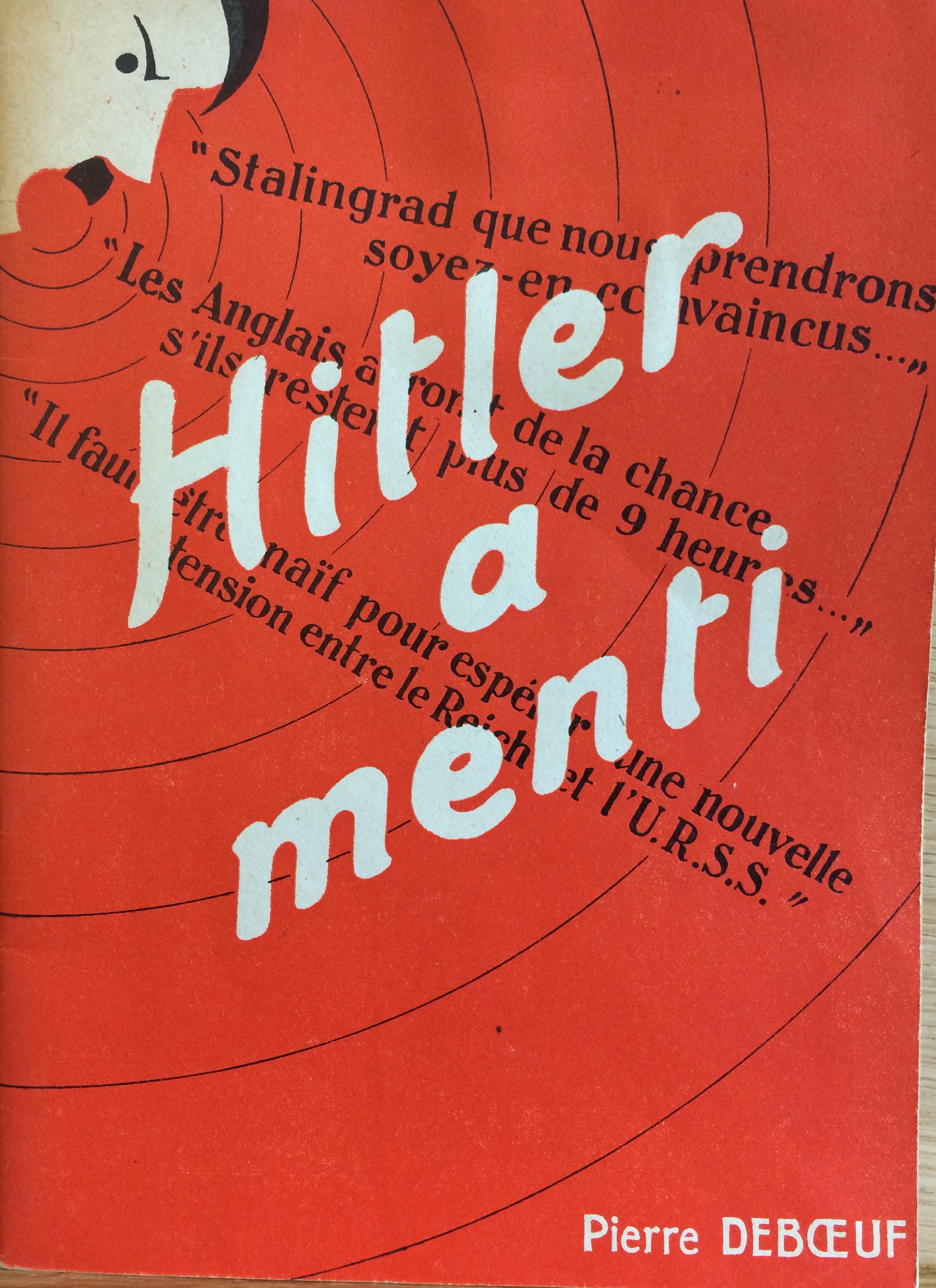
Cover of Liberation.c.401

The Literature of the Liberation Collection aims to collect books that reflect the attitude of the French following the liberation of Paris: as the nation began to recover from—and come to terms with—the German occupation (and active French collaboration). Most of the books in the collection (and that we highlighted in the exhibition) are therefore about the French—what they suffered, how they can recover, and how they relate to their recent history. One book that is striking for its different subject matter is Hitler a menti : ce qu’il a dit, ce qu’il a fait / Pierre Deboeuf (Liberation.c.401).

The book is made up of quotes from Hitler’s writings and speeches, from before and during the war. Continue reading “Newsflash! Hitler lied!”

Goya’s legacy as seen through Glendinning’s eyes

tesoros_Museo_Bilbao
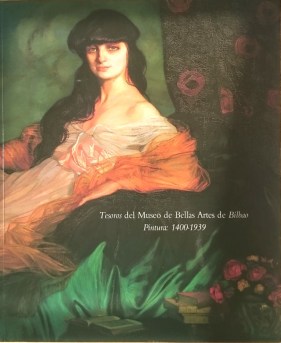
Tesoros del Museo de Bellas Artes de Bilbao, Pintura: 1400-1939 (CCA.65.118)

Over 400 new titles from the library of Professor Nigel Glendinning have been added to Cambridge University Library’s collections since they were donated in 2013.

Works on the Spanish Old Master Francisco de Goya (1746-1828) and, to a lesser extent, his predecessor Diego Velázquez (1599-1660) feature prominently in this collection.  Exhibition catalogues on European art and monographic works on 20th century art and architecture in Britain are also present. Some examples include: Ten years of British architecture, ’45-’55: an Arts Council exhibition (CCC.65.156); Modern British prints: 1914-1960 (CCC.65.105); The captured imagination: drawings by Joan Miró from the Fundació Joan Miró (CCA.65.23).

A significant number of books discuss art in the Zaragoza province (Aragón, Spain) where Francisco de Goya was born —Academicismo y enseñanza de las Bellas Artes en Zaragoza durante el siglo XVIII  (CCC.65.78); Colecciones y coleccionistas aragoneses en los siglos XVII, XVIII y XIX (CCC.65.100).

Continue reading “Goya’s legacy as seen through Glendinning’s eyes”