El cine sonoro en la II República (1929-1936), by Román Gubern. Classmark: 415.d.97.207
The 2014 Norman MacColl Symposium, organised by the Spanish and Portuguese Department of Cambridge University and convened by Prof. Brad Epps, was held on the 1st of November at Clare College under the title “Canon, contra-canon y cinefilia: Historias del cine español en un contexto internacional.”
The symposium encouraged debate around key trends and issues of Spanish cinema. The distinctive style of Spanish cinema, deeply rooted in the Spanish tradition of the sainete and the esperpento (the farce and the absurd), gradually evolved to become an open space where popular cinema grew alongside sophisticated styles inspired by Hollywood or Paris. Although Spain’s political isolation under Franco prevented film makers from fully absorbing European new waves, the death of Franco in 1975 saw a burst of creativity and experimentation that placed Spanish cinema back on the international arena. Continue reading “Spanish cinema resources at the University Library”→
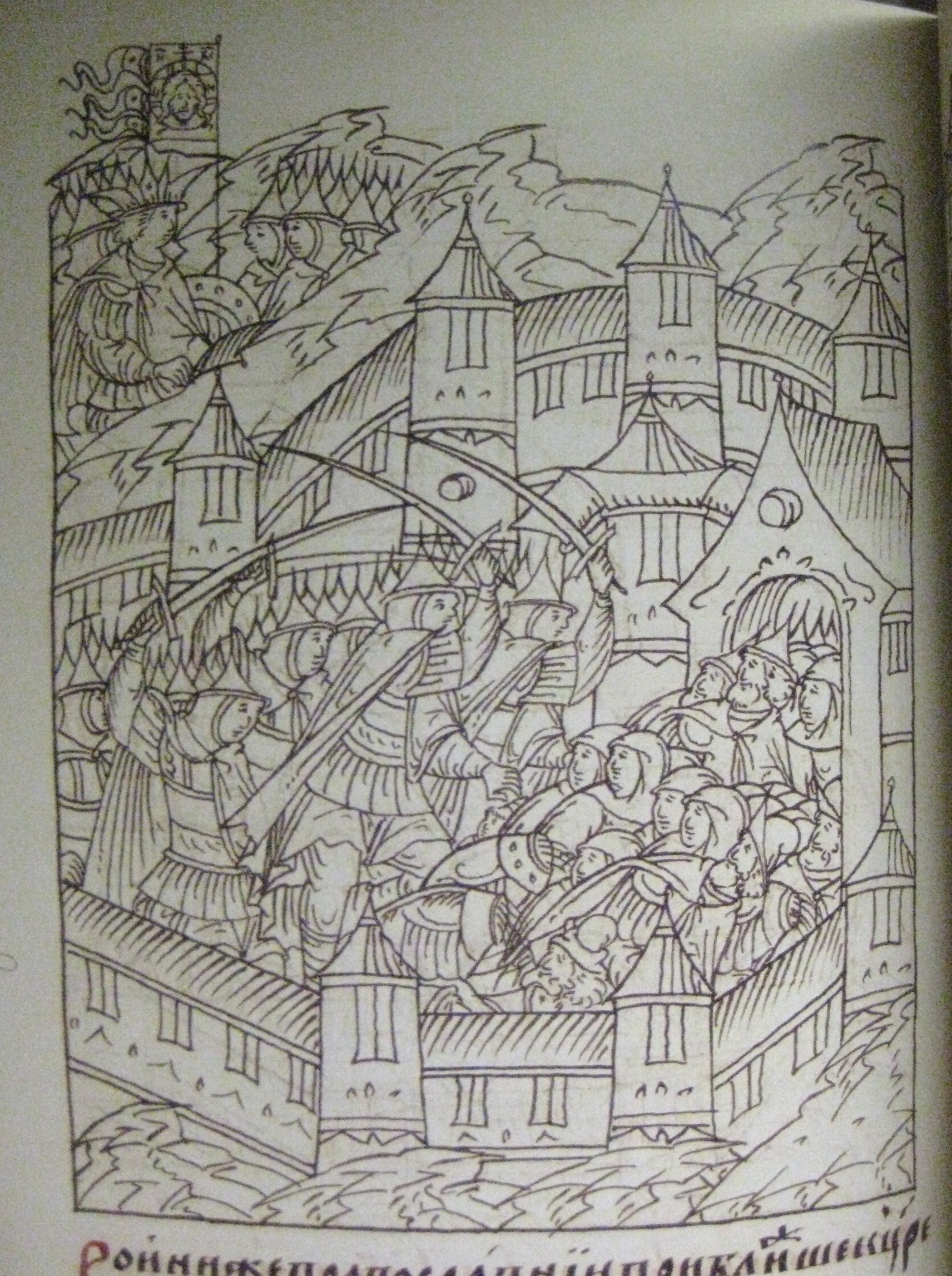
The Kazan slaughter, in v. 21 of the Litsevoi letopisnyi svod (F200.a.14.21)
The latest CamCREES seminar saw Professor Kivelson of the University of Michigan discuss depictions of just and unjust violence in early illustrated histories of Muscovite Russia. The bibliographical notes go on to look at the 40-volume Litsevoi letopisnyi svod chronicle, one of the University Library’s most significant Slavonic purchases (in facsimile reprint) of recent years.
The first three of the four CamCREES seminars this term have seen a march back in time. From the Soviet films of the first seminar we moved to the 18th century in the second, and Professor Kivelson took us all the way back to 16th-century Muscovy and its eastward expansion in the most recent talk. Russian writers from the period, she explained, didn’t pursue the kinds of moral consideration about conquest that can be seen in the work of western writers such as Hobbes and Locke. Some of this gap, though, might be filled to some degree by close examination of visual depictions of imperial expansion. Continue reading “‘Rivers of blood’ : illustrating violence and virtue in Russia’s early modern empire”→
In this post, Jeff Barda explains the topic of his research, and how he makes use of the UL’s collections. Jeff is undertaking a PhD on French contemporary poetry at Trinity College (Cambridge) under the supervision of Dr Jean Khalfa. He has taught at the Charles University of Prague and at King’s College London.
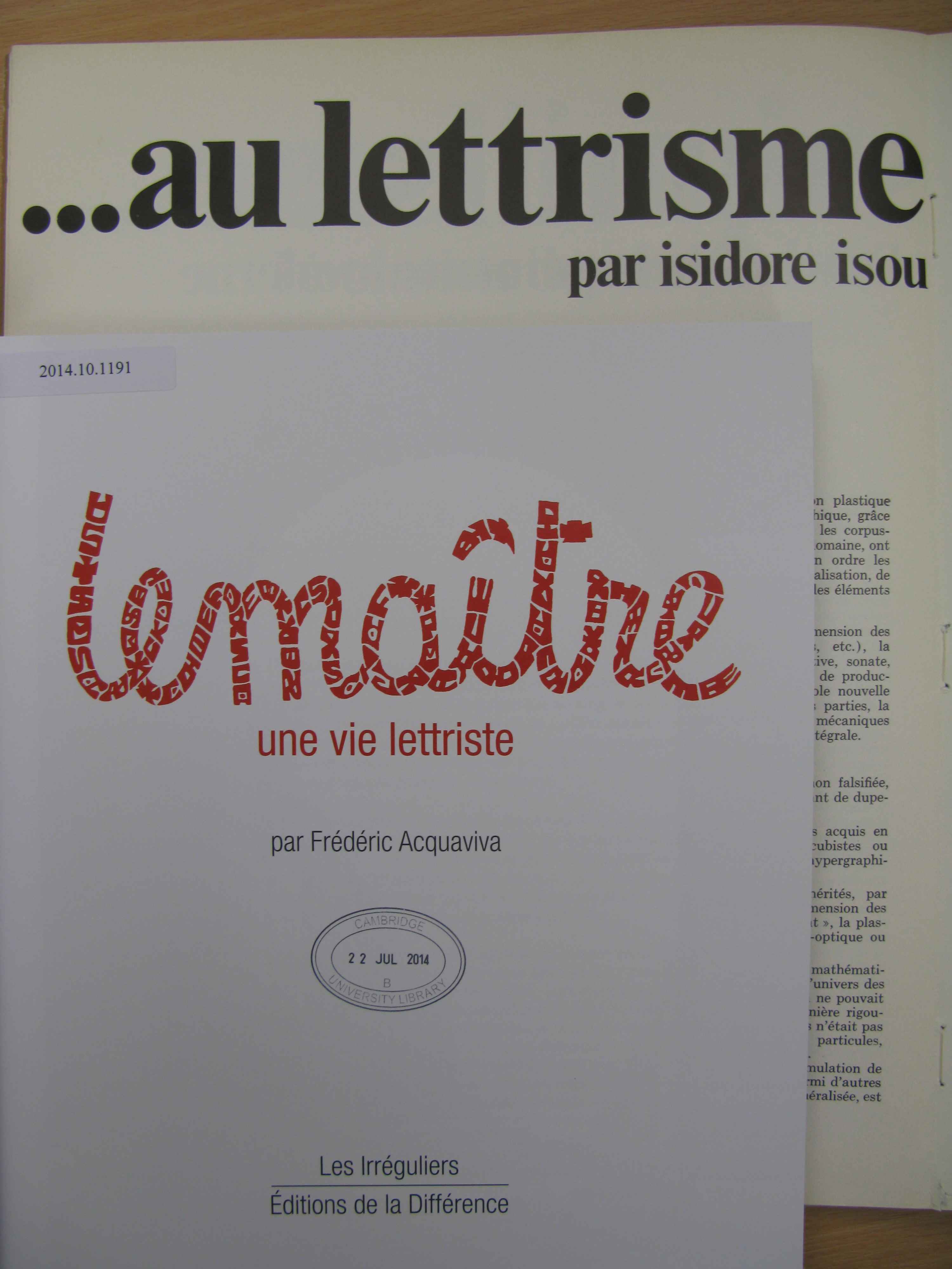
Two recently acquired works on lettrism: Lemaître : une vie lettriste / par Frédéric Acquaviva (2014.10.1191); and De l’impressionnisme au lettrisme / par Isidore Isou (2014.13.6)
The idea that a collection of junk, debris, detritus or waste could generate new representations, filiations, forms and meanings has become a significant and patent feature of a great number of poetic practices of the 20th century in France that work with or from pre-existing materials. From the Dadaist’s unaltered everyday objects to Debord’s détournement, through Breton’s ‘objets trouvés sur le vif’, Bataille’s violent and primal pictures to Isou’s holistic Lettrism, the use of documents has become, in many ways, a means of both generating the novel while broadening the scope to new perceptions, visions and forms of knowledge.
Yet from the early 1970s a set of poetic practices whose directions and upheavals continue to prompt and inflect, ramifies in a variety of contexts and media. Marjorie Perloff and Kenneth Goldsmith have proposed a detailed mapping of the new conditions of writing: Perloff’s conceit of ‘unoriginal genius’ have provided an extensive illustration of how poets, with the impetus of technology and Internet, reject Romantic premises, in favour of immanentist practices that include collage, montage, reappropriation or installation. For Goldsmith, who has recently identified a new paradigm, ‘uncreative writing’, ‘the world is full of texts, more or less interesting and [he] do[es] not wish to add any more’ and suggests that today ‘the problem is not needing to write more; instead we must learn to negotiate the vast quantity that exists’. Yet for Jean-Marie Gleize, poetry must continue by other means and he appends ‘ce qui est pertinent aujourd’hui c’est la question de savoir si l’on tient à faire oeuvre de poésie, de poète, ou si l’on a d’autres projets’. These other projects which Gleize calls ‘postpoésie’, eschew traditional models of postures, which he calls ‘lapoésie’ epitomized by the totemic and ontological poetry of Bonnefoy; ‘repoésie’ of which conception Maulploix’s critical lyricism is so far the best example; or ‘néopoésie’ which implies a conception of poetry combining traditional and new literary enterprise such as Roubaud’s. My dissertation aims to unravel how post poetry – a conception that rejects lyricism and formalism, and favours contextual displacement, code shifting, redeployment of texts and repurposing via linguistics pragmatics as key operations principles – can help us to develop reflective capacities (cognitive awareness) that (re)shape in turn our forms of life and ways of world making. Continue reading “French contemporary poetry and ways of worldmaking”→
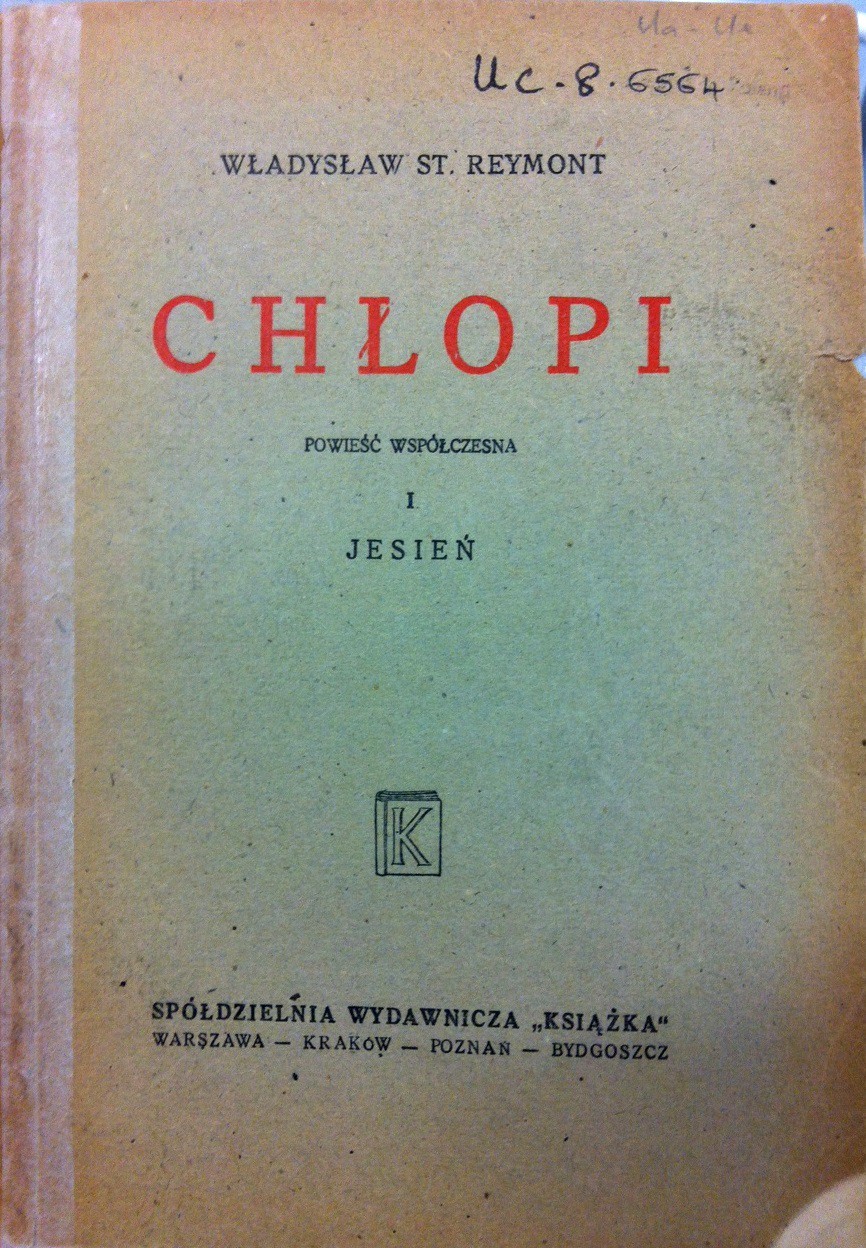
Front cover of v. 1 of a 1931 edition of Chłopi, Uc.8.6564
In November 1924, the Nobel Prize for Literature was awarded to the Polish prose writer Władysław Reymont, the second of four Polish-language literature laureates to date. To mark the award’s anniversary, we look at the University Library’s Reymont holdings, consider our scant acquisitions in recent decades, and search for Reymont in the card catalogue.
Ninety years ago this month, Władysław Reymont was awarded the Nobel Prize for Literature. The Swedish Academy always explains its choice. In Reymont’s case, this was given in some brevity: Reymont was recognised “for his great national epic, The peasants“. He is one of nine laureates, so far, for whom the Academy has “singled out a specific work for particular recognition” (see the Nobel literature fact page and Reymont’s Nobel page), and the second Polish-language literature laureate, following Henryk Sienkiewicz’s award in 1905. Continue reading “Reymont, recognition, and relegation : the November 2014 Slavonic item of the month”→
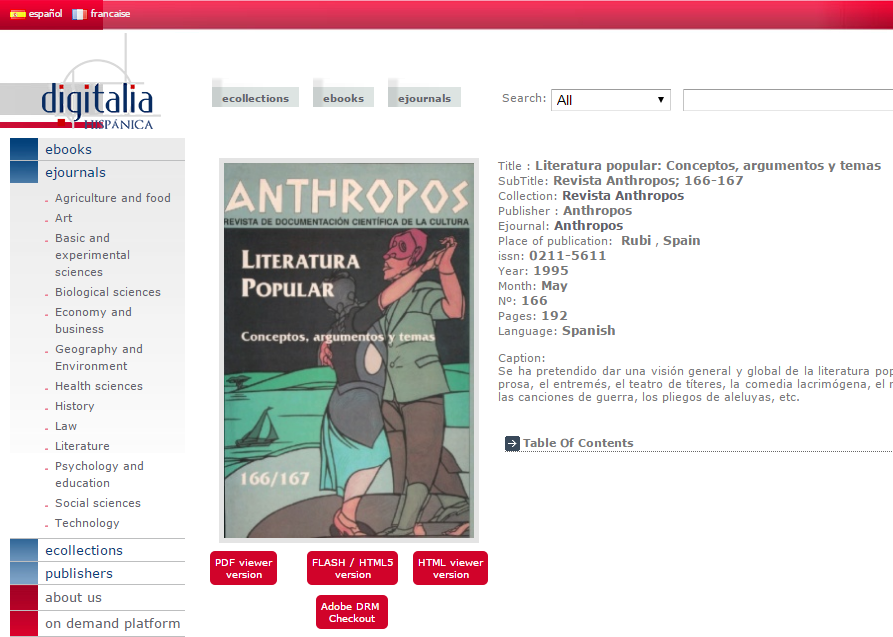
Cambridge University Library has renewed its subscription to DIGITALIA Hispánica for the second year running. DIGITALIA is an aggregator of Spanish-language e-books from Spain, the Caribbean and Latin America. The platform provides access to over 10,700 ebooks and 2,550 ejournal issues, many of them unique to Digitalia. It offers access across multiple file formats, including PDF, HTML Flash, and HTML. See our previous blog post with instructions on access here.
This year, a new feature will allow users to download ebooks using Adobe DRM. To activate this feature, you will need to create a personal account with DIGITALIA. You may do so by clicking on the Your Account tab in the upper right hand corner of the screen. Further instructions are available from the Help Center tab. Continue reading “Borrow Spanish language e-books from the Digitalia platform”→
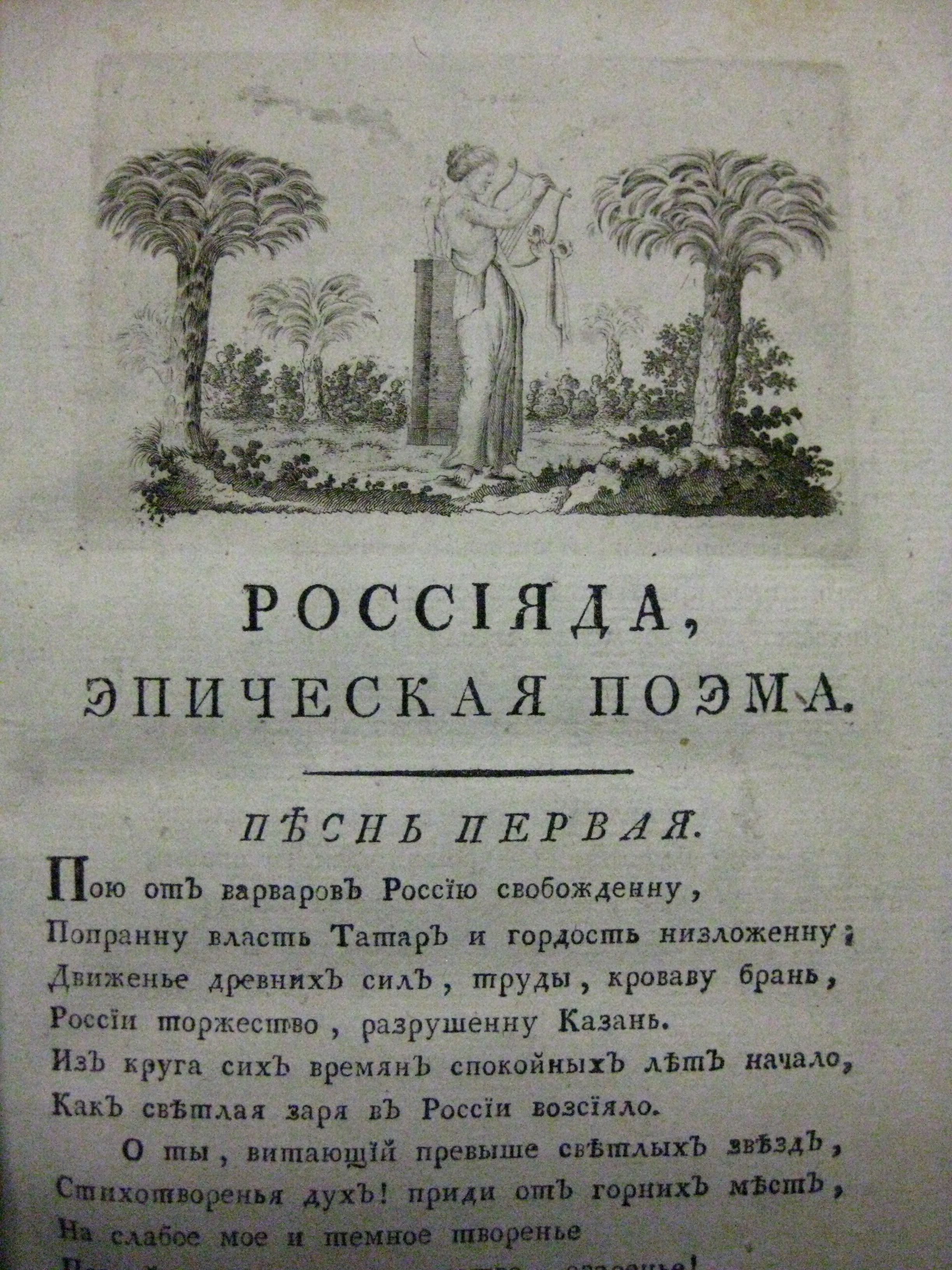
The first lines of Rossiiada by Mikhail Kheraskov (7756.c.1)
The second 2014/15 CamCREES seminar saw Professor Luba Golburt of UC Berkeley speak about the paradox of the obscurity and tenacity of the 18th century in the Russian cultural and historical imagination. These notes go on to look at her question of the Russian 18th century’s true length, in terms of classification and subject headings.
Russian literature’s “Golden Age” was the 19th century, exemplified by Pushkin, the poet described to this day in Russia as nashe vse (our everything). Professor Golburt’s absorbing talk looked at the way in which the epoch which preceded it, the 18th century, both fell into undeserved obscurity and yet also cast an enduring shadow long after it ended. The talk was based on Professor Golburt’s recently published book, The first epoch : the eighteenth century and the Russian cultural imagination (the University Library’s copy is electronic and can be accessed by Library readers from this LibrarySearch record). Continue reading “The persistence of the eighteenth century in the Russian cultural imagination”→
25 years ago, on 9 November 1989, following weeks of images on the world’s television screens of candle-lit demonstrations in Leipzig, overcrowded embassies and trains, the Berlin Wall opened and residents of East and West Germany flooded across the former border. Some of these images are recorded in 9. November 1989, der Tag der Deutschen (9000.d.4068). The period between October 1989 and reunification a year later was one of tremendous upheaval and rapid change. The turmoil was reflected in the publishing industry, as editions licensed between East and West (Lizenzausgaben) became a thing of the past, replaced initially by joint East/West publications, only for such joint enterprises rapidly to disappear. Old GDR publishing houses were merged or closed, and new publishing houses sprang up, many of them very short-lived.
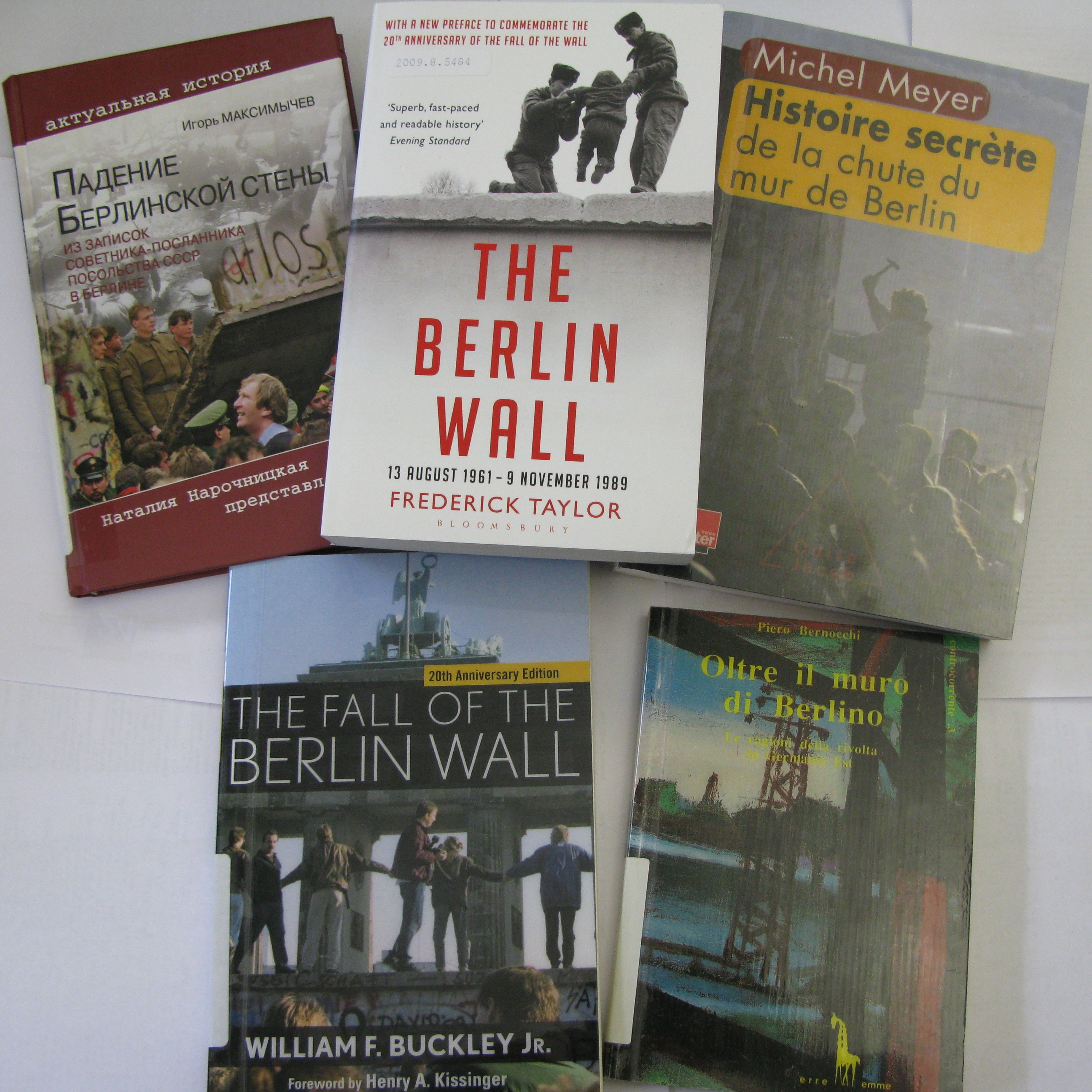
Selected books of the Berlin Wall in the UL
It has been estimated that from November 1989 onwards a new book on contemporary events was being published every working day. Cambridge University Library did its very best to keep abreast of all these titles and collected extensively in the field. It could be a strange experience. In writing to ask a new publisher about titles and prices, sometimes the actual books were sent by return without charge. We were one of six British libraries who contributed to a union list of titles, along with the Bodleian, the university libraries of Nottingham, Portsmouth and Warwick, and the Institute of Germanic Studies of the University of London (now part of Senate House Library). This was published in 1993 under the title Two into one : Germany 1989-1992 : a bibliography of the ‘Wende’ (Cam.d.993.5, R560.G69). The introduction pays testimony to the range of Cambridge’s collecting activity: “Of those libraries contributing, only Cambridge University can be said to cover every aspect of the subject”.
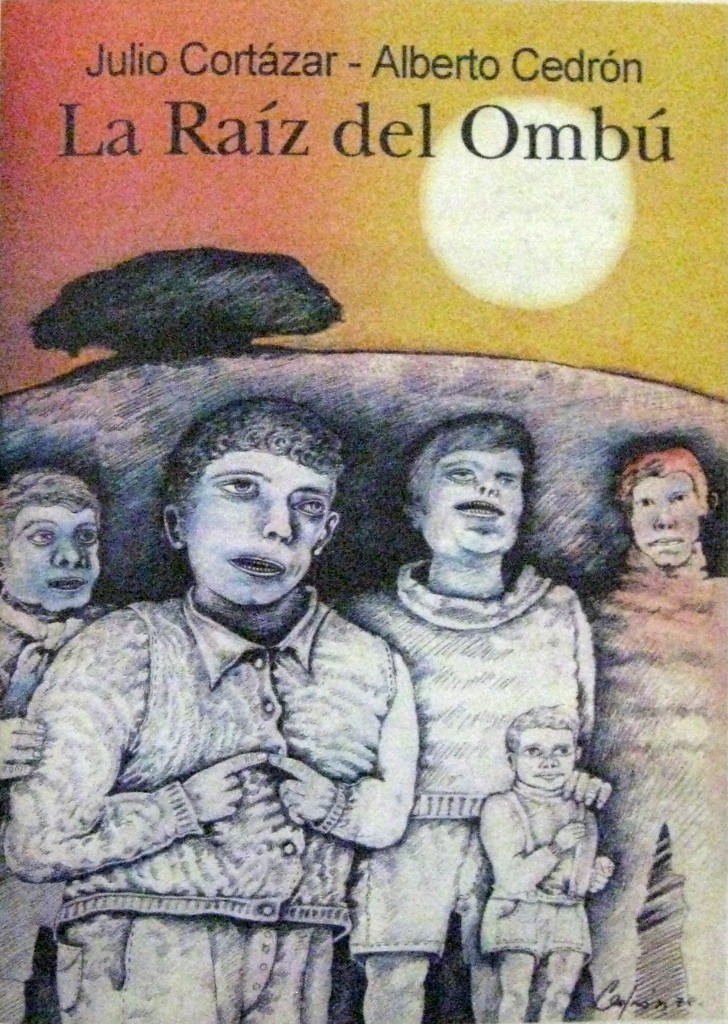
On August 26th this year, our team unfortunately missed the opportunity to write a blog-post on the centenary of Julio Cortázar – one of the pre-eminent Latin-American “boomers” of the 1960s. However, on that same day we were fortunate enough to purchase a fascinating item by the author: La raíz del ombú is Cortázar’s only graphic novel, created in collaboration with artist Alberto Cedrón between 1977 and 1981.
Although Cortázar had previously explored the interplay between text and images (see for example his Fantomas contra los vampiros multinacionales, 1994.8.201 and Ub.8.472) this is his first “full” graphic novel. In the words of Cortázar himself in the introduction, the work is “an account of an Argentinian vision, […] a current vision of hell”. It is an allegory of Argentina’s unsettled and often violent history from 1930 to the late 1970s, built around Alberto Cedrón’s memories, dreams and obsessions. Continue reading “Cortázar’s only graphic novel – an account of an Argentinian vision, or a vision of hell”→


 Languages across Borders