Slavonic item of the month : September 2014

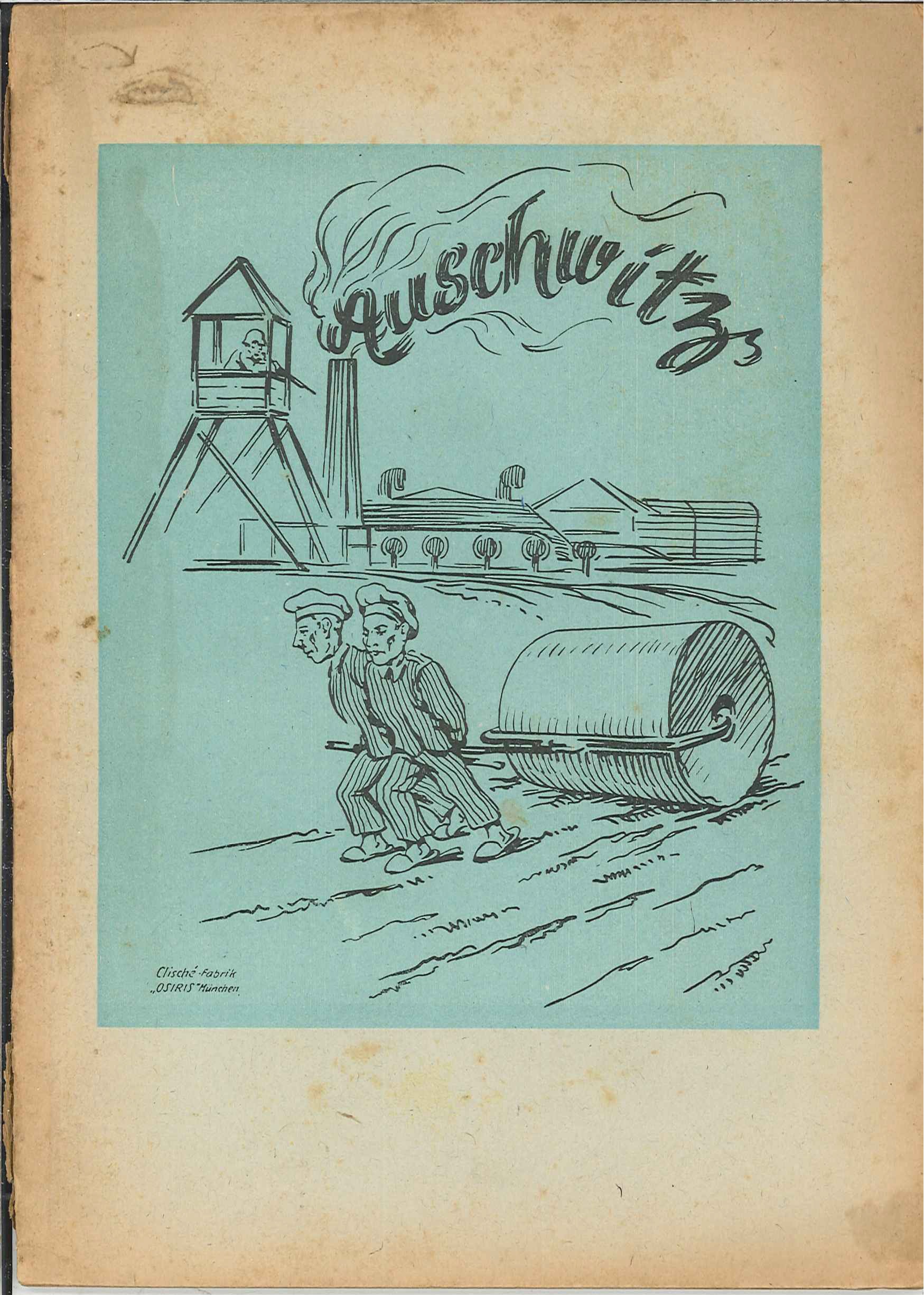
Front cover of Al'bum politv'iaznia by Paladii Osynka (CCC.62.121).
Front cover of Al’bum politv’iaznia by Paladii Osynka (CCC.62.121).

The University Library is currently running a small exhibition of Ukrainian diaspora material from the Peter Yakimiuk Collection in the main entrance hall.  The September item of the month is also from this collection – a book of drawings and wry caricatures of the horrors of Auschwitz seen through the eyes of a Ukrainian political prisoner.

Petro Balei was a Ukrainian writer and nationalist who emigrated to North America after World War II, a very common background among authors whose work is represented in the Yakimiuk Collection.  The majority of books by such authors in the collection usually cover Ukrainian history and politics, including personal narratives of active engagement in fighting during the war.  Balei’s work, however, is rather different – under the pseudonym Paladii Osynka, he produced a book of caricatures of life in Auschwitz, where he spent several years as a political prisoner. 

Continue reading “Slavonic item of the month : September 2014”
A German protégé of Catherine the Great

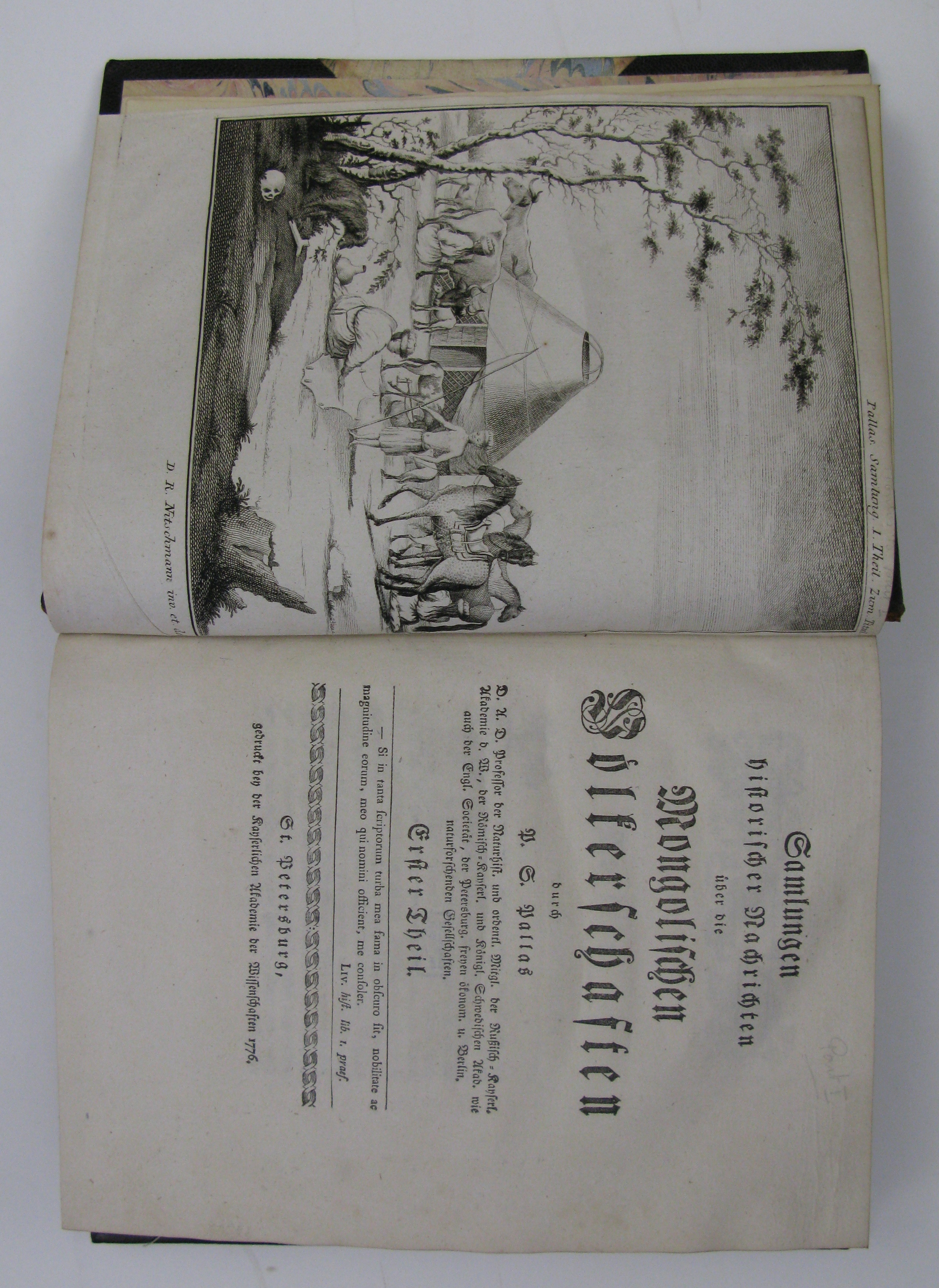
Pallas - Vol. 1, Title page
Pallas – Vol. 1, Title page

A splendid two volume work on Mongol ethnic groups, by Peter Simon Pallas, Sammlungen historischer Nachrichten über die mongolischen Völkerschaften, has just been added to the University Library’s collections (CCB.57.21). It was published in quarto format in St. Petersburg in 1776 (1. Theil) and 1801 (2. Theil). A smaller octavo edition, but only of the first volume, was published in Frankfurt and Leipzig by Johann Georg Fleischer in 1779, and stands at Acton.d.23.1479. The first edition makes no reference on the title-page to the splendid engravings by D.R. Nitschmann which form an integral part of the publication, but in 1779 Fleischer gave them greater prominence, the title-page emphasising the “Erster Theil, mit vielen Kupfern”. Each engraving is accompanied by a paragraph of description.

The author, Peter Simon Pallas, was the subject of a substantial academic monograph in 2 volumes by Folkwart Wendland, published in 1992 (570:01.c.66.83-84). Pallas was a German zoologist and botanist, a protégé of Catherine the Great, who in 1767 became a professor at the St Petersburg Academy of Sciences, and between 1768 and 1774 travelled extensively throughout the Russian Empire collecting natural history specimens. His reports were collected and published as Reise durch verschiedene Provinzen des Russischen Reichs (Mm.48.49, MA.7.101-105, CCA.28.15-18 and Mm.29.77-) between 1771 and 1776, and covered a variety of topics, including geology, accounts of new plants and animals, and descriptions of native peoples and their religions. Pallas gave his name to a variety of animals and birds, including Pallas’s cat, Pallas’s tube-nosed fruit bat, Pallas’s cormorant and Pallas’s grasshopper warbler. Continue reading “A German protégé of Catherine the Great”

Portuguese studies

ejournals & databases services's avatarejournals & databases services

New on ejournals@cambridge A-Z : Portuguese studies

Published by the MHRA (Modern Humanities Research Association), Portuguese studiesis a “biannual multi-disciplinary journal devoted to research on the cultures, societies, and history of the Lusophone world”.

Most accessed article in the Last 3 years: Oscar Wilde, Fernando Pessoa, and the Art of Lying by Mariana de Castro.

A fragment from En veu alta, the choreographer Carolyn Carlson’s dance inspired by the poems of Fernando Pessoa.  Visit also Pessoa Plural, a journal of Fernando Pessoa studies, one among many Portuguese resources featured on the Modern & Medieval Languages, Dept of Spanish and Portuguese web pages.

Access Portuguese studies via the ejournals@cambride A-Z or via this link. (Note that online access starts with Vol. 17 (2001).  Archival access (back to vol. 1) is included in the JSTOR Arts & Sciences XI Collection to which the University does not yet…

View original post 25 more words

2014’s Italian literary prizewinners

Campiello_Barbaro
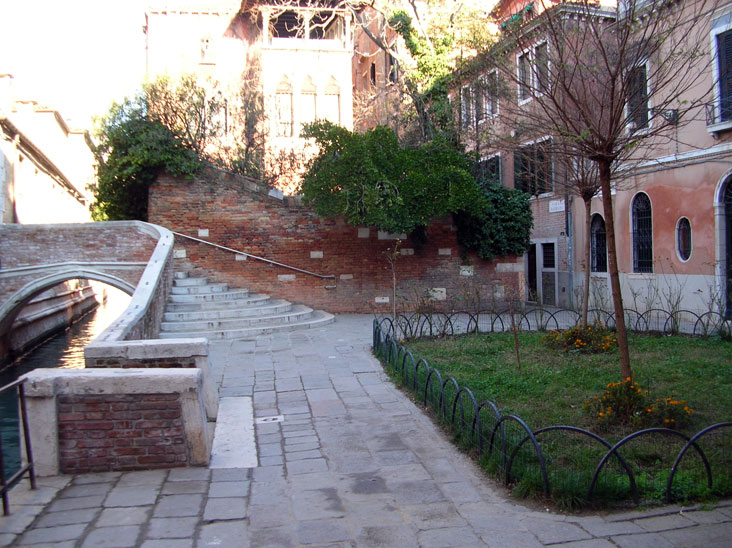
Campiello Barbaro, in Venice. The prize awarded last Saturday to Giorgio Fontana takes its name from the very Venetian word “campiello”, which means a small square. (Image taken from Wikimedia Commons, click to enlarge).

Literary prizes, as seen in previous blog posts, aid the book selector greatly when deciding which modern works to buy. Today we will consider major Italian prizes, looking at what makes each prize distinctive in terms of its history and selection processes, and how this distinctiveness pinpoints in turn the nature of the prize’s winners.

The Bagutta Prize, named after the Trattoria Bagutta in Milan, is the oldest and has been awarded annually since 1927 (with the exception of 1937-1947). Prizes are given to works published during the previous year and are not restricted to particular literary genres. Jury members are important figures in the intellectual life of the nation. 2014’s winners are:

Continue reading “2014’s Italian literary prizewinners”

Ukraine Abroad: the Yakimiuk Collection

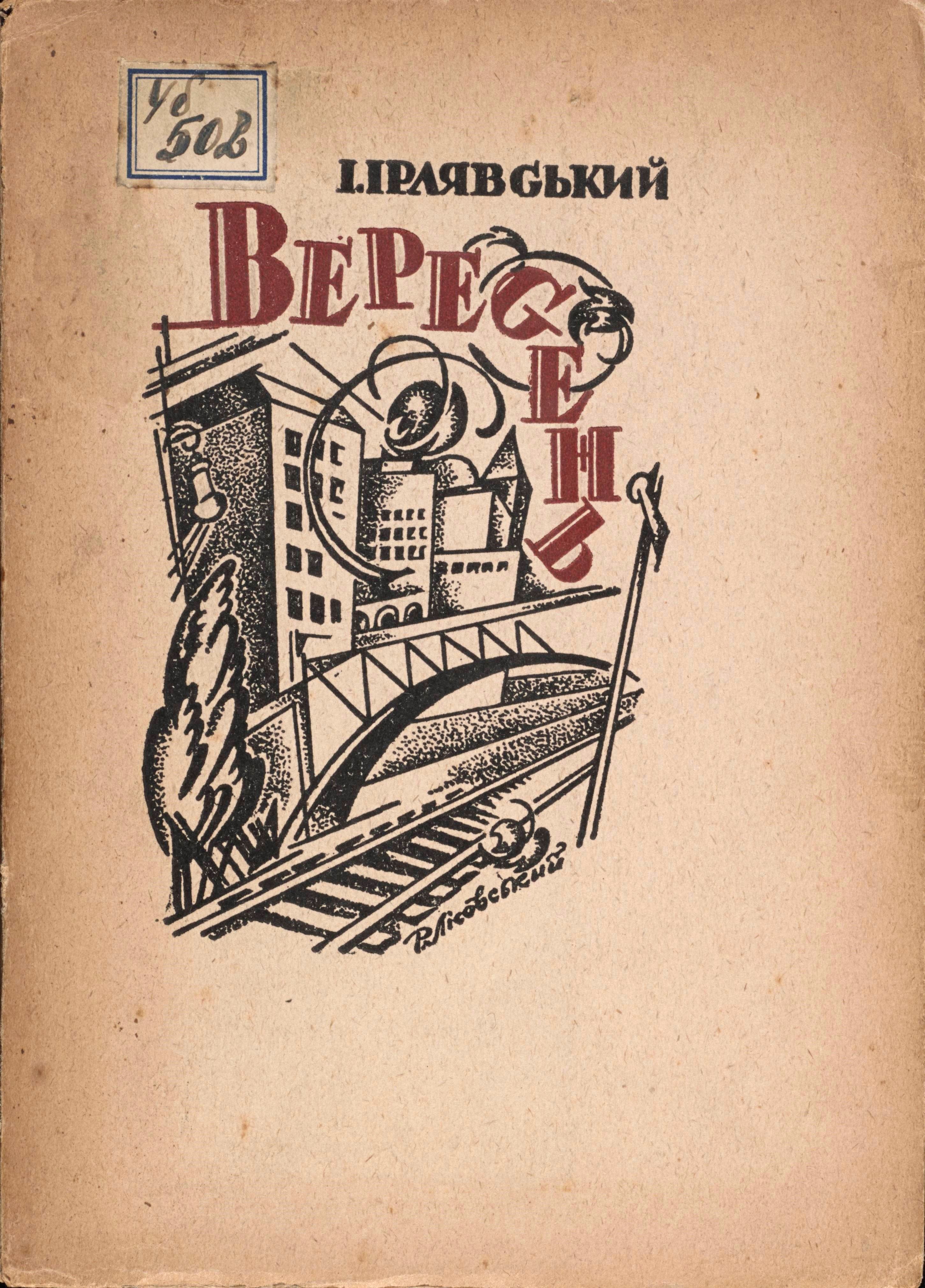
Caption for picture: Front cover of Veresen’ by Ivan Irliavs’kyi.
Front cover of Veresen’ by Ivan Irliavs’kyi.

An exhibition of material from the library of Peter Yakimiuk, donated in his memory to the University Library, is currently on public display in the Library’s Entrance Hall.  The Yakimiuk Collection is a major resource on Ukrainian history, politics and culture, and the exhibition explores the extraordinary geographical breadth of the diasporic publications it contains.

In 2011, the late Peter Yakimiuk’s family generously gave the Library his collection of material on Ukraine.  It contains hundreds of books on Ukrainian history, politics and culture, with an emphasis on post-1945 Ukrainian-language diaspora publications.  Many of the books are held in very few Western academic libraries, having been printed in small runs or distributed only through private channels.  For Cambridge, where Ukrainian Studies was introduced in 2008, the donation is extremely significant, majorly bolstering the University Library’s Ukrainian collection.

  Continue reading “Ukraine Abroad: the Yakimiuk Collection”

Will Catalonia follow in the steps of Scotland?

on Catalan independence
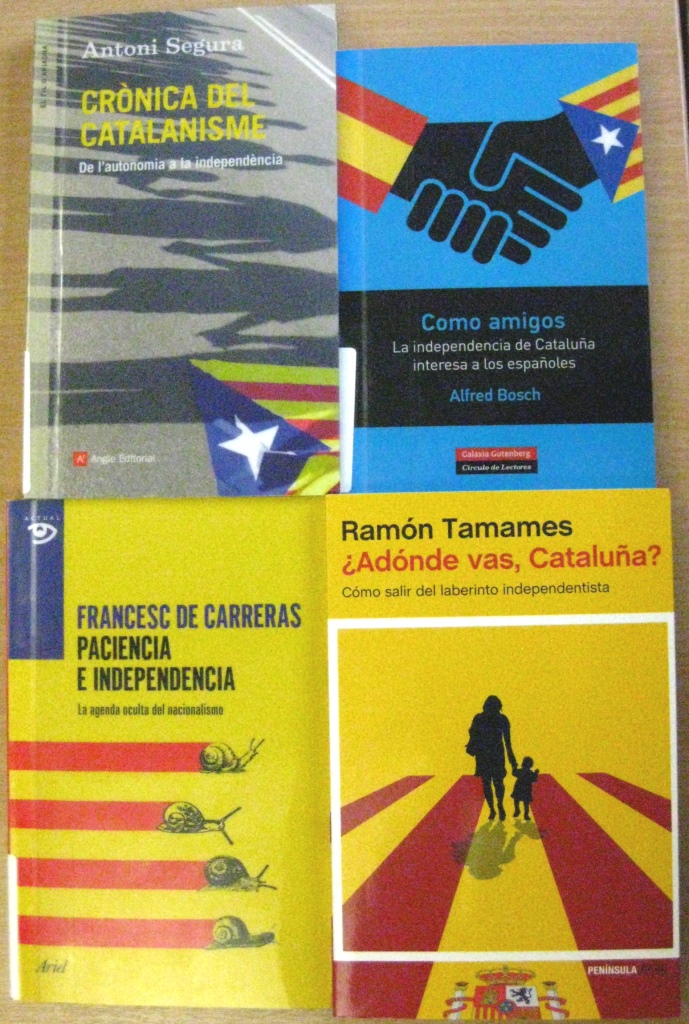
A selection of the books on the topic we have recently received.

In light of the Scottish referendum on independence next week, it is worth remembering that other parts of Europe are currently faced with a similar dilemma. Catalans have long been agitating for the right to have their say in regard to independence and are observing the Scottish vote with much expectation and perhaps a little envy – considering their central government’s blocking of a discussion on the topic, let alone grant permission to the consultations scheduled for November this year.

In the last few years the Catalan publishing market has of course abounded with publications on the matter and we have recently ordered many of the most relevant ones. At the time of writing, Cambridge University Library is the only UK institution (soon to be) holding many of these titles. These books deal with various aspects of Catalan independence: to name just a few, they include titles concerning the Church’s view on the matter (Ser independentista no és cap pecat: l’Església i el nacionalisme català, 2014.8.5092), the potential economic consequences of independence (Economia de Catalunya: preguntes i respostes sobre l’impacte econòmic de la independència, 2014.9.3489) and the positions held by prominent Catalan intellectuals (¿Per què volem un estat propi? : seixanta intel·lectuals parlen de la independència de Catalunya), as well as Albert Pont’s acclaimed Delenda est Hispania : tot allò que Espanya ens amaga sobre la independència de Catalunya (584:33.c.201.13). If you are interested in any of these titles or wish to have a full list, please contact the Hispanic Specialist.

Continue reading “Will Catalonia follow in the steps of Scotland?”

Remembrance in print : recent European publications on World War One

ElsieMairi
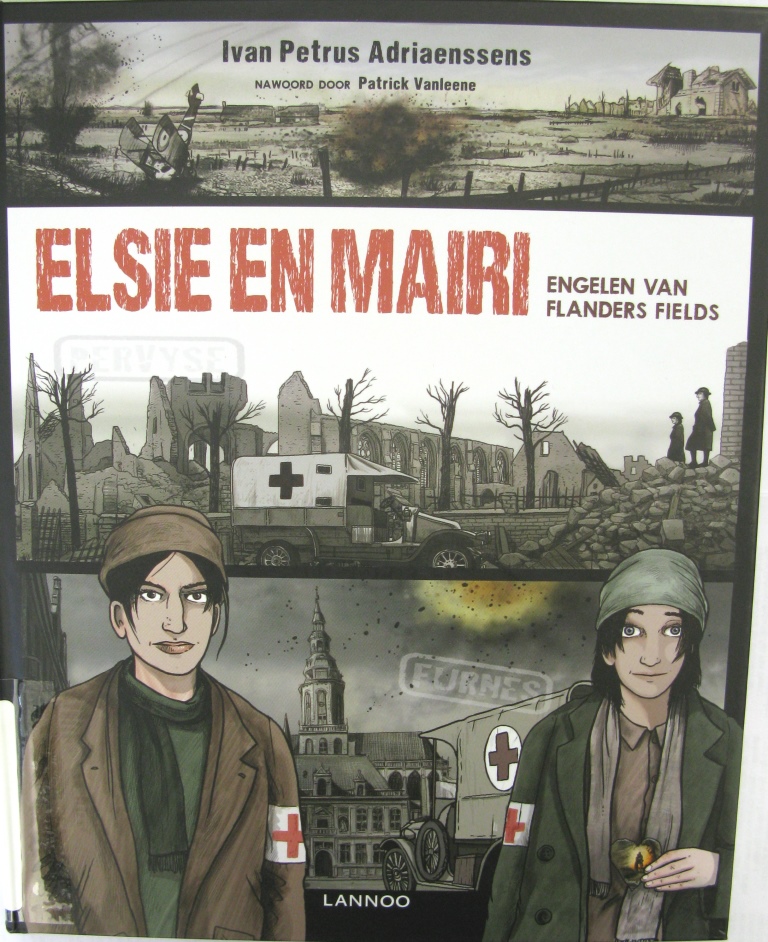
Elsie en Mairi : Engelen van Flanders Fields (C201.b.5854). A Dutch graphic novel.

Due to the centenary of the start of World War I, commemorations have been planned in a wide variety of disciplines. Anybody who saw the Tour de France pass through Cambridge at the beginning of July will have seen the two vehicles that made up part of the Caravane publicitaire from l’office de tourisme d’Arras, which were commemorating the centenary. Other memorials abound this year, from the large national and international events, to small and local ones. Publishers throughout Europe are not immune to this, and much has been published this year to tie in with the centenary. In the UL, we have been trying to buy a selection of these books, and in this post we highlight a few, which helps demonstrate how our collections across European languages complement each other.

Already in 1915 the University Librarian aimed to collect as detailed a documentary record as possible of the conflict, and the Cambridge War Reserve Collection is one of the most extensive of its kind, particularly notable for its fugitive material. As early as 1916 the Librarian wrote that “German propaganda literature has been accumulated chiefly from Italy, Spain, the United States, and some of the South American Republics. Much of this is printed in Germany; but some is produced by partisans at Genoa, Barcelona, Castellón, New York, Chicago, Shanghai, Bogotá, Medellín …” The new additions described below are a clear example of the Library’s attempts to build on existing strength, and indicate the continuing importance of international coverage.

Continue reading “Remembrance in print : recent European publications on World War One”

A mirror on to Rome

Speculum Romanae Magnificentiae, [speculum image number, A29], Special Collections Research Center, University of Chicago Library. (Click on the image to enlarge)

The current exhibition at the Courtauld Gallery, Bruegel to Freud : prints from the Courtauld Gallery, which runs until September 21st, gives an introduction to the Courtauld’s wonderful collection of prints. Just one book is on display, the Courtauld’s copy of Speculum Romanae magnificentiae, open at a splendid view of the Colosseum by Ambrogio Brambilla. Occasionally nowadays – but only rarely – an exhibition curator has the opportunity to digitise lots of images from a volume, so that the visitor is given the chance to view all the content. More usually – as here – the visitor has to be content with one opening. Jotting down details of the publication, it was very satisfying to return to Cambridge, investigate on LibrarySearch, and find I had the opportunity to examine another copy of the Speculum Romanae magnificentiae at my leisure, and several related publications, albeit scattered across several of the University’s library collections. Continue reading “A mirror on to Rome”

Studies in French Cinema

ejournals & databases services's avatarejournals & databases services

New on ejournals@cambridge A-Z : Studies in French Cinema.

223169217_0b159ee2de_z

From the Taylor & Francis website for the journal:

Studies in French Cinema is the only journal published in English devoted exclusively to French and francophone cinema, providing scholars, teachers and students from around the world with a consistent quality of academic investigation across the full breadth of the subject. Contributors scrutinise the cultural context of various works and the diverse stylistic approaches that infuse the visual fabric of this genre.”

Now available to the University of Cambridge electronically from volume 1 (2001) to present.

Access Studies in French Cinema via the ejournals@cambridge A-Z or at this link.

Image: ‘Playtime’ by Steve Rhodes on Flickr, here: https://flic.kr/p/kHNr8

View original post