Slavonic item of the month : June 2014

The subject for June 2014 is Iurii Andropov, the Soviet head of state in the wake of Brezhnev’s death, who was born 100 years ago in June 1914.  When Andropov died nearly 70 years later, in February 1984, he had been in power for only 15 months. We look at two fictional works about him.
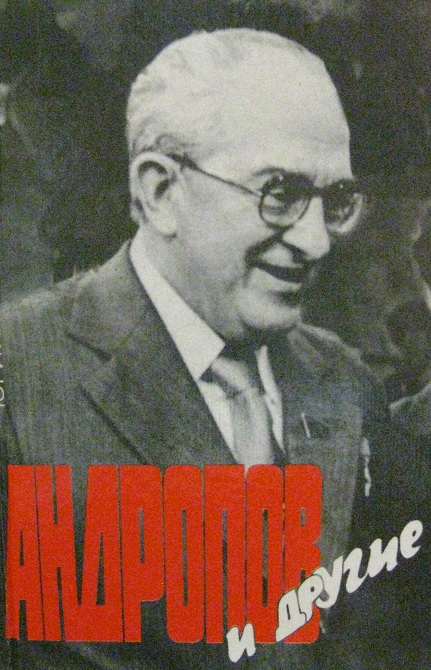
Cover of Iurii Teshkin's /Andropov i drugie/(Andropov and others; 9003.d.1849 )
Cover of Iurii Teshkin’s Andropov i drugie (Andropov and others; 9003.d.1849

Although Iurii Vladimirovich Andropov led the Soviet Union for only a short time, his was already a well-known name when he took power in late 1982.  He had been linked to the repression of the Hungarian Revolution in 1956 (Andropov was the Soviet ambassador to Hungary from 1953 to 1956) and to other international military interventions such as the putting down of the Prague Spring in February 1968.  By 1968, Andropov had become the head of the KGB, a position he was to hold for 15 years.

On the basis of Andropov’s pre-leadership career, then, he was seen as a Soviet hawk – and one with a KGB background to boot.  Stories from his leadership, though, suggest a possibly more liberal side.  A search for Andropov Gorbachev on our LibrarySearch+ catalogue of electronic resources, for example, comes up with a hit for a Guardian article from 1991 which reports a revelation by a government aide that Andropov saw the progressive Gorbachev as his successor and not the conservative Chernenko.

The uncertainty of what Andropov might have achieved had he not died so quickly after coming to power might, then, explain why two of the University Library’s holdings about Andropov are works of fiction.
Continue reading “Slavonic item of the month : June 2014”

Sarajevo 1914

The assassination of Archduke Franz Ferdinand of Austria on June 28th 1914 will forever be remembered as one of the key turning points in twentieth century world history. Archduke Franz Ferdinand, heir to the Austro-Hungarian throne, and his wife Sophie were shot dead in Sarajevo by Gavrilo Princip, a member of the Black Hand gang, a group of Serbian nationalists, whose aim was to free Serbia of the rule of the Austro-Hungarian empire. The assassination of its heir presumptive gave Austria-Hungary the opportunity to settle some old scores and declare war on Serbia, which, in turn, precipitated a political crisis between the major European powers, and this, in turn, triggered a chain of events which led directly to the outbreak of the First World War. This feature will commemorate the 100th anniversary of the Sarajevo assassination and explore how the event and its consequences are represented in the UL’s German collections.

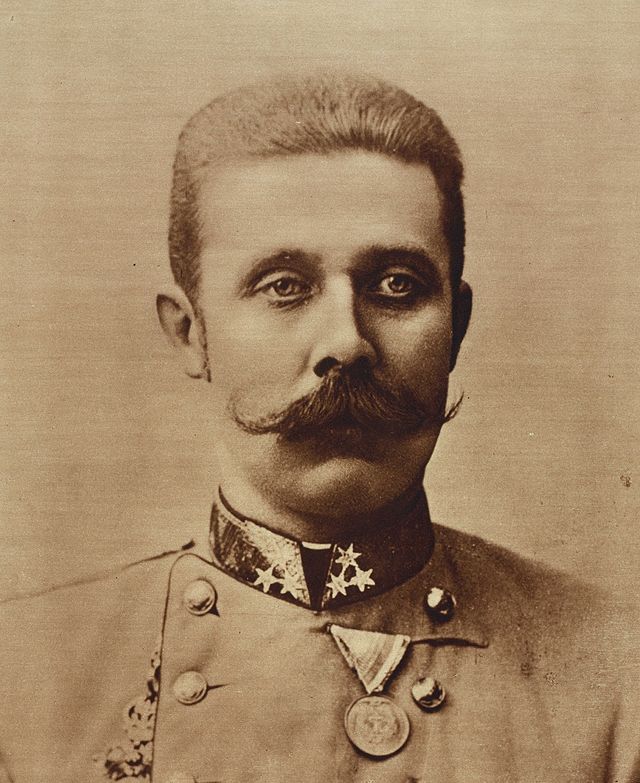
Archduke Franz Ferdinand of Austria
Archduke Franz Ferdinand of Austria (source)

From an early age, Franz Ferdinand pursued a military career in the Austro-Hungarian army and became heir to the Habsburg throne following the suicide of his cousin Crown Prince Rudolf at the famous hunting lodge in Mayerling in 1889. There was tension in his relationship with Emperor Franz Joseph, but historians have differed regarding the nature of Franz Ferdinand’s political views. Some historians emphasise his liberalism compared to the emperor, especially his advocacy of greater autonomy for ethnic groups within the Austro-Hungarian empire, whilst others emphasise his Catholic conservatism and absolutist belief in Austro-Hungarian dynastic rule.

Continue reading

Comments from visitors to the Liberation Collection exhibition

We have previously written about the exhibition currently on display in the University Library’s Exhibition Centre. The exhibition has now been open for over two months, and visitor reactions have been very positive. In this post, we will highlight just a few of the comments that have been left.

A beautiful presentation of the energy and dedication shown by authors, designers, illustrators, printers … determined to record all aspects of the liberation.

What a fantastic treasure of material reflecting a period which must not be forgotten – it is good that the collection in this exhibition is here for future generations to consult and more important to ponder. My favourite exhibits were the cartoons – the “avant” and “après” and the puissant croix carried up the hill with its crucifixion connotation.

Continue reading “Comments from visitors to the Liberation Collection exhibition”

‘Sovetskaia kul’tura’ digital archive

Thanks to strong support from academics and students following the February blog post advertising trial access to the Sovetskaia kul'tura digital archive, the University Library's Accessions Committee agreed to purchase permanent access to the archive, with financial support from money left to the Library by Dr Catherine Cooke.  The purchase was made later in the spring, but it is only in the last few weeks that the digital archive has been fully updated from the pre-purchase state it had been in.

SK stamp section_20140624
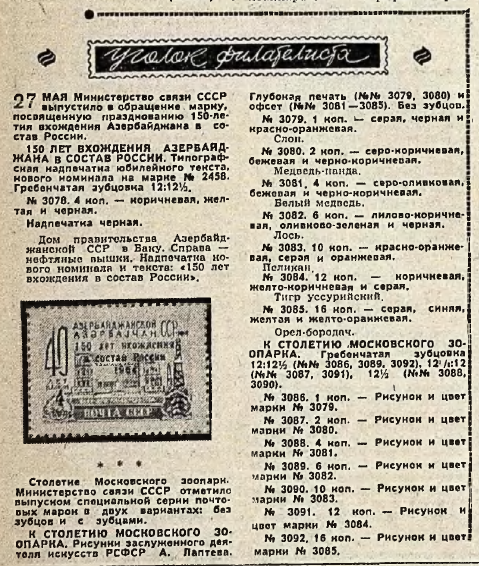
Screenshot of the philately section of the 25 June 1964 issue of Sovetskaia kul’tura.

The archive contains as full a set as East View have so far been able to amass of the various titles under which the current weekly newspaper Kul'tura has been published.  The earliest title was Rabochii i iskusstvo (Worker and art), which started in 1929, followed by Sovetskoe iskusstvo (Soviet art); this title ran from 1931-1953, with the exception of some of 1942-1944 when Literatura i iskusstvo (Literature and art) was used instead), and Sovetskaia kul'tura (Soviet culture; this ran to 1991, after which the current name, Kul'tura (Culture), was adopted).  Any gaps in the collection are detailed within each title's main page, but East View assure us that the search for all remaining copies and also for better copies of issues which have scanned poorly will continue.  As with other East View digital archives, the Sovetskaia kul'tura archive contains scanned pages which are text-searchable in Cyrillic and in transliteration.

Continue reading “‘Sovetskaia kul’tura’ digital archive”

Plugging the gaps – Sir Michael Edwards

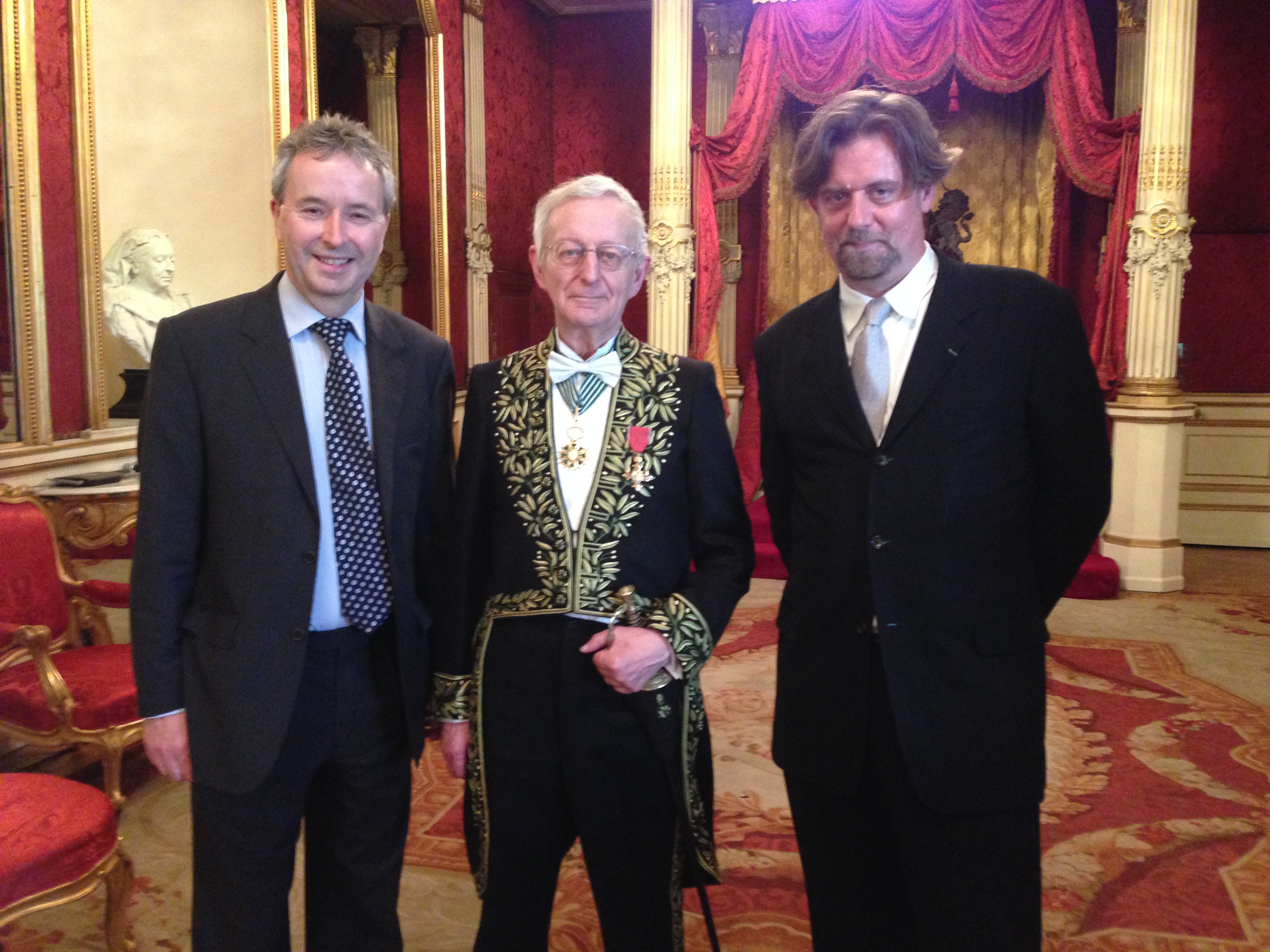
The Master of Christ's College, Sir Michael Edwards and Andrew Todd (Chevalier des Artes et des Lettres) at a reception at the British Embassy in Paris. By permission of the Master of Christ's College.
Sir Michael Edwards (centre) with The Master of Christ’s College and Andrew Todd at a reception at the British Embassy in Paris. By kind permission of the Master of Christ’s College.

A former member of the European Collections and Cataloguing team, now living in Paris, recently sent me a link to an article in a French newspaper about Michael Edwards, who in February 2013 was the first Briton to be elected to the Académie française, where he occupies ‘fauteuil 31’. Her email ended rather ominously ‘I’m afraid you have gaps’, but Eléonore not infrequently spots important gaps in our holdings.

Sir Michael Edwards is a poet, philosopher and cultural historian, knighted in 2014 for services to UK-French cultural relations. After completing a thesis on Racine and four years living in France, he spent much of his career at the University of Warwick, where he was Professor of English and Comparative Literature. In 2002 he became the first British academic to be elected to the Collège de France, holding the chair for the Study of Literary Creation in the English Language. He broadcasts regularly on France Culture, on English and French literature, on painting, music and philosophy. And now he is a French Academician, making reference in his inaugural address on May 22nd 2014 to his undergraduate years in Cambridge. Michael Edwards maintains close links with Cambridge, where he is an honorary fellow of Christ’s College. Continue reading “Plugging the gaps – Sir Michael Edwards”

Luchino Visconti : a lecture on his theatre and opera

A lecture on Visconti will be given by the Italian journalist and writer, Gaia Servadio, on Monday 30th June.

Luchino Visconti di Modrone was born in 1906 in Milan. He was a director and screenwriter, directing plays, films and opera, developing, with others, the movement of “Italian neo-realism” in the 40s and 50s. Although he is probably best known for his films Rocco and his Brothers (1960), The Leopard (1963) and Death In Venice (1971), his opera and theatre productions were lavish and highly acclaimed. He died on March 1976 in Rome. Continue reading “Luchino Visconti : a lecture on his theatre and opera”

Football and literature in Brazil – World Cup readings

futebol_na_praia
Children playing soccer in São Miguel do Gostoso, RN, Brazil (image taken from wikimedia Commons).

Although many might consider it yet more “panem et circenses”, the World Cup is kicking off today in Brazil, and it cannot be denied that soccer is an intrinsic part of that country’s culture. In the Brazilian collective imagination soccer is rooted in the country’s characteristic communitarian way of life. Even literature is permeated with tales of “futebol” (Portuguese for football). What happens at the stadium is narrated by a commentator; it is then mythologized and transformed into literature.

Between 1954 and 1983, Carlos Drummond de Andrade, one of Brazil’s most important writers, wrote pieces on football Continue reading “Football and literature in Brazil – World Cup readings”

L’Année Philologique

ejournals & databases services's avatarejournals & databases services

Currently L’Année philologique : bibliographie critique et analytique de l’Antiquité gréco-latine is available to Cambridge on its own native platform and for all engaged in the study of Greek and Roman antiquity this platform has proved enduring and popular.

ApH is also available on the EbscoHost platform and Cambridge users are invited to try this out up to August 30th 2014 on trial access.

The University Library is committed to supporting the ApH and would be interested to hear from anyone who prefers the EbscoHost platform over the native interface.  If you have any comment on this please write to eresources@lib.cam.ac.uk.  Thank you.

View original post

Shakespeare translations in the UL

7000.e.100 - Hamlet, Prinz af Dannemark
7000.e.100 – Hamlet, Prinz af Dannemark

In observance of William Shakespeare’s 450th birthday, the University Library has had cases with some important editions of Shakespeare displayed in the Entrance Hall, including the UL’s copy of the First folio which was bequeathed to the Library in 1894. In this post, we will look at the UL’s collection of Shakespeare in translation.

The UL has several thousand editions of Shakespeare’s works—a simple search the Library’s Newton catalogue reveals 4822 items written by him, dating from 1608 (apparently an incorrect attribution) to 2013. A search on Library Search, the Library catalogue that searches across all libraries in the University, reveals approximately 9,000 items attributed to William Shakespeare, including almost 3,000 items in college libraries. This search can be narrowed down based on the language of the item. Continue reading “Shakespeare translations in the UL”

Early European Books Collections 3 and 4

ejournals & databases services's avatarejournals & databases services

The University Library is delighted to announce that the JISC has negotiated with ProQuest to make available to UK HE institutions collections 1-4 of the Early European Books resource.   This extends the access for Cambridge to include collections 3 and 4.

Collection 3 is substantially larger than the previous collections, containing 3 million pages in total, from more than 10,000 volumes scanned at four different libraries. It encompasses works in all major European languages, printed in the cities which led the explosion of the print industry in the early modern era, such as Nuremberg, Basel, Leiden, Paris and Venice. This breadth of scope gives a wide-ranging overview of the intellectual life and historical upheavals of early modern Europe. The collection contains the founding works of modern sciences such as botany, anatomy and astrology, together with accounts of travel, exploration and warfare, and influential works of literature, philosophy and humanist thought…

View original post 733 more words